Overview
Take-Two Interactive (
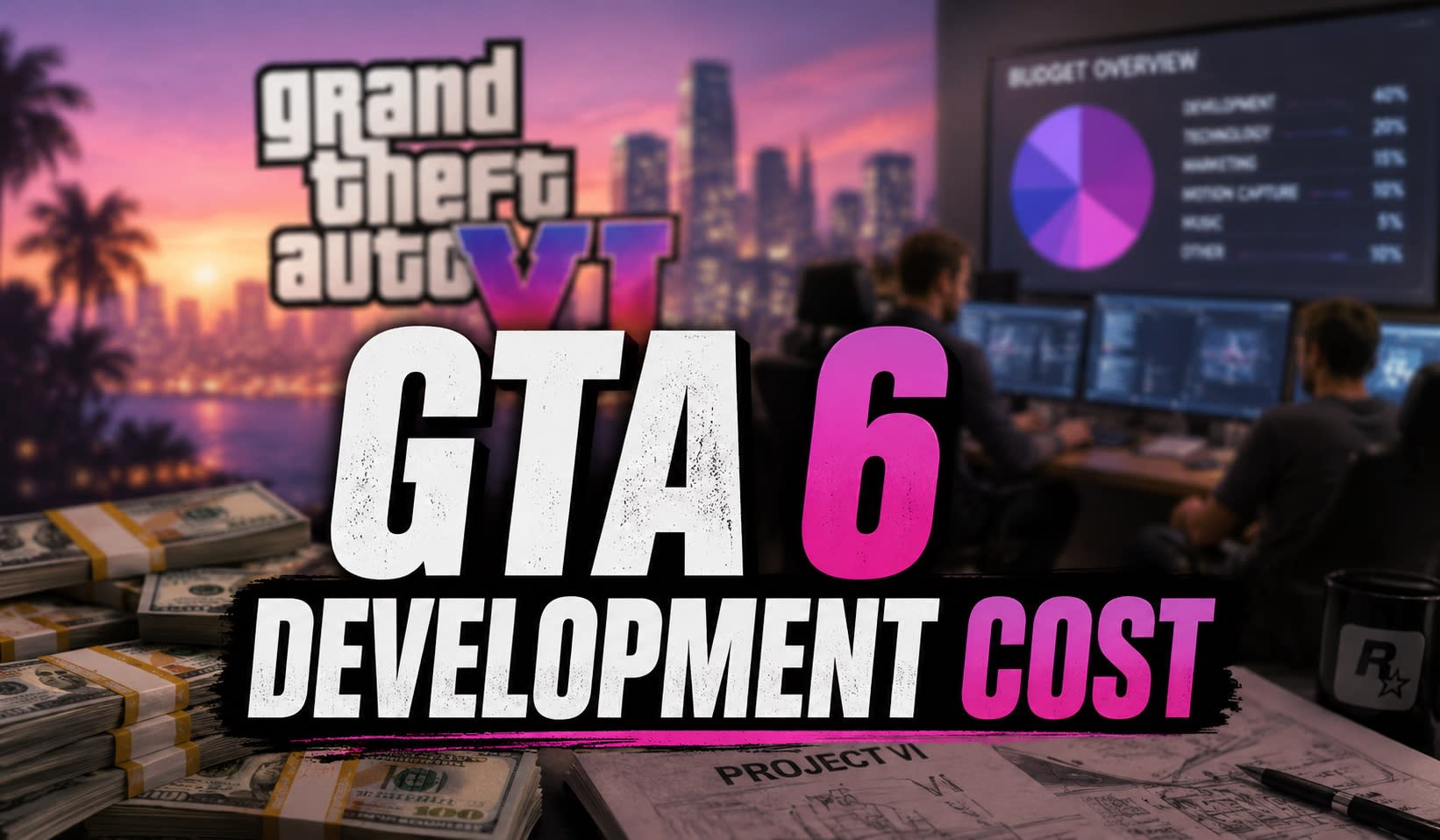
Nasdaq ticker: TTWO) has not publicly disclosed a standalone development budget for Grand Theft Auto VI, and CEO Strauss Zelnick stated during the November 9, 2026 earnings call that the company does not release project budgets while cautioning that a reported ceiling does not mean actual spending equals or approaches that figure. The widely cited $1.5 billion figure stems from 2026 analyst and media estimates placing potential development costs in a $1 billion to $1.5 billion range, whereas the roughly $2.577 billion in software development costs and licenses reported on Take-Two's concurrent Form 10-Q balance sheet covers the entire corporate group rather than GTA 6 alone. Against an official U.S. Standard Edition price of $79.99, a hypothetical $1.5 billion cost ceiling would require roughly 30.00 million copies at $50.00 net per unit or roughly 26.79 million copies at $56.00 net per unit under simplified assumptions, with real-world break-even also shaped by Ultimate Edition ($99.99) mix, live services, and marketing spend.
Key Takeaways
Evaluating GTA 6 cost rumors alongside TTWO stock fundamentals requires separating unverified budget estimates, group-wide balance sheet balances, and per-copy unit economics. According to
Motley Fool coverage of the November 9, 2026 earnings call, an analyst pressed Zelnick on the $1.5 billion development cost ceiling, prompting him to reiterate that Take-Two does not disclose project-level budgets and that an upper estimate does not imply actual spend is near that ceiling. Meanwhile, reading the roughly $2.577 billion software development costs and licenses line on Take-Two's Form 10-Q alongside our guides on
reading U.S. stock balance sheets and
analyzing cash flow statements clarifies that this figure reflects combined balances across the company rather than a single title. Paired with our
GTA 6 launch coverage and
income statement guide, investors can model break-even volumes transparently using the confirmed $79.99 Standard Edition price and explicit net-per-copy assumptions.
Take-Two has never published a standalone development budget for GTA 6. On the November 9, 2026 earnings call, when asked directly about a $1.5 billion development cost ceiling, Zelnick noted that the company does not disclose budgets for individual projects and emphasized that an upper figure does not mean actual costs are close to that ceiling.
The $1.5 billion figure instead originates from external analyst and media estimates in 2026 placing GTA 6's production budget between $1 billion and $1.5 billion, as reported by outlets such as
The Next Web and
GAMES.GG. While Zelnick has remarked in public appearances that the game was expensive and took a long time to build, Take-Two has not confirmed a $1.5 billion figure.
Cost Benchmark or Disclosure | Dollar Amount or Price Point | Scope & Disclosure Status | Role in Budget & Break-Even Analysis |
Official Project Budget Disclosure | Not disclosed by Take-Two | No standalone GTA 6 budget published; Zelnick noted on Nov 9 that a ceiling does not imply actual spend nears it | Prevents treating external estimates as official company figures |
External Analyst & Media Estimates | $1.0 billion to $1.5 billion range | 2026 third-party estimates widely circulated in media coverage | Useful for scenario testing rather than verified cost accounting |
Concurrent Form 10-Q Development & License Asset | ~$2.577 billion | Group-wide balance sheet line covering software development costs and licenses across Take-Two | Represents multi-title and licensed assets across the group, not GTA 6 alone |
Official U.S. Standard Edition Price | $79.99 ($99.99 Ultimate Edition) | Confirmed official retail pricing for PS5 and Xbox Series X | S |
On Take-Two's concurrent Form 10-Q filed with the
U.S. Securities and Exchange Commission, the balance sheet line for software development costs and licenses stands at approximately $2.577 billion. That balance is an enterprise-wide asset total across the Take-Two corporate group, encompassing development costs across multiple titles and studios as well as licensed intellectual property.
Capitalized development balances are amortized over expected product lifecycles once titles launch, while marketing and distribution expenses are managed separately in operating results. Treating a consolidated corporate balance sheet line as a single game's cost overstates project-specific attribution.
Breaking Down the $79.99 Standard Edition Price Into Net Contribution
Official pre-order disclosures covered by
CBS News and
IGN establish a $79.99 U.S. retail price for the GTA 6 Standard Edition on PlayStation 5 and Xbox Series X|S, alongside a $99.99 Ultimate Edition.
A $79.99 retail price does not equal $79.99 in net revenue for Take-Two. Digital storefronts typically take around a 30% platform cut (roughly $24.00 on a $79.99 sale), and regional taxes, promotional pricing, physical retail margins, or returns further reduce net proceeds per copy.
To illustrate unit economics clearly without inventing unverified platform contracts, the break-even table below uses two explicitly labeled net-per-copy assumptions on a $79.99 Standard Edition sale: Assumption A assumes $50.00 net retained per standard copy after roughly $29.99 in combined storefront, tax, and channel deductions; Assumption B assumes $56.00 net retained per standard copy after roughly $23.99 in storefront and channel deductions.
Break-Even Copy Scenarios Under Explicit Assumptions
Dividing a hypothetical cost figure by net revenue per copy shows the volume scale implied by each assumption:
Hypothetical Cost Basis | At $50.00 Net per Standard Copy | At $56.00 Net per Standard Copy | Analytical Caveats & Real-World Factors |
$1.50 billion ($1,500,000,000) | 30.00 million copies | ~26.79 million copies | Illustrates implied equivalent volume against the $1.5B rumor ceiling |
$1.00 billion ($1,000,000,000) | 20.00 million copies | ~17.86 million copies | Illustrates implied equivalent volume against the $1.0B lower estimate |
Actual financial outcomes will also reflect Ultimate Edition ($99.99) mix, recurring online spending, marketing expenses, and post-launch quarterly filings. Investors following corporate updates can visit
MEXC Stocks to
check Take Two company news.
Exclusive View from the MEXC Editorial Team
What actually warrants watching in discussions around GTA 6's cost is how easily a media estimate and a group-wide balance sheet figure get conflated into a single narrative.
On the November 9 earnings call, CEO Strauss Zelnick made clear that Take-Two does not disclose project budgets and that an upper estimate does not mean actual costs approach that ceiling, while the roughly $2.577 billion Form 10-Q development and license balance spans the broader company. Anchoring on the confirmed $79.99 Standard Edition price and tracking actual post-launch filings gives a more grounded view of unit economics than relying on budget rumors alone.
FAQ
How much did GTA 6 cost to make according to Take-Two?
Take-Two has not disclosed a standalone development budget for GTA 6. On the November 9, 2026 earnings call, CEO Strauss Zelnick reiterated that the company does not disclose project budgets and noted that a cited ceiling does not indicate actual costs are near that amount.
The $1.5 billion figure comes from 2026 analyst and media estimates placing potential development costs in a $1 billion to $1.5 billion range rather than from an official Take-Two disclosure.
That balance sheet figure covers software development costs and licenses across the Take-Two corporate group as a whole, spanning multiple game projects and licensed properties rather than GTA 6 exclusively.
How many copies would GTA 6 need to sell to cover $1.5 billion at $79.99?
At the $79.99 official Standard Edition price, covering a hypothetical $1.5 billion cost would require roughly 30.00 million equivalent copies at $50.00 net per copy or roughly 26.79 million equivalent copies at $56.00 net per copy under simplified assumptions, before accounting for Ultimate Edition mix, live services, and marketing costs.
Disclaimer
This article is for general information only and does not constitute investment advice, financial advice, legal advice, tax advice or any trading recommendation. Prices of crypto assets, equities and other related financial assets can move sharply, and the historical data, company disclosures and third-party expectations cited here cannot guarantee future results, while the consensus estimates and third-party projections referenced do not represent actual outcomes and will change with subsequent disclosures and revisions. Readers should conduct their own research and reach independent judgments based on their own financial circumstances, investment objectives and risk tolerance, consulting a qualified professional where appropriate. MEXC operates in compliance with applicable laws and regulations and does not provide services to residents of restricted jurisdictions, and the MEXC Crypto Pulse team accepts no liability for any direct or indirect losses arising from use of the information in this article.
About the Author
MEXC Editorial Team provides the latest platform updates, product launches, trading feature guides, and industry insights. With a focus on developments in the global crypto market, it delivers transparent information, professional data, and forward-looking analysis. Both beginners and experienced traders can find firsthand updates, in-depth observations, and official announcements related to the MEXC ecosystem.
Research References