


Introduction to Technical Analysis for DoubleZero (2Z) Trading
Technical indicators are mathematical calculations based on price, volume, or open interest that help traders analyze market trends and make informed decisions. In cryptocurrency trading, these tools are essential for identifying entry and exit points, especially in volatile markets like DoubleZero (2Z). Technical analysis is particularly relevant for DoubleZero (2Z) because its decentralized framework and focus on high-performance distributed networks create unique trading patterns and liquidity profiles. By complementing fundamental analysis—which examines DoubleZero's technology, tokenomics, and real-world applications—technical indicators provide actionable insights based on historical price and volume data. DoubleZero (2Z)'s 24/7 trading environment on MEXC generates continuous data streams, making it ideal for technical analysis. The most relevant indicators for DoubleZero (2Z) include trend-following tools, momentum oscillators, and volume-based metrics, all of which help traders navigate its distinctive market dynamics.
Example: Technical analysis involves studying DoubleZero (2Z) price movements and trading volumes to identify predictive patterns. For traders, these indicators provide timing signals for entry and exit points without requiring deep knowledge of the DoubleZero (2Z) token's technology. While fundamental analysis examines DoubleZero's innovations and real-world applications, technical analysis focuses on market sentiment and 2Z price direction based on historical data. DoubleZero (2Z) markets display distinct volatility patterns that make them suitable for technical analysis. With 24/7 trading across global exchanges, DoubleZero creates continuous data streams that technical indicators can effectively analyze. The most relevant tools include trend-following indicators, momentum oscillators, and volume metrics that help navigate DoubleZero (2Z)'s unique market dynamics.
Essential Price-Based Indicators for DoubleZero (2Z)
Moving Averages (Simple and Exponential) are foundational tools for tracking DoubleZero (2Z)'s price trends. The 50-day and 200-day Simple Moving Averages (SMA) often highlight key support and resistance levels. A "golden cross" (when the 50-day SMA crosses above the 200-day) signals a bullish trend, while a "death cross" suggests bearish momentum. Exponential Moving Averages (EMA) give more weight to recent prices, making them especially responsive to DoubleZero's fast-moving market conditions.
Bollinger Bands use a 20-day moving average with bands set at two standard deviations to measure DoubleZero (2Z)'s volatility. When DoubleZero (2Z)'s price touches the upper band, it may indicate overbought conditions; the lower band can signal oversold conditions. Traders watch for "Bollinger Band squeezes" as potential precursors to large price movements.
Support and Resistance Levels are derived from DoubleZero's historical price action. These levels help traders identify where buying or selling pressure may intensify, providing reference points for stop-loss and take-profit orders.
Fibonacci Retracement Levels are used to identify potential reversal points in DoubleZero (2Z)'s price trends. By mapping key retracement ratios (23.6%, 38.2%, 61.8%), traders can anticipate where corrections might end and new trends may begin.
Example: Moving Averages serve as fundamental tools, with 50-day and 200-day SMAs indicating key support and resistance levels. The 'golden cross' (50-day crossing above 200-day) signals bullish trends for DoubleZero (2Z), while the 'death cross' indicates bearish shifts. Exponential Moving Averages give more weight to recent prices, making them responsive to DoubleZero (2Z)'s fast-moving conditions. Bollinger Bands (20-day moving average with bands at two standard deviations) help identify potential volatility changes in 2Z price. When price touches the upper band, it may indicate overbought conditions, while the lower band might suggest oversold conditions. DoubleZero (2Z) traders watch for 'Bollinger Band squeezes' as potential indicators of upcoming large price movements.
Volume and Momentum Indicators for DoubleZero (2Z)
Volume Analysis is crucial for confirming DoubleZero (2Z)'s price movements. Strong volume supports genuine breakouts, while low volume may indicate weak or unsustainable trends. Volume spikes often coincide with major announcements or new listings of DoubleZero (2Z) on MEXC.
Relative Strength Index (RSI) measures the speed and change of DoubleZero (2Z)'s price movements on a 0-100 scale. Readings above 70 indicate overbought conditions, while readings below 30 suggest oversold conditions. RSI divergences—where price makes a new high but RSI does not—can signal potential reversals.
MACD (Moving Average Convergence Divergence) helps spot momentum shifts in DoubleZero's market. The MACD line crossing above the signal line is typically bullish, while a cross below is bearish.
On-Balance Volume (OBV) tracks cumulative volume to detect "smart money" movements. Rising OBV alongside price increases suggests accumulation, while falling OBV may indicate distribution.
Example: Volume analysis confirms DoubleZero (2Z) price movements, with strong volume supporting genuine breakouts while low volume suggests weak trends. Volume spikes often coincide with major announcements or exchange listings. Traders should note divergences between price and volume, such as new highs on declining volume, which may signal weakening momentum. The RSI measures price movement speed on a 0-100 scale, with readings above 70 indicating overbought conditions and below 30 suggesting oversold conditions. DoubleZero (2Z) traders watch for RSI divergences where price makes a new high while RSI doesn't, potentially signaling a reversal. During strong bull markets, RSI may remain overbought for extended periods.
Advanced Technical Indicators for DoubleZero (2Z) Trading
Ichimoku Cloud offers a comprehensive view of DoubleZero (2Z)'s trend, support, and resistance. When DoubleZero (2Z) trades above the cloud, the trend is bullish; below the cloud, bearish. The cloud's thickness indicates the strength of support or resistance, and color changes can signal potential trend shifts.
Stochastic Oscillator helps time market entries and exits for DoubleZero by comparing closing prices to recent price ranges. Readings above 80 suggest overbought conditions, while below 20 indicate oversold.
Accumulation/Distribution Line gauges buying and selling pressure on DoubleZero (2Z) by combining price and volume data. A rising line indicates accumulation, while a falling line signals distribution.
Average Directional Index (ADX) measures the strength of DoubleZero's trend, regardless of direction. Readings above 25 indicate a strong trend, while below 20 suggest a sideways market. Combined with Directional Movement Indicators (DMI), ADX can also signal potential trend reversals.
Example: The Ichimoku Cloud provides a comprehensive market view through multiple components. When DoubleZero (2Z) trades above the cloud, the trend is bullish; when below, bearish. Cloud thickness indicates strength of support/resistance, while color changes signal potential trend shifts. The ADX measures trend strength regardless of direction, helping DoubleZero (2Z) traders determine whether a market is trending strongly (readings above 25) or moving sideways (below 20). This guides whether to use trend-following or range-trading approaches. Combined with DMI indicators, ADX can also signal potential trend reversals when these lines cross.
Creating a Technical Analysis Strategy for DoubleZero (2Z)
Combine multiple indicators to confirm DoubleZero (2Z) trading signals from different perspectives.
Avoid indicator redundancy and information overload by selecting complementary tools.
Backtest technical strategies using historical DoubleZero (2Z) price data to validate effectiveness before live trading.
Set up custom indicators and alerts for DoubleZero (2Z) on trading platforms to automate monitoring and response.
Adapt technical analysis to different DoubleZero market conditions, such as trending, ranging, or highly volatile phases.
Example: Effective strategies combine multiple indicators to confirm signals from different perspectives. Pairing trend indicators like Moving Averages with momentum oscillators like RSI and volume indicators provides a more comprehensive view, filtering out false signals during DoubleZero (2Z)'s volatile phases. Backtesting validates strategies before live trading by applying them to historical 2Z data. Trading platforms offer tools to adjust parameters like moving average periods to optimize for DoubleZero (2Z)'s specific behavior. Focus on testing across various market conditions rather than cherry-picking favorable periods, ensuring your strategy works across DoubleZero's cyclical market phases.
Conclusion
Technical indicators provide valuable insights for timing DoubleZero (2Z) trades, but should be combined with proper risk management for optimal results. No indicator is infallible—especially in DoubleZero (2Z)'s volatile market—which is why diversifying your analytical approach is crucial. To put these techniques into practice, MEXC offers a comprehensive trading platform with advanced charting tools and real-time DoubleZero (2Z) data. For the latest price analysis, detailed charts, and up-to-date predictions on DoubleZero's future movements, visit our MEXC DoubleZero (2Z) Price Page, where you can monitor market trends and make informed trading decisions.
Mô tả: Nhịp đập tiền mã hoá áp dụng AI và các nguồn công khai để nhanh chóng mang đến những xu hướng token hot nhất. Để xem nhận định từ chuyên gia và phân tích chuyên sâu, vui lòng truy cập MEXC Learn.
Các bài viết được chia sẻ trên trang này được lấy từ các nền tảng công khai và chỉ nhằm mục đích tham khảo. Các bài viết này không nhất thiết đại diện cho quan điểm của MEXC. Mọi quyền sở hữu thuộc về tác giả gốc. Nếu bạn cho rằng bất kỳ nội dung nào vi phạm quyền của bên thứ ba, vui lòng liên hệ service@support.mexc.com để được xử lý kịp thời.
MEXC không đảm bảo tính chính xác, đầy đủ hoặc kịp thời của bất kỳ nội dung nào và không chịu trách nhiệm cho các hành động được thực hiện dựa trên thông tin cung cấp. Nội dung này không cấu thành lời khuyên tài chính, pháp lý hoặc chuyên môn khác, và cũng không được xem là khuyến nghị hoặc xác nhận từ MEXC.
Tìm hiểu thêm về OpenLedger
Xem thêm
Giải thích sự thay đổi của khối lượng giao dịch và open interest trong Futures

Cấu Trúc Mạng và Lợi Ích Phi Tập Trung của Open Meta City (OMZ)

Công Nghệ Blockchain Được Giải Thích: Kiến Trúc Cơ Bản Của Open Meta City (OMZ)
Cập nhật mới nhất về OpenLedger
Xem thêm
Buterin Đơn Giản Hoá Chìa Khoá Ethereum Để Đạt Được Sự Phi Tập Trung Thực Sự

GHI CHÚ CỦA PHÓNG VIÊN: Tại hội nghị thượng đỉnh Liên Hợp Quốc, chúng tôi đặt câu hỏi làm thế nào để theo kịp tham nhũng xuyên biên giới
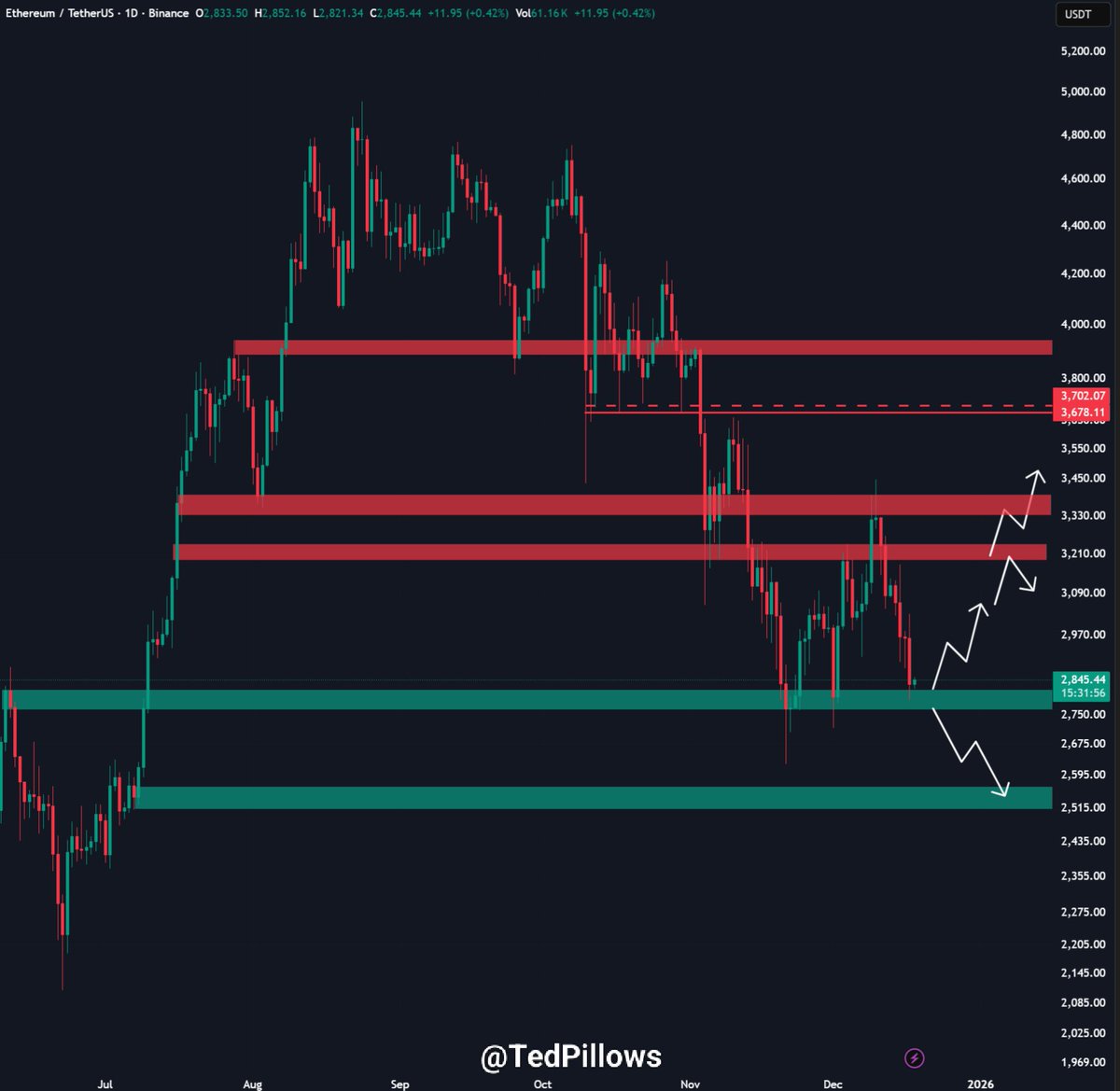
Dự đoán giá Ethereum(ETH): Mô hình nêm giảm báo hiệu đột phá $4,4K
HOT
Tiền mã hoá thịnh hành hiện nay đang thu hút sự chú ý đáng kể của thị trường
Giá tiền mã hoá
Tiền mã hoá có khối lượng giao dịch cao nhất
Mới được thêm vào
Tiền mã hoá được niêm yết gần đây có thể giao dịch