

Why AI Won’t Replace Your Weather App (Yet)
AI can summarize, interpret, and enhance – but when it comes to delivering reliable, real-time weather data, your radar-based weather app is still irreplaceable. Here's why.
The Illusion of AI Forecasting Supremacy
In an age where AI writes articles, diagnoses illness, and composes music, it's tempting to believe it can also predict the weather better than your smartphone app. But meteorology – especially short-term, hyperlocal forecasting – is not just about spotting surface-level patterns. It’s about uncovering the deeper physical laws and complex data structures behind those patterns – something people (and even AI) can only approximate.
\ Generative AI models (LLMs, diffusion models, etc.) are great at interpreting and repackaging existing information, but that’s different from analyzing raw environmental data in real time. For weather forecasting, this is where deep learning models – often trained on radar and satellite data – already play a valuable role, and radar-based apps still hold a practical edge.
Radar > Prediction When Every Minute Counts
Most weather AI models today rely on post-processed or delayed forecast outputs – data that has already gone through numerical weather prediction (NWP), sometimes hours ago. But radar systems don’t predict – they observe.
\
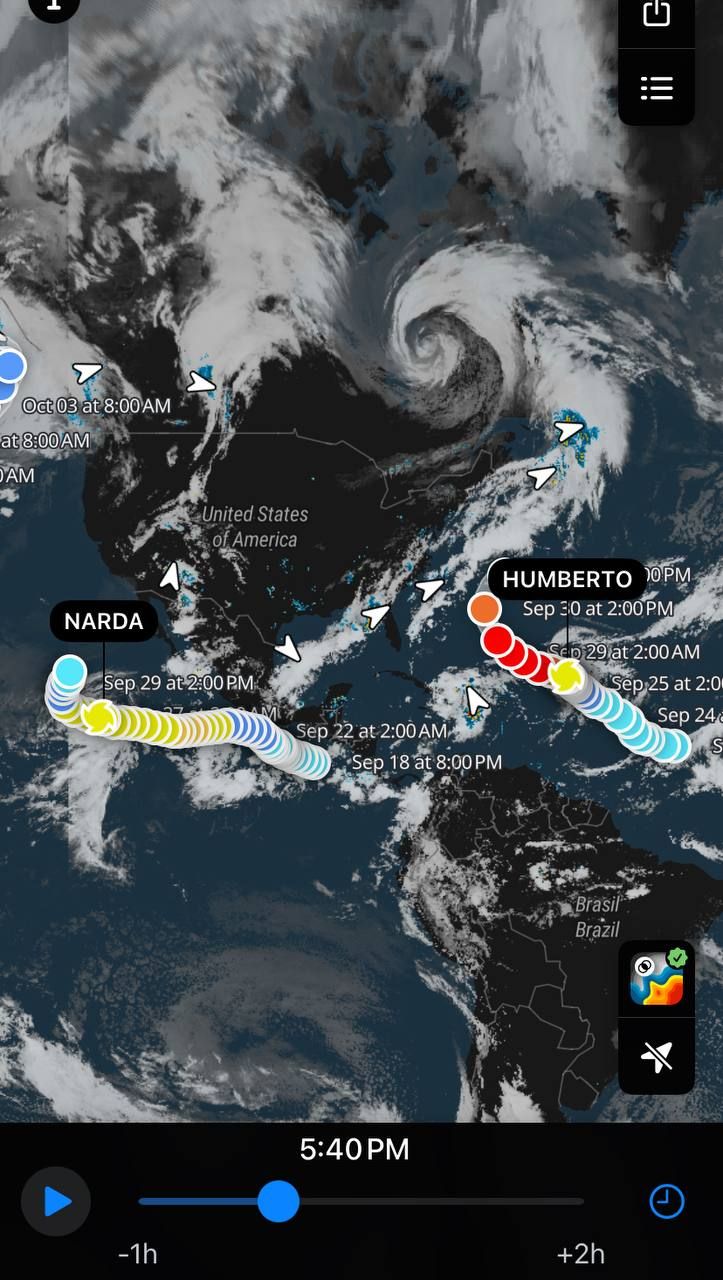
- Doppler radars detect precipitation in motion
- They scan the atmosphere every 5–10 minutes (or faster with phased arrays)
- Apps (like Rain Viewer) visualize this data to show exactly where rain is, how intense it is, and where it’s moving now
\ AI-generated summaries might help you pack for a weekend, but radar helps you decide whether to run for shelter right now.
AI Can’t Yet Replace Physical Infrastructure
Here’s a hard truth: most generative models are only as good as their input data. And that data still comes from physical sensing networks – radars, satellites, weather stations.
\ No radar = no real-time reflection. \n No satellite = no cloud coverage. \n No sensors = no ground truth.
\ This makes weather apps fundamentally different from purely digital tools. Even if an AI could “predict” the chance of rain, it can’t replace 300,000+ tons of hardware orbiting Earth and the vast network of ground-based radars constantly scanning the sky.
The Latency Problem AI Can’t Solve (Yet)
Radar systems have their own delays (5–10 minutes), but once an AI model is trained, it can generate forecasts in seconds – even every minute if needed. The real limitation isn’t the speed of prediction, but the speed and cost of training. Teaching or re-teaching a model can take months and vast resources, and until it’s retrained, the model will keep producing results only in line with its last training. Traditional algorithms, by contrast, can be adjusted instantly – change one formula, and the next forecast reflects that change. With AI, even small improvements require a full retraining cycle.
\ Apps like Rain Viewer use radar-based nowcasting methods, powered by the PySTEPS library, which provides optical flow algorithms such as Lucas-Kanade and DARTS, to track and project precipitation movement in real time. For short-term forecasts (up to 1 hour), these radar-driven techniques remain more accurate than most of the current deep learning based AI predictions.
Why Visualization > Verbalization
AI can say “light rain expected at 4 PM,” but can it:
- Show the exact location of the rain?
- Let you track a moving storm front?
- Allow zoom-level intensity visualization in 90+ countries?
\ Radar-based visualizations let users make faster, more intuitive decisions than reading a forecast paragraph. For time-sensitive scenarios – like hiking, driving, or flying – visual beats verbal every time.
AI Is Still a Powerful Assistant (And We Use It)
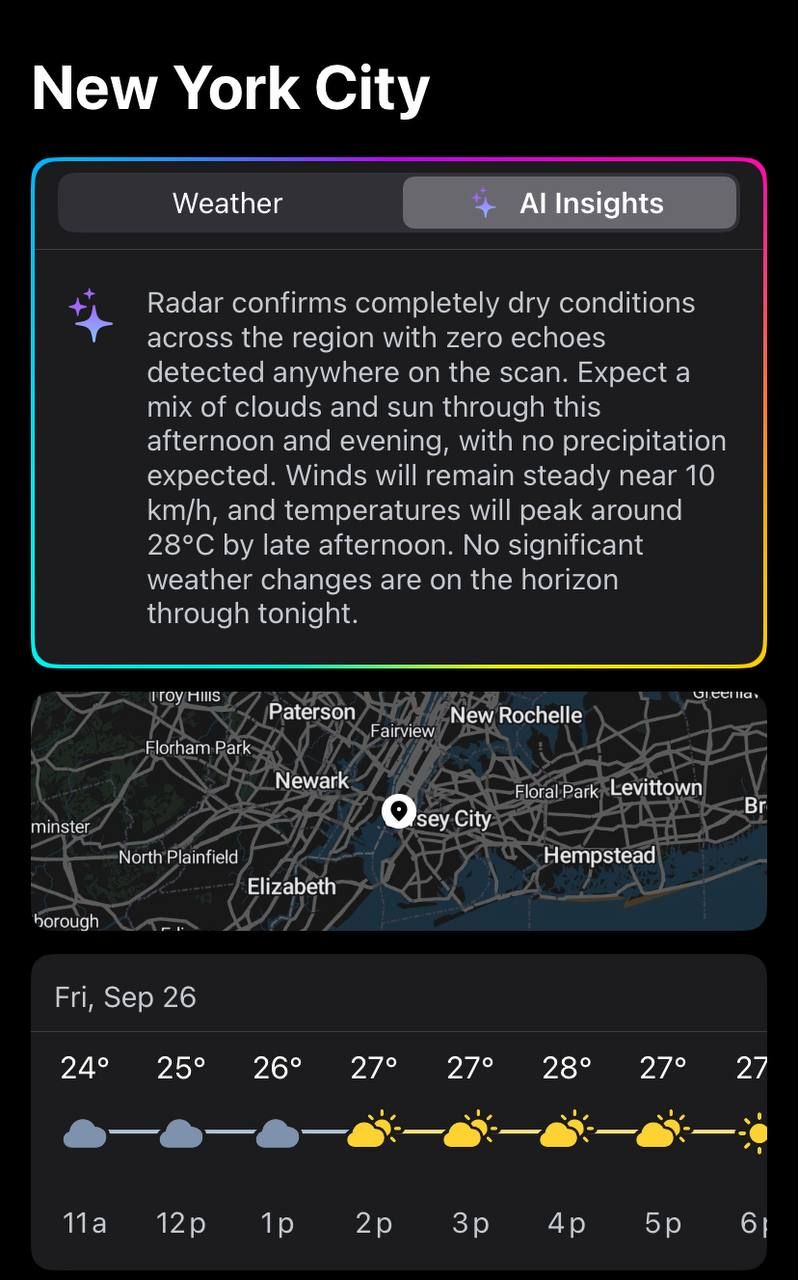
This isn’t to say AI has no place in weather tech. At Rain Viewer, we use AI too. But unlike generic “yes/no” forecasts, our AI actually reads radar imagery, tracks where the rain is and where it’s moving, and translates that into hyperlocal predictions for your exact location. Instead of just telling you whether to take a raincoat, it helps you plan your day around the weather with much more precision.
The Future: Deep Learning + Radar
When it comes to weather, what’s happening matters more than what might happen. Deep learning already helps make forecasts smarter, but it still relies on the physical eyes and ears of meteorology – radars, satellites, and sensors.
\ That’s why AI won’t replace your weather app just yet: only radar-based apps can show you real-time, ground-truth conditions. AI can enhance, summarize, and predict, but without the live radar backbone, it’s guessing in the dark.
\ So…
\ Use AI for context, but trust your radar app for reality. \n


You May Also Like
Vitalik Buterin Proposes Self-Sovereign AI Stack To Protect Users From Risks Of AI Agents

‘Cowardly, dirty, desperate’: Rosmah demands action against Nga Kor Ming over ‘fake’ Johor election poster

Max Holloway VS Conor McGregor First Fight: What Happened in Their 2013 UFC Bout?



