Key TakeawaysOn Sunday, September 6, 2026, self described whitehat hackers withdrew about 4,000 Bitcoin (BTC), worth roughly $320 million, from the federation wallet backing Blockstream's Liquid NetwoKey TakeawaysOn Sunday, September 6, 2026, self described whitehat hackers withdrew about 4,000 Bitcoin (BTC), worth roughly $320 million, from the federation wallet backing Blockstream's Liquid Netwo

Liquid Network Hack Explained: $320 Million in Bitcoin Drained, 85% Returned, and the $47 Million Question

Key Takeaways
On Sunday, September 6, 2026, self described whitehat hackers withdrew about 4,000 Bitcoin (BTC), worth roughly $320 million, from the federation wallet backing Blockstream's Liquid Network, about 95% of the sidechain's reserves of around 4,200 BTC.
The attackers exploited a bug in Elements, the open source software underlying Liquid, to create L-BTC that was not backed by real Bitcoin, then pegged it out through SideSwap's peg out authorization path. Blockstream says the key itself was not compromised and no other Liquid assets were affected.
The negotiation happened entirely on the Bitcoin blockchain: the group wrote "we are whitehats. contact us on chain" into a transaction, demanded every bridge node be patched first, and Blockstream answered with PGP signed messages confirming the fix.
On Monday, September 7, the group returned exactly 3,400 BTC, about $268 million, and kept 598.5 BTC worth roughly $47 million, an apparent self awarded bounty that Blockstream is still negotiating over.
Liquid remains paused with a chain split to unwind, bridge nodes disabled and L-BTC deposits and withdrawals halted at exchanges. Bitcoin held on the main chain is unaffected, and BTC barely reacted, trading near $78,500.


What Liquid Is and Why the Peg Matters

Liquid Network is a Bitcoin sidechain launched by Blockstream in 2018 and operated by a federation of exchanges and institutions. Users lock BTC on the main chain and receive L-BTC on Liquid, where transactions settle in about a minute with confidential amounts, which is why it became a preferred settlement rail between trading venues and a home for assets such as Tether's USDT. The entire system rests on a promise: every L-BTC in circulation is backed one to one by real Bitcoin held in the federation wallet, and a peg out destroys L-BTC on the sidechain while releasing the matching BTC on the main chain.
That promise is what broke on Sunday. Blockstream's incident notice said hackers claiming to be whitehats took about 4,000 BTC from the federation wallet, roughly 95% of reserves that stood near 4,200 BTC beforehand. The coins left through SideSwap's peg out authorization key, one of the keys that can release funds, though Blockstream stressed that the key was not compromised and neither were any others. The root cause, according to SideSwap and subsequent analysis, was a bug in Elements, the blockchain software powering Liquid, that allowed the creation of L-BTC without backing. In effect, the attackers minted counterfeit sidechain Bitcoin and redeemed it for the real thing.


A Negotiation Written Into the Blockchain

What followed was unlike any security disclosure in the industry's history. Rather than emails or a bug bounty portal, the actors communicated through messages embedded in Bitcoin transactions using OP_RETURN. One of the earliest read "we are whitehats. contact us on chain." At Bitcoin block 965,875 they stated they would return the funds, but only after the vulnerability was fixed and the patch applied to every relevant node, a condition Blockstream acknowledged in a PGP signed message of its own. Blockstream then confirmed all bridge nodes had been patched and the funds were safe to send back.
The return came on Monday, September 7. A transaction confirmed at 15:31 UTC sent the federation address 1,000 satoshis along with a PGP encrypted message whose contents remain private. Thirty eight minutes later, in block 965,950, exactly 3,400 BTC arrived back in the federation wallet, worth about $268 million at prevailing prices. The remaining 598.5 BTC, roughly $47 million and about 15% of the haul, stayed with the actors. Samson Mow, the JAN3 chief executive and former Blockstream strategy chief who has been posting updates on the incident, said Blockstream continues to engage with the group over the balance. Whether that sum is a demanded bounty, a unilateral fee, or something still to be returned has not been made public.


Whitehats, or Something Else?

The label is contested. Liquid itself has carefully referred to "purported" whitehats, and Ledger's chief technology officer Charles Guillemet questioned the take first and negotiate later approach, before allowing that the actors could be inexperienced researchers rather than criminals. Genuine whitehat disclosure normally involves reporting a flaw privately and being rewarded after a fix, not draining 95% of a system's reserves and setting terms in public. The counterargument is pragmatic: the group demonstrated the bug, forced a rapid patch, returned the overwhelming majority of the funds, and never attempted to launder anything. The crypto industry has seen this ambiguous middle ground before, and the $47 million now sitting outside Blockstream's control will decide which reading history settles on.


What Is Still Broken

The return eased the collateral crisis but did not end it. Liquid remains paused, bridge nodes are disabled, and L-BTC deposits and withdrawals at centralized exchanges are halted. During the pause a chain split emerged that operators must resolve before a coordinated restart, and the federation has to demonstrate that L-BTC is once again fully backed, either by recovering the outstanding coins, funding the shortfall, or documenting a plan for it. Blockstream says updated software has been deployed and federation members are preparing the restart. Until an official statement confirms peg ins and peg outs have resumed, the peg is operating under supervision rather than restored.
Notably, the Bitcoin price barely flinched, holding near $78,500 through the episode. The market appears to have drawn the right distinction: this was a failure in a federated sidechain's software, not in Bitcoin, and main chain BTC was never at risk. It does, however, land in a bruising year for security following the Coldcard firmware exploit and the Trezor and SafePal data leak
 

What It Means for Traders on MEXC

For most holders the practical impact is zero. Bitcoin on the main chain, including balances held on MEXC, is unaffected; only L-BTC on the paused sidechain is frozen, and anyone with funds there simply has to wait for the restart. The incident is a reminder that wrapped and pegged versions of Bitcoin carry their own trust assumptions, from federations to bridge software, that native BTC does not. Traders can follow the market on BTC/USDT as the restart news develops.
 
Disclaimer: This content is for educational and reference purposes only and does not constitute any investment advice. Digital asset investments carry high risk. Please evaluate carefully and assume full responsibility for your own decisions.
Возможности рынка
Логотип 4
4 Курс (4)
--
----
USD
График цены 4 (4) в реальном времени

Статьи, размещенные на этой странице, взяты из открытых источников и представлены исключительно для информационных целей. Они не отражают позицию или взгляды MEXC. Все права принадлежат OoJae. Если вы считаете, что какой-либо контент нарушает права третьей стороны, пожалуйста, свяжитесь с service@support.mexc.com для оперативного удаления. MEXC не гарантирует точность, полноту или своевременность любого контента и не несет ответственности за любые действия, предпринятые на основе предоставленной информации. Содержание не является финансовым, юридическим или другим профессиональным советом, а также не должно интерпретироваться как рекомендация или одобрение со стороны MEXC. Для получения экспертных мнений и углубленного анализа посетите MEXC Обучение.

Узнайте больше о 4

Подробнее
Объяснение рисков MRKON: зависимость от KEYTRUDA, истечение патента, клинические испытания и риск токенизированных акций

Объяснение рисков MRKON: зависимость от KEYTRUDA, истечение патента, клинические испытания и риск токенизированных акций

Резюме MRKON сочетает риски крупной фармацевтической компании с дополнительным уровнем токенизированного рынка. Наиболее важные базовые риски включают: зависимость от KEYTRUDA; патентный обрыв в 2028
2026/09/10
Может ли Merck расти за пределами KEYTRUDA? WINREVAIR, KEYTRUDA QLEX и конвейер следующего поколения

Может ли Merck расти за пределами KEYTRUDA? WINREVAIR, KEYTRUDA QLEX и конвейер следующего поколения

Резюме Главный стратегический вопрос Merck становится всё более очевидным: Сможет ли компания обеспечить достаточный новый рост до того, как традиционный KEYTRUDA столкнётся со значительным давлением
2026/09/10
MRKON против MRK: в чем разница между токенизированной акцией Merck и акцией Merck?

MRKON против MRK: в чем разница между токенизированной акцией Merck и акцией Merck?

Краткое содержание MRK и MRKON оба обеспечивают доступ к Merck & Co., Inc., но это не один и тот же финансовый инструмент. MRK — это обыкновенная акция Merck, торгуемая на Нью-Йоркской фондовой бирже.
2026/09/10
Подробнее

Последние новости о 4

Подробнее
Дата выхода отчета Tesla за второй квартал 2026 года: время публикации, веб-каст и ключевые показатели

Дата выхода отчета Tesla за второй квартал 2026 года: время публикации, веб-каст и ключевые показатели

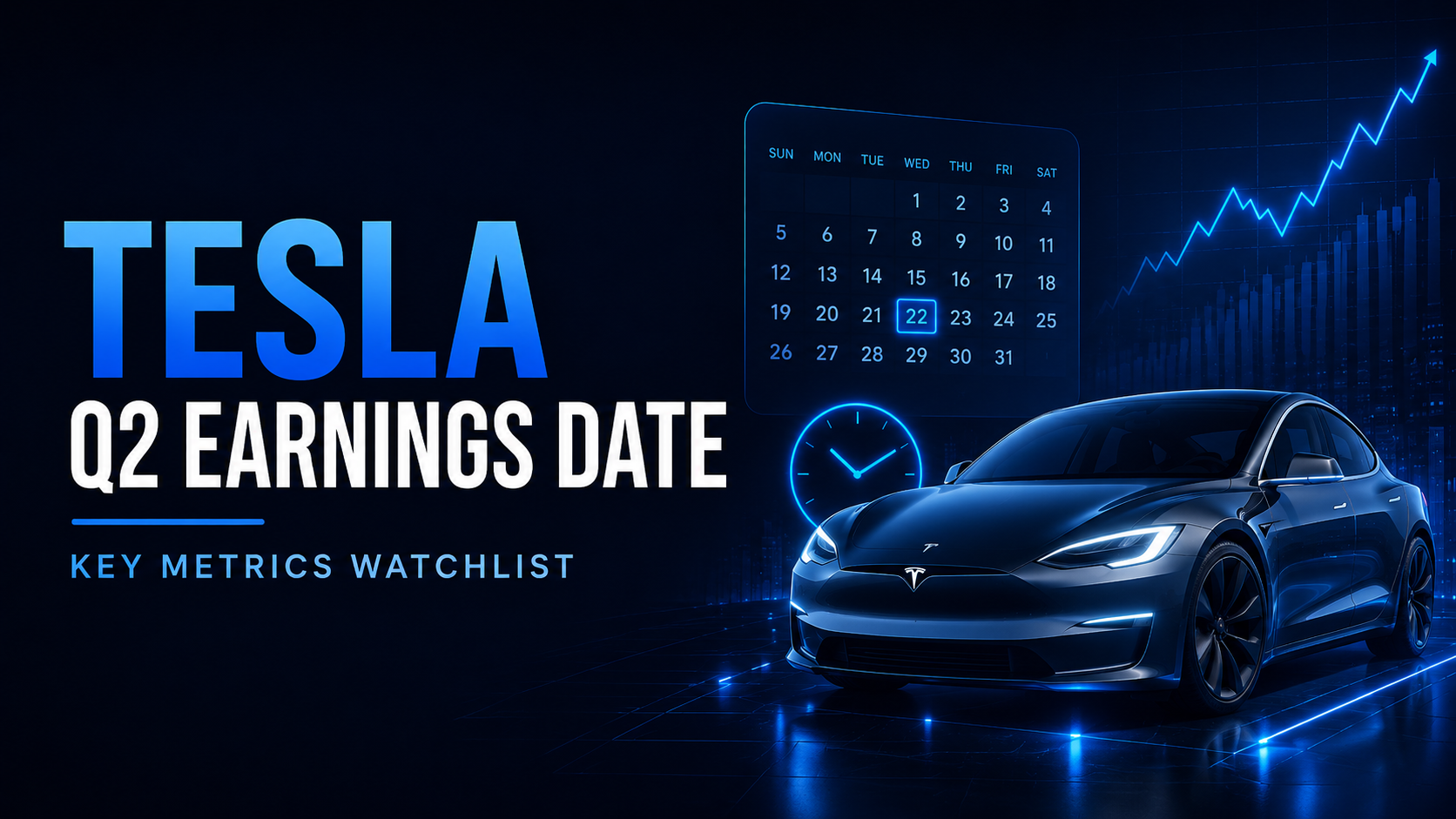
Отчет о доходах Tesla за второй квартал (Q2) 2026 года запланирован на среду, 22 июля 2026 года, после закрытия рынка. Руководство компании проведет прямую трансляцию (веб-каст) с сессией вопросов и ответов в 16:30 по центральному времени (CT) / 17:30 по восточному времени (ET). Обновление за второй квартал и веб-трансляция будут доступны на веб-сайте Tesla Investor Relations, а после звонка ожидается архивная запись. Это не просто очередная дата отчета Tesla. Tesla уже сообщила о квартале поставок, превзошедших ожидания: во втором квартале 2026 года компания произвела 451 758 автомобилей, поставила 480 126 автомобилей и развернула 13,5 ГВт·ч продуктов для хранения энергии. Для трейдеров ключевой вопрос заключается не в том, поставила ли Tesla больше автомобилей. Эта часть уже известна. Настоящий вопрос в том, были ли эти поставки достаточно прибыльными, может ли рост хранения энергии поддержать более широкую историю Tesla, и сможет ли руководство показать, что инвестиции в искусственный интеллект, автопилот и роботакси переходят от простого нарратива к измеримому прогрессу в бизнесе.
2026/07/06
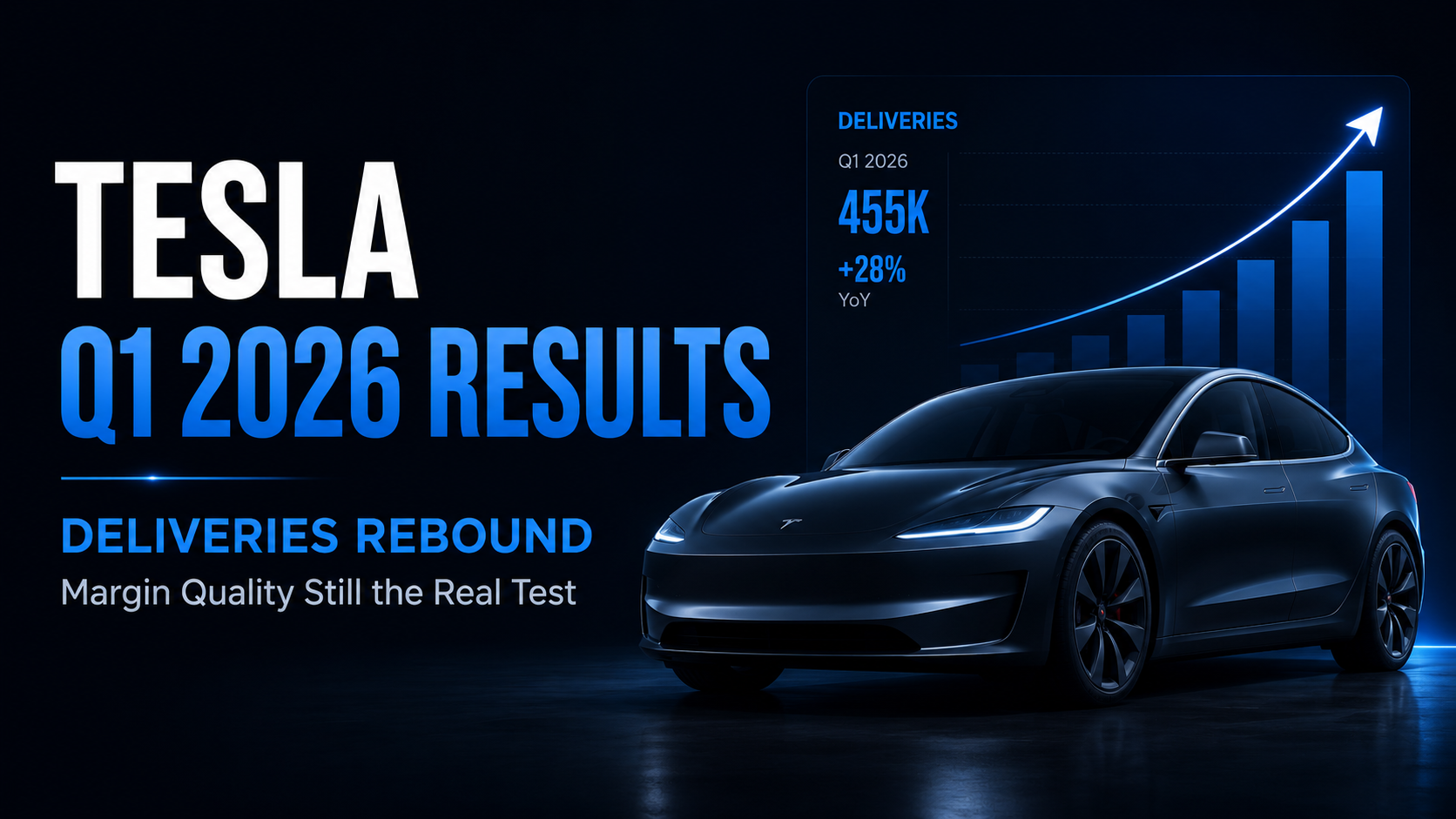
Обзор финансовых результатов Tesla за 1 квартал 2026 года: поставки восстановились, но качество маржи остается главным испытанием

Обзор финансовых результатов Tesla за 1 квартал 2026 года: поставки восстановились, но качество маржи остается главным испытанием

Tesla сообщила о своих финансовых результатах за первый квартал 2026 года 22 апреля 2026 года после закрытия рынка в США. За квартал компания поставила 358 023 автомобиля, получила общую выручку в размере $22,4 млрд и отчиталась о чистой прибыли по GAAP, приходящейся на долю обыкновенных акционеров, в размере $477 млн. Общая валовая маржа по GAAP улучшилась до 21,1%, а операционная маржа достигла 4,2%. Главный сигнал заключается не только в том, что поставки Tesla восстановились после слабой базы предыдущего года. Более важный вопрос заключается в том, смогут ли более высокие объемы поставок, доходы, связанные с FSD, снижение затрат на автомобили и улучшение маржи в автомобильном секторе восстановить уверенность в истории прибыльности Tesla. Для инвесторов, ожидающих следующий отчет TSLA, первый квартал создает важнейшее испытание для второго квартала: определение того, сможет ли рост объемов устойчиво трансформироваться в более качественные доходы.
2026/07/09
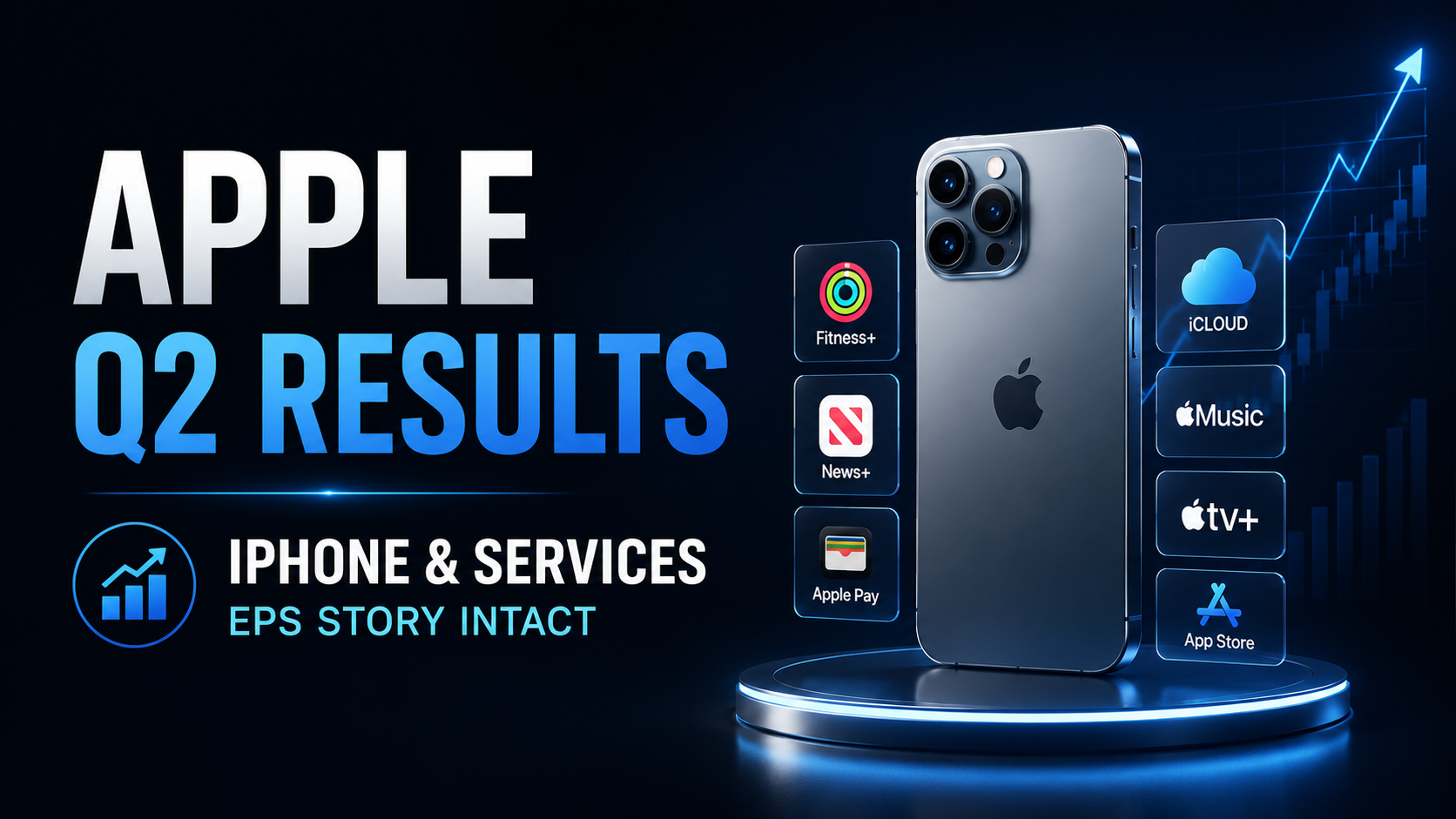
Обзор финансовых результатов Apple за 2 квартал 2026 финансового года: доходы от iPhone и рост сервисов поддерживают историю EPS

Обзор финансовых результатов Apple за 2 квартал 2026 финансового года: доходы от iPhone и рост сервисов поддерживают историю EPS

Компания Apple 30 апреля 2026 года опубликовала финансовые результаты за второй квартал 2026 финансового года, завершившийся 28 марта 2026 года. Квартальная выручка достигла $111,2 млрд, увеличившись на 17% в годовом исчислении, а разводненная прибыль на акцию (EPS) выросла на 22% до $2,01. Согласно заявлению Apple, этот период установил новые исторические мартовские рекорды по общей выручке, доходам от iPhone и EPS, в то время как выручка подразделения Services (Сервисы) достигла нового абсолютного максимума. Этот отчет продемонстрировал результаты, выходящие далеко за рамки обычного аппаратного цикла. Показатели Apple за второй квартал подтвердили, что устойчивый спрос на iPhone, рост сегмента сервисов и масштабные программы возврата капитала по-прежнему работают в синергии, защищая сильные позиции компании по росту прибыли на акцию. Для инвесторов, отслеживающих отчетность Apple, динамику AAPL или дату следующего релиза, ключевой вопрос после Q2 заключается в том, сможет ли Apple сохранять свою премиальную оценку, пока рынок находится в ожидании более мощных катализаторов в сфере ИИ и обновления продуктовых линеек.
2026/07/09
Подробнее

В тренде

Трендовые криптовалюты, которые в настоящее время привлекают значительное внимание рынка

Недавно добавленные

Криптовалюты недавно внесенные в листинг и доступные для торговли