

SEC Tokenization Regulation: Commissioner Peirce’s Revolutionary Call for Market Freedom
BitcoinWorld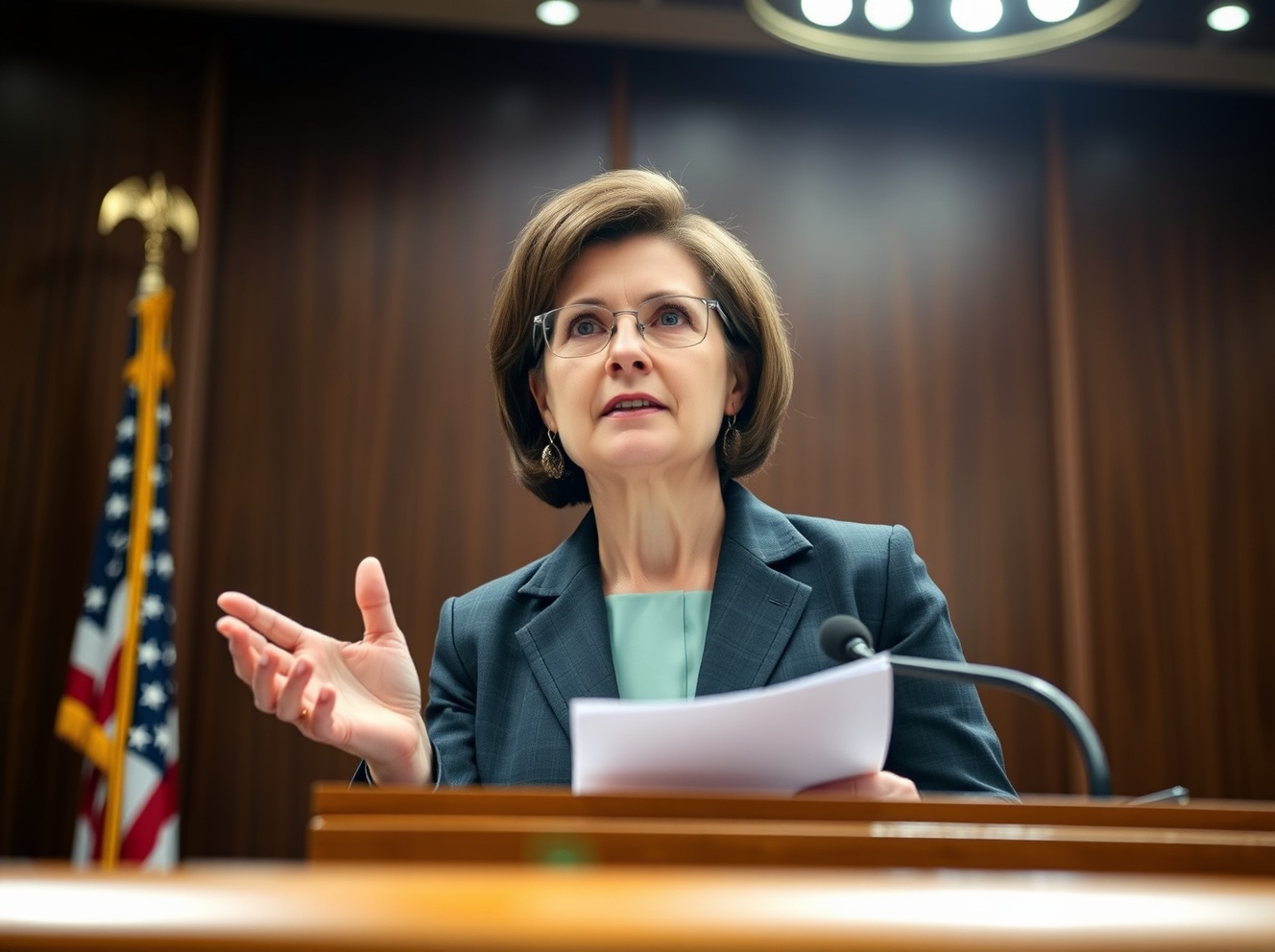
SEC Tokenization Regulation: Commissioner Peirce’s Revolutionary Call for Market Freedom
WASHINGTON, D.C. – March 2025: In a significant development for financial technology, U.S. Securities and Exchange Commission Commissioner Hester Peirce has delivered a compelling argument for reducing regulatory intervention in the rapidly evolving tokenization market. The commissioner, widely known as “Crypto Mom” for her supportive stance toward digital assets, recently urged fellow regulators to simplify disclosure procedures and reconsider complex existing rules. This position emerges as blockchain technology increasingly demonstrates its capacity to transform traditional securities settlement processes.
SEC Tokenization Regulation Faces Critical Reevaluation
Commissioner Peirce articulated her views during a recent financial technology conference, where she emphasized the transformative potential of tokenized securities. According to her analysis, blockchain-based assets inherently support more efficient settlement mechanisms compared to traditional systems. Consequently, she advocates for a regulatory framework that acknowledges these technological advantages rather than imposing legacy requirements. The SEC has previously mentioned exploring innovation exemptions for tokenized securities, which would selectively waive certain rules under specific conditions. This regulatory flexibility could accelerate market adoption while maintaining necessary investor protections.
Tokenization represents the process of converting rights to an asset into a digital token on a blockchain. Financial institutions globally have increasingly experimented with this technology for various assets, including real estate, commodities, and traditional securities. The primary benefits include fractional ownership, increased liquidity, and reduced settlement times. However, regulatory uncertainty has consistently hampered broader implementation. Commissioner Peirce’s comments directly address this barrier by proposing a more adaptive regulatory approach.
Historical Context of SEC’s Digital Asset Approach
The Securities and Exchange Commission has maintained a cautious stance toward digital assets for nearly a decade. Initially, the commission focused primarily on initial coin offerings (ICOs) during the 2017-2018 cryptocurrency boom. Subsequently, enforcement actions established precedents regarding which digital assets qualify as securities under the Howey Test. Meanwhile, Commissioner Peirce has consistently advocated for clearer guidelines and innovation-friendly policies since her appointment in 2018. Her dissenting opinions on several SEC decisions have earned her recognition within the cryptocurrency community.
Recent years have witnessed growing institutional interest in tokenization. Major financial firms like JPMorgan, Goldman Sachs, and BlackRock have launched blockchain-based platforms for asset tokenization. These developments create pressure for regulatory clarity. The SEC’s potential innovation exemption represents a possible middle ground between strict securities regulations and technological innovation. This exemption would function similarly to existing regulatory sandboxes but specifically tailored for tokenized securities.
Comparative Analysis: Traditional vs. Tokenized Securities Settlement
| Aspect | Traditional Settlement | Tokenized Settlement |
|---|---|---|
| Time Frame | T+2 business days | Near-instantaneous |
| Intermediaries | Multiple clearinghouses | Direct peer-to-peer |
| Cost Structure | Higher operational costs | Reduced middleman fees |
| Transparency | Limited audit trails | Immutable public ledger |
| Global Access | Geographic restrictions | Borderless transactions |
This comparative analysis illustrates why Commissioner Peirce emphasizes regulatory adaptation. Tokenized securities fundamentally alter market infrastructure, potentially rendering some traditional regulations obsolete or counterproductive. For instance, settlement risk decreases significantly with blockchain technology, which might justify modified capital requirements for market participants.
Global Regulatory Landscape for Tokenized Assets
International regulators have adopted diverse approaches to tokenization, creating a complex global patchwork. The European Union’s Markets in Crypto-Assets (MiCA) regulation establishes comprehensive rules for digital assets, including specific provisions for asset-referenced tokens and e-money tokens. Meanwhile, Singapore’s Monetary Authority has implemented a progressive regulatory sandbox allowing controlled experimentation with tokenized securities. Switzerland’s Financial Market Supervisory Authority (FINMA) has developed clear guidelines distinguishing payment tokens from asset tokens.
In contrast, the United States maintains a fragmented regulatory approach with multiple agencies claiming jurisdiction. The SEC focuses on securities aspects, while the Commodity Futures Trading Commission oversees commodity tokens. This regulatory overlap creates compliance challenges for market participants. Commissioner Peirce’s advocacy for simplified disclosure procedures addresses this complexity directly. Her proposal aligns with broader industry calls for regulatory harmonization both domestically and internationally.
Expert Perspectives on Regulatory Innovation
Financial technology experts generally welcome Commissioner Peirce’s proposals while emphasizing the need for balanced implementation. Dr. Sarah Johnson, a blockchain regulation scholar at Stanford University, notes that “regulatory frameworks must evolve alongside technological capabilities.” She further explains that traditional disclosure requirements designed for paper-based systems may not optimally serve blockchain environments where information can be programmed directly into smart contracts.
Industry practitioners highlight practical benefits of regulatory adaptation. Michael Chen, CEO of a tokenization platform, states that “simplified disclosure procedures would reduce compliance costs by approximately 40% for emerging projects.” This cost reduction could democratize access to capital markets for smaller enterprises. However, consumer protection advocates caution against excessive deregulation, emphasizing the need to maintain robust investor safeguards even within innovative frameworks.
Potential Impacts on Financial Markets
Reduced regulatory intervention in tokenization could produce several significant market effects. Firstly, increased adoption of blockchain settlement might enhance overall market efficiency. Secondly, simplified disclosure procedures could lower barriers to entry for new market participants. Thirdly, regulatory clarity might attract additional institutional investment into tokenized assets. These developments could collectively transform how traditional securities markets operate.
The SEC’s proposed innovation exemption warrants careful examination. This regulatory mechanism would allow qualified tokenized securities to operate under modified rules for a limited period. Key considerations include:
- Eligibility criteria for projects seeking exemption
- Duration limitations for experimental regulatory status
- Investor protection measures during exemption periods
- Reporting requirements for exempted projects
- <strongTransition pathways from exemption to full compliance
Market participants generally view such exemptions as positive developments. However, they emphasize the importance of predictable transition mechanisms to avoid regulatory uncertainty when exemptions expire.
Conclusion
Commissioner Hester Peirce’s advocacy for reduced regulatory intervention in tokenization represents a pivotal moment for financial technology regulation. Her arguments highlight the tension between innovative blockchain applications and traditional securities frameworks. As tokenized securities demonstrate increasingly efficient settlement capabilities, regulatory adaptation becomes increasingly necessary. The SEC’s exploration of innovation exemptions suggests potential middle ground between technological progress and investor protection. Ultimately, balanced regulatory approaches will determine how quickly tokenization transforms global capital markets while maintaining necessary safeguards for all participants.
FAQs
Q1: What is tokenization in financial markets?
Tokenization converts ownership rights to assets into digital tokens on a blockchain, enabling fractional ownership, increased liquidity, and faster settlement compared to traditional systems.
Q2: Why does Commissioner Peirce advocate for less regulation?
She believes existing complex regulations don’t account for blockchain’s efficiency benefits and that simplified rules could accelerate innovation while maintaining investor protections through adapted frameworks.
Q3: What is the SEC’s innovation exemption for tokenized securities?
This proposed mechanism would temporarily waive certain securities regulations for qualified tokenization projects, allowing controlled experimentation while gathering data for future regulatory development.
Q4: How do tokenized securities improve settlement efficiency?
Blockchain enables near-instantaneous settlement without multiple intermediaries, reducing costs and counterparty risk compared to traditional T+2 settlement systems.
Q5: What are the main challenges facing tokenization adoption?
Key challenges include regulatory uncertainty, interoperability between different blockchain systems, technological standardization, and institutional adoption barriers despite proven efficiency benefits.
This post SEC Tokenization Regulation: Commissioner Peirce’s Revolutionary Call for Market Freedom first appeared on BitcoinWorld.


You May Also Like

Iran’s foreign minister targeted in assassination attempt, wife killed

Why Binance Believes RWAs Are Crypto’s Next Trillion-Dollar Opportunity




