BitcoinWorld Chainlink ETF: Bitwise Files Crucial S-1 Application with SEC The cryptocurrency world is buzzing with significant news as Bitwise, a prominent crypto asset manager, has officially filed an S-1 application for a Chainlink ETF with the U.S. Securities and Exchange Commission (SEC). This pivotal development, initially reported by BWE News, marks a crucial step in the ongoing mainstream integration of digital assets. For many in the crypto community, this move signifies growing institutional interest and potential new avenues for investors to gain exposure to the Chainlink network. What Does This Chainlink ETF Filing Mean? When Bitwise filed its S-1 application, it signaled a formal intent to launch a Chainlink ETF. An S-1 is essentially a registration statement required by the SEC for U.S. companies planning to offer securities to the public. In this context, it details the structure, investment objectives, risks, and operational procedures of the proposed exchange-traded fund. Bitwise’s Role: As a well-respected crypto asset manager, Bitwise has a history of pioneering digital asset investment products. Their move to introduce a Chainlink ETF highlights their belief in Chainlink’s long-term potential. Chainlink (LINK): Chainlink is a decentralized oracle network that connects smart contracts with real-world data and off-chain computations. Its LINK token is vital for paying for these oracle services. ETF Structure: A Chainlink ETF would allow traditional investors to gain exposure to LINK’s price movements without directly buying and holding the cryptocurrency. This simplifies access and often provides a regulated investment vehicle. Why is a Chainlink ETF So Significant? The potential approval of a Chainlink ETF carries immense significance for the broader crypto market and Chainlink specifically. It represents a bridge between traditional finance and the decentralized world, opening doors for a new wave of capital. Here’s why this development is attracting so much attention: Increased Institutional Access: ETFs are familiar investment vehicles for institutional investors, pension funds, and wealth managers. A Chainlink ETF would provide a regulated, liquid, and easily accessible way for these entities to invest in LINK. Market Legitimacy and Trust: SEC approval would lend significant credibility to Chainlink as an asset class. It suggests that regulators are becoming more comfortable with digital assets, potentially paving the way for further crypto product approvals. Potential Price Impact: Increased demand from institutional investors could positively impact LINK’s price. As more capital flows into the market through an ETF, the underlying asset often sees appreciation. Simplified Investment: Retail investors who might be hesitant to navigate crypto exchanges can invest in a Chainlink ETF through their traditional brokerage accounts, making participation much simpler. Navigating the Regulatory Path for a Chainlink ETF While the filing is a positive step, the path to a fully approved Chainlink ETF is not without its challenges. The SEC has historically been cautious regarding cryptocurrency-related investment products, citing concerns about market manipulation, investor protection, and custody. The SEC’s review process is rigorous and involves several stages: Initial Review: The SEC staff examines the S-1 application for completeness and compliance with securities laws. Public Comment Period: The public, including industry experts and concerned citizens, can submit comments on the proposed ETF. Amendments and Resubmissions: Bitwise may need to amend its S-1 multiple times based on SEC feedback and market developments. Final Decision: The SEC will ultimately approve, disapprove, or delay the application. Previous Bitcoin spot ETF applications faced numerous rejections before recent approvals, indicating the SEC’s meticulous approach. This history underscores the importance of a well-structured application and ongoing dialogue with regulators for a Chainlink ETF. What Happens After a Chainlink ETF Filing? The filing of the S-1 application is just the beginning of a potentially lengthy process. Investors and market observers will now closely watch the SEC’s response and any subsequent updates from Bitwise. Key things to look out for include: SEC Communications: The SEC will issue notices regarding the application’s status, including requests for public comments or amendments. Market Reaction: The crypto market, particularly LINK holders, will likely react to each stage of the approval process. Competitive Landscape: Other asset managers might also consider filing for a Chainlink ETF or similar products, intensifying the race for first-mover advantage. Broader Crypto Sentiment: The outcome could influence the regulatory landscape for other altcoin ETFs, setting a precedent for future digital asset products. Bitwise’s S-1 filing for a Chainlink ETF represents a significant milestone in the evolution of cryptocurrency investment. While the journey to approval is complex and subject to regulatory scrutiny, this move highlights the increasing maturity and institutional acceptance of digital assets. It offers a tantalizing glimpse into a future where accessing innovative blockchain projects like Chainlink becomes as straightforward as investing in traditional stocks, potentially unlocking massive capital flows and solidifying crypto’s place in mainstream finance. The coming months will be crucial in determining the fate of this groundbreaking proposal. Frequently Asked Questions (FAQs) 1. What is an S-1 application in the context of a Chainlink ETF? An S-1 application is a registration statement required by the U.S. SEC for new securities offerings. For a Chainlink ETF, it details the fund’s structure, investment strategy, risks, and operational aspects, providing transparency for potential investors. 2. What is Chainlink (LINK) and why is it important? Chainlink is a decentralized oracle network that securely connects smart contracts on various blockchains with real-world data, events, and off-chain computations. Its importance lies in enabling smart contracts to interact with external data, making them more powerful and useful for real-world applications. 3. How does a Chainlink ETF benefit investors? A Chainlink ETF offers investors exposure to LINK’s price movements without the complexities of direct cryptocurrency ownership, such as setting up wallets or managing private keys. It provides a regulated and accessible investment vehicle through traditional brokerage accounts. 4. What are the next steps after Bitwise files for a Chainlink ETF? After filing, the SEC will review the S-1 application. This process involves staff evaluations, potential public comment periods, and requests for amendments from Bitwise. The SEC will eventually issue a decision to approve, deny, or delay the Chainlink ETF. 5. Has the SEC approved other crypto ETFs? Yes, the SEC has approved several Bitcoin futures ETFs and, more recently, a spot Bitcoin ETF. These approvals set precedents and indicate a potential shift in the SEC’s approach to cryptocurrency-related investment products, which could bode well for a Chainlink ETF. 6. What are the main challenges for a Chainlink ETF to get approved? Key challenges include addressing SEC concerns about market manipulation, ensuring adequate investor protection, and establishing robust custody solutions for the underlying LINK assets. The SEC’s historical caution with crypto products means thorough scrutiny is expected. If you found this article insightful, please share it with your network! Your support helps us bring more crucial crypto news and analysis to a wider audience. Join the conversation and spread the word about this significant development for the Chainlink ETF. To learn more about the latest crypto market trends, explore our article on key developments shaping Chainlink institutional adoption. This post Chainlink ETF: Bitwise Files Crucial S-1 Application with SEC first appeared on BitcoinWorld and is written by Editorial TeamBitcoinWorld Chainlink ETF: Bitwise Files Crucial S-1 Application with SEC The cryptocurrency world is buzzing with significant news as Bitwise, a prominent crypto asset manager, has officially filed an S-1 application for a Chainlink ETF with the U.S. Securities and Exchange Commission (SEC). This pivotal development, initially reported by BWE News, marks a crucial step in the ongoing mainstream integration of digital assets. For many in the crypto community, this move signifies growing institutional interest and potential new avenues for investors to gain exposure to the Chainlink network. What Does This Chainlink ETF Filing Mean? When Bitwise filed its S-1 application, it signaled a formal intent to launch a Chainlink ETF. An S-1 is essentially a registration statement required by the SEC for U.S. companies planning to offer securities to the public. In this context, it details the structure, investment objectives, risks, and operational procedures of the proposed exchange-traded fund. Bitwise’s Role: As a well-respected crypto asset manager, Bitwise has a history of pioneering digital asset investment products. Their move to introduce a Chainlink ETF highlights their belief in Chainlink’s long-term potential. Chainlink (LINK): Chainlink is a decentralized oracle network that connects smart contracts with real-world data and off-chain computations. Its LINK token is vital for paying for these oracle services. ETF Structure: A Chainlink ETF would allow traditional investors to gain exposure to LINK’s price movements without directly buying and holding the cryptocurrency. This simplifies access and often provides a regulated investment vehicle. Why is a Chainlink ETF So Significant? The potential approval of a Chainlink ETF carries immense significance for the broader crypto market and Chainlink specifically. It represents a bridge between traditional finance and the decentralized world, opening doors for a new wave of capital. Here’s why this development is attracting so much attention: Increased Institutional Access: ETFs are familiar investment vehicles for institutional investors, pension funds, and wealth managers. A Chainlink ETF would provide a regulated, liquid, and easily accessible way for these entities to invest in LINK. Market Legitimacy and Trust: SEC approval would lend significant credibility to Chainlink as an asset class. It suggests that regulators are becoming more comfortable with digital assets, potentially paving the way for further crypto product approvals. Potential Price Impact: Increased demand from institutional investors could positively impact LINK’s price. As more capital flows into the market through an ETF, the underlying asset often sees appreciation. Simplified Investment: Retail investors who might be hesitant to navigate crypto exchanges can invest in a Chainlink ETF through their traditional brokerage accounts, making participation much simpler. Navigating the Regulatory Path for a Chainlink ETF While the filing is a positive step, the path to a fully approved Chainlink ETF is not without its challenges. The SEC has historically been cautious regarding cryptocurrency-related investment products, citing concerns about market manipulation, investor protection, and custody. The SEC’s review process is rigorous and involves several stages: Initial Review: The SEC staff examines the S-1 application for completeness and compliance with securities laws. Public Comment Period: The public, including industry experts and concerned citizens, can submit comments on the proposed ETF. Amendments and Resubmissions: Bitwise may need to amend its S-1 multiple times based on SEC feedback and market developments. Final Decision: The SEC will ultimately approve, disapprove, or delay the application. Previous Bitcoin spot ETF applications faced numerous rejections before recent approvals, indicating the SEC’s meticulous approach. This history underscores the importance of a well-structured application and ongoing dialogue with regulators for a Chainlink ETF. What Happens After a Chainlink ETF Filing? The filing of the S-1 application is just the beginning of a potentially lengthy process. Investors and market observers will now closely watch the SEC’s response and any subsequent updates from Bitwise. Key things to look out for include: SEC Communications: The SEC will issue notices regarding the application’s status, including requests for public comments or amendments. Market Reaction: The crypto market, particularly LINK holders, will likely react to each stage of the approval process. Competitive Landscape: Other asset managers might also consider filing for a Chainlink ETF or similar products, intensifying the race for first-mover advantage. Broader Crypto Sentiment: The outcome could influence the regulatory landscape for other altcoin ETFs, setting a precedent for future digital asset products. Bitwise’s S-1 filing for a Chainlink ETF represents a significant milestone in the evolution of cryptocurrency investment. While the journey to approval is complex and subject to regulatory scrutiny, this move highlights the increasing maturity and institutional acceptance of digital assets. It offers a tantalizing glimpse into a future where accessing innovative blockchain projects like Chainlink becomes as straightforward as investing in traditional stocks, potentially unlocking massive capital flows and solidifying crypto’s place in mainstream finance. The coming months will be crucial in determining the fate of this groundbreaking proposal. Frequently Asked Questions (FAQs) 1. What is an S-1 application in the context of a Chainlink ETF? An S-1 application is a registration statement required by the U.S. SEC for new securities offerings. For a Chainlink ETF, it details the fund’s structure, investment strategy, risks, and operational aspects, providing transparency for potential investors. 2. What is Chainlink (LINK) and why is it important? Chainlink is a decentralized oracle network that securely connects smart contracts on various blockchains with real-world data, events, and off-chain computations. Its importance lies in enabling smart contracts to interact with external data, making them more powerful and useful for real-world applications. 3. How does a Chainlink ETF benefit investors? A Chainlink ETF offers investors exposure to LINK’s price movements without the complexities of direct cryptocurrency ownership, such as setting up wallets or managing private keys. It provides a regulated and accessible investment vehicle through traditional brokerage accounts. 4. What are the next steps after Bitwise files for a Chainlink ETF? After filing, the SEC will review the S-1 application. This process involves staff evaluations, potential public comment periods, and requests for amendments from Bitwise. The SEC will eventually issue a decision to approve, deny, or delay the Chainlink ETF. 5. Has the SEC approved other crypto ETFs? Yes, the SEC has approved several Bitcoin futures ETFs and, more recently, a spot Bitcoin ETF. These approvals set precedents and indicate a potential shift in the SEC’s approach to cryptocurrency-related investment products, which could bode well for a Chainlink ETF. 6. What are the main challenges for a Chainlink ETF to get approved? Key challenges include addressing SEC concerns about market manipulation, ensuring adequate investor protection, and establishing robust custody solutions for the underlying LINK assets. The SEC’s historical caution with crypto products means thorough scrutiny is expected. If you found this article insightful, please share it with your network! Your support helps us bring more crucial crypto news and analysis to a wider audience. Join the conversation and spread the word about this significant development for the Chainlink ETF. To learn more about the latest crypto market trends, explore our article on key developments shaping Chainlink institutional adoption. This post Chainlink ETF: Bitwise Files Crucial S-1 Application with SEC first appeared on BitcoinWorld and is written by Editorial Team


Chainlink ETF: Bitwise Files Crucial S-1 Application with SEC

6 min read

BitcoinWorld

Chainlink ETF: Bitwise Files Crucial S-1 Application with SEC

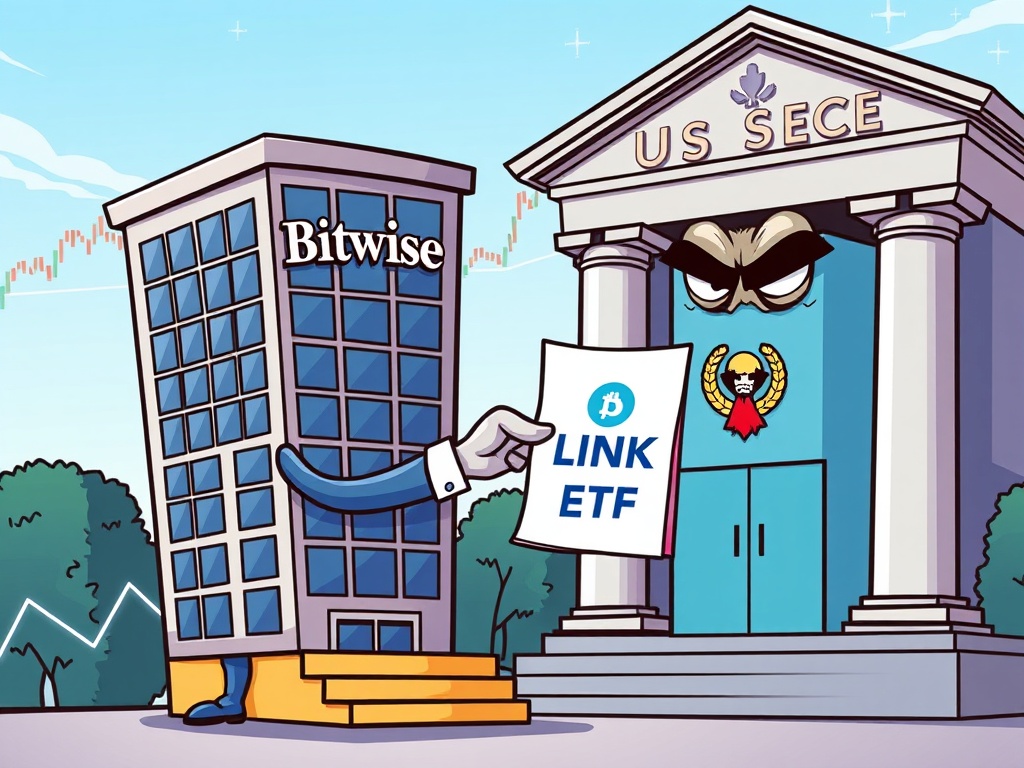
The cryptocurrency world is buzzing with significant news as Bitwise, a prominent crypto asset manager, has officially filed an S-1 application for a Chainlink ETF with the U.S. Securities and Exchange Commission (SEC). This pivotal development, initially reported by BWE News, marks a crucial step in the ongoing mainstream integration of digital assets. For many in the crypto community, this move signifies growing institutional interest and potential new avenues for investors to gain exposure to the Chainlink network.

When Bitwise filed its S-1 application, it signaled a formal intent to launch a Chainlink ETF. An S-1 is essentially a registration statement required by the SEC for U.S. companies planning to offer securities to the public. In this context, it details the structure, investment objectives, risks, and operational procedures of the proposed exchange-traded fund.

  • Bitwise’s Role: As a well-respected crypto asset manager, Bitwise has a history of pioneering digital asset investment products. Their move to introduce a Chainlink ETF highlights their belief in Chainlink’s long-term potential.
  • Chainlink (LINK): Chainlink is a decentralized oracle network that connects smart contracts with real-world data and off-chain computations. Its LINK token is vital for paying for these oracle services.
  • ETF Structure: A Chainlink ETF would allow traditional investors to gain exposure to LINK’s price movements without directly buying and holding the cryptocurrency. This simplifies access and often provides a regulated investment vehicle.

The potential approval of a Chainlink ETF carries immense significance for the broader crypto market and Chainlink specifically. It represents a bridge between traditional finance and the decentralized world, opening doors for a new wave of capital.

Here’s why this development is attracting so much attention:

  • Increased Institutional Access: ETFs are familiar investment vehicles for institutional investors, pension funds, and wealth managers. A Chainlink ETF would provide a regulated, liquid, and easily accessible way for these entities to invest in LINK.
  • Market Legitimacy and Trust: SEC approval would lend significant credibility to Chainlink as an asset class. It suggests that regulators are becoming more comfortable with digital assets, potentially paving the way for further crypto product approvals.
  • Potential Price Impact: Increased demand from institutional investors could positively impact LINK’s price. As more capital flows into the market through an ETF, the underlying asset often sees appreciation.
  • Simplified Investment: Retail investors who might be hesitant to navigate crypto exchanges can invest in a Chainlink ETF through their traditional brokerage accounts, making participation much simpler.

While the filing is a positive step, the path to a fully approved Chainlink ETF is not without its challenges. The SEC has historically been cautious regarding cryptocurrency-related investment products, citing concerns about market manipulation, investor protection, and custody.

The SEC’s review process is rigorous and involves several stages:

  1. Initial Review: The SEC staff examines the S-1 application for completeness and compliance with securities laws.
  2. Public Comment Period: The public, including industry experts and concerned citizens, can submit comments on the proposed ETF.
  3. Amendments and Resubmissions: Bitwise may need to amend its S-1 multiple times based on SEC feedback and market developments.
  4. Final Decision: The SEC will ultimately approve, disapprove, or delay the application.

Previous Bitcoin spot ETF applications faced numerous rejections before recent approvals, indicating the SEC’s meticulous approach. This history underscores the importance of a well-structured application and ongoing dialogue with regulators for a Chainlink ETF.

The filing of the S-1 application is just the beginning of a potentially lengthy process. Investors and market observers will now closely watch the SEC’s response and any subsequent updates from Bitwise.

Key things to look out for include:

  • SEC Communications: The SEC will issue notices regarding the application’s status, including requests for public comments or amendments.
  • Market Reaction: The crypto market, particularly LINK holders, will likely react to each stage of the approval process.
  • Competitive Landscape: Other asset managers might also consider filing for a Chainlink ETF or similar products, intensifying the race for first-mover advantage.
  • Broader Crypto Sentiment: The outcome could influence the regulatory landscape for other altcoin ETFs, setting a precedent for future digital asset products.

Bitwise’s S-1 filing for a Chainlink ETF represents a significant milestone in the evolution of cryptocurrency investment. While the journey to approval is complex and subject to regulatory scrutiny, this move highlights the increasing maturity and institutional acceptance of digital assets. It offers a tantalizing glimpse into a future where accessing innovative blockchain projects like Chainlink becomes as straightforward as investing in traditional stocks, potentially unlocking massive capital flows and solidifying crypto’s place in mainstream finance. The coming months will be crucial in determining the fate of this groundbreaking proposal.

Frequently Asked Questions (FAQs)

An S-1 application is a registration statement required by the U.S. SEC for new securities offerings. For a Chainlink ETF, it details the fund’s structure, investment strategy, risks, and operational aspects, providing transparency for potential investors.

Chainlink is a decentralized oracle network that securely connects smart contracts on various blockchains with real-world data, events, and off-chain computations. Its importance lies in enabling smart contracts to interact with external data, making them more powerful and useful for real-world applications.

A Chainlink ETF offers investors exposure to LINK’s price movements without the complexities of direct cryptocurrency ownership, such as setting up wallets or managing private keys. It provides a regulated and accessible investment vehicle through traditional brokerage accounts.

After filing, the SEC will review the S-1 application. This process involves staff evaluations, potential public comment periods, and requests for amendments from Bitwise. The SEC will eventually issue a decision to approve, deny, or delay the Chainlink ETF.

5. Has the SEC approved other crypto ETFs?

Yes, the SEC has approved several Bitcoin futures ETFs and, more recently, a spot Bitcoin ETF. These approvals set precedents and indicate a potential shift in the SEC’s approach to cryptocurrency-related investment products, which could bode well for a Chainlink ETF.

Key challenges include addressing SEC concerns about market manipulation, ensuring adequate investor protection, and establishing robust custody solutions for the underlying LINK assets. The SEC’s historical caution with crypto products means thorough scrutiny is expected.

If you found this article insightful, please share it with your network! Your support helps us bring more crucial crypto news and analysis to a wider audience. Join the conversation and spread the word about this significant development for the Chainlink ETF.

To learn more about the latest crypto market trends, explore our article on key developments shaping Chainlink institutional adoption.

This post Chainlink ETF: Bitwise Files Crucial S-1 Application with SEC first appeared on BitcoinWorld and is written by Editorial Team

Market Opportunity
RealLink Logo
RealLink Price(REAL)
$0.04775
$0.04775$0.04775
-5.27%
USD
RealLink (REAL) Live Price Chart
Disclaimer: The articles reposted on this site are sourced from public platforms and are provided for informational purposes only. They do not necessarily reflect the views of MEXC. All rights remain with the original authors. If you believe any content infringes on third-party rights, please contact service@support.mexc.com for removal. MEXC makes no guarantees regarding the accuracy, completeness, or timeliness of the content and is not responsible for any actions taken based on the information provided. The content does not constitute financial, legal, or other professional advice, nor should it be considered a recommendation or endorsement by MEXC.

You May Also Like

Botanix launches stBTC to deliver Bitcoin-native yield

Botanix launches stBTC to deliver Bitcoin-native yield

The post Botanix launches stBTC to deliver Bitcoin-native yield appeared on BitcoinEthereumNews.com. Botanix Labs has launched stBTC, a liquid staking token designed to turn Bitcoin into a yield-bearing asset by redistributing network gas fees directly to users. The protocol will begin yield accrual later this week, with its Genesis Vault scheduled to open on Sept. 25, capped at 50 BTC. The initiative marks one of the first attempts to generate Bitcoin-native yield without relying on inflationary token models or centralized custodians. stBTC works by allowing users to deposit Bitcoin into Botanix’s permissionless smart contract, receiving stBTC tokens that represent their share of the staking vault. As transactions occur, 50% of Botanix network gas fees, paid in BTC, flow back to stBTC holders. Over time, the value of stBTC increases relative to BTC, enabling users to redeem their original deposit plus yield. Botanix estimates early returns could reach 20–50% annually before stabilizing around 6–8%, a level similar to Ethereum staking but fully denominated in Bitcoin. Botanix says that security audits have been completed by Spearbit and Sigma Prime, and the protocol is built on the EIP-4626 vault standard, which also underpins Ethereum-based staking products. The company’s Spiderchain architecture, operated by 16 independent entities including Galaxy, Alchemy, and Fireblocks, secures the network. If adoption grows, Botanix argues the system could make Bitcoin a productive, composable asset for decentralized finance, while reinforcing network consensus. This is a developing story. This article was generated with the assistance of AI and reviewed by editor Jeffrey Albus before publication. Get the news in your inbox. Explore Blockworks newsletters: Source: https://blockworks.co/news/botanix-launches-stbtc
Share
BitcoinEthereumNews2025/09/18 02:37
PBOC sets USD/CNY reference rate at 6.9590 vs. 6.9570 previous

PBOC sets USD/CNY reference rate at 6.9590 vs. 6.9570 previous

The post PBOC sets USD/CNY reference rate at 6.9590 vs. 6.9570 previous appeared on BitcoinEthereumNews.com. On Friday, the People’s Bank of China (PBOC) sets the
Share
BitcoinEthereumNews2026/02/06 09:28
UK and US Seal $42 Billion Tech Pact Driving AI and Energy Future

UK and US Seal $42 Billion Tech Pact Driving AI and Energy Future

The post UK and US Seal $42 Billion Tech Pact Driving AI and Energy Future appeared on BitcoinEthereumNews.com. Key Highlights Microsoft and Google pledge billions as part of UK US tech partnership Nvidia to deploy 120,000 GPUs with British firm Nscale in Project Stargate Deal positions UK as an innovation hub rivaling global tech powers UK and US Seal $42 Billion Tech Pact Driving AI and Energy Future The UK and the US have signed a “Technological Prosperity Agreement” that paves the way for joint projects in artificial intelligence, quantum computing, and nuclear energy, according to Reuters. Donald Trump and King Charles review the guard of honour at Windsor Castle, 17 September 2025. Image: Kirsty Wigglesworth/Reuters The agreement was unveiled ahead of U.S. President Donald Trump’s second state visit to the UK, marking a historic moment in transatlantic technology cooperation. Billions Flow Into the UK Tech Sector As part of the deal, major American corporations pledged to invest $42 billion in the UK. Microsoft leads with a $30 billion investment to expand cloud and AI infrastructure, including the construction of a new supercomputer in Loughton. Nvidia will deploy 120,000 GPUs, including up to 60,000 Grace Blackwell Ultra chips—in partnership with the British company Nscale as part of Project Stargate. Google is contributing $6.8 billion to build a data center in Waltham Cross and expand DeepMind research. Other companies are joining as well. CoreWeave announced a $3.4 billion investment in data centers, while Salesforce, Scale AI, BlackRock, Oracle, and AWS confirmed additional investments ranging from hundreds of millions to several billion dollars. UK Positions Itself as a Global Innovation Hub British Prime Minister Keir Starmer said the deal could impact millions of lives across the Atlantic. He stressed that the UK aims to position itself as an investment hub with lighter regulations than the European Union. Nvidia spokesman David Hogan noted the significance of the agreement, saying it would…
Share
BitcoinEthereumNews2025/09/18 02:22