BitcoinWorld Massive ETH Reserves: 69 Firms Accumulate Over 4.1 Million Ethereum The cryptocurrency world is buzzing with fascinating developments, and recent data has unveiled a significant trend: a massive accumulation of ETH reserves by a select group of firms. This phenomenon signals growing institutional confidence in Ethereum’s long-term potential, prompting a closer look at who is holding what and why these holdings matter for the broader market. Understanding the Surge in ETH Reserves by Firms According to data from Strategic ETH Reserve, a notable group of 69 firms has formalized their Ethereum accumulation strategies. Their combined ETH reserves have now surpassed an impressive 4.1 million ETH. This figure translates to approximately $19.43 billion at current valuations, highlighting a substantial investment. These holdings represent roughly 3.39% of the total Ethereum supply. It’s clear that these entities see significant value in Ethereum’s future. Several key players lead this accumulation: Bitmine: Holds a staggering 1.5 million ETH. SharpLink Gaming: Possesses 740,000 ETH. The Ether Machine: Accounts for 345,000 ETH. Such substantial individual holdings underscore a strategic, long-term outlook from these firms. How Do ETH Spot ETF Holdings Compare? Beyond individual firms, another major player in the Ethereum ecosystem is the collective of ETH spot ETF issuers. These entities offer investment vehicles that track Ethereum’s price, making it easier for traditional investors to gain exposure without directly owning the asset. Currently, ETH spot ETF issuers collectively hold about 6.5 million ETH. This represents a value of approximately $30.81 billion. Their holdings account for an even larger share of the total ETH supply, standing at 5.38%. When we compare these figures, it’s evident that both direct firm accumulation and ETF-driven holdings are contributing significantly to the overall institutional footprint in Ethereum. The growing presence of these large-scale holders profoundly impacts market dynamics. Implications of Growing ETH Reserves for the Ethereum Ecosystem The increasing concentration of ETH reserves in the hands of firms and ETFs carries several key implications for the Ethereum network and its community. First, it demonstrates a strong belief in Ethereum’s underlying technology and its future as a decentralized global computing platform. Moreover, these substantial holdings can contribute to market stability. Large institutional investors often have longer investment horizons compared to retail traders, potentially reducing short-term volatility. The continued accumulation suggests that these firms view Ethereum as a critical asset for the long haul. Key Takeaways: Enhanced Legitimacy: Institutional involvement boosts Ethereum’s credibility in traditional finance. Supply Dynamics: A significant portion of ETH being held off the market could impact available supply for trading. Network Security: If these holdings are staked, they directly contribute to the security and decentralization of the Ethereum blockchain. What Challenges and Opportunities Arise from Concentrated ETH Reserves? While the growth in ETH reserves by firms signals strong confidence, it also presents both challenges and opportunities. One potential challenge is the risk of centralization. If too much ETH is controlled by a few large entities, it could raise concerns about market manipulation or undue influence on governance decisions, although Ethereum’s decentralized nature helps mitigate this. However, the opportunities are equally compelling. Increased institutional adoption often leads to greater liquidity and more sophisticated financial products built around Ethereum. This can attract a broader range of investors and further integrate Ethereum into the global financial system. Opportunities include: Development of new financial instruments. Increased mainstream awareness and acceptance. Potential for further capital inflows as more institutions enter the space. The Future of Ethereum Holdings The data clearly shows a powerful trend: the accumulation of ETH reserves by both individual firms and through investment vehicles like spot ETFs is accelerating. This growing institutional footprint solidifies Ethereum’s position as a foundational asset in the digital economy. As these holdings continue to expand, they are likely to shape Ethereum’s price action, market stability, and overall trajectory for years to come, signaling a robust and maturing ecosystem. Frequently Asked Questions (FAQs) What are ETH reserves in the context of this article? In this article, ETH reserves refer to the total amount of Ethereum (ETH) cryptocurrency held by specific firms and institutional entities, including those issuing ETH spot ETFs. These are strategic holdings, often accumulated for long-term investment or operational purposes. Why are firms accumulating such large ETH reserves? Firms accumulate ETH reserves for various reasons, including a long-term belief in Ethereum’s technology and its potential for future growth, participation in decentralized finance (DeFi), staking for network security, or to offer exposure to clients through investment products like ETFs. How do firm holdings differ from ETH spot ETF holdings? Firm holdings typically refer to direct ownership of ETH by private companies for their balance sheets or specific projects. ETH spot ETF holdings, on the other hand, are Ethereum held by regulated financial institutions that issue exchange-traded funds, allowing traditional investors to gain exposure to ETH’s price without directly managing the crypto asset. What impact do these large ETH reserves have on Ethereum’s price? Large ETH reserves held by institutions can have several impacts. They can reduce the circulating supply available on exchanges, potentially leading to price appreciation if demand remains strong. They also signal institutional confidence, which can attract more investors and contribute to market stability over time. Is the concentration of ETH reserves by a few entities a concern? While any concentration of assets can raise concerns about centralization, Ethereum’s design, particularly with its move to Proof-of-Stake and ongoing decentralization efforts, aims to mitigate these risks. The widespread distribution among various firms and ETF issuers, rather than a single entity, also helps to diversify control. Share This Insightful Analysis! Found this deep dive into institutional ETH reserves enlightening? Share this article with your network on social media to spread awareness about the growing institutional interest in Ethereum and its potential impact on the crypto market! To learn more about the latest Ethereum trends, explore our article on key developments shaping Ethereum institutional adoption. This post Massive ETH Reserves: 69 Firms Accumulate Over 4.1 Million Ethereum first appeared on BitcoinWorld and is written by Editorial TeamBitcoinWorld Massive ETH Reserves: 69 Firms Accumulate Over 4.1 Million Ethereum The cryptocurrency world is buzzing with fascinating developments, and recent data has unveiled a significant trend: a massive accumulation of ETH reserves by a select group of firms. This phenomenon signals growing institutional confidence in Ethereum’s long-term potential, prompting a closer look at who is holding what and why these holdings matter for the broader market. Understanding the Surge in ETH Reserves by Firms According to data from Strategic ETH Reserve, a notable group of 69 firms has formalized their Ethereum accumulation strategies. Their combined ETH reserves have now surpassed an impressive 4.1 million ETH. This figure translates to approximately $19.43 billion at current valuations, highlighting a substantial investment. These holdings represent roughly 3.39% of the total Ethereum supply. It’s clear that these entities see significant value in Ethereum’s future. Several key players lead this accumulation: Bitmine: Holds a staggering 1.5 million ETH. SharpLink Gaming: Possesses 740,000 ETH. The Ether Machine: Accounts for 345,000 ETH. Such substantial individual holdings underscore a strategic, long-term outlook from these firms. How Do ETH Spot ETF Holdings Compare? Beyond individual firms, another major player in the Ethereum ecosystem is the collective of ETH spot ETF issuers. These entities offer investment vehicles that track Ethereum’s price, making it easier for traditional investors to gain exposure without directly owning the asset. Currently, ETH spot ETF issuers collectively hold about 6.5 million ETH. This represents a value of approximately $30.81 billion. Their holdings account for an even larger share of the total ETH supply, standing at 5.38%. When we compare these figures, it’s evident that both direct firm accumulation and ETF-driven holdings are contributing significantly to the overall institutional footprint in Ethereum. The growing presence of these large-scale holders profoundly impacts market dynamics. Implications of Growing ETH Reserves for the Ethereum Ecosystem The increasing concentration of ETH reserves in the hands of firms and ETFs carries several key implications for the Ethereum network and its community. First, it demonstrates a strong belief in Ethereum’s underlying technology and its future as a decentralized global computing platform. Moreover, these substantial holdings can contribute to market stability. Large institutional investors often have longer investment horizons compared to retail traders, potentially reducing short-term volatility. The continued accumulation suggests that these firms view Ethereum as a critical asset for the long haul. Key Takeaways: Enhanced Legitimacy: Institutional involvement boosts Ethereum’s credibility in traditional finance. Supply Dynamics: A significant portion of ETH being held off the market could impact available supply for trading. Network Security: If these holdings are staked, they directly contribute to the security and decentralization of the Ethereum blockchain. What Challenges and Opportunities Arise from Concentrated ETH Reserves? While the growth in ETH reserves by firms signals strong confidence, it also presents both challenges and opportunities. One potential challenge is the risk of centralization. If too much ETH is controlled by a few large entities, it could raise concerns about market manipulation or undue influence on governance decisions, although Ethereum’s decentralized nature helps mitigate this. However, the opportunities are equally compelling. Increased institutional adoption often leads to greater liquidity and more sophisticated financial products built around Ethereum. This can attract a broader range of investors and further integrate Ethereum into the global financial system. Opportunities include: Development of new financial instruments. Increased mainstream awareness and acceptance. Potential for further capital inflows as more institutions enter the space. The Future of Ethereum Holdings The data clearly shows a powerful trend: the accumulation of ETH reserves by both individual firms and through investment vehicles like spot ETFs is accelerating. This growing institutional footprint solidifies Ethereum’s position as a foundational asset in the digital economy. As these holdings continue to expand, they are likely to shape Ethereum’s price action, market stability, and overall trajectory for years to come, signaling a robust and maturing ecosystem. Frequently Asked Questions (FAQs) What are ETH reserves in the context of this article? In this article, ETH reserves refer to the total amount of Ethereum (ETH) cryptocurrency held by specific firms and institutional entities, including those issuing ETH spot ETFs. These are strategic holdings, often accumulated for long-term investment or operational purposes. Why are firms accumulating such large ETH reserves? Firms accumulate ETH reserves for various reasons, including a long-term belief in Ethereum’s technology and its potential for future growth, participation in decentralized finance (DeFi), staking for network security, or to offer exposure to clients through investment products like ETFs. How do firm holdings differ from ETH spot ETF holdings? Firm holdings typically refer to direct ownership of ETH by private companies for their balance sheets or specific projects. ETH spot ETF holdings, on the other hand, are Ethereum held by regulated financial institutions that issue exchange-traded funds, allowing traditional investors to gain exposure to ETH’s price without directly managing the crypto asset. What impact do these large ETH reserves have on Ethereum’s price? Large ETH reserves held by institutions can have several impacts. They can reduce the circulating supply available on exchanges, potentially leading to price appreciation if demand remains strong. They also signal institutional confidence, which can attract more investors and contribute to market stability over time. Is the concentration of ETH reserves by a few entities a concern? While any concentration of assets can raise concerns about centralization, Ethereum’s design, particularly with its move to Proof-of-Stake and ongoing decentralization efforts, aims to mitigate these risks. The widespread distribution among various firms and ETF issuers, rather than a single entity, also helps to diversify control. Share This Insightful Analysis! Found this deep dive into institutional ETH reserves enlightening? Share this article with your network on social media to spread awareness about the growing institutional interest in Ethereum and its potential impact on the crypto market! To learn more about the latest Ethereum trends, explore our article on key developments shaping Ethereum institutional adoption. This post Massive ETH Reserves: 69 Firms Accumulate Over 4.1 Million Ethereum first appeared on BitcoinWorld and is written by Editorial Team


Massive ETH Reserves: 69 Firms Accumulate Over 4.1 Million Ethereum

2025/08/23 14:25
5 min read
For feedback or concerns regarding this content, please contact us at crypto.news@mexc.com

BitcoinWorld

Massive ETH Reserves: 69 Firms Accumulate Over 4.1 Million Ethereum

The cryptocurrency world is buzzing with fascinating developments, and recent data has unveiled a significant trend: a massive accumulation of ETH reserves by a select group of firms. This phenomenon signals growing institutional confidence in Ethereum’s long-term potential, prompting a closer look at who is holding what and why these holdings matter for the broader market.

Understanding the Surge in ETH Reserves by Firms

According to data from Strategic ETH Reserve, a notable group of 69 firms has formalized their Ethereum accumulation strategies. Their combined ETH reserves have now surpassed an impressive 4.1 million ETH. This figure translates to approximately $19.43 billion at current valuations, highlighting a substantial investment.

These holdings represent roughly 3.39% of the total Ethereum supply. It’s clear that these entities see significant value in Ethereum’s future. Several key players lead this accumulation:

  • Bitmine: Holds a staggering 1.5 million ETH.
  • SharpLink Gaming: Possesses 740,000 ETH.
  • The Ether Machine: Accounts for 345,000 ETH.

Such substantial individual holdings underscore a strategic, long-term outlook from these firms.

How Do ETH Spot ETF Holdings Compare?

Beyond individual firms, another major player in the Ethereum ecosystem is the collective of ETH spot ETF issuers. These entities offer investment vehicles that track Ethereum’s price, making it easier for traditional investors to gain exposure without directly owning the asset.

Currently, ETH spot ETF issuers collectively hold about 6.5 million ETH. This represents a value of approximately $30.81 billion. Their holdings account for an even larger share of the total ETH supply, standing at 5.38%.

When we compare these figures, it’s evident that both direct firm accumulation and ETF-driven holdings are contributing significantly to the overall institutional footprint in Ethereum. The growing presence of these large-scale holders profoundly impacts market dynamics.

Implications of Growing ETH Reserves for the Ethereum Ecosystem

The increasing concentration of ETH reserves in the hands of firms and ETFs carries several key implications for the Ethereum network and its community. First, it demonstrates a strong belief in Ethereum’s underlying technology and its future as a decentralized global computing platform.

Moreover, these substantial holdings can contribute to market stability. Large institutional investors often have longer investment horizons compared to retail traders, potentially reducing short-term volatility. The continued accumulation suggests that these firms view Ethereum as a critical asset for the long haul.

Key Takeaways:

  • Enhanced Legitimacy: Institutional involvement boosts Ethereum’s credibility in traditional finance.
  • Supply Dynamics: A significant portion of ETH being held off the market could impact available supply for trading.
  • Network Security: If these holdings are staked, they directly contribute to the security and decentralization of the Ethereum blockchain.

What Challenges and Opportunities Arise from Concentrated ETH Reserves?

While the growth in ETH reserves by firms signals strong confidence, it also presents both challenges and opportunities. One potential challenge is the risk of centralization. If too much ETH is controlled by a few large entities, it could raise concerns about market manipulation or undue influence on governance decisions, although Ethereum’s decentralized nature helps mitigate this.

However, the opportunities are equally compelling. Increased institutional adoption often leads to greater liquidity and more sophisticated financial products built around Ethereum. This can attract a broader range of investors and further integrate Ethereum into the global financial system.

Opportunities include:

  • Development of new financial instruments.
  • Increased mainstream awareness and acceptance.
  • Potential for further capital inflows as more institutions enter the space.

The Future of Ethereum Holdings

The data clearly shows a powerful trend: the accumulation of ETH reserves by both individual firms and through investment vehicles like spot ETFs is accelerating. This growing institutional footprint solidifies Ethereum’s position as a foundational asset in the digital economy. As these holdings continue to expand, they are likely to shape Ethereum’s price action, market stability, and overall trajectory for years to come, signaling a robust and maturing ecosystem.

Frequently Asked Questions (FAQs)

What are ETH reserves in the context of this article?

In this article, ETH reserves refer to the total amount of Ethereum (ETH) cryptocurrency held by specific firms and institutional entities, including those issuing ETH spot ETFs. These are strategic holdings, often accumulated for long-term investment or operational purposes.

Why are firms accumulating such large ETH reserves?

Firms accumulate ETH reserves for various reasons, including a long-term belief in Ethereum’s technology and its potential for future growth, participation in decentralized finance (DeFi), staking for network security, or to offer exposure to clients through investment products like ETFs.

How do firm holdings differ from ETH spot ETF holdings?

Firm holdings typically refer to direct ownership of ETH by private companies for their balance sheets or specific projects. ETH spot ETF holdings, on the other hand, are Ethereum held by regulated financial institutions that issue exchange-traded funds, allowing traditional investors to gain exposure to ETH’s price without directly managing the crypto asset.

What impact do these large ETH reserves have on Ethereum’s price?

Large ETH reserves held by institutions can have several impacts. They can reduce the circulating supply available on exchanges, potentially leading to price appreciation if demand remains strong. They also signal institutional confidence, which can attract more investors and contribute to market stability over time.

Is the concentration of ETH reserves by a few entities a concern?

While any concentration of assets can raise concerns about centralization, Ethereum’s design, particularly with its move to Proof-of-Stake and ongoing decentralization efforts, aims to mitigate these risks. The widespread distribution among various firms and ETF issuers, rather than a single entity, also helps to diversify control.

Share This Insightful Analysis!

Found this deep dive into institutional ETH reserves enlightening? Share this article with your network on social media to spread awareness about the growing institutional interest in Ethereum and its potential impact on the crypto market!

To learn more about the latest Ethereum trends, explore our article on key developments shaping Ethereum institutional adoption.

This post Massive ETH Reserves: 69 Firms Accumulate Over 4.1 Million Ethereum first appeared on BitcoinWorld and is written by Editorial Team

Market Opportunity
Brainedge Logo
Brainedge Price(LEARN)
$0.006658
$0.006658$0.006658
-2.07%
USD
Brainedge (LEARN) Live Price Chart
Disclaimer: The articles reposted on this site are sourced from public platforms and are provided for informational purposes only. They do not necessarily reflect the views of MEXC. All rights remain with the original authors. If you believe any content infringes on third-party rights, please contact crypto.news@mexc.com for removal. MEXC makes no guarantees regarding the accuracy, completeness, or timeliness of the content and is not responsible for any actions taken based on the information provided. The content does not constitute financial, legal, or other professional advice, nor should it be considered a recommendation or endorsement by MEXC.

You May Also Like

Edges higher ahead of BoC-Fed policy outcome

Edges higher ahead of BoC-Fed policy outcome

The post Edges higher ahead of BoC-Fed policy outcome appeared on BitcoinEthereumNews.com. USD/CAD gains marginally to near 1.3760 ahead of monetary policy announcements by the Fed and the BoC. Both the Fed and the BoC are expected to lower interest rates. USD/CAD forms a Head and Shoulder chart pattern. The USD/CAD pair ticks up to near 1.3760 during the late European session on Wednesday. The Loonie pair gains marginally ahead of monetary policy outcomes by the Bank of Canada (BoC) and the Federal Reserve (Fed) during New York trading hours. Both the BoC and the Fed are expected to cut interest rates amid mounting labor market conditions in their respective economies. Inflationary pressures in the Canadian economy have cooled down, emerging as another reason behind the BoC’s dovish expectations. However, the Fed is expected to start the monetary-easing campaign despite the United States (US) inflation remaining higher. Investors will closely monitor press conferences from both Fed Chair Jerome Powell and BoC Governor Tiff Macklem to get cues about whether there will be more interest rate cuts in the remainder of the year. According to analysts from Barclays, the Fed’s latest median projections for interest rates are likely to call for three interest rate cuts by 2025. Ahead of the Fed’s monetary policy, the US Dollar Index (DXY), which tracks the Greenback’s value against six major currencies, holds onto Tuesday’s losses near 96.60. USD/CAD forms a Head and Shoulder chart pattern, which indicates a bearish reversal. The neckline of the above-mentioned chart pattern is plotted near 1.3715. The near-term trend of the pair remains bearish as it stays below the 20-day Exponential Moving Average (EMA), which trades around 1.3800. The 14-day Relative Strength Index (RSI) slides to near 40.00. A fresh bearish momentum would emerge if the RSI falls below that level. Going forward, the asset could slide towards the round level of…
Share
BitcoinEthereumNews2025/09/18 01:23
Crypto Supercycle in 2025? DeepSeek Ranks the Best Altcoins to Buy Right Now
Crypto Supercycle in 2025? DeepSeek Ranks the Best Altcoins to Buy Right Now

The post Crypto Supercycle in 2025? DeepSeek Ranks the Best Altcoins to Buy Right Now appeared on BitcoinEthereumNews.com. Crypto Supercycle in 2025? DeepSeek Ranks the Best Altcoins to Buy Right Now Sign Up for Our Newsletter! For updates and exclusive offers enter your email. As a crypto writer, Krishi splits his time between decoding the chaos of the markets and writing about it in a way that doesn’t put you to sleep. He’s been at it for nearly two years in the crypto trenches. Yes, he regrets missing the magnificent rallies that came before that (who doesn’t!), but he’s more than ready to put his money where his words are. Before diving headfirst into crypto, Krishi spent over five years writing for some of the biggest names in tech, including TechRadar, Tom’s Guide, and PC Gaming, covering everything from gadgets and cybersecurity to gaming and software. When he’s not scouring and writing about the latest happenings in crypto, Krishi trades the forex market while keeping crypto in his long-term HODL plans. He’s a Bitcoin believer, though he never lets that bias creep into his writing. This website uses cookies. By continuing to use this website you are giving consent to cookies being used. Visit our Privacy Center or Cookie Policy. I Agree Source: https://bitcoinist.com/crypto-supercycle-2025-best-altcoins-to-buy-now-deepseek/


Share
BitcoinEthereumNews2025/09/18 01:45
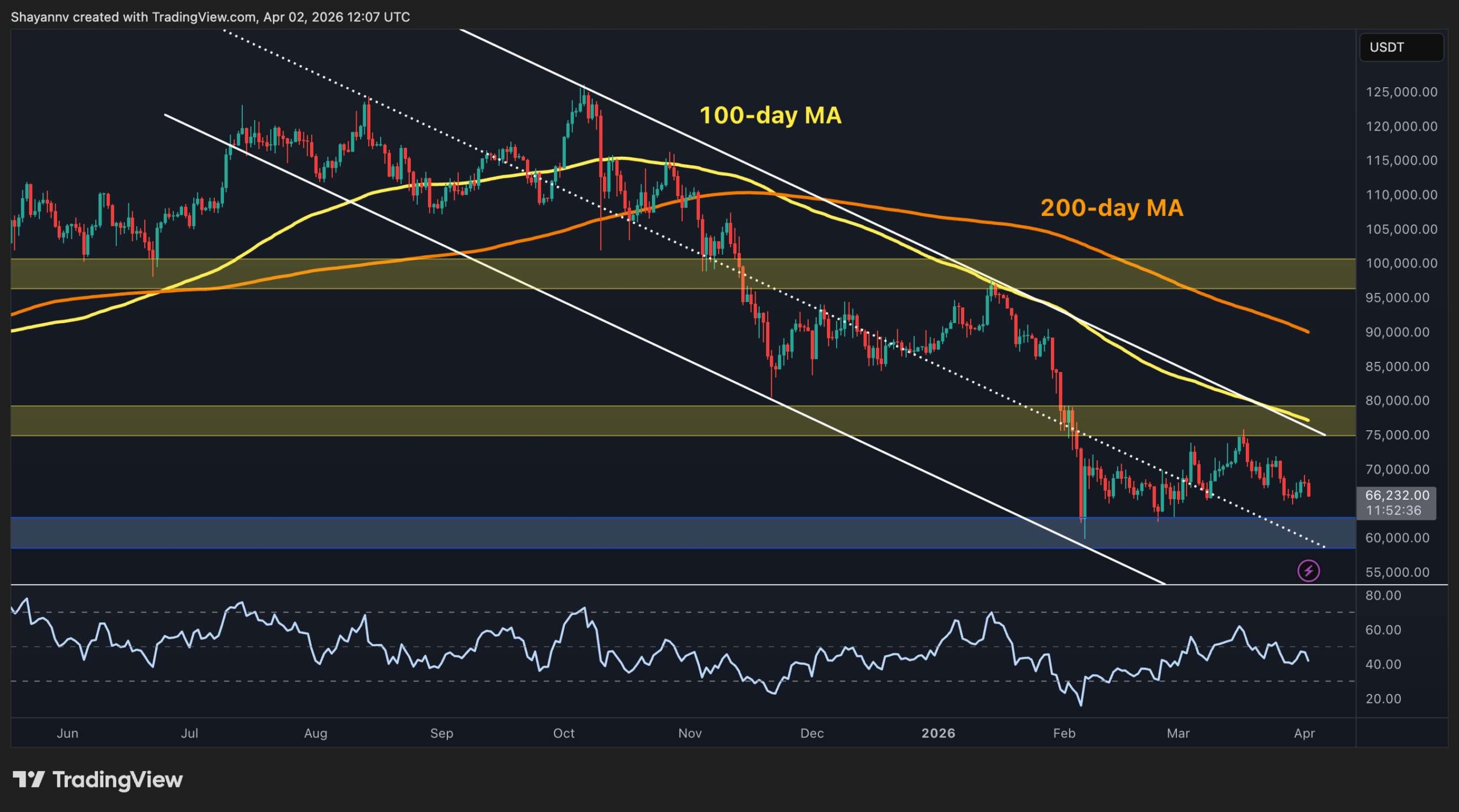
Bitcoin Price Analysis: What’s Next for BTC After Tanking to $66K?

Bitcoin Price Analysis: What’s Next for BTC After Tanking to $66K?

BTC has entered a phase of consolidation after a sharp decline from January highs near $100k. The price action shows that BTC has been respecting a broad ascending
Share
CryptoPotato2026/04/02 22:27

$30,000 in PRL + 15,000 USDT

$30,000 in PRL + 15,000 USDT$30,000 in PRL + 15,000 USDT

Deposit & trade PRL to boost your rewards!