The post UK Scraps Mandatory Digital ID Plans as Crypto Privacy Tech Gains Ground appeared on BitcoinEthereumNews.com. The United Kingdom’s Prime Minister Keir The post UK Scraps Mandatory Digital ID Plans as Crypto Privacy Tech Gains Ground appeared on BitcoinEthereumNews.com. The United Kingdom’s Prime Minister Keir

UK Scraps Mandatory Digital ID Plans as Crypto Privacy Tech Gains Ground

The United Kingdom’s Prime Minister Keir Starmer’s government has dropped plans to make a centralized digital ID mandatory for workers, softening a flagship policy that would have required every employee to prove their right to work via a government‑issued credential rather than traditional documents like passports. 

The move follows months of backlash from critics, including UK Member of Parliament Rupert Lowe, Reform UK Leader Nigel Farage and other cross‑party politicians, civil liberties groups and campaigners. 

Opponents warned it risked building an “Orwellian nightmare,” centralizing sensitive data in a honeypot vulnerable to hacking, and mission creep into areas such as housing, banking and voting.

Almost three million people signed a parliamentary petition opposing digital ID cards. Lowe celebrated the policy shift in a video on X, saying he was off for “a very large drink to celebrate the demise of mandatory Digital ID,” while Farage said it was “a victory for individual liberty against a ghastly, authoritarian government.”

Demise of the UK’s digital ID. Source: Rupert Lowe

​UK waters down mandatory digital ID after public backlash

Officials now say digital right‑to‑work checks will remain mandatory, but when the UK’s digital ID scheme is introduced around 2029, it will be offered on an optional basis alongside alternative electronic documentation, rather than being imposed as the only route to employment verification. 

Related: Digital ID, CBDCs risk turning US into ‘surveillance state,’ lawmaker says

That partial rollback highlights how public unease over tying basic rights like work to a single government‑run identifier is reshaping policy, echoing wider debates over central bank digital currencies (CBDCs) and the European Central Bank’s digital euro, where both civil society groups and some lawmakers have pushed for hard privacy guarantees rather than blanket traceability.

Digital euro and EU digital ID explore privacy‑preserving designs

As the UK softens its stance, the European Union is moving ahead with its own digital identity framework and digital euro plans, but has explored using zero‑knowledge proofs so citizens can prove attributes (such as age or residency) without exposing all underlying personal data.

These types of measures, along with decentralized identity technologies and privacy‑preserving tools on blockchains, such as zero‑knowledge credential systems and privacy‑enhancing smart contract designs, aim to reconcile compliance with data minimization, offering an alternative to centralized databases that store all user information in one place.

Related: Concordium debuts app for anonymous online age checks amid UK rules backlash

Crypto privacy tools rise as policymakers test onchain ID controls

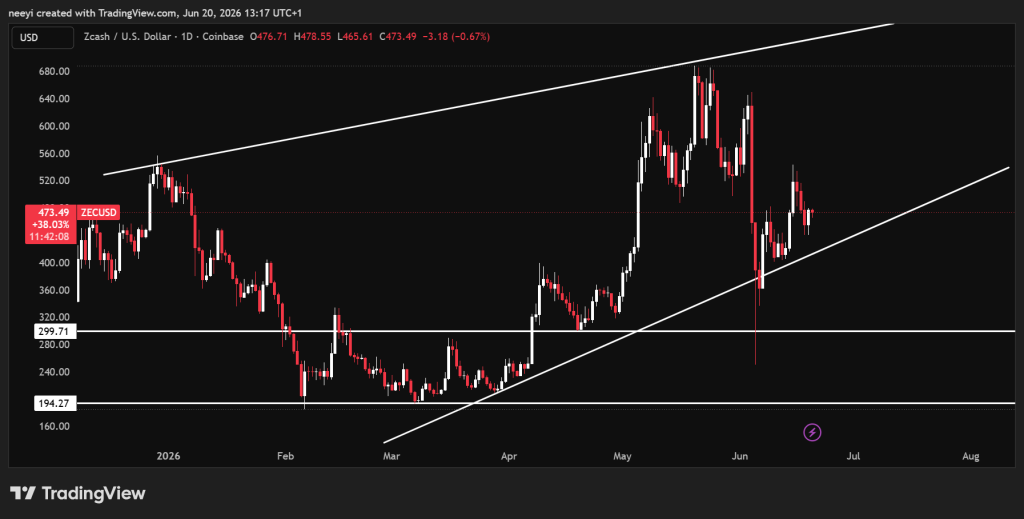
Against that backdrop, privacy‑focused crypto tools, from privacy coins like Zcash (ZEC) and Monero (XMR) to decentralized identity protocols, continue to attract attention from users worried about financial surveillance and data breaches, as regulators step up scrutiny and explore ways to embed identity checks into DeFi and self‑hosted wallets.

The US Treasury’s proposed DeFi ID framework and renewed interest in privacy tokens have shown that policymakers are actively testing ways to fold stronger Anti-Money Laundering and Know Your Customer controls into onchain infrastructure at the same time as builders push privacy‑preserving alternatives.

Cointelegraph is committed to independent, transparent journalism. This news article is produced in accordance with Cointelegraph’s Editorial Policy and aims to provide accurate and timely information. Readers are encouraged to verify information independently. Read our Editorial Policy https://cointelegraph.com/editorial-policy

Source: https://cointelegraph.com/news/uk-drops-mandatory-digital-id-right-to-work-2029-optional?utm_source=rss_feed&utm_medium=feed&utm_campaign=rss_partner_inbound


Market Opportunity
SPACE ID Logo
SPACE ID Price(ID)
$0.07279
$0.07279$0.07279
-4.91%
USD
SPACE ID (ID) Live Price Chart
Disclaimer: The articles reposted on this site are sourced from public platforms and are provided for informational purposes only. They do not necessarily reflect the views of MEXC. All rights remain with the original authors. If you believe any content infringes on third-party rights, please contact service@support.mexc.com for removal. MEXC makes no guarantees regarding the accuracy, completeness, or timeliness of the content and is not responsible for any actions taken based on the information provided. The content does not constitute financial, legal, or other professional advice, nor should it be considered a recommendation or endorsement by MEXC.

You May Also Like

Crypto News: Donald Trump-Aligned Fed Governor To Speed Up Fed Rate Cuts?

Crypto News: Donald Trump-Aligned Fed Governor To Speed Up Fed Rate Cuts?

The post Crypto News: Donald Trump-Aligned Fed Governor To Speed Up Fed Rate Cuts? appeared on BitcoinEthereumNews.com. In recent crypto news, Stephen Miran swore in as the latest Federal Reserve governor on September 16, 2025, slipping into the board’s last open spot right before the Federal Open Market Committee kicks off its two-day rate discussion. Traders are betting heavily on a 25-basis-point trim, which would bring the federal funds rate down to 4.00%-4.25%, based on CME FedWatch Tool figures from September 15, 2025. Miran, who’s been Trump’s top economic advisor and a supporter of his trade ideas, joins a seven-member board where just three governors come from Democratic picks, according to the Fed’s records updated that same day. Crypto News: Miran’s Background and Quick Path to Confirmation The Senate greenlit Miran on September 15, 2025, with a tight 48-47 vote, following his nomination on September 2, 2025, as per a recent crypto news update. His stint runs only until January 31, 2026, stepping in for Adriana D. Kugler, who stepped down in August 2025 for reasons not made public. Miran earned his economics Ph.D. from Harvard and worked at the Treasury back in Trump’s first go-around. Afterward, he moved to Hudson Bay Capital Management as an economist, then looped back to the White House in December 2024 to head the Council of Economic Advisers. There, he helped craft Trump’s “reciprocal tariffs” approach, aimed at fixing trade gaps with China and the EU. He wouldn’t quit his White House gig, which irked Senator Elizabeth Warren at the September 7, 2025, confirmation hearings. That limited time frame means Miran gets to cast a vote straight away at the FOMC session starting September 16, 2025. The full board now features Chair Jerome H. Powell (Trump pick, term ends 2026), Vice Chair Philip N. Jefferson (Biden, to 2036), and folks like Lisa D. Cook (Biden, to 2028) and Michael S. Barr…
Share
BitcoinEthereumNews2025/09/18 03:14
What John Harbaugh And Mike Tomlin’s Departures Mean For NFL Coaching

What John Harbaugh And Mike Tomlin’s Departures Mean For NFL Coaching

The post What John Harbaugh And Mike Tomlin’s Departures Mean For NFL Coaching appeared on BitcoinEthereumNews.com. Baltimore Ravens head coach John Harbaugh (L
Share
BitcoinEthereumNews2026/01/15 10:56
Twitter founder's "weekend experiment": Bitchat encryption software becomes a "communication Noah's Ark"

Twitter founder's "weekend experiment": Bitchat encryption software becomes a "communication Noah's Ark"

Author: Nancy, PANews In the crypto world, both assets and technologies are gradually taking center stage with greater practical significance. In the past few months
Share
PANews2026/01/15 11:00