

South Korea’s Democratic Party to Consult Solana Policy Experts on Digital Asset Legislation
BitcoinWorld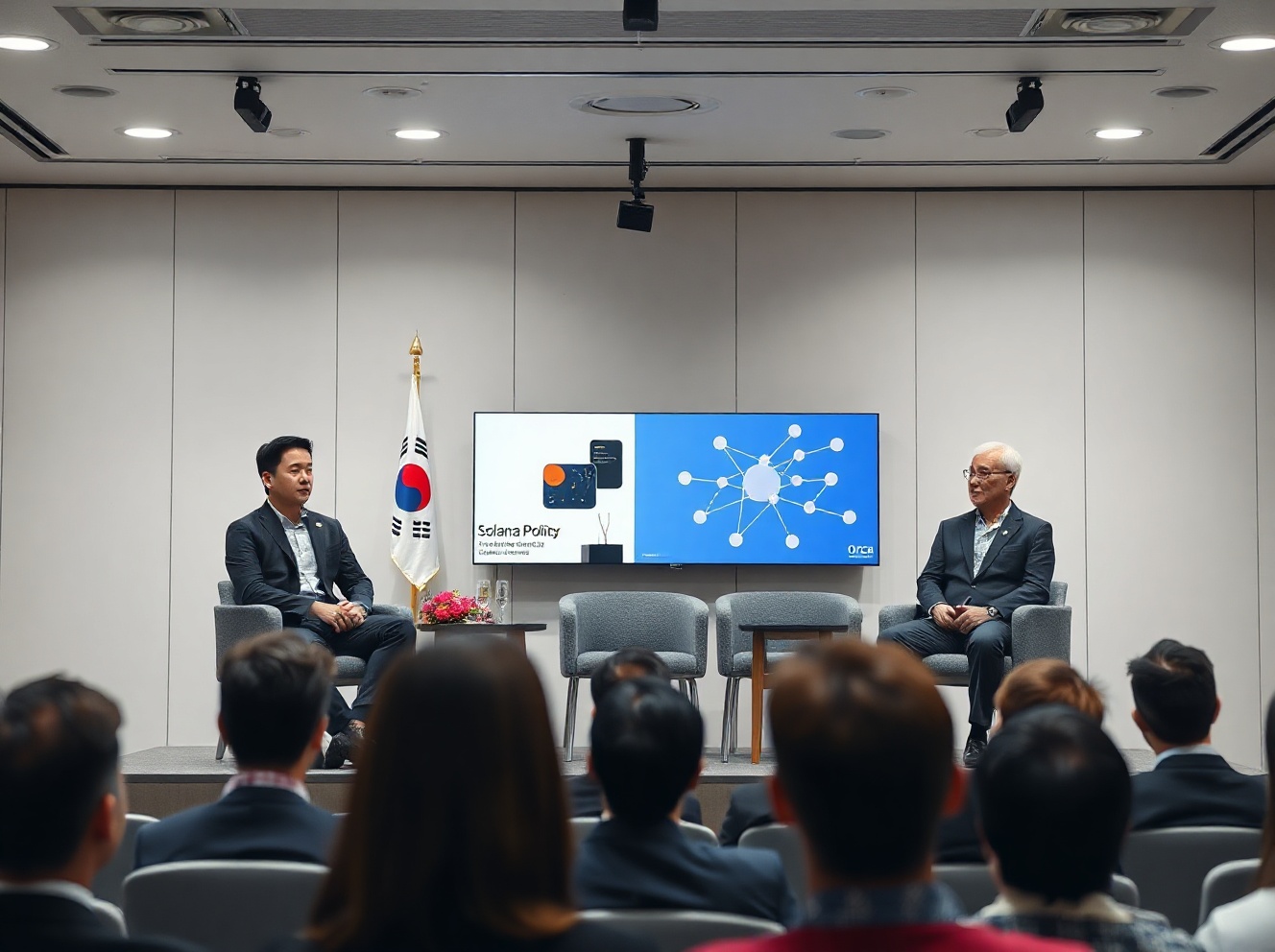
South Korea’s Democratic Party to Consult Solana Policy Experts on Digital Asset Legislation
South Korea’s Democratic Party is set to hold a closed-door seminar with representatives from the Solana ecosystem on June 22, as the party advances efforts to draft a foundational law for digital assets. The event, first reported by local media outlet Edaily, marks a notable intersection between domestic legislative processes and global blockchain policy expertise.
Key Participants and Agenda
The seminar will be hosted by Democratic Party lawmakers Ahn Do-geol and Lee Kang-il, both of whom have been active in shaping the party’s stance on cryptocurrency regulation. The Solana side will be represented by Miller Whitehouse-Levine, CEO of the Solana Policy Institute, and Chris Montanago, Chief Legal Officer of Orca, a decentralized exchange (DEX) built on the Solana blockchain.
The agenda is expected to focus on international regulatory trends, the technical and legal nuances of decentralized finance (DeFi), and potential frameworks for investor protection without stifling innovation. The Democratic Party intends to use the insights gathered to refine its proposed digital asset foundational law, which aims to provide a comprehensive legal structure for cryptocurrencies and blockchain projects operating in South Korea.
Why This Matters for South Korea’s Crypto Market
South Korea has long been a significant player in the global cryptocurrency market, with a high rate of retail participation and a vibrant trading ecosystem. However, its regulatory environment has been fragmented, with different agencies overseeing aspects of digital assets without a unified legal backbone. The Democratic Party’s push for a foundational law is seen as a critical step toward creating legal clarity, which could encourage institutional participation and protect retail investors.
The involvement of the Solana Policy Institute, a relatively new entity focused on educating policymakers, signals that blockchain projects are increasingly engaging directly with lawmakers. This contrasts with earlier periods where the industry’s voice was often absent from legislative discussions.
Global Context and Legislative Timing
This seminar occurs against a backdrop of accelerating global regulatory activity. The European Union’s Markets in Crypto-Assets (MiCA) framework is nearing full implementation, while the United States continues to debate the scope of the SEC’s authority. South Korea’s approach could influence other Asian markets, particularly as Japan and Singapore also refine their own digital asset laws.
The Democratic Party’s willingness to consult with a foreign blockchain policy institute suggests a desire to align domestic legislation with international best practices, potentially avoiding the pitfalls of overly restrictive or excessively permissive regimes.
Conclusion
The June 22 seminar between South Korea’s Democratic Party and Solana ecosystem representatives represents a practical step toward crafting a coherent digital asset law. By bringing in external technical and policy expertise, the party aims to produce legislation that balances innovation with investor protection. The outcome of this meeting could have ripple effects across South Korea’s crypto industry and provide a template for other jurisdictions grappling with similar regulatory challenges.
FAQs
Q1: Why is the Democratic Party consulting with Solana specifically?
The Solana Policy Institute has positioned itself as a resource for lawmakers, offering technical and regulatory insights from a major blockchain platform. The party likely chose Solana for its active DeFi ecosystem and its policy team’s willingness to engage in legislative education.
Q2: What is the ‘digital asset foundational law’ being discussed?
This is a proposed comprehensive legal framework in South Korea that would define digital assets, set licensing requirements for exchanges, establish investor protection rules, and clarify the jurisdiction of regulatory bodies. It aims to replace the current patchwork of regulations.
Q3: How might this seminar affect ordinary crypto investors in South Korea?
If the seminar leads to well-informed legislation, investors could benefit from clearer rules, better protection against fraud, and a more stable market environment. However, any new law could also impose stricter compliance requirements on exchanges and projects.
This post South Korea’s Democratic Party to Consult Solana Policy Experts on Digital Asset Legislation first appeared on BitcoinWorld.


You May Also Like

Gold continues to hit new highs. How to invest in gold in the crypto market?

3 Beaten-Down Stocks That Could Roar Back in June

First Iranian Oil Moves Past US Blockade Ahead Of Deal Signing



