

Zimbabwe crypto regulation 2026: Inside the shift from prohibition to policy
In a country where modern economic history is written in the harsh ink of currency volatility, digital assets stopped being a speculative gamble; they became a financial necessity. After years of banishing the crypto sector to the regulatory wilderness, Zimbabwe has officially changed its stance, moving to integrate digital assets into the formal economy.
On Friday, June 12, 2026, Finance Minister Mthuli Ncube announced Statutory Instrument 99 of 2026, establishing Zimbabwe’s first dedicated regulatory framework for virtual asset businesses. This is not just a domestic policy adjustment but a stark admission that governments cannot simply ban their way out of financial innovation, and it offers a fascinating case study in how to domesticate a shadow economy while keeping pace with regional heavyweights such as Nigeria, Kenya, and South Africa.
To fully appreciate the weight of this policy shift, we have to look back at the 2018 central bank directive that severed local crypto exchanges from the formal banking system. That ban did not kill crypto in Zimbabwe; it simply pushed it underground. Driven by historical hyperinflation and the continuous search for a stable store of value, a struggle that culminated in the launch of the gold-backed ZiG currency, citizens turned to Bitcoin and stablecoins in droves.
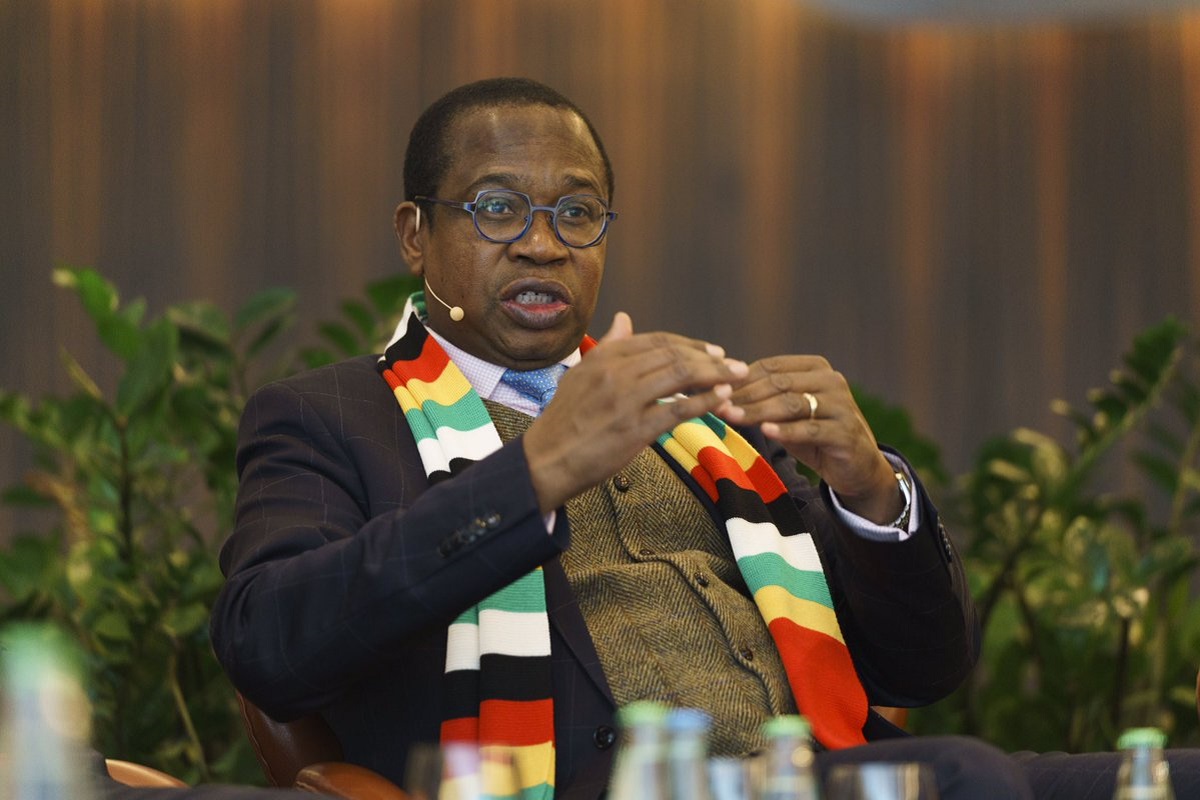 Prof. Mthuli Ncube, Zimbabwe’s Finance Minister
They relied on peer-to-peer networks to preserve their wealth and avoid the exorbitant fees associated with traditional cross-border remittances. The sheer volume of capital moving through these unregulated channels eventually became too massive for authorities in Harare to ignore. By licensing these operators, the government is making a calculated move to curb money laundering, shield consumers from widespread Ponzi schemes, and attract the kind of formal venture capital that strictly avoids unregulated markets.
Zimbabwe’s Statutory Instrument 99 of 2026
The government’s new approach trades technological suppression for absolute visibility. Under the new mandate, any entity involved in buying, selling, transferring, or safeguarding virtual assets must register annually with the Financial Intelligence Unit, the anti-money laundering division of the Reserve Bank of Zimbabwe.
The barrier to entry is surprisingly accessible. Operators are to pay a flat $500 initial registration fee, with annual renewals set at $400. However, operating outside this framework is now a criminal offence.
The law also imposes heavy fiscal and data burdens. Zimbabwe will impose a 15% withholding tax on payments to offshore crypto platforms, effective 2026, securing the state its cut of international capital flight. Local crypto platforms are now also required to register as data controllers with the national telecom regulator, POTRAZ, ensuring stricter oversight of user information.

It’s important to point out that Zimbabwe’s policy pivot does not happen in isolation. The nation is catching up to an African tech ecosystem that is rapidly codifying its digital finance laws to manage a booming sector. Sub-Saharan Africa remains one of the fastest-growing crypto markets globally, currently processing over $205 billion in on-chain transaction value annually, driven largely by genuine utility like cross-border remittances, stablecoin infrastructure, and inflation hedging.
The regulatory approaches across the continent are clearly maturing. South Africa remains the leader, with the Financial Sector Conduct Authority adopting a tough stance and treating crypto assets as financial products. Their mature regime provides institutional investors with a very secure and strictly compliant environment.
Nigeria shares a similar history of initial regulatory hostility, including its own infamous banking bans. Today, however, the Nigerian Securities and Exchange Commission actively oversees the sector and has begun issuing operational licences to local exchanges, marking a clear transition toward a structured, tax-generating embrace.
In East Africa, Kenya recently activated its Virtual Asset Service Providers Act, establishing a dual-supervision model split between the Central Bank of Kenya and the Capital Markets Authority. This setup is designed to balance consumer protection with Kenya’s standing as a primary innovation hub. Meanwhile, markets like Mauritius have long leveraged comprehensive virtual asset acts to attract offshore businesses, and Ghana’s central bank is actively testing progressive sandbox frameworks to integrate blockchain utilities without destabilising the local fiat.

At a mere $500, Zimbabwe’s licensing fee is remarkably low compared to the steep capital requirements demanded in markets like Nigeria and South Africa. This suggests the government is prioritising maximum compliance and the unearthing of informal operators over immediate, heavy-handed capital extraction from the startups themselves. The revenue will instead flow through the 15% withholding tax on offshore platforms.
Also read: CBN PSV 2028: How Nigeria is using eNaira and stablecoins to bank 50 million people
By acknowledging that digital assets are a permanent fixture of modern finance, Zimbabwe is transforming a perceived threat into a regulated industry. For the everyday user, this framework promises safer trading platforms and legal recourse. For the broader African fintech sector, it cements a prevailing truth: the continent has moved decisively past debating whether cryptocurrency should exist and is now entirely focused on how to securely wire it into the formal economy.


You May Also Like

Uphold’s Massive 1.59 Billion XRP Holdings Shocks Community, CEO Reveals The Real Owners

Mixin Launches Mixin Cash Bank Accounts, Simplifying Fund Movement Between Traditional Banking and Stablecoins

Elon Musk Just Made More Money in 6.5 Hours Than Warren Buffett Made in His Entire Life.



