

[OPINION] Patients in the Philippines don’t have to face medical bankruptcy
A man who contributed to PhilHealth for 25 years died seven hours after arriving at a hospital. His family’s tragedy should force the Philippines to ask a difficult question: Have we built the right model for universal healthcare?
Just 2,000 kilometers away, Thailand made a different promise to its citizens more than two decades ago. A patient arrives at the hospital with a national ID card. Treatment begins. The government pays.
Consider the following analogy: Two men suffer the same medical emergency. A sudden brain hemorrhage. Both are rushed to the emergency room. Both need urgent surgery. Both families are terrified. But the next few hours unfold very differently.
In Thailand, the family asks: “How soon can the doctors start?”
In the Philippines, the family may ask: “How much will this cost? How much will PhilHealth cover? How can we raise the money?”
That difference captures the central challenge of Philippine healthcare today.
The Philippines has achieved what many countries aspire to: universal health insurance coverage on paper. Almost every Filipino is enrolled in PhilHealth. But a card in your wallet is not the same as financial protection.
A health system should not be judged by how many people carry an insurance card. It should be judged by a simpler question: When a citizen faces the worst medical crisis of their life, does the system stand beside them?
For too many Filipino families, the answer remains uncertain.
ALSO ON RAPPLER
- Hush reshuffle: PhilHealth’s version of the controversial SEC circular
- [Vantage Point] PhilHealth’s P60-billion question
- [ANALYSIS] PilferHealth
- Don’t engage in unethical practices to dupe PhilHealth
- Corruption, controversies faced by PhilHealth
The numbers tell a painful story
Thailand and the Philippines are not worlds apart. Both are middle-income Southeast Asian nations. Both have limited resources. Neither has the wealth of Japan, Singapore, or the United States. Yet their healthcare outcomes are dramatically different.
Thailand spends around US$29 billion annually on healthcare for approximately 72 million people. The Philippines spends approximately US$26 billion for about 117 million people.
The difference is not only how much money is spent. The difference is who pays.
In Thailand, the government finances roughly 75% of total health expenditure. Households pay only around 10–12% directly out of pocket.
In the Philippines, government spending accounts for only around one-third of health expenditure. PhilHealth contributes another portion. Filipino families still pay roughly 45% of healthcare costs directly from their own pockets.
This means that when illness strikes, a Filipino family is far more likely to experience financial devastation. Healthcare costs are not merely medical problems. They are among the fastest ways a family can fall into poverty.
The 30-baht revolution
More than two decades ago, Thailand made a political decision that transformed its healthcare system. In 2001, the government introduced what became popularly known as the 30-baht healthcare scheme. Its philosophy was revolutionary in its simplicity: “You are Thai. You are sick. You deserve treatment.”
The system was not built around the idea that citizens must first prove how much they contributed. It was built on the belief that healthcare is a public service financed by the nation as a whole. The government allocates money from general taxation to the National Health Security Office, which then pays hospitals and healthcare providers.
For ordinary citizens, the process is simple. A patient presents their national identification. The system verifies their eligibility. Treatment begins. The family does not need to calculate package rates, understand insurance categories, or negotiate how much money they must prepare before a life-saving procedure.
Thailand’s system is not perfect. It faces challenges involving rising costs, an aging population, and healthcare workforce shortages. But it achieved something remarkable: it significantly reduced the financial fear associated with getting sick.
The Philippine insurance dilemma
The Philippines chose a different path. PhilHealth was designed around a social health insurance model. Such a model naturally creates administrative questions: Is the patient eligible? What is the benefit package? How much does PhilHealth reimburse? What charges remain? What documents must be submitted? These are reasonable questions for an insurance company.
But a family standing outside an operating room does not experience healthcare as a claims process. They experience it as a crisis.
The recent death of a long-time PhilHealth contributor became a national controversy because it exposed a painful contradiction. A person can spend decades paying into the system, yet their family may still face enormous uncertainty during a medical emergency.
The uncomfortable budget question
Whenever the Philippines debates healthcare funding, the immediate response is often: “Where will the money come from?”
But perhaps the more important question is: “What are our national priorities?”
Every year, the government spends hundreds of billions of pesos on different forms of social assistance and subsidies. The tragedy is that this money often arrives after a family has already experienced fear, uncertainty, and financial distress.
A better question is not simply whether the government should spend more on healthcare. It is whether the same public money should be organized differently: from a reactive system of asking for help, to a proactive system where healthcare is guaranteed from the moment a patient walks into a hospital.
The country should ask whether a greater share of public resources should be directed toward a system that prevents families from falling into poverty in the first place.
A catastrophic illness can erase a lifetime of savings within days. A country that spends billions helping citizens after they become poor should also ask whether it has invested enough to stop them from becoming poor because of healthcare costs.
Healthcare should not be a political favor. It should be a social guarantee.
In Thailand, a patient arrives at a hospital and presents a national ID card. In the Philippines, a patient may spend days or weeks going from office to office, collecting guarantee letters to settle a hospital bill. The difference is not merely administrative. It reflects two fundamentally different social contracts.
Does the Philippines need to rethink PhilHealth?
The country should ask a fundamental question: Should PhilHealth continue operating primarily as an insurance institution, or should it consider evolving into a tax-funded national healthcare purchaser similar to Thailand’s model?
The debate should no longer be limited to increasing benefit packages or adjusting reimbursement rates. The Philippines needs to discuss the architecture of the entire system.
The goal should be clear: No Filipino family standing outside an emergency room should have to ask, “Can we afford to save the person we love?”
The real measure of universal healthcare
Universal healthcare is not measured by how many people have a membership card. It is measured by what happens at 2 am when a father has a stroke, a child cannot breathe, or a mother needs emergency surgery. In that moment, the government reveals what its social contract truly means.
Thailand made its choice more than 20 years ago. The Philippines now has to decide whether it is ready to make its own.
The question is not whether the Philippines can afford a Thai-style healthcare system. The question is whether it can afford another generation of Filipinos going bankrupt because they became sick. – Rappler.com
Dr. Jaemin Park is a physician and healthcare investor who works at the intersection of health policy, innovation, and investment in Asia. He serves as adjunct orofessor at UP Manila College of Public Health. He writes regularly on healthcare systems and policy reforms in Southeast Asia.


You May Also Like
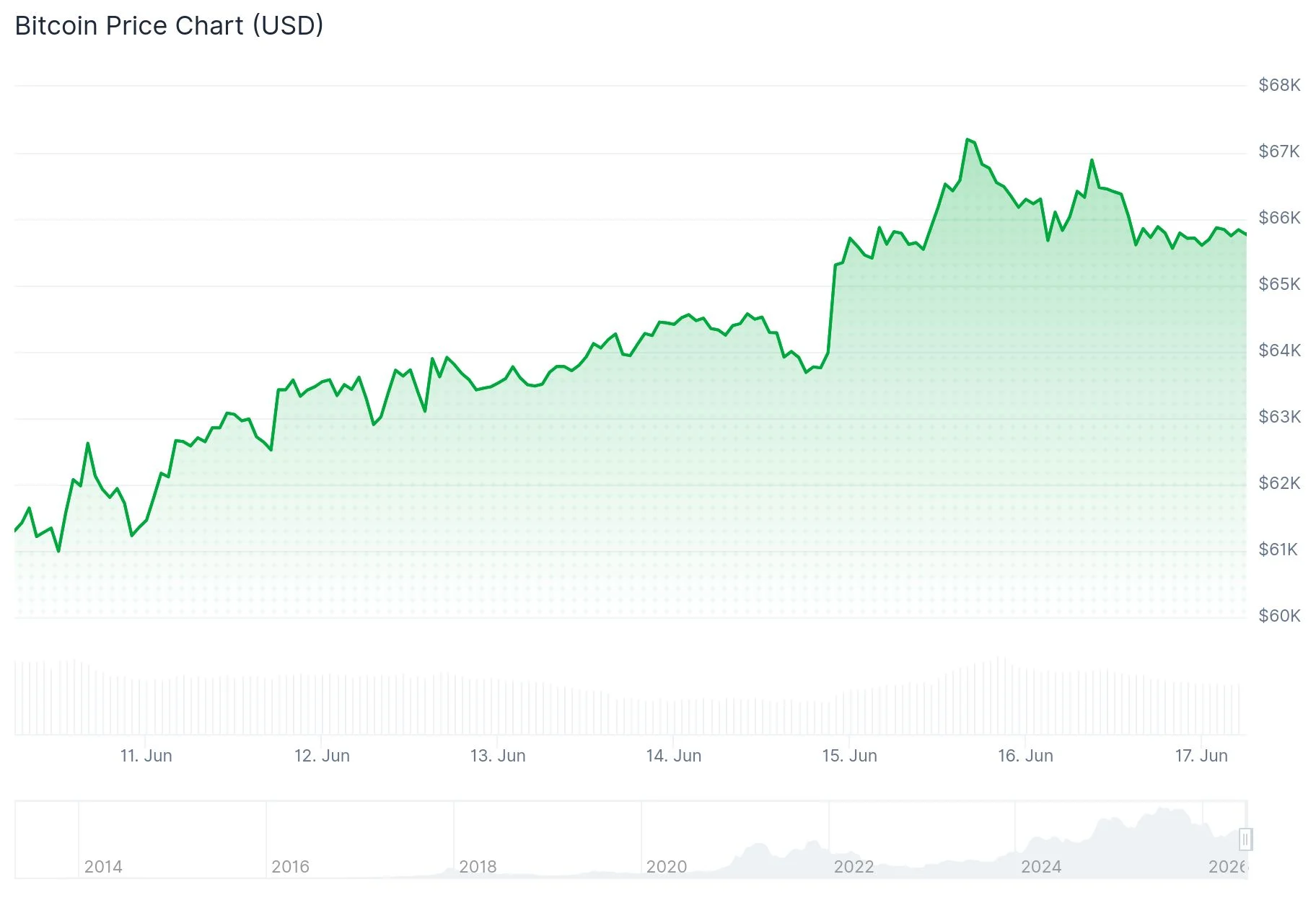
Bitcoin (BTC) Steady at $65K as BlackRock Reveals $9 Trillion Capital Shift Coming

Placeholder Partner Chris Burniske Begins Buying, Calls October a ‘Critical Turning Point’ for Crypto

Wall Street Firms and Crypto Companies to Review New Market Structure Proposal in Private Sessions



