

Best Privacy Crypto Coins To Buy For The Long Term: Monero, Zcash And Bittensor Lead
TLDR
- Monero uses ring signatures and stealth addresses to make every transaction private by default
- Zcash uses zk-SNARK cryptography to offer optional privacy, appealing to both users and institutions
- Bittensor is a decentralized AI network, increasingly viewed as part of the data sovereignty movement
- Some major exchanges have removed Monero due to regulatory and anti-money laundering concerns
- Long-term demand for privacy tools may grow as AI tracking and government surveillance increase
Privacy coins have quietly become one of the most debated topics in crypto. Here is a look at three projects investors are watching for the long term.
Bitcoin is often described as anonymous, but most of its transactions are fully public and traceable on the blockchain. That gap has created a market for cryptocurrencies designed to protect user identities, wallet balances, and transaction history.
Three projects stand out in this space: Monero, Zcash, and Bittensor. Each takes a different approach to privacy and data ownership.
Monero (XMR)
Monero launched in 2014 and was built from the ground up to make transactions untraceable. It uses technologies called ring signatures and stealth addresses to hide wallet addresses, transaction amounts, and the identities of those involved.
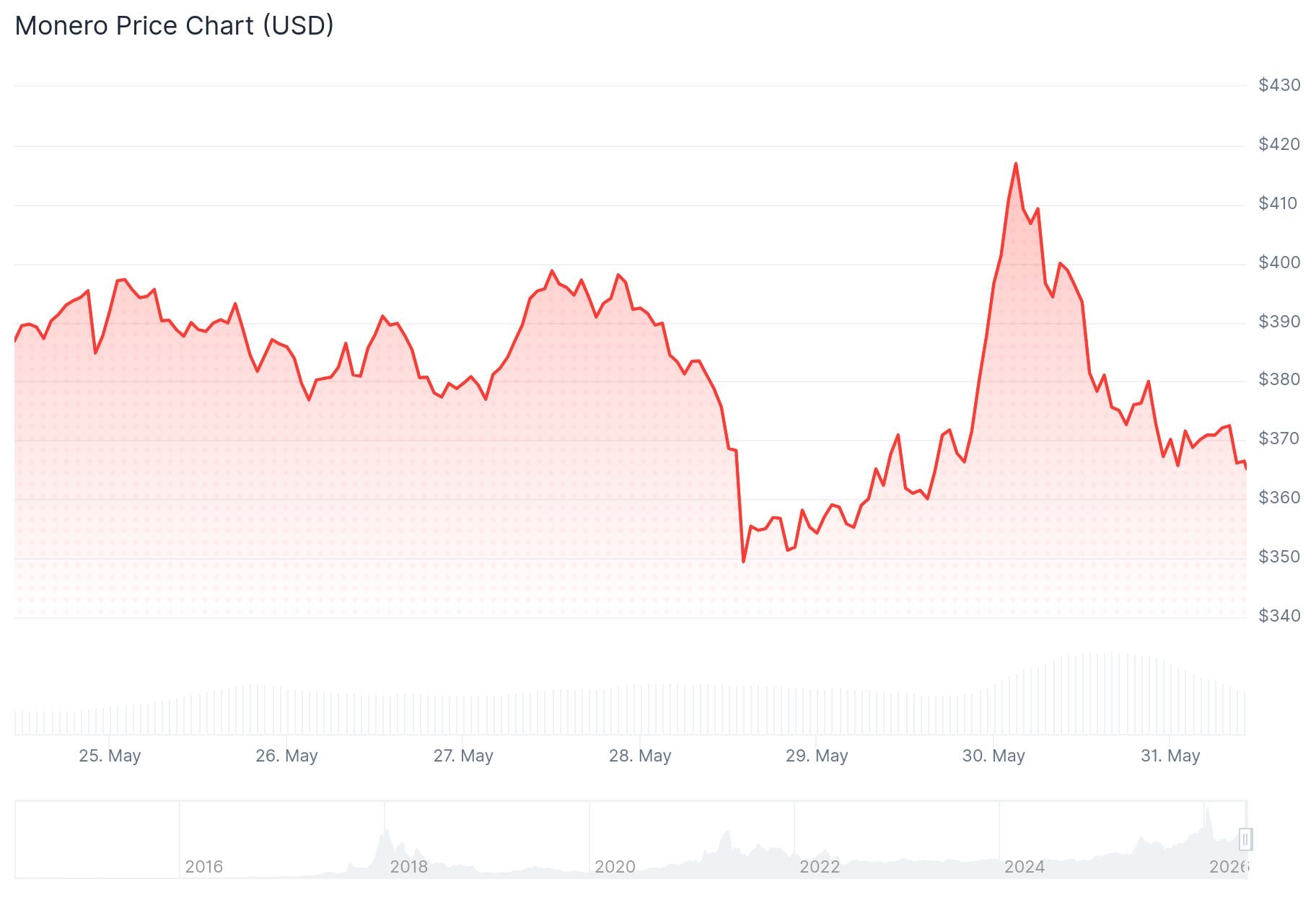 Monero (XMR) Price
Privacy is on by default in Monero. Every single transaction benefits from the same protections, which makes it harder to single out specific users compared to systems where privacy is optional.
Monero has built a strong reputation over the past decade, backed by a loyal community and consistent developer activity. Supporters say it has one of the clearest use cases in crypto: private peer-to-peer payments.
The project does face risks. Several major exchanges have removed Monero from their platforms due to regulatory pressure linked to anti-money laundering concerns. Governments may continue targeting privacy coins, which could limit access for everyday investors.
Despite this, many in the crypto space believe demand for financial privacy will grow. If that plays out, Monero remains one of the top candidates in the sector.
Zcash (ZEC)
Zcash launched in 2016 and uses a different privacy method known as zk-SNARKs, a form of advanced zero-knowledge cryptography. Unlike Monero, privacy in Zcash is optional rather than automatic.
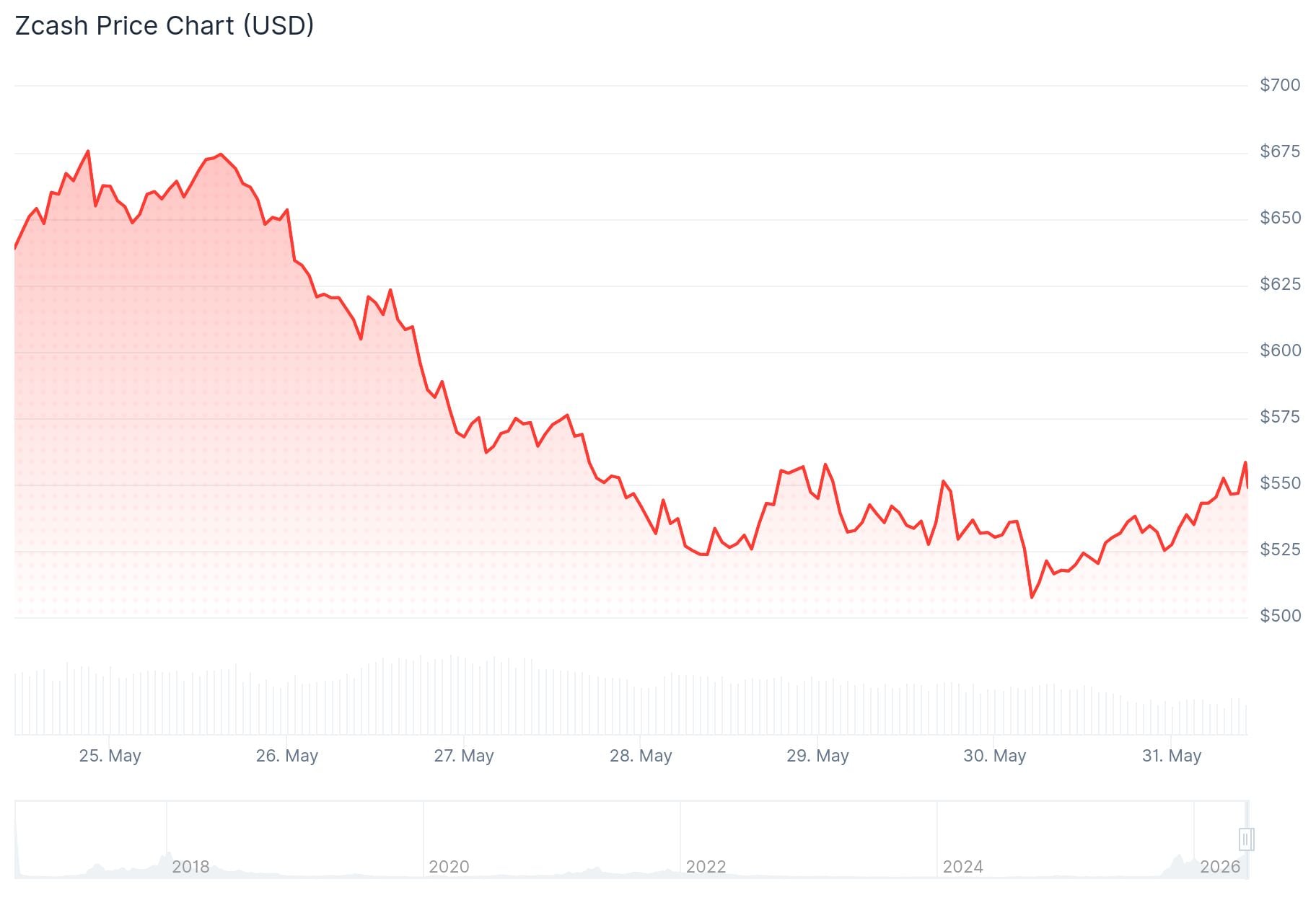 Zcash (ZEC) Price
That flexibility is seen by some as an advantage. Users and businesses can choose to make transactions either private or transparent, which may make it easier to comply with regulations when needed.
Zcash was one of the early pioneers of zero-knowledge technology, which has since grown into one of the most widely discussed topics in blockchain development. The technology is now being explored for use in blockchain scaling, digital identity, and Web3 applications.
However, Zcash has struggled with adoption and community growth. Its price performance has also disappointed many investors in recent years. Its long-term outlook depends heavily on whether zero-knowledge technology becomes more mainstream.
Bittensor (TAO)
Bittensor is not a traditional privacy coin, but it is increasingly grouped with projects focused on data sovereignty and decentralized AI. It aims to build an open marketplace where machine learning models can contribute intelligence and earn rewards.
The project sits at the intersection of several trends: artificial intelligence, decentralization, open-source infrastructure, and data ownership. As major technology companies collect growing amounts of user data, some investors see decentralized AI networks as a potential counter to that trend.
Bittensor also benefits from the current wave of AI investment. That gives it more momentum than older privacy coins that are not tied to the AI narrative.
The downside is that Bittensor remains more speculative. The technology is complex, and long-term adoption has not yet been proven.
Where Things Stand
Monero still holds the strongest track record as a pure privacy coin. Zcash offers a path into zero-knowledge cryptography. Bittensor gives exposure to decentralized AI and data ownership.
All three remain high-risk assets. But for investors focused on digital privacy and data control, these are the names most discussed in the space right now.
The post Best Privacy Crypto Coins To Buy For The Long Term: Monero, Zcash And Bittensor Lead appeared first on CoinCentral.


You May Also Like

The changing face of elder care in Malaysia — Sayed Mohammad Reza Yamani Sayed Umar

Not a loophole: Singapore AI export controls let China tap US AI legally

Q2 Market Insights: Bitcoin regains dominance in risk-averse environment, ETFs remain critical to market structure



