Ethereum co-founder Vitalik Buterin has issued a comprehensive warning about the dangers of closed technological systems, arguing that proprietary infrastructure across health, digital identity, and civic technology creates conditions for “abuse and monopolies” while concentrating power among a few players. In a September 24 blog post, Buterin outlined his vision for “full-stack openness and verifiability” spanning software, hardware, and biological systems. He argued that civilizations that produce open technology rather than merely consume it will dominate the 21st century. The warning comes as Buterin advocates for stronger “copyleft” licensing, which requires developers who build on open-source code to share their improvements. Previously supporting permissive licenses, he now believes the crypto industry has become “more competitive and mercenary,” making voluntary code sharing unreliable. His call extends beyond software to hardware verification, biological monitoring systems, and civic infrastructure. Buterin envisions a world where personal devices offer smartphone functionality with crypto wallet security while remaining as inspectable as mechanical watches. The Ethereum Foundation has backed this philosophy with a recent $500,000 donation to support Tornado Cash developer Roman Storm’s legal defense, while the Solana Policy Institute also contributed an additional $500,000. Both organizations argue that prosecuting privacy tool developers sets dangerous precedents for criminalizing open-source development. Digital Infrastructure Threatens Individual Sovereignty Buterin identified health technology as a critical battleground where proprietary systems could entrench global inequalities. According to the blog post, the COVID vaccine distribution exposed these risks when production was concentrated in a few countries, resulting in massive disparities between wealthy and developing nations.Source: Vitalik Closed-source vaccine manufacturing processes prevented equal access initiatives from scaling effectively. Meanwhile, pharmaceutical companies’ opaque safety communications have contributed to widespread mistrust, which has extended into a rejection of established science. Personal health tracking faces similar concerns as devices collect vastly more data than identification systems like Worldcoin. When this infrastructure remains proprietary, large corporations gain exclusive access to build applications, while others face API limitations and the potential for service termination. Security vulnerabilities compound these problems. Compromised health data enables blackmail over medical conditions, optimized insurance pricing extraction, and location tracking for physical threats. Brain-computer interfaces raise the stakes further, with successful attacks potentially allowing hostile actors to read or manipulate thoughts. Buterin’s proposed solution involves open-source biological monitoring equipment that communities can verify independently.Source: Vitalik This includes personal medical devices, air quality sensors, and universal airborne disease detection systems that provide transparency about data collection and processing. The approach extends to public surveillance systems where open-source, verifiable cameras and sensors could function like “digital guard dogs” rather than creating comprehensive surveillance networks. Legal frameworks would guarantee the public’s right to inspect monitoring equipment randomly. Centralized Control Undermines Democratic Innovation Taking it a step further, Buterin believes that Civic technology faces similar centralization pressures that threaten democratic participation and local innovation. Electronic voting systems have drawn criticism from security researchers for using proprietary “black box software” that prevents public verification of vote-counting processes.Source: Vitalik Real-world failures validate these concerns. Massachusetts courts invalidated large volumes of breathalyzer evidence after discovering state crime labs withheld information about widespread calibration problems. The ruling emphasized that due process requires not only fairness but also a common understanding of fairness. Buterin argued that technological efficiency gains will render purely analog systems increasingly irrelevant as people bypass slower alternatives. This creates pressure to develop secure, verifiable digital solutions rather than avoiding technology entirely. Open-source civic systems would enable local experimentation with governance innovations, such as quadratic voting, citizens’ assemblies, and sortition-based decision-making. Proprietary systems force communities to either convince companies to implement preferred features or rebuild from scratch. Physical security presents additional challenges as drone warfare makes high-tech countermeasures necessary for national defense. Proprietary security equipment creates opaque, centralized data collection, while open alternatives could limit information gathering to specific threats while deleting irrelevant data. Buterin’s comprehensive vision includes secure personal devices, encrypted messaging with formal verification, blockchain-based finance with social recovery, and open-source satellite internet infrastructure. He acknowledged that designing for verifiability imposes costs through reduced optimization opportunities and challenging business models, but argued these trade-offs remain manageable for high-security applicationsEthereum co-founder Vitalik Buterin has issued a comprehensive warning about the dangers of closed technological systems, arguing that proprietary infrastructure across health, digital identity, and civic technology creates conditions for “abuse and monopolies” while concentrating power among a few players. In a September 24 blog post, Buterin outlined his vision for “full-stack openness and verifiability” spanning software, hardware, and biological systems. He argued that civilizations that produce open technology rather than merely consume it will dominate the 21st century. The warning comes as Buterin advocates for stronger “copyleft” licensing, which requires developers who build on open-source code to share their improvements. Previously supporting permissive licenses, he now believes the crypto industry has become “more competitive and mercenary,” making voluntary code sharing unreliable. His call extends beyond software to hardware verification, biological monitoring systems, and civic infrastructure. Buterin envisions a world where personal devices offer smartphone functionality with crypto wallet security while remaining as inspectable as mechanical watches. The Ethereum Foundation has backed this philosophy with a recent $500,000 donation to support Tornado Cash developer Roman Storm’s legal defense, while the Solana Policy Institute also contributed an additional $500,000. Both organizations argue that prosecuting privacy tool developers sets dangerous precedents for criminalizing open-source development. Digital Infrastructure Threatens Individual Sovereignty Buterin identified health technology as a critical battleground where proprietary systems could entrench global inequalities. According to the blog post, the COVID vaccine distribution exposed these risks when production was concentrated in a few countries, resulting in massive disparities between wealthy and developing nations.Source: Vitalik Closed-source vaccine manufacturing processes prevented equal access initiatives from scaling effectively. Meanwhile, pharmaceutical companies’ opaque safety communications have contributed to widespread mistrust, which has extended into a rejection of established science. Personal health tracking faces similar concerns as devices collect vastly more data than identification systems like Worldcoin. When this infrastructure remains proprietary, large corporations gain exclusive access to build applications, while others face API limitations and the potential for service termination. Security vulnerabilities compound these problems. Compromised health data enables blackmail over medical conditions, optimized insurance pricing extraction, and location tracking for physical threats. Brain-computer interfaces raise the stakes further, with successful attacks potentially allowing hostile actors to read or manipulate thoughts. Buterin’s proposed solution involves open-source biological monitoring equipment that communities can verify independently.Source: Vitalik This includes personal medical devices, air quality sensors, and universal airborne disease detection systems that provide transparency about data collection and processing. The approach extends to public surveillance systems where open-source, verifiable cameras and sensors could function like “digital guard dogs” rather than creating comprehensive surveillance networks. Legal frameworks would guarantee the public’s right to inspect monitoring equipment randomly. Centralized Control Undermines Democratic Innovation Taking it a step further, Buterin believes that Civic technology faces similar centralization pressures that threaten democratic participation and local innovation. Electronic voting systems have drawn criticism from security researchers for using proprietary “black box software” that prevents public verification of vote-counting processes.Source: Vitalik Real-world failures validate these concerns. Massachusetts courts invalidated large volumes of breathalyzer evidence after discovering state crime labs withheld information about widespread calibration problems. The ruling emphasized that due process requires not only fairness but also a common understanding of fairness. Buterin argued that technological efficiency gains will render purely analog systems increasingly irrelevant as people bypass slower alternatives. This creates pressure to develop secure, verifiable digital solutions rather than avoiding technology entirely. Open-source civic systems would enable local experimentation with governance innovations, such as quadratic voting, citizens’ assemblies, and sortition-based decision-making. Proprietary systems force communities to either convince companies to implement preferred features or rebuild from scratch. Physical security presents additional challenges as drone warfare makes high-tech countermeasures necessary for national defense. Proprietary security equipment creates opaque, centralized data collection, while open alternatives could limit information gathering to specific threats while deleting irrelevant data. Buterin’s comprehensive vision includes secure personal devices, encrypted messaging with formal verification, blockchain-based finance with social recovery, and open-source satellite internet infrastructure. He acknowledged that designing for verifiability imposes costs through reduced optimization opportunities and challenging business models, but argued these trade-offs remain manageable for high-security applications

Ethereum Co-Founder Warns Closed Systems Breed ‘Abuse and Monopolies,’ Calls for Open-Source in Key Sectors

Ethereum co-founder Vitalik Buterin has issued a comprehensive warning about the dangers of closed technological systems, arguing that proprietary infrastructure across health, digital identity, and civic technology creates conditions for “abuse and monopolies” while concentrating power among a few players.

In a September 24 blog post, Buterin outlined his vision for “full-stack openness and verifiability” spanning software, hardware, and biological systems.

He argued that civilizations that produce open technology rather than merely consume it will dominate the 21st century.

The warning comes as Buterin advocates for stronger “copyleft” licensing, which requires developers who build on open-source code to share their improvements.

Previously supporting permissive licenses, he now believes the crypto industry has become “more competitive and mercenary,” making voluntary code sharing unreliable.

His call extends beyond software to hardware verification, biological monitoring systems, and civic infrastructure.

Buterin envisions a world where personal devices offer smartphone functionality with crypto wallet security while remaining as inspectable as mechanical watches.

The Ethereum Foundation has backed this philosophy with a recent $500,000 donation to support Tornado Cash developer Roman Storm’s legal defense, while the Solana Policy Institute also contributed an additional $500,000.

Both organizations argue that prosecuting privacy tool developers sets dangerous precedents for criminalizing open-source development.

Digital Infrastructure Threatens Individual Sovereignty

Buterin identified health technology as a critical battleground where proprietary systems could entrench global inequalities.

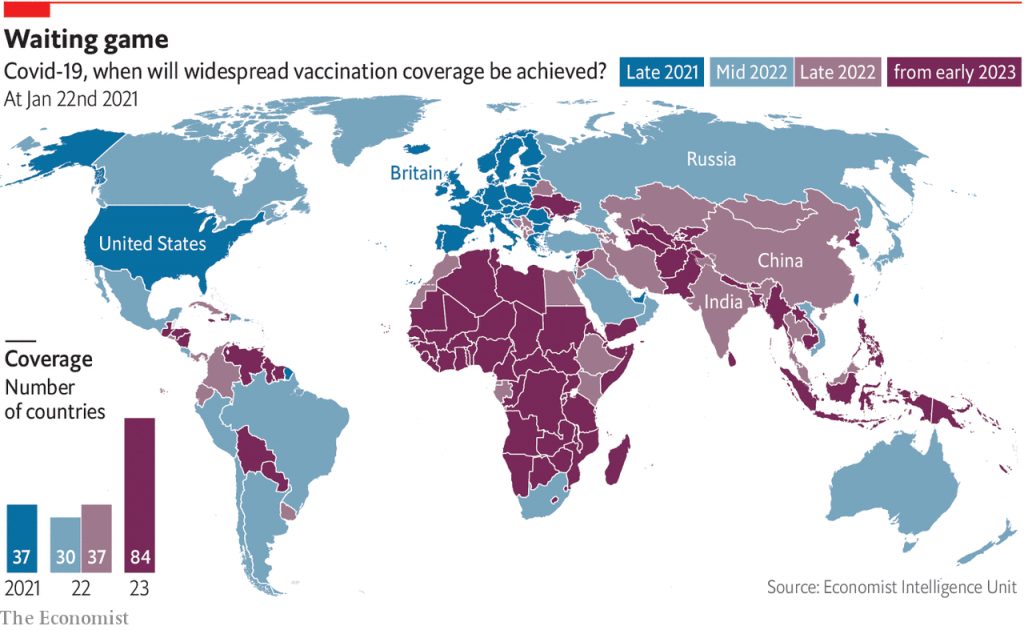
According to the blog post, the COVID vaccine distribution exposed these risks when production was concentrated in a few countries, resulting in massive disparities between wealthy and developing nations.
Ethereum Founder Warns Closed Systems Breed 'Abuse and Monopolies,' Calls for Open-Source in Key SectorsSource: Vitalik

Closed-source vaccine manufacturing processes prevented equal access initiatives from scaling effectively.

Meanwhile, pharmaceutical companies’ opaque safety communications have contributed to widespread mistrust, which has extended into a rejection of established science.

Personal health tracking faces similar concerns as devices collect vastly more data than identification systems like Worldcoin.

When this infrastructure remains proprietary, large corporations gain exclusive access to build applications, while others face API limitations and the potential for service termination.

Security vulnerabilities compound these problems. Compromised health data enables blackmail over medical conditions, optimized insurance pricing extraction, and location tracking for physical threats.

Brain-computer interfaces raise the stakes further, with successful attacks potentially allowing hostile actors to read or manipulate thoughts.

Buterin’s proposed solution involves open-source biological monitoring equipment that communities can verify independently.

Ethereum Founder Warns Closed Systems Breed 'Abuse and Monopolies,' Calls for Open-Source in Key SectorsSource: Vitalik

This includes personal medical devices, air quality sensors, and universal airborne disease detection systems that provide transparency about data collection and processing.

The approach extends to public surveillance systems where open-source, verifiable cameras and sensors could function like “digital guard dogs” rather than creating comprehensive surveillance networks.

Legal frameworks would guarantee the public’s right to inspect monitoring equipment randomly.

Centralized Control Undermines Democratic Innovation

Taking it a step further, Buterin believes that Civic technology faces similar centralization pressures that threaten democratic participation and local innovation.

Electronic voting systems have drawn criticism from security researchers for using proprietary “black box software” that prevents public verification of vote-counting processes.

Ethereum Founder Warns Closed Systems Breed 'Abuse and Monopolies,' Calls for Open-Source in Key SectorsSource: Vitalik

Real-world failures validate these concerns. Massachusetts courts invalidated large volumes of breathalyzer evidence after discovering state crime labs withheld information about widespread calibration problems.

The ruling emphasized that due process requires not only fairness but also a common understanding of fairness.

Buterin argued that technological efficiency gains will render purely analog systems increasingly irrelevant as people bypass slower alternatives.

This creates pressure to develop secure, verifiable digital solutions rather than avoiding technology entirely.

Open-source civic systems would enable local experimentation with governance innovations, such as quadratic voting, citizens’ assemblies, and sortition-based decision-making.

Proprietary systems force communities to either convince companies to implement preferred features or rebuild from scratch.

Physical security presents additional challenges as drone warfare makes high-tech countermeasures necessary for national defense.

Proprietary security equipment creates opaque, centralized data collection, while open alternatives could limit information gathering to specific threats while deleting irrelevant data.

Buterin’s comprehensive vision includes secure personal devices, encrypted messaging with formal verification, blockchain-based finance with social recovery, and open-source satellite internet infrastructure.

He acknowledged that designing for verifiability imposes costs through reduced optimization opportunities and challenging business models, but argued these trade-offs remain manageable for high-security applications.


Market Opportunity
OpenLedger Logo
OpenLedger Price(OPEN)
$0.15263
$0.15263$0.15263
-1.49%
USD
OpenLedger (OPEN) Live Price Chart
Disclaimer: The articles reposted on this site are sourced from public platforms and are provided for informational purposes only. They do not necessarily reflect the views of MEXC. All rights remain with the original authors. If you believe any content infringes on third-party rights, please contact service@support.mexc.com for removal. MEXC makes no guarantees regarding the accuracy, completeness, or timeliness of the content and is not responsible for any actions taken based on the information provided. The content does not constitute financial, legal, or other professional advice, nor should it be considered a recommendation or endorsement by MEXC.

You May Also Like

BFX Presale Raises $7.5M as Solana Holds $243 and Avalanche Eyes $1B Treasury — Best Cryptos to Buy in 2025

BFX Presale Raises $7.5M as Solana Holds $243 and Avalanche Eyes $1B Treasury — Best Cryptos to Buy in 2025

BFX presale hits $7.5M with tokens at $0.024 and 30% bonus code BLOCK30, while Solana holds $243 and Avalanche builds a $1B treasury to attract institutions.
Share
Blockchainreporter2025/09/18 01:07
Trading time: Tonight, the US GDP and the upcoming non-farm data will become the market focus. Institutions are bullish on BTC to $120,000 in the second quarter.

Trading time: Tonight, the US GDP and the upcoming non-farm data will become the market focus. Institutions are bullish on BTC to $120,000 in the second quarter.

Daily market key data review and trend analysis, produced by PANews.
Share
PANews2025/04/30 13:50
Franklin Templeton CEO Dismisses 50bps Rate Cut Ahead FOMC

Franklin Templeton CEO Dismisses 50bps Rate Cut Ahead FOMC

The post Franklin Templeton CEO Dismisses 50bps Rate Cut Ahead FOMC appeared on BitcoinEthereumNews.com. Franklin Templeton CEO Jenny Johnson has weighed in on whether the Federal Reserve should make a 25 basis points (bps) Fed rate cut or 50 bps cut. This comes ahead of the Fed decision today at today’s FOMC meeting, with the market pricing in a 25 bps cut. Bitcoin and the broader crypto market are currently trading flat ahead of the rate cut decision. Franklin Templeton CEO Weighs In On Potential FOMC Decision In a CNBC interview, Jenny Johnson said that she expects the Fed to make a 25 bps cut today instead of a 50 bps cut. She acknowledged the jobs data, which suggested that the labor market is weakening. However, she noted that this data is backward-looking, indicating that it doesn’t show the current state of the economy. She alluded to the wage growth, which she remarked is an indication of a robust labor market. She added that retail sales are up and that consumers are still spending, despite inflation being sticky at 3%, which makes a case for why the FOMC should opt against a 50-basis-point Fed rate cut. In line with this, the Franklin Templeton CEO said that she would go with a 25 bps rate cut if she were Jerome Powell. She remarked that the Fed still has the October and December FOMC meetings to make further cuts if the incoming data warrants it. Johnson also asserted that the data show a robust economy. However, she noted that there can’t be an argument for no Fed rate cut since Powell already signaled at Jackson Hole that they were likely to lower interest rates at this meeting due to concerns over a weakening labor market. Notably, her comment comes as experts argue for both sides on why the Fed should make a 25 bps cut or…
Share
BitcoinEthereumNews2025/09/18 00:36