

The Next Crypto Shift: Inside Latin America’s $1.5T Digital Asset Evolution And The Race To Build Trust-Based Infrastructure
Latin America’s crypto market is entering a more mature phase. Chainalysis reported that regional crypto adoption grew 63% in the 12 months ending June 2025, while the region processed nearly $1.5 trillion in cryptocurrency transaction volume between July 2022 and June 2025. That growth reflects both long-standing demand for stablecoins and cross-border payments, and a newer push toward institutional participation and clearer rules.
That backdrop makes TicoBlockchain 2026 a timely lens on where the conversation is headed. Organized by the Costa Rica Blockchain Association, the event returns to San José in May 2026 after drawing more than 300 attendees in 2025, with an agenda centered on stablecoins, real-world asset tokenization, security, custody, and regulation.
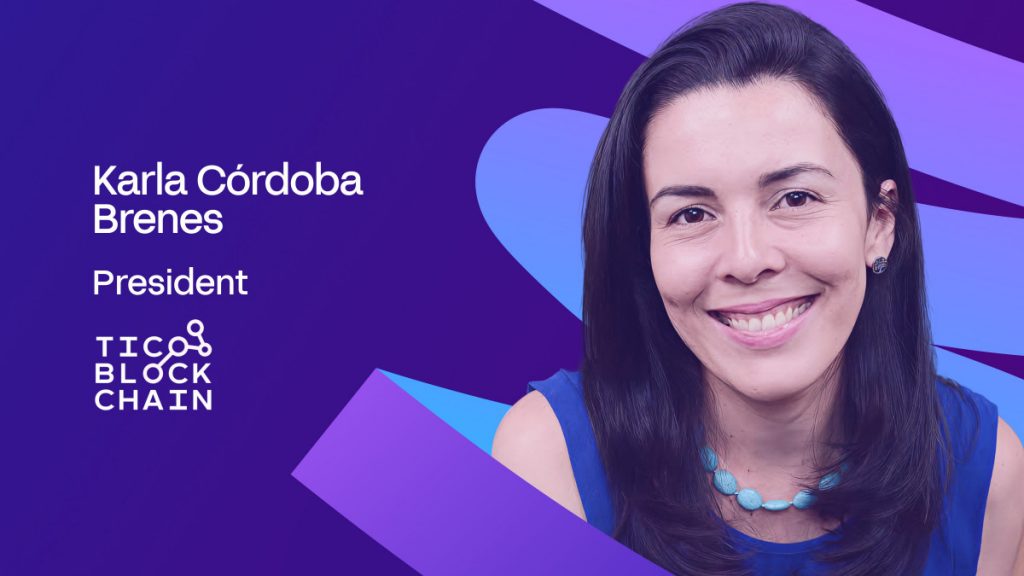
Ahead of the upcoming conference, MPost spoke with Karla Córdoba Brenes, President of the Costa Rica Blockchain Association, to explore the region’s shift from crypto as a necessity-driven tool toward a broader technology stack spanning payments, identity, traceability, and investment—and to examine how Costa Rica can help shape the next phase of Latam’s digital asset economy.
Is crypto adoption in Latin America still mainly driven by financial necessity, or has it shifted toward opportunity and broader use cases?
We are currently experiencing a hybrid model. In countries with volatile economies, necessity remains the primary driver, where stablecoins and remittances act as an indispensable shield against inflation and high cross-border costs. However, the narrative has evolved toward opportunity thanks to extremely high mobile penetration in the region. We are now ready for solutions “designed by and for us.” In more stable markets like Costa Rica, the opportunity lies in sophistication: we are moving beyond simple money transfers toward leveraging traceability, Real-World Asset (RWA) tokenization, and digital identity. At TicoBlockchain 2026, we focus on these “new economic rails” that allow technology to create infrastructures of trust and efficiency that were previously impossible.
From your perspective, how would you describe the pace and nature of adoption across the region today?
Adoption is not uniform but specialized. While giants like Brazil, Mexico, Argentina, and Colombia lead in volume and startup ecosystem maturity, Central America is seeing a strategic acceleration based on complementary strengths. Costa Rica and Guatemala are positioning themselves as engines for talent and technological innovation, while El Salvador leads in regulatory experimentation and Panama consolidates as a hub for investment and financial logistics. This dynamic suggests the region is not just competing for size, but also to become a secure and efficient port for cutting-edge solutions. TicoBlockchain 2026 integrates these strengths to project Central America as a cohesive and globally competitive ecosystem.
Is regulatory fragmentation a major barrier to a unified regional market, and how could regulation be better harmonized?
Fragmentation is a challenge, but also a strategic opportunity. By being a step behind in the timeline, we can adopt best practices from jurisdictions like Singapore, Switzerland, the EU (MiCA), and the UAE (VARA), adapting them to our reality so that regulation acts as a catalyst rather than a constraint. Harmonization will come through regional collaboration; hence, we are actively working on the Latin American Blockchain Federation alongside partners from Chile, Bolivia, Mexico, Peru, Paraguay, and Ecuador. The goal is to standardize educational and regulatory processes that allow solutions developed in Costa Rica to scale easily to other markets.
Which Latin American country leads in blockchain or fintech innovation, and what can Costa Rica learn from it?
Argentina is a constant source of inspiration for me. During my participation in Devconnect Buenos Aires last November, I witnessed how extreme economic challenges, like persistent inflation, became a breeding ground for resilience and creativity. Argentina leads not only with world-class companies like Lemon, Peanut, Ripio, and OpenZeppelin, but also by nurturing systemic communities like Crecimiento. The main lesson for Costa Rica is that innovation depends on building a vibrant and collaborative community. Argentina teaches us that an ecosystem must self-organize to solve real-world problems. Costa Rica can blend that community culture with our institutional stability to scale solutions with a unique seal of trust.
Is Costa Rica on track to become a regional blockchain hub?
Absolutely. As President of the Costa Rica Blockchain Association, this is exactly the vision we promote: positioning the country as the premier hub for experimentation and scalability. Costa Rica offers unique conditions: a bilingual and highly technical workforce, a strategic location, and, above all, democratic stability that translates into legal certainty—vital for Web3 investors. The country is an ideal laboratory for blockchain pilots—from agricultural traceability to new financial rails—that can be exported to the rest of Latin America. TicoBlockchain 2026 showcases that we are the natural bridge between local talent and global investment.
Will Costa Rica’s central bank shift its cautious stance on digital assets, and what would responsible engagement look like?
The Central Bank of Costa Rica has maintained a stance of “tolerant vigilance,” which has allowed the ecosystem to grow without being stifled prematurely. We maintain a very close and constructive relationship with the Central Bank, SUGEVAL, and the Financial Innovation Center. Responsible participation moving forward implies evolving from observation to guided experimentation. The ecosystem strengthens when authorities facilitate environments such as regulatory sandboxes. We are inspired by Brazil, where the Central Bank has taken a proactive leadership role. Costa Rica is ready to move into a “national laboratory” phase where we can test solutions in a safe and regulated environment.
Will rising institutional participation in the market boost growth or limit local innovation?
Far from limiting innovation, the arrival of institutions is validation that the technology has matured. We now have tested protocols, a much more accessible UX, and, crucially, advances in privacy (such as advanced encryption) that were the missing piece for corporations to feel secure. Two paths will coexist: an “invisible” mass adoption, where new economic rails facilitate processes that have been slow for decades, and the original essence of individual sovereignty, which will continue to push the technical frontier. At TicoBlockchain 2026, we believe institutional participation is the necessary vehicle for decentralization benefits to reach the majority.
Looking ahead five years, what would success look like for Costa Rica in the blockchain and digital asset space?
Rather than a rigid five-year plan, success for Costa Rica lies in consolidating an agile and resilient vision. In a convulsive global context, the ideal scenario is one where we have restored autonomy, security, and traceability to people through technology. Success will be reflected in an ecosystem where education has closed the technical gap, allowing local talent to create grounded solutions for real needs. We are laying the groundwork so that the connection between traditional industries (like AgTech and banking) and Web3 innovators creates a robust infrastructure of trust.
Which blockchain use case is most likely to go mainstream in Costa Rica or Latin America in the next three years, and why?
Mass success will come from expanding toward the general public. The winning use case will integrate digital assets into daily life: marketplaces and platforms that allow SMEs to access investment mechanisms and global markets easily. I am referring to solutions where a merchant can protect margins from volatility and pay international suppliers without friction. The key is not selling “blockchain,” but selling access, efficiency, and economic protection. TicoBlockchain 2026 places special emphasis on Real-World Assets (RWA) and AgTech, because that is where technology becomes a tool for progress in the real economy.
How far has crypto improved remittances in Costa Rica, and what would expand its impact?
This is a fundamental distinction. Unlike regional neighbors where family remittances dominate, in Costa Rica the potential of digital assets is materializing in the talent economy and wealth sector. The strongest use case today is freelancers and remote workers receiving international payments, eliminating banking friction. We also see growing adoption in high-value asset acquisition, such as real estate and vehicles, where traceability and speed offer a competitive advantage. To expand this, we must continue working on regulatory clarity and educating traditional sectors.
At TicoBlockchain, which group—companies, developers, or public sector—is advancing fastest, and which needs the most engagement?
The group progressing fastest is our local technical talent. However, the most exciting development is the awakening of the public sector. Costa Rica is taking historic steps: from the Supreme Electoral Tribunal allowing digital asset contributions to the Comptroller General launching pilots for real-time monitoring of public works. We see a unique synergy where academia (with projects like RISE by TEC and the Municipality of San José) and regulators are converging. Our mission is to act as the connective tissue that ensures public and private innovation reinforce each other.
What would you advise a young entrepreneur building a fintech or blockchain company in the region to focus on, and what pitfalls should they avoid?
My advice is always: “Have you talked to your end-user?” It is surprising how many entrepreneurs launch prototypes without validating real pain points. Financial sustainability stems from deeply understanding the user’s needs. My big bet for new talent is the ReFi (Regenerative Finance) ecosystem. Costa Rica, with its global reputation for sustainability, is the perfect place to lead this movement. I advise seeking problems that improve natural resource management and generate positive social impact. The biggest mistake to avoid is falling in love with the solution before understanding the problem; the biggest success is building with purpose from day one.
The post The Next Crypto Shift: Inside Latin America’s $1.5T Digital Asset Evolution And The Race To Build Trust-Based Infrastructure appeared first on Metaverse Post.


You May Also Like

WLFI Moves to End Indefinite Token Lock with Four-Year Vesting Proposal

What Texas Roadhouse Teaches You About Real Leadership




