

Jim Cramer: Interest Rates Trump Iran Crisis as Market’s Real Driver
Key Takeaways
- Despite Iran-related tensions, the S&P 500 sits just 1.5% below its record peak
- CNBC’s Jim Cramer identifies declining interest rates as the primary catalyst supporting equities
- Treasury yields topped out on March 27 before reversing lower
- The Federal Reserve may dismiss tariff and oil-related price pressures as transitory
- Technology shares outperformed while energy stocks stumbled despite elevated crude prices
Despite escalating Middle East tensions that have driven oil prices higher, the S&P 500 has surged back to within striking distance of its January peak. According to CNBC’s Jim Cramer, the market’s resilience boils down to one critical factor: interest rates haven’t spiked.
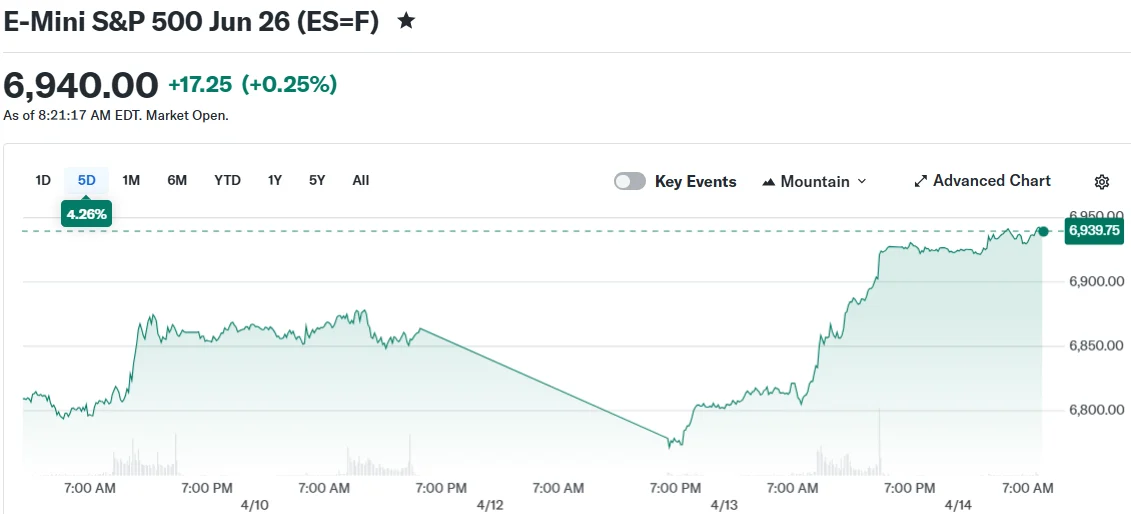 E-Mini S&P 500 Jun 26 (ES=F)
Following the February 28 strikes on Iran by U.S. and Israeli forces, Treasury yields initially jumped. However, the 10-year yield reached its 2025 peak on March 27 before reversing course. The S&P 500 bottomed on March 30 and has rallied since.
Cramer emphasizes this sequence isn’t random.
Declining interest rates enhance the present value of corporate earnings projections, encouraging investors to accept higher valuation multiples. This mechanism has remained intact even as crude oil has climbed amid supply disruption fears around the Strait of Hormuz.
Historically, rising oil prices combined with geopolitical instability would drag down stock prices. Cramer noted that conventional market behavior is “being disobeyed and ignored” in the current environment.
What Makes This Oil Rally Unique
Part of the explanation for stocks weathering higher oil prices lies in America’s reduced dependence on petroleum. Modern vehicles deliver superior fuel economy, while natural gas has become increasingly central to U.S. energy consumption.
The United States enjoys substantially lower natural gas prices compared to global counterparts. This price advantage helps contain inflation even when crude oil surges.
Cramer further suggested the Federal Reserve may not respond to present inflationary pressures with rate hikes. While tariffs and energy costs have elevated prices, central bank officials could classify these as temporary disruptions rather than persistent inflation.
Kevin Warsh, nominated by President Trump to succeed Jerome Powell, is scheduled to assume the Fed chairmanship next month. Cramer indicated the incoming leadership is unlikely to pursue rate increases and might even implement cuts if inflation moderates.
Technology Surges While Energy Falters
Monday’s trading patterns validated Cramer’s analysis. Tech stocks powered the market higher while energy equities lagged, despite elevated crude prices.
Cramer emphasized that Middle Eastern geopolitical developments bear no meaningful relationship to earnings prospects for most American corporations.
The 10-year Treasury yield edged lower Monday as equities maintained their position near recent peaks.
The post Jim Cramer: Interest Rates Trump Iran Crisis as Market’s Real Driver appeared first on Blockonomi.


You May Also Like

DASH Breaks $42 This Week or Crashes to $30

OpenAI Unveils GPT-5.4-Cyber in Direct Response to Anthropic’s Controversial Mythos Model



