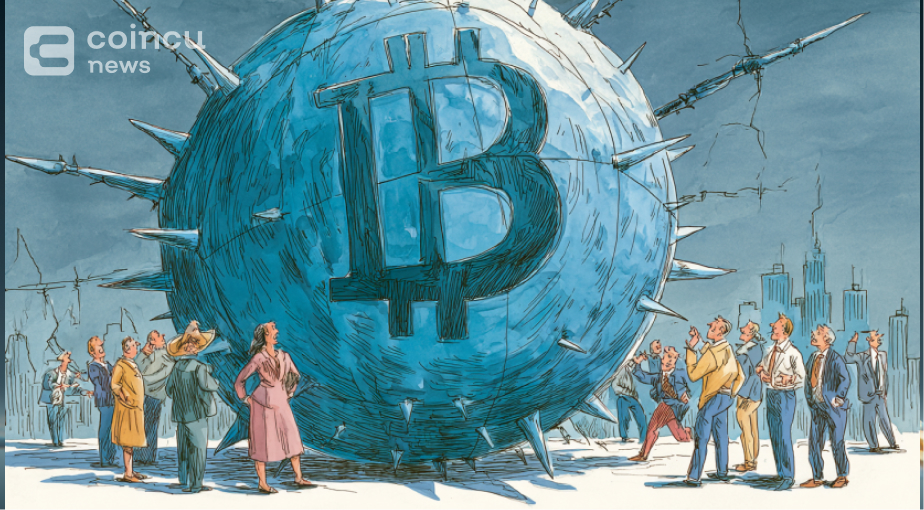
Bitcoin rose nearly 3% on April 1 as two potential catalysts converged: signs that the U.S.-Iran military conflict could wind down within weeks, and growing expectations around a Morgan Stanley Bitcoin ETF that has moved closer to launch. The combination of easing geopolitical risk and fresh institutional access could create conditions for further upside, though neither catalyst is confirmed.
Bitcoin traded at $68,702 with a 24-hour gain of +2.78%, putting its market cap near $1.37 trillion. The move came alongside a broader equity rally, with the S&P 500 up 2.9% and the Dow gaining more than 2.5% on the same day.
BTC price$68,702
BTC 24h change+2.78%
Despite the daily gain, the broader sentiment backdrop remained cautious. The Fear and Greed Index sat at 8, deep in “Extreme Fear” territory, suggesting that the day’s price action was a relief bounce rather than a shift in structural conviction.
Trump’s Two-to-Three-Week Timeline Lifted Risk Appetite
On March 31, President Trump said the U.S. could be done launching attacks against Iran in two to three weeks, according to AP reporting. The statement triggered a broad risk-on reaction across equities and crypto alike.
The mechanism is straightforward. Military conflict in the Middle East elevates energy prices, disrupts trade routes through the Strait of Hormuz, and pushes investors toward defensive positioning. A credible timeline for de-escalation reverses that pressure, freeing capital to rotate back into risk assets including Bitcoin.
Bitcoin’s sensitivity to macro risk events has grown as its correlation with equity markets has tightened. The 2.78% daily gain mirrored the equity rally rather than diverging from it, reinforcing that institutional and algorithmic flows now treat BTC as part of the broader risk basket.
The Iran conflict timeline remains a reported expectation, not a confirmed outcome. Markets have historically repriced quickly when de-escalation hopes are walked back, which is why traders watching this catalyst should treat it as a sentiment driver rather than a structural shift.
Morgan Stanley Bitcoin ETF Filing Nears Potential Launch
The second catalyst centers on Morgan Stanley’s push into spot Bitcoin ETFs. On January 6, 2026, Morgan Stanley Investment Management announced it had filed initial registration statements for both Morgan Stanley Bitcoin Trust and Morgan Stanley Solana Trust.
Morgan Stanley described the Bitcoin Trust as a passive vehicle intended to track the price of bitcoin rather than actively trade it. Both products remain pending regulatory approval.
An amended S-1/A filed with the SEC on March 4, 2026, confirmed that the preliminary prospectus was not yet complete and the securities could not yet be sold. The filing stated that shares were only anticipated to be listed on NYSE Arca once the registration became effective.
Bloomberg ETF analyst Eric Balchunas viewed the NYSE listing announcement as a sign that a Morgan Stanley Bitcoin ETF launch could be near, according to Benzinga reporting. That read helped fuel market expectations, even though no official launch date has been set.
The distinction matters. The headline’s framing of a Morgan Stanley Bitcoin ETF “launch” remains unconfirmed by official sources. What is confirmed is an active filing process that appears to be advancing through regulatory steps, a development that has been enough to shift sentiment among institutional watchers.
A Morgan Stanley-branded spot Bitcoin product would carry weight beyond its direct inflows. Morgan Stanley manages trillions in client assets, and its entry would signal to wealth managers and advisors across the industry that spot Bitcoin exposure is becoming a standard allocation option. Similar dynamics played out when institutional players announced broader crypto plans earlier this year.
Why the Two Catalysts Reinforce Each Other
Geopolitical de-escalation and ETF-driven institutional access operate on different channels, which is precisely why their convergence matters. One removes a macro headwind; the other adds a Bitcoin-specific demand driver.
When geopolitical risk is elevated, even positive Bitcoin-specific news tends to be discounted. Portfolio managers are less likely to allocate to a new Bitcoin product while their broader books are under pressure from energy shocks and defense spending uncertainty. Remove the macro overhang, and the ETF narrative has a cleaner runway.
The reverse also holds. A cleaner macro backdrop alone does not guarantee Bitcoin outperformance versus other risk assets. The ETF catalyst provides the asset-specific reason for capital to flow into Bitcoin rather than simply rotating into equities or commodities.
This dual-catalyst framing explains why some analysts highlighted both factors together rather than treating them as separate stories. One creates the conditions; the other provides the vehicle. The current market environment, where activity across crypto platforms has picked up, suggests that participants are positioning for potential upside despite the prevailing fear.
What Traders and Readers Should Watch Next
The Iran de-escalation timeline is the more fragile of the two catalysts. Trump’s two-to-three-week estimate sets a concrete window that markets will test against reality. Any escalation, expansion of strikes, or diplomatic breakdown within that period could reverse the sentiment gain quickly.
On the ETF front, the key milestone is an effective registration statement from the SEC. Until that step occurs, the Morgan Stanley Bitcoin Trust cannot begin trading. Traders should watch for SEC comment letters, amended filings, or official Morgan Stanley announcements confirming a launch date.
Volume and flow data will also matter. The 24-hour trading volume of approximately $55.1 billion showed healthy participation on April 1, but sustained buying pressure would need to follow for the rally to extend. The extreme fear reading of 8 on the Fear and Greed Index suggests that much of the market remains unconvinced, which paradoxically creates room for a larger move if either catalyst firms up.
New product launches in the crypto space, including AI-driven trading tools, have added additional infrastructure for participants looking to act on macro-driven opportunities. Whether that infrastructure absorbs meaningful flow depends on whether the macro and ETF catalysts materialize as expected.
FAQ About Bitcoin, Iran De-Escalation, and the Morgan Stanley ETF
Is easing geopolitical tension typically bullish for Bitcoin?
Reduced geopolitical risk generally supports risk assets, and Bitcoin has increasingly traded in line with that pattern. When investors move out of defensive positions and back into growth-oriented allocations, Bitcoin tends to benefit. However, the effect is sentiment-driven and can reverse if tensions flare again.
Why does an ETF-related headline matter for Bitcoin’s price?
ETFs lower the barrier to entry for institutional and retail investors who may not want to hold Bitcoin directly. A product from a major institution like Morgan Stanley carries additional credibility signaling, potentially unlocking allocation from wealth management channels that require regulated investment vehicles.
Does this report guarantee a Bitcoin rally?
No. The Iran de-escalation timeline is an expectation, not a confirmed outcome. The Morgan Stanley Bitcoin ETF has not officially launched; it remains in the regulatory filing process. Both catalysts could fail to materialize, and the current Fear and Greed Index reading of 8 reflects a market that remains deeply skeptical despite the day’s price action.
Has Morgan Stanley confirmed an ETF launch date?
No. Morgan Stanley filed initial registration statements in January 2026 and submitted an amended S-1/A in March 2026. The SEC filing explicitly states the preliminary prospectus is not complete and shares cannot be sold until the registration is effective. No launch date has been publicly confirmed.
Disclaimer: This article is for informational purposes only and does not constitute financial or investment advice. Cryptocurrency and digital asset markets carry significant risk. Always do your own research before making decisions.
Source: https://coincu.com/news/bitcoin-iran-de-escalation-morgan-stanley-etf-launch/