Mistral AI’s Strategic $830M Debt Raise Powers Ambitious Paris Data Center for European AI Sovereignty
BitcoinWorld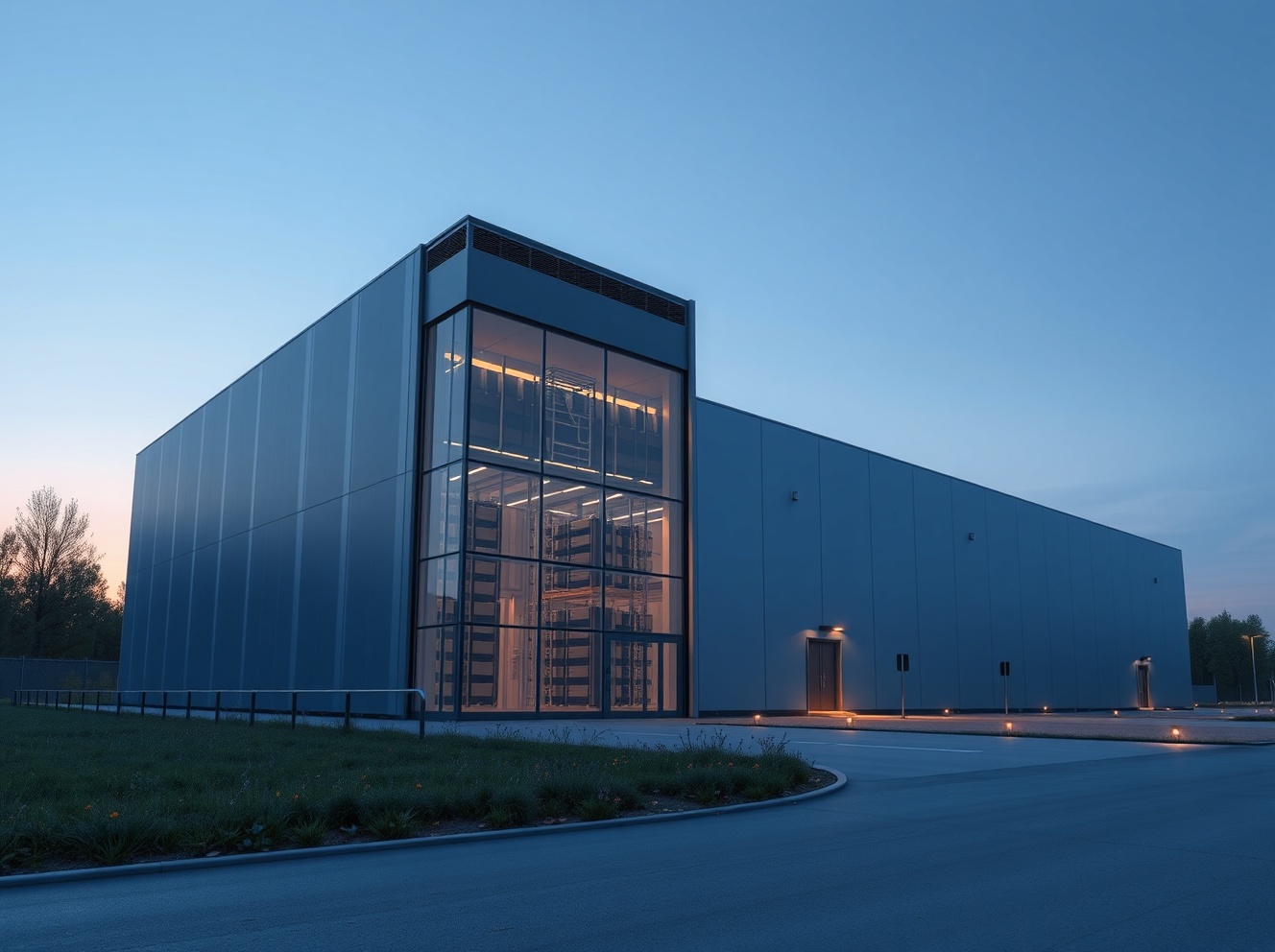
Mistral AI’s Strategic $830M Debt Raise Powers Ambitious Paris Data Center for European AI Sovereignty
In a decisive move for European technological independence, French artificial intelligence lab Mistral AI has secured a substantial $830 million debt facility specifically to construct a major new data center near Paris. This strategic financing, confirmed by reports from Reuters and CNBC on March 30, 2026, underscores the intense global race to build foundational AI infrastructure and signals a significant step in Europe’s quest for digital sovereignty. The facility will be powered by advanced Nvidia chips, positioning it as a critical hub for next-generation AI compute capacity on the continent.
Mistral AI’s Paris Data Center: A Pillar of European Strategy
Mistral AI first announced its intention to build a dedicated data center last year. Subsequently, CEO Arthur Mensch indicated in February 2025 that the company was exploring various financing options for the project. The newly secured $830 million debt package provides the capital necessary to turn those plans into reality. According to Reuters, construction will take place in Bruyeres-le-Chatel, a location near Paris, with completion and operational status targeted for the second quarter of 2026.
This project is not an isolated endeavor but a core component of Mistral AI’s broader European infrastructure blueprint. Last month, the company revealed a parallel $1.4 billion investment plan for AI infrastructure in Sweden. Together, these initiatives support a bold corporate objective: to deploy 200 megawatts of compute capacity across Europe by 2027. This scale of investment highlights the enormous computational resources required to train and run cutting-edge large language models (LLMs) and other AI systems competitively.
The Drive for AI Autonomy in Europe
The financing and construction of this data center directly address a pressing concern for European governments, enterprises, and research institutions: over-reliance on third-party, often non-European, cloud providers. In a statement to CNBC, CEO Arthur Mensch framed the investment as essential for regional empowerment and innovation. “Scaling our infrastructure in Europe is critical to empower our customers and to ensure AI innovation and autonomy remain at the heart of Europe,” Mensch said.
He further emphasized the market demand, noting “surging and sustained demand from governments, enterprises, and research institutions seeking to build their own customized AI environment.” This sentiment reflects a growing trend, often termed “technological sovereignty,” where nations and blocs seek to control the underlying technologies deemed critical for economic and strategic security. A sovereign AI infrastructure allows for data residency compliance, tailored security protocols, and reduced dependency on external geopolitical factors.
Financing the AI Arms Race: Debt, Equity, and Strategic Backing
The choice of debt financing for this specific project is noteworthy. While venture capital fuels rapid growth and R&D, debt is often employed for tangible, revenue-generating infrastructure with predictable returns. This $830 million facility suggests lenders have confidence in Mistral AI’s business model and the future demand for its dedicated compute services.
Mistral AI’s ability to raise such capital is built upon a formidable foundation of equity investment. To date, the company has raised over €2.8 billion (approximately $3.1 billion) from a prestigious roster of global investors. Key backers include:
- General Catalyst and Lightspeed Venture Partners (prominent Silicon Valley venture firms)
- Andreessen Horowitz (a16z) (a major investor in frontier technology)
- DST Global (an international investment group)
- ASML (the European semiconductor equipment giant, indicating strategic industrial alignment)
This blend of equity and debt financing provides Mistral AI with the flexible capital structure needed to simultaneously fund long-term infrastructure and aggressive research and development.
Nvidia’s Central Role in the AI Ecosystem
The report that the Paris data center will be “powered by Nvidia chips” is a crucial technical detail. Nvidia’s graphics processing units (GPUs), particularly its H100 and next-generation Blackwell architecture chips, have become the de facto standard for training and inferencing advanced AI models. However, securing a sufficient supply of these high-demand chips has been a major bottleneck for AI companies worldwide.
Mistral AI’s explicit partnership with Nvidia for this facility ensures access to this critical hardware. It also positions the data center as a state-of-the-art installation capable of handling the most computationally intensive AI workloads. This dependency also highlights a broader challenge for European sovereignty: while infrastructure can be built locally, the supply chain for the most advanced semiconductors remains concentrated outside Europe.
| Location | Investment Type | Amount | Key Purpose | Timeline |
|---|---|---|---|---|
| Bruyeres-le-Chatel, France | Debt Financing | $830 Million | Build Nvidia-powered data center | Operational by Q2 2026 |
| Sweden | Equity Investment | $1.4 Billion | AI infrastructure & data centers | Ongoing |
| Europe-Wide | Cumulative Capital | 200 MW capacity | Total compute power target | By 2027 |
Conclusion
Mistral AI’s $830 million debt raise to establish a major data center near Paris represents far more than a corporate expansion. It is a concrete manifestation of Europe’s strategic push to claim a sovereign role in the global artificial intelligence landscape. By building foundational, Nvidia-powered infrastructure on European soil, Mistral AI aims to provide the computational bedrock that allows local entities to innovate without external constraints. This move directly responds to powerful demand signals from both the public and private sectors for controlled, customized AI environments. As the facility moves toward its 2026 operational date, it will serve as a critical test case for whether Europe can successfully translate its ambitions for technological autonomy into a competitive, homegrown AI ecosystem. The success of this Mistral AI data center will significantly influence the continent’s position in the ongoing AI revolution.
FAQs
Q1: Why did Mistral AI choose debt financing for this data center?
Debt financing is a common tool for funding tangible infrastructure projects with predictable revenue streams, like data centers. It allows the company to leverage its strong equity backing without further diluting ownership, while lenders are attracted to the asset-backed nature of the investment.
Q2: What does “AI sovereignty” mean in this context?
AI sovereignty refers to the ability of a nation or region to develop, deploy, and govern artificial intelligence technologies without critical dependence on foreign entities. It encompasses control over data, algorithms, compute infrastructure, and supply chains to ensure strategic, economic, and regulatory independence.
Q3: How does this data center fit into Mistral AI’s overall business model?
Beyond developing and licensing its own AI models (like Mistral Large), Mistral AI is building a platform business. This data center will allow it to sell dedicated, high-performance compute capacity and managed AI services directly to enterprises, governments, and researchers, creating a recurring revenue stream.
Q4: What are the main challenges in building such a large AI data center?
Key challenges include securing a reliable and massive power supply (often hundreds of megawatts), obtaining planning permissions, managing complex construction logistics, acquiring scarce advanced hardware like Nvidia GPUs, and ensuring robust cooling systems for the energy-intensive servers.
Q5: How does Mistral’s investment compare to other major AI infrastructure projects?
While large, Mistral’s European-focused build-out is part of a global trend. For scale, major U.S. cloud providers like Amazon Web Services, Microsoft Azure, and Google Cloud are investing tens of billions annually in data centers globally. Mistral’s strategy is differentiated by its focus on European sovereignty and tailored, high-performance AI compute rather than general-purpose cloud services.
This post Mistral AI’s Strategic $830M Debt Raise Powers Ambitious Paris Data Center for European AI Sovereignty first appeared on BitcoinWorld.


You May Also Like

Dogecoin Price Prediction Points to Historic Rally: Here’s What Comes Next for DOGE
BAE Systems (BAESY) Secures $180M Swedish Air Defense Deal Despite Stock Decline