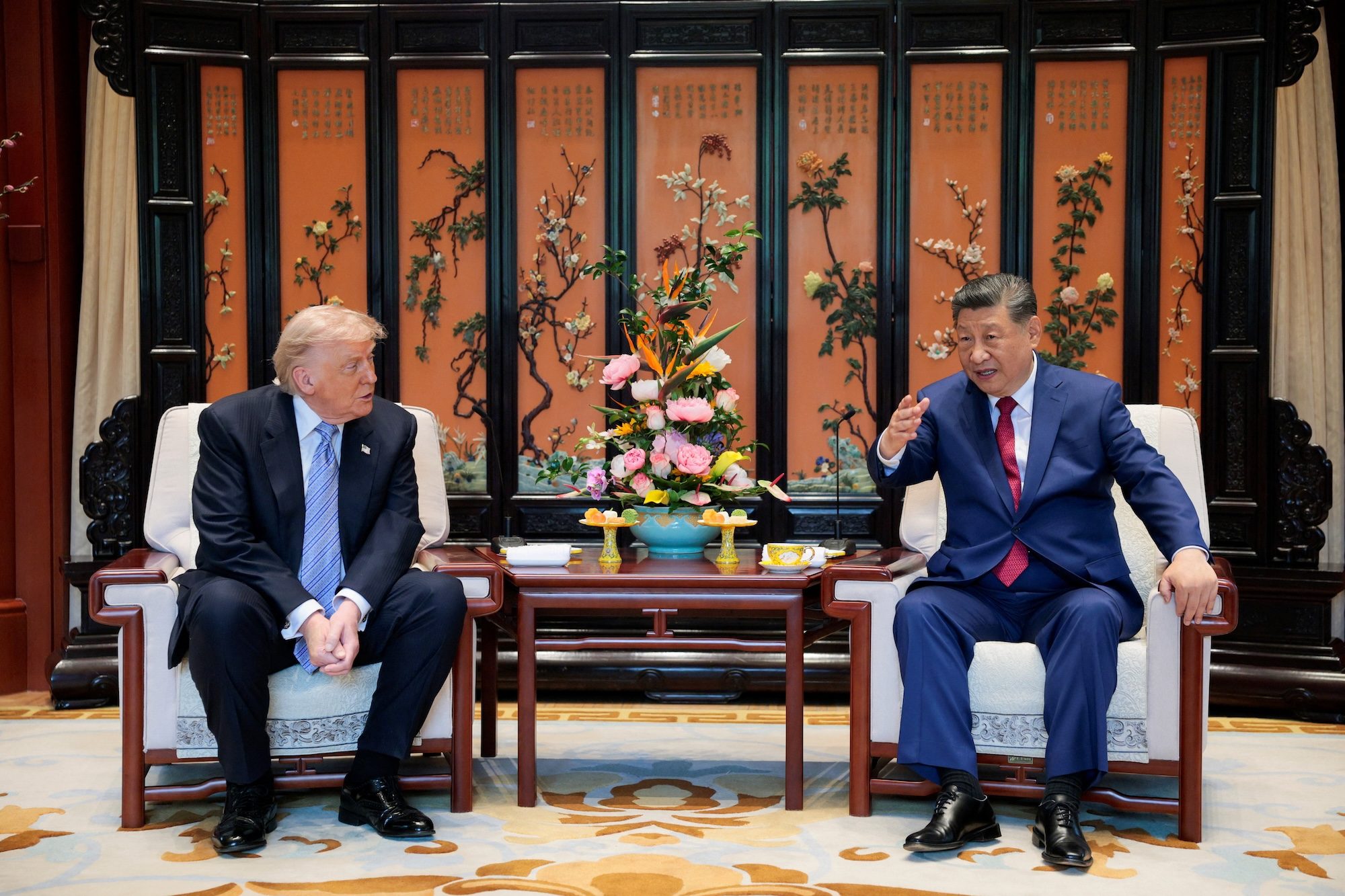
Trump Iran Deal: Decoding the High-Stakes Negotiation Signals and Regional Fallout
BitcoinWorld
Trump Iran Deal: Decoding the High-Stakes Negotiation Signals and Regional Fallout
WASHINGTON, D.C. – Recent statements from former President Donald Trump regarding Iran’s diplomatic posture have reignited global analysis of a potential nuclear agreement framework. Specifically, Trump’s characterization that “Iran is negotiating” and “wants to make a deal so badly” provides a crucial lens through which to examine current geopolitical tensions, economic pressures, and the complex pathway to regional stability in the Middle East. This analysis delves into the verifiable context behind these remarks, the historical precedent of the JCPOA, and the multifaceted impacts on global energy markets and international security architecture.
Trump Iran Deal Statement: Context and Immediate Reactions
Former President Donald Trump made his remarks during a recent policy address, framing Iran’s position within his administration’s “maximum pressure” campaign legacy. Consequently, regional analysts immediately scrutinized the statement for shifts in diplomatic signaling. Furthermore, the Iranian Foreign Ministry issued a calibrated response, neither fully confirming nor denying a heightened negotiation posture. This exchange highlights the delicate dance of public diplomacy where statements serve as both domestic messaging and international probes. Importantly, the context includes sustained economic pressure from sanctions, which have significantly constrained Iran’s oil exports and access to global financial systems.
Several key factors shape the current landscape. First, the shadow of the 2015 Joint Comprehensive Plan of Action (JCPOA) looms large. Second, regional proxy conflicts in Yemen and Syria create complicating layers. Third, the development of Iran’s nuclear program, as reported by the International Atomic Energy Agency (IAEA), establishes urgent non-proliferation timelines. Finally, the strategic interests of regional actors like Israel, Saudi Arabia, and the United Arab Emirates directly influence negotiation dynamics. Each factor interlinks, creating a negotiation environment far more complex than simple bilateral talks.
Economic Pressures as a Negotiating Lever
The assertion that Iran “wants to make a deal so badly” finds its strongest evidence in the nation’s economic indicators. According to World Bank data and IMF reports, sanctions have precipitated a deep recession, high inflation, and currency devaluation. For instance, Iran’s oil export revenue, a primary fiscal pillar, has fallen dramatically. This economic distress theoretically increases Tehran’s incentive to secure sanctions relief through diplomatic concessions. However, analysts caution that economic pressure alone does not guarantee diplomatic outcomes, as national pride and strategic autonomy often outweigh material concerns for revolutionary states.
Historical Precedent: From the JCPOA to Maximum Pressure
Understanding the current moment requires a brief examination of the recent past. The 2015 JCPOA, negotiated under the Obama administration, established strict limits on Iran’s nuclear activities in exchange for sanctions relief. The Trump administration unilaterally withdrew from the agreement in 2018, reinstating and expanding sanctions under a “maximum pressure” strategy. The Biden administration subsequently engaged in indirect talks in Vienna to explore a mutual return to compliance. These on-again, off-again negotiations have created a legacy of distrust that any new diplomatic initiative must overcome.
A comparison of key negotiation parameters illustrates the shifting goals:
| Parameter | JCPOA (2015) | Current Reported Sticking Points |
|---|---|---|
| Nuclear Enrichment | Cap of 3.67% purity, stockpile limit | Level of enrichment rollback, verification mechanisms |
| Sanctions Relief | Lifting of nuclear-related sanctions | Scope of relief (including terrorism-related sanctions) |
| Duration | 10-15 year sunset clauses | Permanence of restrictions, long-term framework |
| Regional Behavior | Not formally addressed | Demands to address missile programs & proxy activities |
This table shows how the negotiation baseline has evolved, particularly with the inclusion of non-nuclear issues, which Iran has historically rejected as topics for the nuclear file.
Regional Implications and Security Architecture
The potential for a new U.S.-Iran understanding carries profound implications for Middle Eastern security. A successful deal could potentially:
- Reduce immediate proliferation risks by reinstating intrusive IAEA monitoring.
- Stabilize global oil markets by allowing the gradual return of Iranian crude.
- Alter regional alliances, potentially easing tensions between Iran and Gulf Arab states.
Conversely, a collapse in talks or a deal perceived as weak could trigger adverse reactions. For example, Israel has consistently stated it reserves the right to take military action to prevent a nuclear-armed Iran. Similarly, a Republican-led U.S. Congress might oppose any agreement that does not address Iran’s ballistic missile program and support for regional militias. Therefore, the diplomatic process must balance non-proliferation goals with the complex security concerns of multiple stakeholders.
Expert Analysis on Negotiation Credibility
Dr. Anahita Mir, a senior fellow at the Center for Strategic and International Studies, notes, “Public statements from figures like former President Trump are often tactical. They can be designed to shape the negotiation atmosphere, signal flexibility to domestic audiences, or test the other side’s resolve. The critical metric is not the rhetoric but the movement in working-level talks, which often occurs away from headlines.” This perspective underscores the importance of separating political commentary from the technical diplomatic process, which involves detailed discussions on centrifuge counts, verification protocols, and sanctions-lifting sequences.
The Path Forward: Scenarios and Outcomes
Several plausible scenarios exist for the coming months. A breakthrough leading to a new or revived agreement remains possible, though politically difficult. Alternatively, a continuation of the current stalemate, characterized by indirect talks and incremental nuclear advancement by Iran, seems likely. A worst-case scenario involves a complete diplomatic breakdown, possibly accompanied by heightened military posturing or covert actions. The economic dimension remains pivotal; the longer sanctions persist, the greater the strain on Iran’s economy, but also the greater its advancement in nuclear know-how, thereby altering the technical basis for any future deal.
Key determinants of the outcome include:
- The results of upcoming U.S. elections and their impact on foreign policy continuity.
- Iran’s internal political dynamics and the balance of power between moderates and hardliners.
- The ability of European mediators (E3) to bridge U.S. and Iranian positions.
- Unforeseen regional events that could derail or accelerate diplomacy.
Conclusion
Former President Trump’s comments on the Trump Iran deal negotiations provide a flashpoint for examining a multifaceted and high-stakes diplomatic challenge. The desire for a deal, driven by severe economic pressure, confronts deep-seated political and strategic obstacles on both sides. Ultimately, the path to a sustainable agreement requires not just political will but also creative diplomacy that addresses core security concerns for all parties in the region. The world watches closely, as the outcome will significantly influence non-proliferation efforts, Middle Eastern stability, and global energy security for years to come.
FAQs
Q1: What did former President Trump actually say about Iran negotiations?
In a recent policy address, former President Donald Trump stated that Iran is currently engaged in negotiations and has a strong desire to secure a deal, framing this within the context of the economic pressure applied during his administration.
Q2: Why is Iran perceived as wanting a deal “so badly”?
Analysts point to the severe impact of international sanctions on Iran’s economy, including reduced oil revenue, high inflation, and currency devaluation, which create powerful incentives for Tehran to obtain sanctions relief through diplomatic agreement.
Q3: What is the main obstacle to a new U.S.-Iran nuclear deal?
A primary obstacle is the expanded set of demands beyond the 2015 JCPOA framework, including issues like Iran’s ballistic missile program and regional activities, which Iran refuses to include in nuclear talks, and the deep mistrust built from the prior U.S. withdrawal.
Q4: How do regional actors like Israel and Saudi Arabia view these negotiations?
Both Israel and Gulf Arab states have expressed strong concerns about any agreement that does not permanently curb Iran’s nuclear capabilities and address its regional military influence, fearing it would enhance Iranian power and threaten their security.
Q5: What would be the global impact of a successful deal?
A successful deal could stabilize global oil markets by allowing increased Iranian exports, reduce immediate nuclear proliferation risks in the Middle East, and potentially create openings for de-escalation in regional conflicts, though it would face significant political opposition.
This post Trump Iran Deal: Decoding the High-Stakes Negotiation Signals and Regional Fallout first appeared on BitcoinWorld.


You May Also Like

MicroStrategy’s STRC Perpetual Preferred Stock Hits Record $1.5 Billion Daily Volume

Crypto market maker B2C2 secures MiCA license for EU-wide expansion