Bloomberg ETF analysts Eric Balchunas and James Seyffart expect REX-Osprey’s XRP and Doge ETFs to launch Thursday, marking the first U.S. spot exposure to these cryptocurrencies through regulated investment vehicles. The XRP ETF will trade under ticker $XRPR while the Dogecoin fund uses symbol $DOJE, both utilizing the faster 40 Act structure that bypasses traditional SEC approval delays. REX-Osprey confirmed the XRP ETF launch through social media, positioning $XRPR as the first U.S. fund delivering spot exposure to the third-largest cryptocurrency by market capitalization. The effective prospectus includes Trump and Bonk token ETFs, though launch dates for those products remain unannounced. The launches occur as 92 crypto ETF applications await SEC review, with most facing October deadlines for Solana, XRP, and Litecoin products. 40 Act Structure Enables Rapid Market Entry, Bypassing SEC Bottlenecks Rex-Osprey’s strategy utilizes Investment Company Act of 1940 structures that avoid the Form S-1 and 19b-4 filing requirements faced by traditional spot crypto ETFs. ETF Store President Nate Geraci previously described this approach as a “regulatory end-around” that eliminates typical approval delays. The same structure enabled REX’s successful launch of the Solana staking ETF earlier this year. Unlike traditional ETF applications requiring extensive SEC review periods, 40 Act funds can reach markets through effective prospectus filings. While REX got its own approval, seven major asset managers filed updated XRP ETF amendments on August 23, including Grayscale, Bitwise, Canary, CoinShares, Franklin, 21Shares, and WisdomTree. Bloomberg analysts attributed the coordinated filings to SEC feedback, calling the simultaneous submissions “highly notable” and “a very good sign” for eventual approval prospects. The amendments adjusted fund structures to allow XRP or cash creations alongside both cash and in-kind redemptions rather than strictly cash-based mechanisms. However, BlackRock notably avoided joining the XRP race despite launching the first spot Bitcoin and Ethereum ETFs. REX-Osprey expanded its crypto ETF portfolio beyond Solana products, filing for BNB staking ETFs in August and MOVE token exposure in March. The firm’s aggressive alternative asset strategy put it as a leader among those chasing unique assets beyond Bitcoin and Ethereum. Similarly, Grayscale is pursuing trust-to-ETF conversions for Litecoin, Solana, Dogecoin, XRP, and Avalanche while maintaining separate applications for Ethereum staking products. The company revealed the “GDOG” ticker for its Dogecoin ETF planned for NYSE Arca listing. Institutional Momentum Builds Despite SEC Delays and Generic Listing Uncertainty Earlier this month, the SEC extended Franklin Templeton’s Solana and XRP ETF decisions to November 14, using the maximum 60-day extension authority before final rulings. At the same time, BlackRock’s Ethereum staking amendment was also postponed to October 30, adding complexity to institutional adoption timelines. Bloomberg analyst Eric Balchunas attributes systematic delays to SEC coordination with generic listing standards requested by Cboe and NYSE in July. Institutions have proposed amendments that would allow for the automatic listing of crypto ETFs without requiring case-by-case regulatory review, potentially triggering simultaneous product launches. Current guidelines require separate proposed rule changes for each application, creating 240-day review processes that generic standards would eliminate. Balchunas expects a “flood of ETFs probably in a couple months” following anticipated October approval of streamlined procedures. As of September 15, institutional demand continues building with Bitcoin ETFs recording $260 million in net inflows yesterday, marking their 6th consecutive day of inflows, while Ethereum products attracted $360 million, according to SosoValue. BlackRock’s ETHA led Ethereum inflows at $45.4 million, as the world’s largest asset manager pushes for the integration of staking functionality. As it stands now, prediction markets assign 96% approval probability for XRP ETFs, climbing from 64% in August as institutional confidence builds around regulatory clarity following the SEC dropping the Ripple lawsuit.Source: Polymarket Similarly, other Dogecoin funds maintain 96% approval odds on Polymarket, more than doubling from 44% in June, despite the token’s origins as a meme coin and its cultural positioning.Source: PolymarketBloomberg ETF analysts Eric Balchunas and James Seyffart expect REX-Osprey’s XRP and Doge ETFs to launch Thursday, marking the first U.S. spot exposure to these cryptocurrencies through regulated investment vehicles. The XRP ETF will trade under ticker $XRPR while the Dogecoin fund uses symbol $DOJE, both utilizing the faster 40 Act structure that bypasses traditional SEC approval delays. REX-Osprey confirmed the XRP ETF launch through social media, positioning $XRPR as the first U.S. fund delivering spot exposure to the third-largest cryptocurrency by market capitalization. The effective prospectus includes Trump and Bonk token ETFs, though launch dates for those products remain unannounced. The launches occur as 92 crypto ETF applications await SEC review, with most facing October deadlines for Solana, XRP, and Litecoin products. 40 Act Structure Enables Rapid Market Entry, Bypassing SEC Bottlenecks Rex-Osprey’s strategy utilizes Investment Company Act of 1940 structures that avoid the Form S-1 and 19b-4 filing requirements faced by traditional spot crypto ETFs. ETF Store President Nate Geraci previously described this approach as a “regulatory end-around” that eliminates typical approval delays. The same structure enabled REX’s successful launch of the Solana staking ETF earlier this year. Unlike traditional ETF applications requiring extensive SEC review periods, 40 Act funds can reach markets through effective prospectus filings. While REX got its own approval, seven major asset managers filed updated XRP ETF amendments on August 23, including Grayscale, Bitwise, Canary, CoinShares, Franklin, 21Shares, and WisdomTree. Bloomberg analysts attributed the coordinated filings to SEC feedback, calling the simultaneous submissions “highly notable” and “a very good sign” for eventual approval prospects. The amendments adjusted fund structures to allow XRP or cash creations alongside both cash and in-kind redemptions rather than strictly cash-based mechanisms. However, BlackRock notably avoided joining the XRP race despite launching the first spot Bitcoin and Ethereum ETFs. REX-Osprey expanded its crypto ETF portfolio beyond Solana products, filing for BNB staking ETFs in August and MOVE token exposure in March. The firm’s aggressive alternative asset strategy put it as a leader among those chasing unique assets beyond Bitcoin and Ethereum. Similarly, Grayscale is pursuing trust-to-ETF conversions for Litecoin, Solana, Dogecoin, XRP, and Avalanche while maintaining separate applications for Ethereum staking products. The company revealed the “GDOG” ticker for its Dogecoin ETF planned for NYSE Arca listing. Institutional Momentum Builds Despite SEC Delays and Generic Listing Uncertainty Earlier this month, the SEC extended Franklin Templeton’s Solana and XRP ETF decisions to November 14, using the maximum 60-day extension authority before final rulings. At the same time, BlackRock’s Ethereum staking amendment was also postponed to October 30, adding complexity to institutional adoption timelines. Bloomberg analyst Eric Balchunas attributes systematic delays to SEC coordination with generic listing standards requested by Cboe and NYSE in July. Institutions have proposed amendments that would allow for the automatic listing of crypto ETFs without requiring case-by-case regulatory review, potentially triggering simultaneous product launches. Current guidelines require separate proposed rule changes for each application, creating 240-day review processes that generic standards would eliminate. Balchunas expects a “flood of ETFs probably in a couple months” following anticipated October approval of streamlined procedures. As of September 15, institutional demand continues building with Bitcoin ETFs recording $260 million in net inflows yesterday, marking their 6th consecutive day of inflows, while Ethereum products attracted $360 million, according to SosoValue. BlackRock’s ETHA led Ethereum inflows at $45.4 million, as the world’s largest asset manager pushes for the integration of staking functionality. As it stands now, prediction markets assign 96% approval probability for XRP ETFs, climbing from 64% in August as institutional confidence builds around regulatory clarity following the SEC dropping the Ripple lawsuit.Source: Polymarket Similarly, other Dogecoin funds maintain 96% approval odds on Polymarket, more than doubling from 44% in June, despite the token’s origins as a meme coin and its cultural positioning.Source: Polymarket

Bloomberg Analysts Expect REX-Osprey XRP and Doge ETFs to Begin Trading This Thursday

Bloomberg ETF analysts Eric Balchunas and James Seyffart expect REX-Osprey’s XRP and Doge ETFs to launch Thursday, marking the first U.S. spot exposure to these cryptocurrencies through regulated investment vehicles.

The XRP ETF will trade under ticker $XRPR while the Dogecoin fund uses symbol $DOJE, both utilizing the faster 40 Act structure that bypasses traditional SEC approval delays.

REX-Osprey confirmed the XRP ETF launch through social media, positioning $XRPR as the first U.S. fund delivering spot exposure to the third-largest cryptocurrency by market capitalization.

The effective prospectus includes Trump and Bonk token ETFs, though launch dates for those products remain unannounced.

The launches occur as 92 crypto ETF applications await SEC review, with most facing October deadlines for Solana, XRP, and Litecoin products.

40 Act Structure Enables Rapid Market Entry, Bypassing SEC Bottlenecks

Rex-Osprey’s strategy utilizes Investment Company Act of 1940 structures that avoid the Form S-1 and 19b-4 filing requirements faced by traditional spot crypto ETFs.

ETF Store President Nate Geraci previously described this approach as a “regulatory end-around” that eliminates typical approval delays.

The same structure enabled REX’s successful launch of the Solana staking ETF earlier this year.

Unlike traditional ETF applications requiring extensive SEC review periods, 40 Act funds can reach markets through effective prospectus filings.

While REX got its own approval, seven major asset managers filed updated XRP ETF amendments on August 23, including Grayscale, Bitwise, Canary, CoinShares, Franklin, 21Shares, and WisdomTree.

Bloomberg analysts attributed the coordinated filings to SEC feedback, calling the simultaneous submissions “highly notable” and “a very good sign” for eventual approval prospects.

The amendments adjusted fund structures to allow XRP or cash creations alongside both cash and in-kind redemptions rather than strictly cash-based mechanisms.

However, BlackRock notably avoided joining the XRP race despite launching the first spot Bitcoin and Ethereum ETFs.

REX-Osprey expanded its crypto ETF portfolio beyond Solana products, filing for BNB staking ETFs in August and MOVE token exposure in March.

The firm’s aggressive alternative asset strategy put it as a leader among those chasing unique assets beyond Bitcoin and Ethereum.

Similarly, Grayscale is pursuing trust-to-ETF conversions for Litecoin, Solana, Dogecoin, XRP, and Avalanche while maintaining separate applications for Ethereum staking products.

The company revealed the “GDOG” ticker for its Dogecoin ETF planned for NYSE Arca listing.

Institutional Momentum Builds Despite SEC Delays and Generic Listing Uncertainty

Earlier this month, the SEC extended Franklin Templeton’s Solana and XRP ETF decisions to November 14, using the maximum 60-day extension authority before final rulings.

At the same time, BlackRock’s Ethereum staking amendment was also postponed to October 30, adding complexity to institutional adoption timelines.

Bloomberg analyst Eric Balchunas attributes systematic delays to SEC coordination with generic listing standards requested by Cboe and NYSE in July.

Institutions have proposed amendments that would allow for the automatic listing of crypto ETFs without requiring case-by-case regulatory review, potentially triggering simultaneous product launches.

Current guidelines require separate proposed rule changes for each application, creating 240-day review processes that generic standards would eliminate.

Balchunas expects a “flood of ETFs probably in a couple months” following anticipated October approval of streamlined procedures.

As of September 15, institutional demand continues building with Bitcoin ETFs recording $260 million in net inflows yesterday, marking their 6th consecutive day of inflows, while Ethereum products attracted $360 million, according to SosoValue.

BlackRock’s ETHA led Ethereum inflows at $45.4 million, as the world’s largest asset manager pushes for the integration of staking functionality.

As it stands now, prediction markets assign 96% approval probability for XRP ETFs, climbing from 64% in August as institutional confidence builds around regulatory clarity following the SEC dropping the Ripple lawsuit.
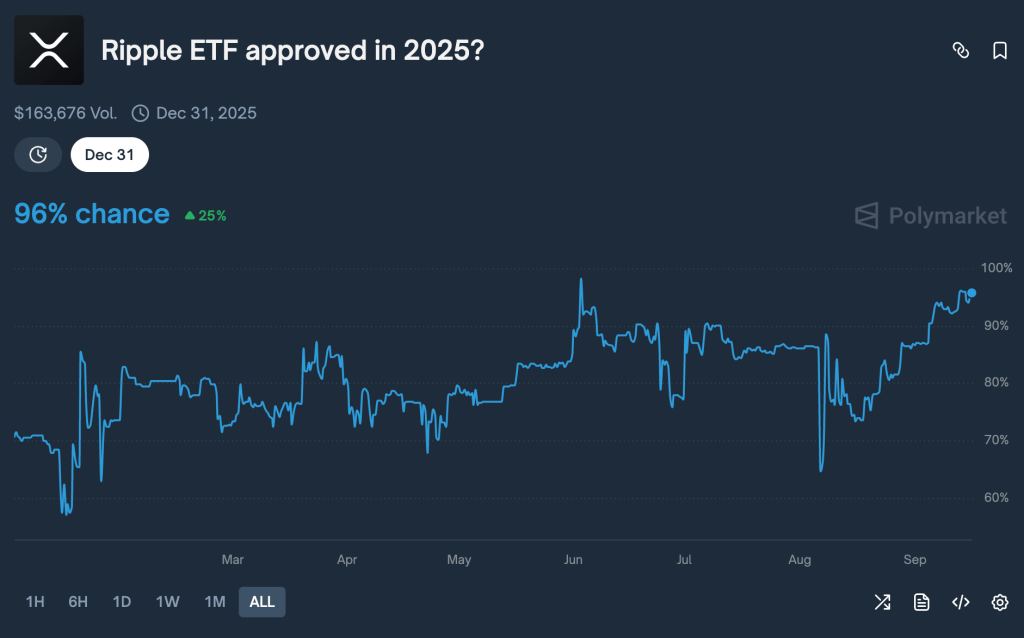
Bloomberg Analysts Expect REX-Osprey XRP and Doge ETFs to Begin Trading This ThursdaySource: Polymarket

Similarly, other Dogecoin funds maintain 96% approval odds on Polymarket, more than doubling from 44% in June, despite the token’s origins as a meme coin and its cultural positioning.

Bloomberg Analysts Expect REX-Osprey XRP and Doge ETFs to Begin Trading This ThursdaySource: Polymarket
Market Opportunity
XRP Logo
XRP Price(XRP)
$1.9531
$1.9531$1.9531
-1.42%
USD
XRP (XRP) Live Price Chart
Disclaimer: The articles reposted on this site are sourced from public platforms and are provided for informational purposes only. They do not necessarily reflect the views of MEXC. All rights remain with the original authors. If you believe any content infringes on third-party rights, please contact service@support.mexc.com for removal. MEXC makes no guarantees regarding the accuracy, completeness, or timeliness of the content and is not responsible for any actions taken based on the information provided. The content does not constitute financial, legal, or other professional advice, nor should it be considered a recommendation or endorsement by MEXC.

You May Also Like

Pendle price eyes breakout above $2.35 resistance as new staking model goes live

Pendle price eyes breakout above $2.35 resistance as new staking model goes live

Pendle price is showing signs of recovery above a key resistance level as the protocol rolls out a new staking model. Pendle was trading at $2.07 at press time,
Share
Crypto.news2026/01/20 13:25
SEC clears framework for fast-tracked crypto ETF listings

SEC clears framework for fast-tracked crypto ETF listings

The post SEC clears framework for fast-tracked crypto ETF listings appeared on BitcoinEthereumNews.com. The Securities and Exchange Commission has approved new generic listing standards for spot crypto exchange-traded funds, clearing the way for faster approvals. Summary SEC has greenlighted new generic listing standards for spot crypto ETFs. Rule change eliminates lengthy case-by-case approvals, aligning crypto ETFs with commodity funds. Grayscale’s Digital Large Cap Fund and Bitcoin ETF options also gain approval. The U.S. SEC has approved new generic listing standards that will allow exchanges to fast-track spot crypto ETFs, marking a pivotal shift in U.S. digital asset regulation. According to a Sept. 17 press release, the SEC voted to approve rule changes from Nasdaq, NYSE Arca, and Cboe BZX, enabling them to list and trade commodity-based trust shares, including those holding spot digital assets, without submitting individual proposals for each product. A streamlined path for crypto ETFs Under the new rules, an ETF can be listed without SEC sign-off if its underlying asset trades on a market with surveillance-sharing agreements, has active CFTC-regulated futures contracts for at least six months, or already represents at least 40% of an existing listed ETF. This brings crypto ETFs in line with traditional commodity-based funds under Rule 6c-11, eliminating a process that could take up to 240 days. SEC chair Paul Atkins said the move was designed to “maximize investor choice and foster innovation” while ensuring the U.S. remains the leading market for digital assets. Jamie Selway, director of the division of trading and markets, called the framework “a rational, rules-based approach” that balances access with investor protection. First products already approved Alongside the new standards, the SEC cleared the listing of the Grayscale Digital Large Cap Fund, which tracks spot assets based on the CoinDesk 5 Index. It also approved trading of options tied to the Cboe Bitcoin U.S. ETF Index and its mini version, with…
Share
BitcoinEthereumNews2025/09/18 14:04
Masterpieces at Your Fingertips: Why Artplace is the Ultimate Revolution in Digital Art Galleries

Masterpieces at Your Fingertips: Why Artplace is the Ultimate Revolution in Digital Art Galleries

Art has long been perceived as an exclusive world—a realm reserved for the elite, tucked away in silent galleries and prestigious auction houses. However, the emergence
Share
Techbullion2026/01/20 13:33