The ESA Breach: Is API Token Theft the New, Silent Ransomware?
When you hear ‘cyberattack,’ you probably think of loud, disruptive ransomware. But what if the next breach on your network is completely silent?
The late 2025 European Space Agency (ESA) incident changed the risk profile for every business. Attacker “888” didn’t lock files; they stole a 200 GB blueprint of the cloud network, including API tokens. These tokens bypass Multi-Factor Authentication (MFA), creating a hidden, long-term threat.
Every security team must now ask: Why is this type of digital espionage more dangerous than any file encryption?
Key Takeaways:
- The 2025 ESA breach was a digital espionage attack, not ransomware, where the attacker “888” stole 200 GB of IaC files and API tokens over a one-week period.
- Stolen Infrastructure as Code (IaC) files act as a complete cloud network blueprint, exposing security settings and plaintext secrets like database passwords in state files.
- Stolen API tokens are highly dangerous because they bypass Multi-Factor Authentication (MFA), allowing attackers stealthy, long-term access that mimics normal developer activity.
- Modern defense requires a Zero Trust approach and API Token Governance, including setting token lifespans to 15 minutes or less to reduce the window of attack.
How Did the 2025 ESA Incident Redefine Digital Espionage?
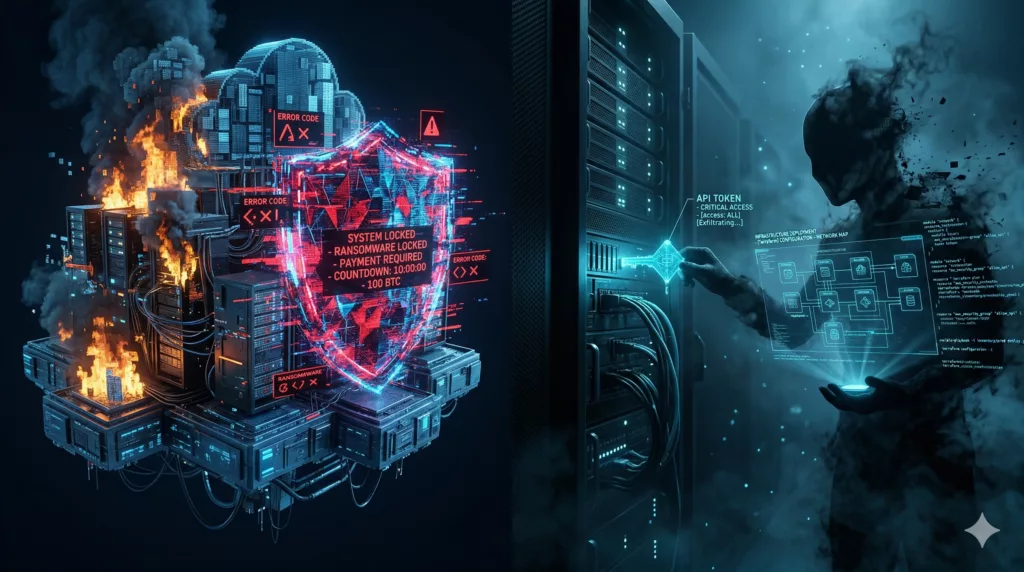
Cyberattacks are changing. In late 2025, the European Space Agency (ESA) faced a major data leak. An attacker known as “888” stole 200 gigabytes of data. This was not a standard ransomware attack. The hacker did not lock files for money. Instead, they stole the blueprints for the agency’s digital setup.
The breach began on December 18, 2025. For one week, the attacker moved through development tools like Jira and Bitbucket. They took Infrastructure as Code (IaC) files, specifically Terraform and Ansible scripts. These files show exactly how the agency builds its cloud networks. The attacker also stole API access tokens.
ESA Breach Facts (December 2025)
| Category | Details |
| Attacker | “888” |
| Data Stolen | 200 GB of code and tokens |
| Target Systems | Atlassian Jira and Bitbucket |
| Access Dates | December 18 to December 25, 2025 |
| Primary Goal | Infrastructure-centric espionage |
| Entry Method | Stolen credentials and misconfigured tokens |
This theft creates a long-term risk. Stolen tokens allow attackers to bypass multi-factor authentication. They can stay inside the system without being caught. The ESA has a history of digital threats. It dealt with a payment attack in 2024 and a database breach in 2015. This 2025 incident is more serious. The stolen files act as a map for future attacks.
The agency must now secure its internal scripts. Using Terraform and Ansible files, the attacker “888” gained a full view of the cloud environment. This transforms efficiency tools into a guide for hackers. Organizations today must protect their automated scripts as much as their hardware.
Why is Stealing Your Cloud Network’s “Map” (IaC) So Dangerous?
Modern IT teams use Infrastructure as Code (IaC) to build networks. Tools like Terraform and Ansible allow engineers to set up complex systems using simple text files. In the 2025 ESA breach, the theft of these files gave attackers the digital instructions for the agency’s entire environment. These files do more than describe a network. They function as the actual framework of the digital system.
Terraform and Network Exposure
Terraform defines cloud resources such as virtual networks and security roles. By stealing these files, the attacker “888” gained a complete view of the ESA network. This data includes internal IP addresses and specific security settings.
The leak specifically affected files for the Copernicus Earth observation program. This allows an adversary to see how scientific data moves through the system. Terraform also relies on “state files” to track resources. These files often store sensitive data, like database passwords, in plain text. An attacker with access to these files can find direct paths to high-value data.
| Terraform Security Risk | Impact of Exposure |
| Plaintext State Files | Reveals passwords and secret resource IDs. |
| Admin Roles | Helps attackers move between systems. |
| Hardcoded Secrets | Provides immediate access to restricted areas. |
| Unsecured Storage | Leads to large-scale data leaks. |
Ansible and Automated Attacks
While Terraform builds the network, Ansible manages daily tasks. It uses “playbooks” to update servers and deploy apps. If an attacker steals these playbooks, they can run commands across the entire infrastructure. They often gain the highest level of administrative power.
In the ESA breach, these files likely show how science servers handle telemetry data. A single error in an Ansible script can create a security hole in hundreds of systems at once. This “automated misconfiguration” is very hard to detect. Security tools often ignore the activity because it looks like a normal software update.
Are API Tokens the ‘Skeleton Keys’ That Bypass MFA?
The 2025 ESA breach highlights a major security flaw: stolen API tokens. In modern cloud systems, these tokens allow different apps to talk to each other. They prove a user has already logged in. Because of this, a stolen token can bypass Multi-Factor Authentication (MFA). An attacker with a token does not need a password or a phone code to enter the system.
The attacker, “888,” took tokens for Jira and Bitbucket. These platforms are where engineers share code and plan projects. With these tokens, the attacker can enter private areas and see sensitive files. Their activity looks like a regular developer at work. This makes it difficult for security software to find them.
Token-Based Attack Vectors
| Attack Method | How It Works | Impact |
| Token Replay | Using a stolen session to act as a user. | Bypasses MFA and passwords. |
| Broken Auth | Failing to check if a token is real or expired. | Grants access using fake tokens. |
| Metadata Exploit | Stealing temporary keys from cloud servers. | Accesses internal cloud resources. |
| OAuth Errors | Using weak settings to keep access to apps. | Maintains access without new logins. |
| Hardcoded Keys | Storing keys in plain text code files. | Creates a permanent entry point. |
Persistent Threats and Data Sales
Tokens often stay active for a long time. If the ESA does not cancel these tokens immediately, the attacker maintains access for months. The hacker “888” is currently selling the stolen 200 gigabytes of data for Monero.
There is a high risk that a government-backed group will buy this information. For these buyers, unclassified satellite data and simulation models are valuable. A buyer can use the stolen tokens to stay inside the ESA network quietly. They can watch projects in real-time or slowly steal data without triggering alarms.
How Does a Breach at the Perimeter Lead to a Total System Compromise?
The 2025 ESA breach shows how a small entry point leads to a total system compromise. The agency initially stated the impact was limited to external servers. However, modern cloud networks are highly integrated. A breach in one area often provides a path to the most sensitive data.
Stolen Terraform and Ansible files act as a technical map of the network. They reveal how different systems communicate. For example, an external Jira server may have a service account that accesses internal code. If login details are stored in these files, an attacker can move from the perimeter to the core. This lack of separation turns a single entry point into total access.
Lateral Movement and CI/CD Risks
The theft of CI/CD pipeline configurations for Jenkins and GitHub Actions is a major concern. These tools automate software updates. By studying these files, an attacker can find gaps in the testing process. They can then insert malicious code into a software update. Because they understand the build process, they can ensure the code remains hidden. This malicious software could eventually reach ground control systems or satellites.
| Lateral Movement Technique | Stolen ESA Asset | Security Result |
| Credential Testing | Stolen passwords | Access to multiple environments. |
| SaaS Abuse | Atlassian to Cloud links | Bypasses perimeter defenses. |
| Machine ID Theft | Ansible service tokens | Stealthy movement in the cloud. |
| Pipeline Injection | Jenkins/GitHub build scripts | Delivers malware to production. |
The exfiltrated data helps attackers move through the system without being noticed. They use authorized connections to bypass traditional security. This makes the 2025 incident a serious threat to long-term operations.
What is the Strategic Business Impact: Token Theft vs. Ransomware?
Business leaders must understand how an API token breach differs from ransomware. Both are serious, but they create different risks for an organization.
Ransomware: Overt and Disruptive
Ransomware is loud. Attackers want you to know they are there so they can demand a payment. This attack stops business operations by locking files and systems. The primary impact is downtime and financial loss. To recover, teams usually restore data from backups and patch the security hole.
Token and IaC Theft: Stealthy Espionage
The theft of API tokens and infrastructure files is a form of digital spying. It is a quiet attack designed to stay hidden. In the 2025 ESA breach, attackers stayed inside for a week to steal 200 gigabytes of data. This targets the secrecy and accuracy of your information. The damage is hard to measure because it involves stolen secrets and plans for future attacks.
The Supply Chain Risk
Small and medium businesses (SMEs) are often the entry point for larger attacks. Small firms use shared tools like Jira and Bitbucket to work with big partners. If an attacker steals an API token from a small business, they can move into the larger partner’s network. The 2024 Snowflake breach is a clear example. Stolen logins from third-party apps allowed hackers to target 160 different organizations. For a small business, being the source of a major breach can end customer trust and future contracts.
| Impact Category | Ransomware | Token/IaC Theft |
| Detection Speed | Immediate (Ransom note) | Delayed (Hidden for months) |
| Business Impact | Immediate shutdown | Stealthy data removal |
| Recovery Strategy | Restore from backups | Rotate all keys and rebuild |
| Primary Risk | Cost of downtime | Stolen secrets and sabotage |
| Public Image | Victim of a common crime | Seen as a system failure |
What Should a Post-Breach Defensive Framework for Cloud Infrastructure Look Like?
The ESA breach shows that traditional perimeter security fails when hackers steal system code and API keys. Modern defense requires a Zero Trust approach. This model assumes a breach has already happened. You must verify every access request every time.
Zero Trust Controls
- Verify Identity: Use FIDO2 hardware keys or passkeys. These methods stop phishing more effectively than standard passwords.
- Limit Access: Give users only the data they need for their specific tasks. This prevents hackers from moving through the whole network if they steal one login.
- Watch for Anomalies: Monitor network activity constantly. Look for signs of trouble, such as mass data downloads or logins from new countries.
Securing System Code
Infrastructure as Code (IaC) files describe your entire network. If these are stolen, hackers have a guide to your systems.
- Remove Hardcoded Secrets: Never put passwords or keys in Terraform or Ansible files. Use a vault service like AWS Secrets Manager to store them.
- Automate Security Scans: Use tools to check your code for errors. Look for unencrypted storage or security roles with too much power.
- Protect State Files: Store Terraform state files in encrypted, remote locations. Limit who can see or change these files.
API Token Governance
API tokens allow apps to talk to each other. Manage these tokens with the same care as human passwords.
- Inventory All Keys: List every API key and service account. Assign a human owner to each one to prevent “orphaned” keys.
- Shorten Lifespans: Set tokens to expire in 15 minutes or less. Rotate them often to reduce the risk of a stolen key.
- Use Device Binding: Use proof-of-possession techniques. This locks a token to a specific device so a hacker cannot use it from their own computer.
| Security Task | Action | Outcome |
| Identity | Move to FIDO2 keys | Prevents credential theft. |
| Governance | Set 15-minute token limits | Reduces attack windows. |
| Automation | Scan IaC for “security errors” | Finds leaks before deployment. |
| Secrets | Move keys to a vault | Removes passwords from plain text. |
What is the Roadmap for Digital Resilience After a Major Data Leak?
Recovering from a major data leak like the 2025 ESA incident takes time. Simply changing passwords is not enough. You must rebuild your digital defenses to ensure the network is safe.
Immediate Actions and Analysis
First, stop the data loss. Disconnect affected systems from the internet. Do not turn the hardware off, as forensic teams need the data stored in the machine’s memory. Experts must find out exactly what the hackers took. They also need to check if the attackers left hidden entry points to return later.
A Roadmap for Digital Resilience
The recovery process follows five distinct phases. Each step reduces the risk of a repeat attack.
| Remediation Phase | Action Items | Expected Outcome |
| 1. Containment | Cancel all stolen API tokens and keys. | Stops hackers from using stolen access. |
| 2. Eradication | Wipe servers and clean code history. | Removes hidden credentials. |
| 3. Reconstruction | Use new, secure system templates. | Fixes security holes in the network map. |
| 4. Governance | Rotate all service account keys. | Deletes old, unused access paths. |
| 5. Monitoring | Watch network traffic in real-time. | Detects suspicious behavior early. |
Long-Term Strategy
The ESA must review all stolen source code. This helps identify vulnerabilities the hackers might exploit in the future. If the stolen data contains unpatched security holes, the risk lasts for years.
To stay safe, the agency must separate its science networks from its main mission systems. This prevents a breach in a collaboration tool, like Jira or Bitbucket, from reaching mission-critical hardware. Organizations should treat unclassified data with the same care as secret files, as it often contains the blueprints for the entire system.
Conclusion: What Is the Final Frontier of Cybersecurity for Your Business?
The 2025 breach of the European Space Agency (ESA) is a warning for all businesses. Modern cybercriminals no longer just lock your files for ransom. Instead, they steal the “map” to your network, such as cloud scripts and API tokens. By taking 200 GB of infrastructure code, the threat actor “888” undermined the agency’s entire digital foundation.
Traditional security is not enough when attackers use your own automation tools against you. Using Infrastructure as Code (IaC) is fast, but it creates new risks that old methods cannot catch. To stay safe in 2026, you must eliminate “secrets sprawl” and verify every access request. Resilience now means knowing exactly who has your digital keys and where they are going.
Audit Your Cloud Keys
Scan your repositories for exposed API tokens and hardcoded credentials. Use our latest guide on Infrastructure as Code security to lock down your provisioning scripts today.
FAQs
- What was the primary difference between the 2025 ESA breach and a standard ransomware attack?
The 2025 ESA breach was a form of digital espionage, not a standard ransomware attack. The hacker, “888,” did not lock files for money but instead stole 200 GB of data, primarily Infrastructure as Code (IaC) files (Terraform and Ansible scripts) and API access tokens. This theft provides a blueprint for future attacks and allows for stealthy, long-term access, unlike the overt and disruptive nature of ransomware. - Why are stolen API tokens considered more dangerous than traditional passwords?
Stolen API tokens can bypass Multi-Factor Authentication (MFA), allowing an attacker to enter the system without needing a password or a phone code. They prove a user has already logged in. This allows the attacker to move through sensitive systems, and their activity often looks like a regular developer at work, making detection difficult. - What is the specific risk associated with the theft of Infrastructure as Code (IaC) files like Terraform and Ansible scripts?
IaC files function as the digital instructions for an organization’s entire cloud network. By stealing them, the attacker gains a complete map of the environment, including internal IP addresses and security settings. Critically, Terraform “state files” can reveal sensitive data like database passwords in plain text, providing direct paths to high-value data. - What is the difference in the business impact and recovery strategy between ransomware and token/IaC theft?
Ransomware results in an immediate business shutdown and downtime, with recovery focusing on restoring from backups and patching the security hole. In contrast, token and IaC theft is a quiet, stealthy form of espionage that leads to a delayed detection (potentially months) and stolen secrets/sabotage. The recovery strategy requires a complete rotation of all keys and a rebuild of the digital defenses. - What are three key cybersecurity measures recommended for API Token Governance after a breach like this?
The recommended measures for API Token Governance are:- Inventory All Keys: Create a list of every API key and service account and assign a human owner to prevent “orphaned” keys.
- Shorten Lifespans: Set tokens to expire quickly (e.g., 15 minutes or less) and rotate them often to reduce the attack window.
- Use Device Binding: Implement proof-of-possession techniques to lock a token to a specific device, preventing a hacker from using it from their own computer.
You May Also Like

Bitcoin ETFs hit June’s biggest outflows as BTC dips under $60K

Robotics Automation Prototyping: Engineering Kinetic Agility into End-Effectors

Russell snatches pole as Verstappen crashes at Austrian F1 Grand Prix