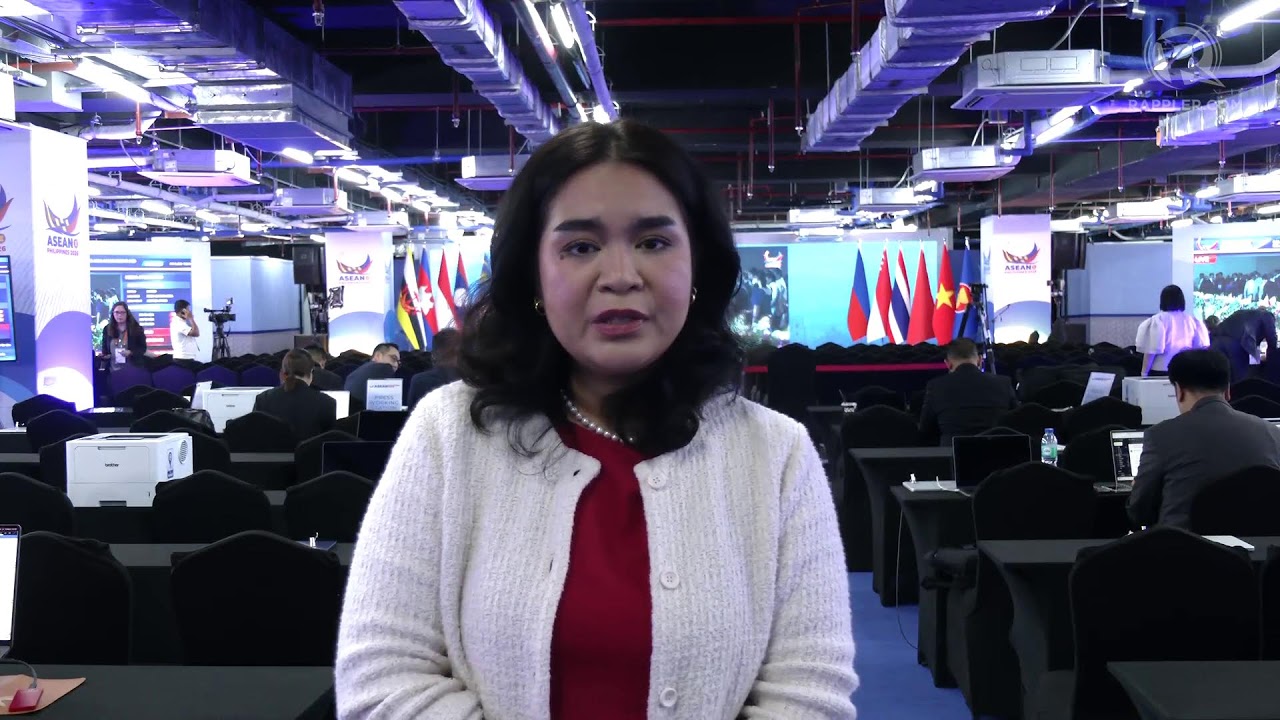
Public schools will soon switch to a three-term academic calendar as President Ferdinand Marcos Jr. gives his approval to the Department of Education. A teachersPublic schools will soon switch to a three-term academic calendar as President Ferdinand Marcos Jr. gives his approval to the Department of Education. A teachers

Trimester system gets Marcos’ nod but teachers fear new burden

2026/03/23 20:10
4 min read
For feedback or concerns regarding this content, please contact us at crypto.news@mexc.com

MANILA, Philippines – President Ferdinand Marcos Jr. approved the proposal of the Department of Education (DepEd) to shift from a quarterly to a trimester or three-term system for public schools beginning school year (SY) 2026-2027.

The Presidential Communications Office (PCO) announced the approval on Sunday, March 22, saying that the shift to a three-term system “aims to address the long-standing issue of compressed learning periods caused by class suspensions due to natural hazards and overlapping major events.”

“While the proposal has not undergone pilot testing, consultations have been conducted with various educational institutions prior to its presentation,” the PCO said.

Under the DepEd’s plan, the new academic calendar would have a total of 201 days, divided as follows:

Term 1 (69 days, June to September)

  • Opening block, for “learner profiling, baseline assessments, and essential administrative processes”: 5 days
  • Instructional block, for “uninterrupted teaching and learning”: 54 days
  • End-of-term block, for activities and celebrations, “targeted remediation and enrichment for learners, in-service training for teachers, and wellness breaks for both teachers and learners”: 10 days

Term 2 (65 days, September to December)

  • Instructional block: 55 days
  • End-of-term block: 10 days

Term 3 (67 days, January to early April)

  • Instructional block: 61 days
  • End-of-term block: 6 days

“This reform strategically addresses long-standing systemic inefficiencies, such as the documented loss of up to 53 school days in SY 2023-2024. By redesigning how time is structured in schools, the reform ensures learning,” the DepEd said in a statement on Monday, March 23.

“The shift from four quarters to three terms significantly streamlines grading cycles and reduces reporting peaks, easing administrative burden and allowing educators to concentrate on what matters most — effective instruction.”

‘Half-baked’?

According to the DepEd, it conducted “a rigorous, multi-stage consultation process” with students, teachers, school leaders, parents, the Senate, and the House of Representatives before deciding on the calendar shift.

But the Alliance of Concerned Teachers (ACT) called the approval of the trimester system “rushed” and “half-baked,” saying that their appeals for proper consultation and thorough planning were disregarded. The group urged the DepEd not to push through with the shift.

“Ang mga ganitong polisiya na minadali…tiyak na papalpak at kaming mga nasa eskuwelahan na naman ang mag-iimbento ng paraan at sasalo sa lahat ng kakulangan. At matindi pa, sa pagpalpak nito, kami na naman ang may kasalanan,” ACT chairperson Ruby Bernardo said in a statement.

(Rushed policies like this one are doomed to fail, and school personnel will again be forced to figure out ways to adjust and make up for the shortcomings of the system. What’s worse is when it fails, it’ll be our fault.)

“Hindi kalendaryo ang ugat ng krisis sa edukasyon. Kahit anong ayos ng school calendar, kung kulang ang silid-aralan, guro, at pasilidad, at kung gutom ang mga estudyante, mananatiling atrasado ang kalidad ng edukasyon,” added Bernardo.

(The calendar isn’t the root of the education crisis. No matter how we change the school calendar, if there aren’t enough classrooms, teachers, or facilities, and if students remain hungry, the quality of education would still be poor.)

The DepEd noted that changing the academic calendar is only one of the government’s plans for the education sector — a sector facing a massive crisis despite receiving the biggest share of the national budget.

“Complementary initiatives include accelerated classroom construction, expanded school-based feeding and strengthened nutrition programs, intensified literacy interventions, provision of textbooks for all learners, and a refined inter-agency policy on class suspensions,” the department said.

Crucial preparations

Another group, the Teachers’ Dignity Coalition (TDC), said switching to a three-term system might help address the problem of lost learning time, streamline teachers’ tasks, and offer more time for rest and wellness.

But TDC stressed that these potential benefits would only materialize if there are “sustained and genuine” consultations with stakeholders and “comprehensive” pilot testing, among others, to ensure that all will be ready for the shift.

In a hearing of the Senate basic education committee last March 3, University of the Philippines Diliman professor Lizamarie Olegario warned that “a trimester shift, if poorly implemented, may introduce major disruptions across curriculum pacing, assessment schedules, materials, reporting systems, and school operations.”

The DepEd and public schools will have just around two months to prepare for the new three-term system, as SY 2026-2027 opens in June. – Rappler.com


Market Opportunity
PUBLIC Logo
PUBLIC Price(PUBLIC)
$0,01537
$0,01537$0,01537
0,00%
USD
PUBLIC (PUBLIC) Live Price Chart
Disclaimer: The articles reposted on this site are sourced from public platforms and are provided for informational purposes only. They do not necessarily reflect the views of MEXC. All rights remain with the original authors. If you believe any content infringes on third-party rights, please contact crypto.news@mexc.com for removal. MEXC makes no guarantees regarding the accuracy, completeness, or timeliness of the content and is not responsible for any actions taken based on the information provided. The content does not constitute financial, legal, or other professional advice, nor should it be considered a recommendation or endorsement by MEXC.

You May Also Like

BTC supply on centralized exchanges is at a 7-year low

BTC supply on centralized exchanges is at a 7-year low

PANews reported on September 18th that crypto analyst The DeFi Investor wrote on the X platform: "The supply of BTC on centralized exchanges is at its lowest level in seven years. The scale of funds invested by institutions in purchasing Bitcoin in this cycle is incredible."
Share
PANews2025/09/18 09:53
Breaking: CME Group Unveils Solana and XRP Options

Breaking: CME Group Unveils Solana and XRP Options

CME Group launches Solana and XRP options, expanding crypto offerings. SEC delays Solana and XRP ETF approvals, market awaits clarity. Strong institutional demand drives CME’s launch of crypto options contracts. In a bold move to broaden its cryptocurrency offerings, CME Group has officially launched options on Solana (SOL) and XRP futures. Available since October 13, 2025, these options will allow traders to hedge and manage exposure to two of the most widely traded digital assets in the market. The new contracts come in both full-size and micro-size formats, with expiration options available daily, monthly, and quarterly, providing flexibility for a diverse range of market participants. This expansion aligns with the rising demand for innovative products in the crypto space. Giovanni Vicioso, CME Group’s Global Head of Cryptocurrency Products, noted that the new options offer increased flexibility for traders, from institutions to active individual investors. The growing liquidity in Solana and XRP futures has made the introduction of these options a timely move to meet the needs of an expanding market. Also Read: Vitalik Buterin Reveals Ethereum’s Bold Plan to Stay Quantum-Secure and Simple! Rapid Growth in Solana and XRP Futures Trading CME Group’s decision to roll out options on Solana and XRP futures follows the substantial growth in these futures products. Since the launch of Solana futures in March 2025, more than 540,000 contracts, totaling $22.3 billion in notional value, have been traded. In August 2025, Solana futures set new records, with an average daily volume (ADV) of 9,000 contracts valued at $437.4 million. The average daily open interest (ADOI) hit 12,500 contracts, worth $895 million. Similarly, XRP futures, which launched in May 2025, have seen significant adoption, with over 370,000 contracts traded, totaling $16.2 billion. XRP futures also set records in August 2025, with an ADV of 6,600 contracts valued at $385 million and a record ADOI of 9,300 contracts, worth $942 million. Institutional Demand for Advanced Hedging Tools CME Group’s expansion into options is a direct response to growing institutional interest in sophisticated cryptocurrency products. Roman Makarov from Cumberland Options Trading at DRW highlighted the market demand for more varied crypto products, enabling more advanced risk management strategies. Joshua Lim from FalconX also noted that the new options products meet the increasing need for institutional hedging tools for assets like Solana and XRP, further cementing their role in the digital asset space. The launch of options on Solana and XRP futures marks another step toward the maturation of the cryptocurrency market, providing a broader range of tools for managing digital asset exposure. SEC’s Delay on Solana and XRP ETF Approvals While CME Group expands its offerings, the broader market is also watching the progress of Solana and XRP exchange-traded funds (ETFs). The U.S. Securities and Exchange Commission (SEC) has delayed its decisions on multiple crypto-related ETF filings, including those for Solana and XRP. Despite the delay, analysts anticipate approval may be on the horizon. This week, REX Shares and Osprey Funds are expected to launch an XRP ETF that will hold XRP directly and allocate at least 40% of its assets to other XRP-related ETFs. Despite the delays, some analysts believe that approval could come soon, fueling further interest in these assets. The delay by the SEC has left many crypto investors awaiting clarity, but approval of these ETFs could fuel further momentum in the Solana and XRP futures markets. Also Read: Tether CEO Breaks Silence on $117,000 Bitcoin Price – Market Reacts! The post Breaking: CME Group Unveils Solana and XRP Options appeared first on 36Crypto.
Share
Coinstats2025/09/18 02:35
Why Fintech Platforms Are Growing Faster Than Traditional Banks

Why Fintech Platforms Are Growing Faster Than Traditional Banks

Fintech platforms are outpacing traditional banks in growth across nearly every measurable dimension. Customer acquisition rates, revenue growth, geographic expansion
Share
Techbullion2026/03/24 07:58