TLDRs; California lawmakers passed an AI safety bill requiring company transparency, leaving Governor Gavin Newsom with a tough decision. The bill could set a precedent for nationwide AI regulation, reflecting California’s influence on tech governance standards. Tech giants and lobbying groups oppose the legislation, warning it could hurt innovation while overlooking smaller AI developers. Newsom’s [...] The post California Lawmakers Send AI Safety Bill Back to Newsom’s Desk appeared first on CoinCentral.TLDRs; California lawmakers passed an AI safety bill requiring company transparency, leaving Governor Gavin Newsom with a tough decision. The bill could set a precedent for nationwide AI regulation, reflecting California’s influence on tech governance standards. Tech giants and lobbying groups oppose the legislation, warning it could hurt innovation while overlooking smaller AI developers. Newsom’s [...] The post California Lawmakers Send AI Safety Bill Back to Newsom’s Desk appeared first on CoinCentral.


California Lawmakers Send AI Safety Bill Back to Newsom’s Desk

TLDRs;

  • California lawmakers passed an AI safety bill requiring company transparency, leaving Governor Gavin Newsom with a tough decision.
  • The bill could set a precedent for nationwide AI regulation, reflecting California’s influence on tech governance standards.
  • Tech giants and lobbying groups oppose the legislation, warning it could hurt innovation while overlooking smaller AI developers.
  • Newsom’s decision could impact both his presidential prospects and California’s role in shaping responsible AI development.

California lawmakers have approved sweeping AI safety legislation that now awaits Governor Gavin Newsom’s signature setting up a critical decision point for the second year in a row.

The proposal would require major artificial intelligence developers to disclose their safety testing protocols and certify compliance, a move that could reshape both the state’s relationship with its powerful tech sector and the broader national conversation around AI regulation.

Balancing Innovation and Oversight

The bill, authored by San Francisco Democrat Scott Wiener, seeks to build transparency into the development of advanced AI models.

Companies generating over $500 million in annual revenue would be required to provide detailed reports of their testing frameworks, while smaller developers working on so-called “frontier models” would submit more general disclosures. Lawmakers argue that this tiered approach strikes a balance between public safety and the need to foster innovation.

Newsom, however, faces a familiar dilemma. Last year, he vetoed a more expansive version of Wiener’s legislation, warning that it could undermine California’s competitive edge.

His concerns centered on the potential for overly strict rules to drive companies and their capital  out of the state.

National Implications of California’s Move

Because California is home to some of the world’s most influential AI companies, the bill could serve as a model for other states should it become law. Advocates say the framework could establish a baseline for responsible AI practices, particularly in an industry where fears about risks, misuse, and unchecked development are mounting.

Supporters of the legislation include AI lab Anthropic, which praised the bill for requiring companies to “tell the truth” about the testing they perform. OpenAI, while not explicitly backing or opposing the measure, has acknowledged that the principles behind it are constructive.

Still, not everyone is on board. The California Chamber of Commerce, TechNet, and other industry lobbying groups have voiced strong objections. In a letter to Wiener, they warned that focusing only on “large developers” risks overlooking smaller players whose models could also carry catastrophic risks.

Tech giants like Apple, Google, and Amazon have indirectly pushed against the measure, citing potential regulatory overlap and inconsistencies with international frameworks.

Political Stakes for Newsom and Wiener

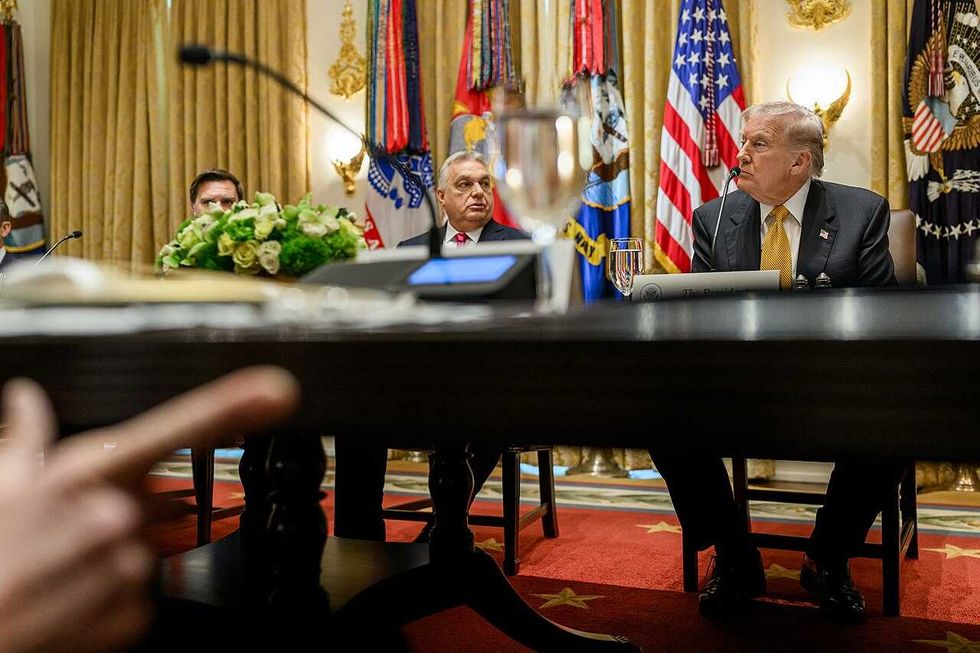
The decision also carries heavy political weight. Newsom, widely seen as a likely Democratic contender for the 2028 presidential election, must weigh whether siding with voters concerned about AI’s dangers is worth alienating the state’s tech donors. Signing the bill would distinguish him from President Donald Trump, whose administration has pursued an aggressive pro-AI development agenda, framing it as a race against China.

For Wiener, the stakes are equally high. Fresh off filing to run for the congressional seat long held by Nancy Pelosi, he has pitched the bill as the most comprehensive state-level AI safety framework in the country. His revised, narrower proposal reflects lessons learned from last year’s defeat, as well as recommendations from an AI policy panel convened by Newsom himself.

If Newsom signs the bill, it would mark a turning point for U.S. tech governance, potentially shaping national standards in the absence of comprehensive federal regulation. If he vetoes it again, however, it could signal a prioritization of industry competitiveness over public safeguards, and highlight the deep influence Silicon Valley wields over California politics.

The post California Lawmakers Send AI Safety Bill Back to Newsom’s Desk appeared first on CoinCentral.

Market Opportunity
Suilend Logo
Suilend Price(SEND)
$0.1542
$0.1542$0.1542
+0.06%
USD
Suilend (SEND) Live Price Chart
Disclaimer: The articles reposted on this site are sourced from public platforms and are provided for informational purposes only. They do not necessarily reflect the views of MEXC. All rights remain with the original authors. If you believe any content infringes on third-party rights, please contact service@support.mexc.com for removal. MEXC makes no guarantees regarding the accuracy, completeness, or timeliness of the content and is not responsible for any actions taken based on the information provided. The content does not constitute financial, legal, or other professional advice, nor should it be considered a recommendation or endorsement by MEXC.

You May Also Like

Trade War Headlines Trigger $800M In Liquidations Overnight: Longs Get Wiped Out Across Crypto Markets

Trade War Headlines Trigger $800M In Liquidations Overnight: Longs Get Wiped Out Across Crypto Markets

The crypto market faced a sharp selloff overnight as renewed trade conflict fears between the United States and the European Union shook global risk sentiment.
Share
NewsBTC2026/01/20 11:00
Rokid Ai Glasses Style Now Available Globally

Rokid Ai Glasses Style Now Available Globally

The world’s first open ecosystem AI smart glasses—ultra-light, prescription-first, and built for ChatGPT, Qwen, DeepSeek, and more—are now shipping worldwide, starting
Share
AI Journal2026/01/20 11:45
FCA, crackdown on crypto

FCA, crackdown on crypto

The post FCA, crackdown on crypto appeared on BitcoinEthereumNews.com. The regulation of cryptocurrencies in the United Kingdom enters a decisive phase. The Financial Conduct Authority (FCA) has initiated a consultation to set minimum standards on transparency, consumer protection, and digital custody, in order to strengthen market confidence and ensure safer operations for exchanges, wallets, and crypto service providers. The consultation was published on May 2, 2025, and opened a public discussion on operational responsibilities and safeguarding requirements for digital assets (CoinDesk). The goal is to make the rules clearer without hindering the sector’s evolution. According to the data collected by our regulatory monitoring team, in the first weeks following the publication, the feedback received from professionals and operators focused mainly on custody, incident reporting, and insurance requirements. Industry analysts note that many responses require technical clarifications on multi-sig, asset segregation, and recovery protocols, as well as proposals to scale obligations based on the size of the operator. FCA Consultation: What’s on the Table The consultation document clarifies how to apply rules inspired by traditional finance to the crypto perimeter, balancing innovation, market integrity, and user protection. In this context, the goal is to introduce minimum standards for all firms under the supervision of the FCA, an essential step for a more transparent and secure sector, with measurable benefits for users. The proposed pillars Obligations towards consumers: assessment on the extension of the Consumer Duty – a requirement that mandates companies to provide “good outcomes” – to crypto services, with outcomes for users that are traceable and verifiable. Operational resilience: introduction of continuity requirements, incident response plans, and periodic testing to ensure the operational stability of platforms even in adverse scenarios. Financial Crime Prevention: strengthening AML/CFT measures through more stringent transaction monitoring and structured counterpart checks. Custody and safeguarding: definition of operational methods for the segregation of client assets, secure…
Share
BitcoinEthereumNews2025/09/18 05:40