

Bank of Canada’s Macklem Issues Stern Warning: Ready to Hike Rates if Energy Fuels Persistent Inflation
BitcoinWorld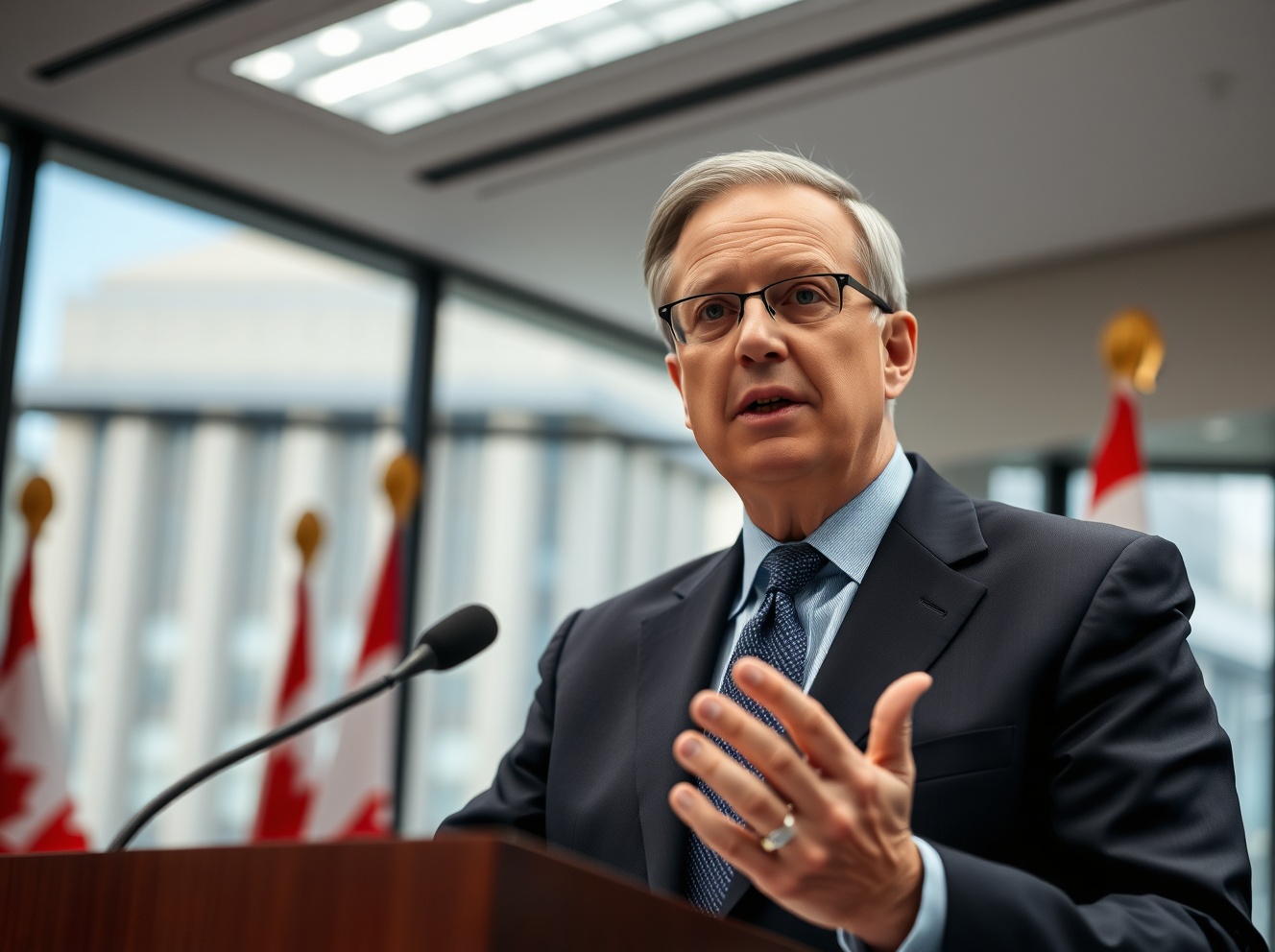
Bank of Canada’s Macklem Issues Stern Warning: Ready to Hike Rates if Energy Fuels Persistent Inflation
OTTAWA, March 2025 — Bank of Canada Governor Tiff Macklem delivered a clear monetary policy warning today, stating the central bank stands ready to raise interest rates if volatile energy prices trigger persistent inflationary pressures. This statement marks a significant shift in tone from earlier communications and signals heightened concern about inflation’s potential resurgence.
Bank of Canada’s Inflation Warning Signals Policy Shift
Governor Macklem’s remarks come amid renewed global energy market volatility. The Bank of Canada maintains its primary inflation target of 2%. However, recent data shows concerning trends. Energy price fluctuations increasingly influence broader price stability. Consequently, monetary policymakers must remain vigilant. The central bank’s latest statement emphasizes this renewed focus. Previously, the BoC had signaled a potential pause in its tightening cycle. Now, officials explicitly mention possible rate increases. This represents a notable policy evolution. Market analysts immediately reacted to this hawkish pivot. Furthermore, the Canadian dollar strengthened following the announcement. Bond yields also experienced upward pressure. These market movements reflect changing expectations about future monetary policy.
Energy Price Dynamics and Inflation Persistence
Energy costs directly impact multiple economic sectors. Transportation, manufacturing, and heating expenses all respond to energy price changes. Recent geopolitical tensions have disrupted global energy supplies. Additionally, extreme weather events affect production and distribution. These factors combine to create sustained price pressures. The Bank of Canada monitors several key indicators:
- Core inflation measures: CPI-trim and CPI-median
- Energy component of CPI: Gasoline, natural gas, electricity
- Inflation expectations</strong: Business and consumer surveys
- Wage growth: Particularly in energy-intensive industries
Historical data reveals concerning patterns. Energy-driven inflation often proves more persistent than initially anticipated. For instance, the 2022-2023 inflation surge demonstrated this phenomenon clearly. Price increases in energy sectors frequently spill over into other areas. Businesses pass higher costs to consumers through various channels. This creates secondary inflationary effects throughout the economy. Therefore, central bankers must address these risks proactively.
Monetary Policy Framework and Response Mechanisms
The Bank of Canada employs a flexible inflation-targeting framework. This approach allows temporary deviations from the 2% target. However, persistent overshoots require policy responses. Governor Macklem outlined specific conditions that would trigger rate hikes. First, energy prices must show sustained increases beyond temporary spikes. Second, these increases must translate into broader inflationary pressures. Third, inflation expectations must begin to de-anchor from the target. The BoC’s policy toolkit includes several instruments. The overnight rate remains the primary monetary policy tool. Quantitative tightening continues to reduce the central bank’s balance sheet. Forward guidance communicates policy intentions to markets. All these tools work together to maintain price stability.
Economic Context and Global Comparisons
Canada’s situation reflects broader global trends. Many central banks face similar challenges with energy-driven inflation. The Federal Reserve recently addressed comparable concerns. The European Central Bank continues monitoring energy markets closely. However, Canada’s economy possesses unique characteristics. The country exports substantial energy resources while also importing refined products. This creates complex price transmission mechanisms. Domestic energy policies further complicate the inflation picture. Carbon pricing mechanisms interact with market energy prices. These interactions require careful policy consideration. The following table compares key inflation indicators across major economies:
| Economy | Headline Inflation | Core Inflation | Energy Inflation | Policy Stance |
|---|---|---|---|---|
| Canada | 3.2% | 3.0% | 8.5% | Hawkish Watch |
| United States | 3.0% | 3.1% | 7.8% | Data Dependent |
| Euro Area | 2.8% | 2.9% | 9.2% | Cautiously Hawkish |
| United Kingdom | 3.5% | 3.3% | 10.1% | Restrictive |
This comparative analysis reveals Canada’s middle position. The country experiences moderate but concerning inflationary pressures. Energy inflation remains elevated across all major economies. Therefore, Governor Macklem’s warning aligns with global central banking trends.
Potential Impacts on Canadian Economy and Households
Interest rate increases would affect multiple economic sectors. Higher borrowing costs typically slow economic activity. Mortgage payments would rise for variable-rate homeowners. Business investment decisions might face reconsideration. Consumer spending patterns could shift significantly. However, controlling inflation remains the paramount concern. Unchecked inflation erodes purchasing power more severely than moderate rate increases. The Bank of Canada must balance these competing considerations carefully. Historical analysis provides valuable insights. Previous tightening cycles have successfully anchored inflation expectations. However, they sometimes precipitated economic slowdowns. The current situation requires particularly nuanced policy responses. Energy price volatility adds substantial uncertainty to economic forecasts. Therefore, policymakers emphasize data-dependent approaches.
Expert Perspectives on Monetary Policy Direction
Economists generally support the Bank of Canada’s prepared stance. Preemptive action often proves more effective than delayed responses. Several prominent analysts have commented on today’s announcement. Former central bank officials emphasize the importance of credibility. Academic economists highlight transmission mechanism complexities. Financial market participants focus on timing implications. Most experts agree on several key points. First, energy markets remain fundamentally unstable. Second, inflation psychology requires careful management. Third, communication clarity helps guide market expectations. These expert views inform the broader policy discussion. They also provide context for understanding the BoC’s strategic positioning.
Conclusion
Bank of Canada Governor Tiff Macklem’s warning about potential interest rate hikes represents a significant monetary policy development. The central bank clearly signals readiness to respond if energy prices fuel persistent inflation. This stance reflects careful analysis of economic data and global trends. Canadian households and businesses should prepare for possible policy adjustments. The Bank of Canada remains committed to its 2% inflation target despite challenging circumstances. Future monetary policy decisions will depend heavily on incoming data, particularly regarding energy price developments and their broader economic impacts.
FAQs
Q1: What specifically would trigger Bank of Canada interest rate hikes?
The BoC would raise rates if energy price increases become persistent rather than temporary, if these increases spread to broader inflation measures, and if inflation expectations rise above the 2% target.
Q2: How do energy prices affect overall inflation in Canada?
Energy prices directly impact transportation, manufacturing, and heating costs. These increases often get passed through to consumer prices across multiple sectors, creating secondary inflationary effects throughout the economy.
Q3: What is the Bank of Canada’s current inflation target?
The Bank of Canada maintains a flexible inflation-targeting framework with a 2% annual inflation target, measured by the Consumer Price Index (CPI).
Q4: How does Canada’s situation compare to other major economies?
Canada experiences moderate inflation pressures similar to the United States but less severe than the United Kingdom. Energy inflation remains elevated across all major economies, creating global monetary policy challenges.
Q5: What would higher interest rates mean for Canadian homeowners?
Higher interest rates would increase mortgage payments for variable-rate homeowners and those renewing fixed-rate mortgages. This could reduce disposable income and potentially slow housing market activity.
This post Bank of Canada’s Macklem Issues Stern Warning: Ready to Hike Rates if Energy Fuels Persistent Inflation first appeared on BitcoinWorld.


You May Also Like

Best Crypto to Buy With $750? Experts Compare Pepecoin (PEPE) and New Protocols

Sky Quarry (SKYQ) Stock Soars 120% as Oil Prices Spike and West Coast Refineries Shut Down




