

ORDI Price Prediction 2026-2030: A Realistic Analysis of the Bitcoin Ordinals Token’s Potential
BitcoinWorld
ORDI Price Prediction 2026-2030: A Realistic Analysis of the Bitcoin Ordinals Token’s Potential
As the cryptocurrency market evolves beyond its initial phases, the Ordinals (ORDI) token has emerged as a significant project built directly on the Bitcoin blockchain. This analysis provides a comprehensive, experience-driven examination of ORDI’s potential price trajectory from 2026 through 2030, grounded in technical fundamentals, market mechanics, and verifiable blockchain data. The discussion focuses on measurable factors rather than speculative hype, offering readers a balanced perspective on this unique digital asset’s future.
Understanding the Ordinals Protocol and ORDI Token Fundamentals
The Ordinals protocol represents a fundamental innovation for the Bitcoin network. Introduced in early 2023 by developer Casey Rodarmor, this protocol enables the inscription of data directly onto individual satoshis, Bitcoin’s smallest unit. Consequently, this creates non-fungible tokens and other digital artifacts natively on Bitcoin. The ORDI token operates as the first BRC-20 token standard implementation on this protocol. It functions as a fungible token standard that leverages the Ordinals infrastructure for creation and transfer.
Several technical characteristics distinguish ORDI from typical Ethereum-based tokens. First, all transactions settle directly on the Bitcoin blockchain, inheriting its security and decentralization. Second, minting and transferring ORDI requires Bitcoin transactions, creating an intrinsic link to BTC’s network activity. Third, the total supply is permanently fixed at 21 million tokens, mirroring Bitcoin’s own scarcity model. This fundamental architecture provides the foundation for analyzing ORDI’s potential value proposition moving forward.
Market Context and Historical Performance Analysis
ORDI’s market debut followed a distinctive trajectory compared to traditional token launches. Initially distributed through a fair launch model without venture capital backing, the token gained attention throughout 2023. Its price exhibited significant volatility, reflecting both broader cryptocurrency market trends and specific developments within the Bitcoin ecosystem. Major cryptocurrency exchanges began listing ORDI in late 2023, providing increased liquidity and accessibility. This historical context is crucial for understanding the token’s maturation process and establishing realistic benchmarks for future growth.
Technical and On-Chain Analysis Framework for ORDI
Evaluating ORDI’s future requires examining multiple technical dimensions. On-chain metrics provide objective data about network adoption and holder behavior. Analysis includes tracking the number of unique addresses holding ORDI, transaction volume patterns, and token distribution across wallets. Furthermore, Bitcoin network activity directly influences ORDI’s operational environment. Metrics such as Bitcoin transaction fees, block space demand, and Ordinals inscription counts offer insights into underlying network health and utility.
Several key technical factors will influence ORDI’s trajectory:
- Bitcoin Network Upgrades: Implementations like Taproot enhancements can improve Ordinals functionality.
- BRC-20 Standard Development: Protocol improvements may increase efficiency and reduce transaction costs.
- Wallet and Infrastructure Support: Broader compatibility with cryptocurrency wallets and services.
- Layer 2 Integration: Potential connections with Bitcoin Layer 2 solutions for scaling.
Comparative Market Analysis and Sector Positioning
ORDI operates within the broader context of several overlapping cryptocurrency sectors. As a Bitcoin-based token, its performance correlates with BTC’s market movements, though with distinct characteristics. Comparatively, it occupies a unique position between several established categories. Unlike Ethereum-based utility tokens, ORDI derives its security model directly from Bitcoin’s proof-of-work consensus. Unlike traditional Bitcoin investments, it represents a specific application layer asset with different risk and reward parameters.
The table below illustrates ORDI’s positioning relative to other asset types:
| Asset Type | Primary Blockchain | Value Proposition | Risk Profile |
|---|---|---|---|
| ORDI Token | Bitcoin (Ordinals) | Bitcoin-native fungible token standard | High (emerging protocol) |
| Bitcoin (BTC) | Bitcoin | Digital gold/store of value | Moderate (established) |
| Ethereum Tokens | Ethereum | Smart contract utility | Variable (diverse ecosystem) |
| Other Layer 1 Tokens | Various | Alternative blockchain platforms | High (competitive landscape) |
Expert Perspectives and Institutional Considerations
Industry analysts approach ORDI with cautious interest, recognizing both its innovative architecture and unproven long-term viability. Blockchain researchers note that the Ordinals protocol represents one of the most significant developments for Bitcoin’s utility expansion in recent years. However, experts consistently emphasize that the technology remains experimental. Financial analysts highlight ORDI’s correlation with Bitcoin’s price while noting periods of decoupling during specific market conditions. Regulatory observers point to ongoing developments in cryptocurrency classification that may affect BRC-20 tokens differently than other digital assets.
Institutional adoption represents another critical factor for ORDI’s future trajectory. Currently, most institutional cryptocurrency exposure focuses on Bitcoin and Ethereum. The emergence of Bitcoin-based token standards could potentially attract institutional interest seeking Bitcoin exposure through alternative vehicles. However, this requires further infrastructure development, including regulated custody solutions, clearer regulatory frameworks, and established market liquidity. These institutional considerations will significantly influence ORDI’s market maturation between 2026 and 2030.
Potential Catalysts and Risk Factors for 2026-2030
Several potential catalysts could positively influence ORDI’s adoption and valuation. Technological advancements within the Bitcoin ecosystem, particularly scaling solutions that reduce transaction costs, could enhance Ordinals protocol utility. Increased developer activity building applications on the Ordinals platform would demonstrate growing ecosystem health. Furthermore, integration with decentralized finance protocols or traditional financial systems could expand use cases beyond current implementations.
Conversely, multiple risk factors warrant consideration. Technical challenges, including Bitcoin network congestion and high transaction fees during peak periods, could limit practical utility. Regulatory uncertainty surrounding token classification and securities laws creates compliance challenges. Competitive pressure from other blockchain platforms offering similar functionality at lower cost represents another significant risk. Additionally, the inherent volatility of cryptocurrency markets means external macroeconomic factors could disproportionately affect emerging tokens like ORDI.
Conclusion
This analysis of the Ordinals (ORDI) price prediction for 2026-2030 emphasizes fundamental factors over speculative forecasting. The token’s future trajectory will primarily depend on technological adoption, Bitcoin ecosystem development, and broader cryptocurrency market maturation. While ORDI represents a technically innovative approach to Bitcoin-based tokens, its long-term success requires sustained developer activity, infrastructure improvement, and clear utility demonstration. Investors should approach this emerging asset with thorough research, recognizing both its unique position within the Bitcoin ecosystem and the inherent uncertainties of developing cryptocurrency protocols. The coming years will determine whether ORDI establishes itself as a sustainable component of the digital asset landscape or remains an experimental protocol with limited adoption.
FAQs
Q1: What exactly is the Ordinals protocol?
The Ordinals protocol is a numbering scheme for satoshis that allows data inscription directly on the Bitcoin blockchain, enabling NFT-like functionality and token creation natively on Bitcoin.
Q2: How does ORDI differ from regular Bitcoin?
ORDI is a BRC-20 standard token built using the Ordinals protocol, representing a fungible digital asset, while Bitcoin (BTC) is the native cryptocurrency of the Bitcoin blockchain used for transactions and store of value.
Q3: What factors most influence ORDI’s price?
Key factors include Bitcoin network activity and fees, adoption of the Ordinals protocol, overall cryptocurrency market sentiment, exchange listings, developer activity, and technological developments within the Bitcoin ecosystem.
Q4: Is ORDI considered a security by regulators?
Regulatory classification remains uncertain and varies by jurisdiction. The decentralized nature of its launch and operation on Bitcoin may influence how different regulators approach BRC-20 tokens like ORDI.
Q5: What are the main risks of investing in ORDI?
Primary risks include high volatility, regulatory uncertainty, technological immaturity of the Ordinals protocol, Bitcoin network congestion issues, competitive pressure from other blockchains, and limited historical data for evaluation.
This post ORDI Price Prediction 2026-2030: A Realistic Analysis of the Bitcoin Ordinals Token’s Potential first appeared on BitcoinWorld.


You May Also Like
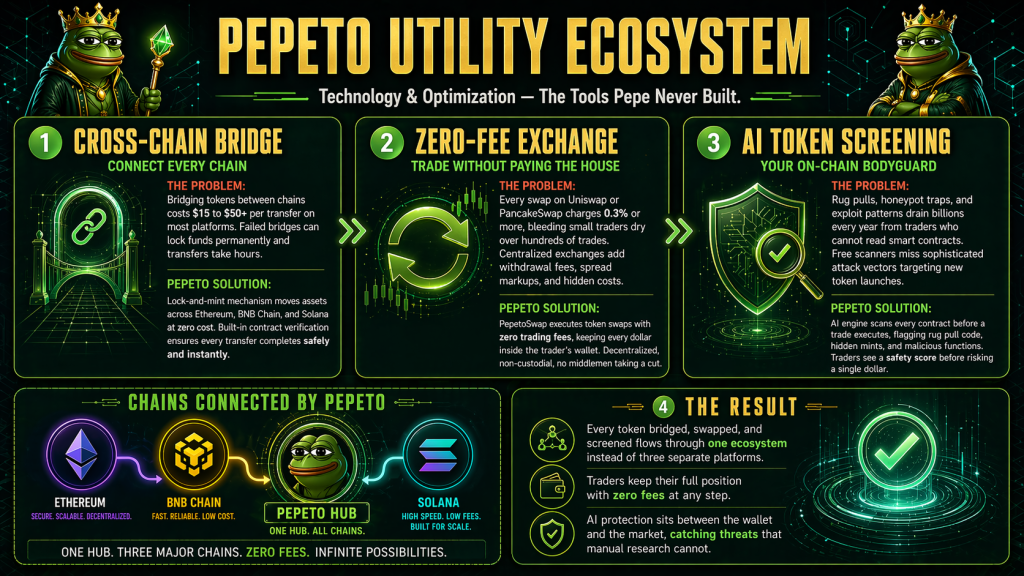
Which Are the Top 3 Cryptos to Buy Now as Solana Lands Mastercard and Pepeto Presale Nears Sold-Out Close
Ondas (ONDS) Stock Soars After Revenue Explodes Over 1,000% in Q1 2026




