Nvidia GTC 2026 Keynote: Your Essential Guide to Watching Jensen Huang’s Pivotal AI Address
BitcoinWorld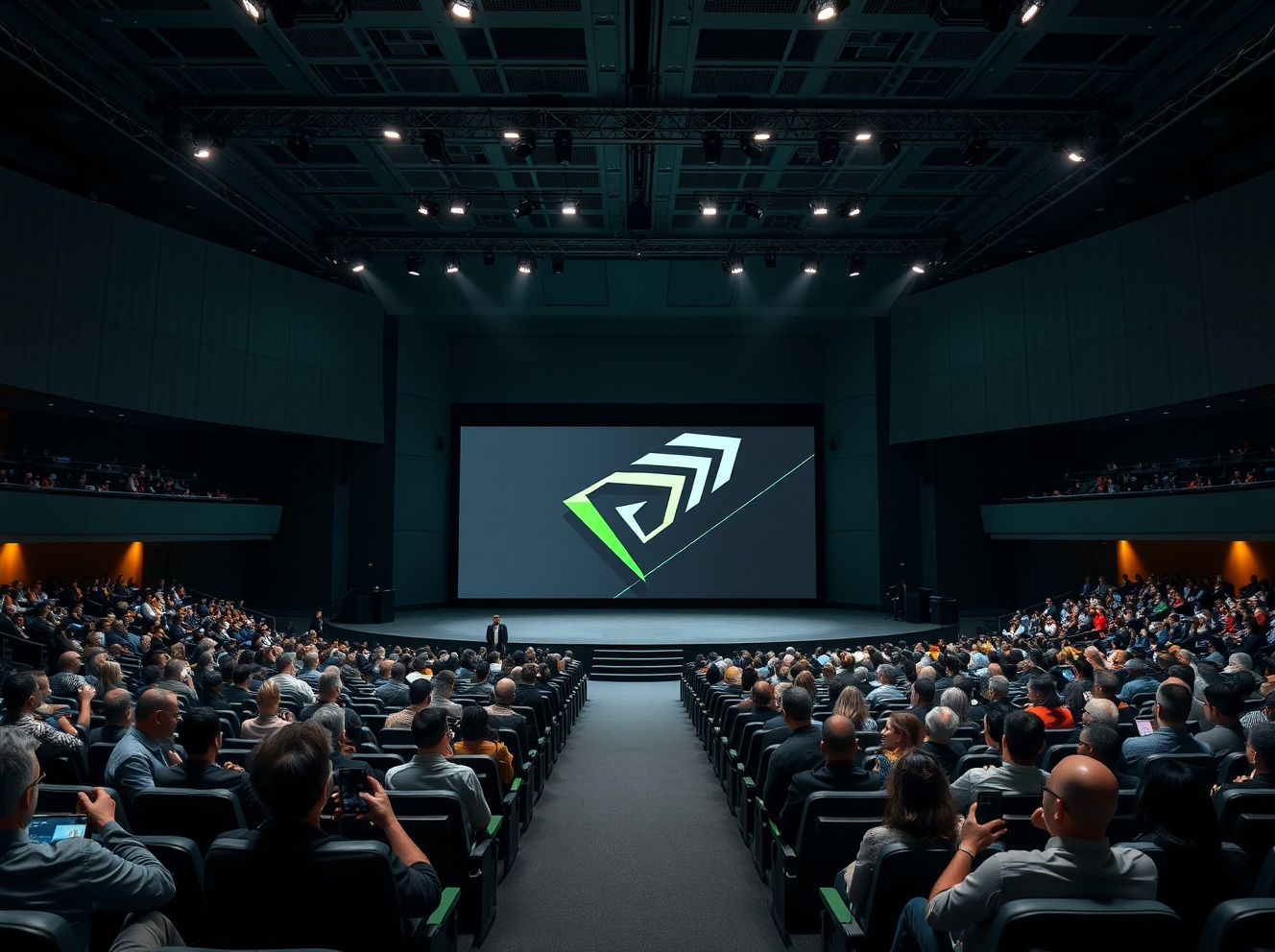
Nvidia GTC 2026 Keynote: Your Essential Guide to Watching Jensen Huang’s Pivotal AI Address
Nvidia’s flagship GPU Technology Conference (GTC) 2026 commences next week in San Jose, California, headlined by CEO Jensen Huang’s highly anticipated keynote address. This pivotal event, scheduled for Monday, March 16, 2026, at 11:00 AM Pacific Time, will set the tone for the future of artificial intelligence and accelerated computing. Industry observers and developers globally are preparing to tune in, as Huang outlines Nvidia’s strategic vision and potentially unveils groundbreaking hardware and software platforms.
How to Watch the Nvidia GTC 2026 Keynote Live
Viewers have two primary options to experience Jensen Huang’s address. Firstly, the event will be livestreamed directly from the official Nvidia GTC website, ensuring global accessibility. Secondly, attendees can watch in person at the SAP Center in San Jose. The keynote is slated to last approximately two hours, providing a comprehensive overview of Nvidia’s trajectory. Historically, these keynotes serve as critical bellwethers for the semiconductor and AI industries, influencing market trends and developer roadmaps for the year ahead.
Furthermore, the broader GTC 2026 conference spans three days, from March 16 to 18. It will host hundreds of sessions, workshops, and demonstrations. These events will delve into AI applications across healthcare, robotics, autonomous vehicles, and climate science. Consequently, the keynote acts as the foundational pillar for these detailed technical discussions.
Strategic Expectations for Nvidia’s Announcements
Analysts and industry reports point toward several major announcements. On the software frontier, Nvidia is rumored to launch NemoClaw, an open-source platform for building enterprise AI agents. This move, initially reported by Wired, represents a strategic counter to similar offerings from OpenAI and other cloud providers. Essentially, NemoClaw would provide businesses with a structured toolkit to develop autonomous AI software capable of executing complex, multi-step tasks without constant human oversight.
Simultaneously, the hardware landscape expects significant news. Reports suggest Nvidia will unveil a new chip architecture specifically optimized for AI inference. Inference is the process where a trained AI model generates responses or makes decisions. While training models requires immense computational power, efficient inference is crucial for scalable, cost-effective real-world deployment. This new chip aims to solidify Nvidia’s dominance beyond the training market, where it holds an estimated 80% share, and into the fiercely competitive inference space.
Expert Analysis on Market Implications
Kevin Cook, a senior equity strategist at Zacks Investment Research, provided context to Bitcoin World. He highlighted the strategic importance of Nvidia’s relationship with Groq, an inference-focused company. Nvidia reportedly invested $20 billion late last year to license Groq’s technology. Subsequently, key Groq personnel, including founder Jonathan Ross and President Sunny Madra, joined Nvidia. Cook notes the industry’s intense curiosity about how Nvidia will integrate and scale this licensed technology, potentially creating a new benchmark for inference performance.
This development occurs amid escalating competition. Companies like Google, Amazon, and Meta are aggressively developing custom silicon for AI workloads. Therefore, Nvidia’s announcements at GTC 2026 are not merely product launches. They are strategic maneuvers to maintain its central position in the AI infrastructure ecosystem. The race now extends from sheer training power to holistic efficiency across the entire AI lifecycle.
The Broader Context of GTC 2026
GTC has evolved from a graphics-focused gathering into the preeminent AI developer conference. This year’s theme, centered on “The Future of Computing,” reflects Nvidia’s transition from a gaming chip company to the foundational engine of the AI revolution. The conference will showcase partnerships and demonstrations across various sectors, illustrating the pervasive integration of AI.
For instance, attendees can expect reveals in digital biology, where AI models simulate molecular interactions. Another focus will be on robotics, showcasing platforms that combine vision, language, and physical action models. Additionally, the event will highlight progress in autonomous vehicle platforms, emphasizing the role of simulation and AI training in developing safer systems. These demonstrations provide tangible proof of concepts for the technologies Huang discusses in his keynote.
Navigating the Competitive Inference Landscape
The rumored inference chip underscores a critical industry shift. The following table contrasts the key market segments:
| Market Segment | Nvidia’s Position | Primary Competitors | Key Challenge |
|---|---|---|---|
| AI Training | Dominant (≈80% share) | Limited; custom silicon from large hyperscalers | Sustaining performance leadership at scale |
| AI Inference | Growing, but competitive | Google (TPU), Amazon (Inferentia), Groq, AMD | Delivering cost-per-inference and latency advantages |
Consequently, Nvidia’s strategy appears dual-pronged: defend its training supremacy while aggressively capturing inference market share. Success in inference requires not just powerful silicon but also a mature software stack that simplifies deployment for enterprise customers. This is where platforms like the rumored NemoClaw could create a powerful, synergistic ecosystem.
Conclusion
Jensen Huang’s Nvidia GTC 2026 keynote is a must-watch event for anyone invested in the future of technology. It will provide crucial insights into the next phase of AI development, from hardware infrastructure to enterprise software tools. By tuning into the livestream, viewers will gain a first look at technologies that could define computational capabilities for years to come. The announcements expected on March 16 have the potential to reshape competitive dynamics and accelerate the practical, widespread adoption of artificial intelligence across every industry.
FAQs
Q1: When and where is Jensen Huang’s Nvidia GTC 2026 keynote?
A1: The keynote is on Monday, March 16, 2026, at 11:00 AM PT / 2:00 PM ET. It is held at the SAP Center in San Jose, California, and will be livestreamed on the Nvidia GTC website.
Q2: What is NemoClaw, and why is it significant?
A2: NemoClaw is Nvidia’s rumored open-source platform for building enterprise AI agents. It is significant because it would provide businesses with a standardized way to create and deploy autonomous AI software, positioning Nvidia directly against similar offerings from major AI software companies.
Q3: What is the difference between AI training and AI inference?
A3: AI training is the computationally intensive process of teaching a model using vast datasets. AI inference is the subsequent process where the trained model applies its learning to generate outputs, like text or decisions, in real-time. Efficient inference is key for scalable AI applications.
Q4: Why is Nvidia’s relationship with Groq important?
A4: Nvidia licensed Groq’s inference technology for a reported $20 billion. Groq’s founders and team joined Nvidia. This partnership is critical as it may give Nvidia a major advantage in the competitive AI inference chip market, combining Groq’s architectural innovations with Nvidia’s scale and software.
Q5: What are the main areas of focus for the broader GTC 2026 conference?
A5: Beyond the keynote, GTC 2026 will feature deep dives into AI applications across healthcare and life sciences, robotics and manufacturing, autonomous vehicles, climate science, and digital twins. The event connects developers with the tools and knowledge to implement Nvidia’s technology stack.
This post Nvidia GTC 2026 Keynote: Your Essential Guide to Watching Jensen Huang’s Pivotal AI Address first appeared on BitcoinWorld.


You May Also Like

Stakestone (STO) Soars: Token Surpasses $1.14 After Stunning 367% Rally
Gamma Fund Moves $24.5M in ETH to Binance, Fueling Sell-Off Speculation