U.S. Regulators Clear the Path for Tokenized Securities in Bank Capital Frameworks
- U.S. bank regulators confirmed tokenized securities carry the same capital requirements as traditional ones
- The rule is technology-neutral — blockchain type (public or private) doesn’t change the treatment
- Tokenized securities can now be used as financial collateral under existing legal standards
- Banks must still meet strict legal, operational, and AML compliance standards to qualify
The move signals a significant regulatory development for financial institutions exploring blockchain-based asset infrastructure – and gives the market something it has been waiting on for years: clarity.
The core message from regulators is straightforward. The type of technology used to issue or settle a security does not, on its own, change how that security is treated for capital purposes. Whether a Treasury bond lives on a public blockchain, a permissioned ledger, or a paper-backed custodial system, the capital treatment follows the asset — not the rails it travels on.
What Qualifies – and What Doesn’t
The guidance doesn’t hand banks a blank check. For a tokenized security to receive standard capital treatment, it must confer identical legal ownership rights as its non-tokenized equivalent. A token that merely references an asset, or that introduces legal ambiguity around ownership, won’t make the cut.
Collateral recognition follows similar logic. Tokenized securities can be counted as financial collateral for credit risk mitigation purposes — but only where a bank can demonstrate a perfected, first-priority security interest in the asset, enforceable under applicable law. Regulators also expect clear evidence of asset segregation, protecting holdings from a bank’s own estate in any insolvency scenario.
For derivatives referencing tokenized securities, the treatment mirrors that of derivatives on traditional forms of the same assets. No special carve-outs, no new category — same rules, different wrapper.
The Compliance Burden Hasn’t Gone Away
While the guidance removes the threat of punitive capital surcharges, it makes clear that operational and legal standards are non-negotiable. Banks looking to leverage this framework will need to get serious about their internal infrastructure.
Regulators are specifically focused on smart contract governance. Institutions are expected to conduct rigorous due diligence on who holds administrative access within smart contracts — including permissions to mint tokens, freeze transfers, or authorize transactions. These aren’t hypothetical risks; they’re identified points of failure that examiners will scrutinize.
On the custody side, banks must deploy robust safekeeping infrastructure — multi-party computation (MPC) or comparable technologies — to prevent unauthorized key access. Beyond that, operational resilience requirements apply: backup ledgers, oversight of third-party DLT infrastructure providers, and full compliance with existing AML and counter-terrorism financing rules.
READ MORE:
Crypto Market Pulls Back as Bitcoin Holds Near $71K
Fair value assessment remains mandatory. Banks using tokenized assets as collateral must be able to value those assets accurately and apply appropriate liquidity haircuts, consistent with how they’d treat traditional securities in the same role.
Industry Context
The guidance didn’t emerge in a vacuum. Firms like BlackRock and Franklin Templeton have already moved into tokenized Treasury products, drawing regulatory attention to a market that was operating without explicit capital guidance. With the $29 trillion Treasuries market increasingly eyed as a candidate for tokenized infrastructure — offering 24/7 trading, near-instant settlement, and lower transaction costs — the stakes for getting this right are considerable.
The announcement also arrives alongside the OCC’s separate proposal to implement the GENIUS Act, which would establish a supervisory framework for payment stablecoins — a sign that U.S. regulators are working to build out a more comprehensive digital asset framework rather than addressing individual instruments in isolation.
Globally, the approach aligns with a broader trend. Jurisdictions including Hong Kong have adopted similar “substance over form” and technology-neutral positions, suggesting regulatory convergence on how digital asset infrastructure is treated across major financial markets.
Bottom Line
The joint guidance doesn’t change the underlying rules — it confirms they apply equally to tokenized assets. Banks that can demonstrate legal equivalence, maintain enforceable collateral interests, and build the operational controls regulators expect will be able to integrate tokenized securities without capital penalty. Those that can’t will find the framework offers no shortcuts.
The information provided in this article is for educational purposes only and does not constitute financial, investment, or trading advice. Coindoo.com does not endorse or recommend any specific investment strategy or cryptocurrency. Always conduct your own research and consult with a licensed financial advisor before making any investment decisions.
The post U.S. Regulators Clear the Path for Tokenized Securities in Bank Capital Frameworks appeared first on Coindoo.


You May Also Like
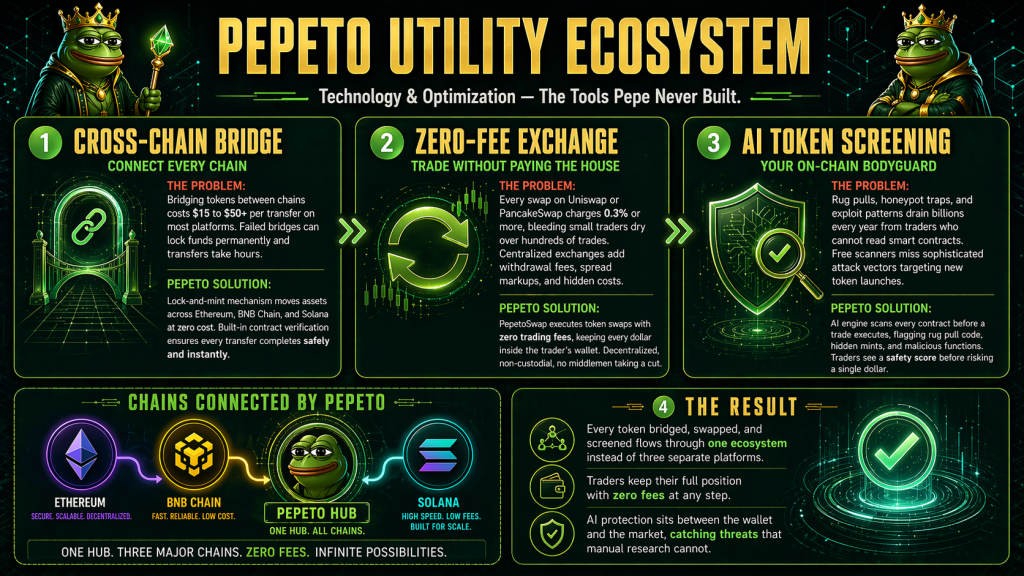
Pepe Coin Price Prediction Gets a New Signal as Canary Files PEPE ETF and Pepeto Could Be the Last Chance Before Listing
Goatseus Maximus (GOAT) Price Prediction 2026, 2027-2030