Bitcoin defies weekend geopolitical chaos with ETF inflows hitting $1.5 billion as Iran tensions test crypto's safe haven credentials. (Read More)Bitcoin defies weekend geopolitical chaos with ETF inflows hitting $1.5 billion as Iran tensions test crypto's safe haven credentials. (Read More)

BTC Rallies During Iran Crisis as $1.5B Floods Into ETFs

2026/03/04 03:50
4 min read
For feedback or concerns regarding this content, please contact us at crypto.news@mexc.com

BTC Rallies During Iran Crisis as $1.5B Floods Into ETFs

Iris Coleman Mar 03, 2026 19:50

Bitcoin defies weekend geopolitical chaos with ETF inflows hitting $1.5 billion as Iran tensions test crypto's safe haven credentials.
BTC Rallies During Iran Crisis as $1.5B Floods Into ETFs

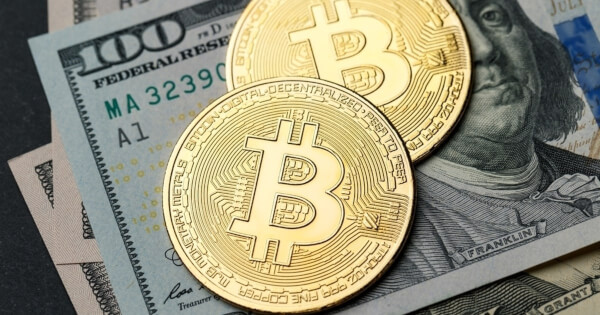
Bitcoin attracted $1.5 billion in ETF inflows over the past week as the Iran crisis intensified, breaking a five-week outflow streak and challenging assumptions about how the asset behaves during geopolitical shocks. BTC currently trades at $67,372, down just 1.96% in 24 hours despite oil surging 13% on Strait of Hormuz fears.

The pattern here matters. When President Trump's Saturday actions triggered the latest escalation—following the withdrawal of UK embassy staff—traditional markets were closed. Bitcoin, the only major liquid asset trading continuously through weekends, typically absorbs panic selling in these moments before recovering once equities reopen.

This time was different. Instead of serving as a pressure release valve, BTC rallied into the instability.

Why the Market Structure Was Ready

CoinShares' James Butterfill points to five months of preparation that most observers missed. An estimated $30 billion in whale outflows between October 2025 and February 2026 had already cleared motivated sellers from the market. By the time geopolitical risk spiked, the corrective work was largely done.

The technical picture supports this. MVRV valuations had compressed to roughly one standard deviation below realized value—historically a late-stage correction signal, not a continuation pattern. RSI touched 16 at recent lows, an extreme oversold reading by any measure. Leverage ratios dropped from 33% in October to 25%, back to long-term averages.

"The marginal seller was less present. And the marginal buyer, apparently, was ready," Butterfill wrote.

The Flow Data Confirms It

After five consecutive weeks of ETF outflows totaling $4.3 billion—comparable to peak outflow periods in prior corrections—last week delivered $1 billion in fresh capital. Monday alone, the first trading day post-escalation, saw another $500 million pour in.

This matches a historical pattern worth noting. During the Russia-Ukraine war outbreak in February 2022, BTC dropped 10% initially but rebounded 28% within five days. The October 2023 Israel-Palestine conflict saw a 5-6% dip followed by a 32% recovery. Bitcoin sells off with risk assets in acute shocks, then recovers as the safe haven narrative kicks in.

The Hormuz Variable

What makes this crisis different is the chokepoint involved. Roughly 21% of global oil trade passes through the Strait of Hormuz daily. Marine insurance withdrawals and tanker congestion suggest shipping counterparties are making real decisions, not just watching.

Butterfill argues this creates a medium-term case for Bitcoin that goes beyond typical risk-on/risk-off dynamics. Prolonged Hormuz disruption would stress energy-importing nations' finances and test confidence in global financial infrastructure—correspondent banking, dollar settlement systems, trade finance mechanisms.

The 2022 immobilization of $300 billion in Russian central bank reserves proved that sovereign assets held in foreign custody can become politically inaccessible overnight. A sustained Hormuz crisis tests different assumptions but favors the same hedge: an asset with no issuer, no counterparty, and no dependency on strained infrastructure.

The Complication

Macro headwinds haven't disappeared. January's PPI came in hot at 0.5% month-over-month versus 0.3% expected, with core hitting 0.8%. Energy-driven inflation from Iran fears will likely push goods prices higher, delaying rate cuts. Futures markets now price a June cut below 50% probability.

Higher-for-longer rates traditionally hurt non-yielding assets like Bitcoin. But the longer energy inflation persists while central banks stay hawkish, the more compelling the non-sovereign, fixed-supply argument becomes.

What Traders Should Watch

Key indicators for the coming weeks: continued ETF flow direction to confirm the sentiment shift, whale wallet activity to verify distribution has genuinely moderated, energy prices and their second-order effects on rate expectations, and any operational escalation at Hormuz beyond current insurance and shipping disruptions.

CoinShares maintains a near-term consolidation outlook with modest downside bias—the macro picture isn't clean. But with leverage reset, valuations normalized, and $1.5 billion entering precisely as geopolitical risk peaked, Bitcoin is behaving like a maturing safe haven should. The Iran crisis didn't create this thesis. It's testing it in real time.

Image source: Shutterstock
  • bitcoin
  • btc
  • iran crisis
  • etf inflows
  • safe haven
Market Opportunity
Ucan fix life in1day Logo
Ucan fix life in1day Price(1)
$0.0004373
$0.0004373$0.0004373
-3.01%
USD
Ucan fix life in1day (1) Live Price Chart
Disclaimer: The articles reposted on this site are sourced from public platforms and are provided for informational purposes only. They do not necessarily reflect the views of MEXC. All rights remain with the original authors. If you believe any content infringes on third-party rights, please contact crypto.news@mexc.com for removal. MEXC makes no guarantees regarding the accuracy, completeness, or timeliness of the content and is not responsible for any actions taken based on the information provided. The content does not constitute financial, legal, or other professional advice, nor should it be considered a recommendation or endorsement by MEXC.

You May Also Like

The Federal Reserve cut interest rates by 25 basis points, and Powell said this was a risk management cut

The Federal Reserve cut interest rates by 25 basis points, and Powell said this was a risk management cut

PANews reported on September 18th, according to the Securities Times, that at 2:00 AM Beijing time on September 18th, the Federal Reserve announced a 25 basis point interest rate cut, lowering the federal funds rate from 4.25%-4.50% to 4.00%-4.25%, in line with market expectations. The Fed's interest rate announcement triggered a sharp market reaction, with the three major US stock indices rising briefly before quickly plunging. The US dollar index plummeted, briefly hitting a new low since 2025, before rebounding sharply, turning a decline into an upward trend. The sharp market volatility was closely tied to the subsequent monetary policy press conference held by Federal Reserve Chairman Powell. He stated that the 50 basis point rate cut lacked broad support and that there was no need for a swift adjustment. Today's move could be viewed as a risk-management cut, suggesting the Fed will not enter a sustained cycle of rate cuts. Powell reiterated the Fed's unwavering commitment to maintaining its independence. Market participants are currently unaware of the risks to the Fed's independence. The latest published interest rate dot plot shows that the median expectation of Fed officials is to cut interest rates twice more this year (by 25 basis points each), one more than predicted in June this year. At the same time, Fed officials expect that after three rate cuts this year, there will be another 25 basis point cut in 2026 and 2027.
Share
PANews2025/09/18 06:54
SEC Approves Generic Listing Standards for Crypto ETFs

SEC Approves Generic Listing Standards for Crypto ETFs

In a bombshell filing, the SEC is prepared to allow generic listing standards for crypto ETFs. This would permit ETF listings without a specific case-by-case approval process. The filing’s language rests on cryptoassets that are commodities, not securities. However, the Commission is reclassifying many such assets, theoretically enabling an XRP ETF alongside many other new products. Why Generic Listing Standards Matter The SEC has been tacitly approving new crypto ETFs like XRP and DOGE-based products, but there hasn’t been an unambiguously clear signal of greater acceptance. Huge waves of altcoin ETF filings keep reaching the Commission, but there hasn’t been a corresponding show of confidence. Until today, that is, as the SEC just took a sweeping measure to approve generic listing standards for crypto ETFs: “[Several leading exchanges] filed with the SEC proposed rule changes to adopt generic listing standards for Commodity-Based Trust Shares. Each of the foregoing proposed rule changes… were subject to notice and comment. This order approves the Proposals on an accelerated basis,” the SEC’s filing claimed. The proposals came from the Nasdaq, CBOE, and NYSE Arca, which all the ETF issuers have been using to funnel their proposals. In other words, this decision on generic listing standards could genuinely transform crypto ETF approvals. A New Era for Crypto ETFs Specifically, these new standards would allow issuers to tailor-make compliant crypto ETF proposals. If these filings meet all the Commission’s criteria, the underlying ETFs could trade on the market without direct SEC approval. This would remove a huge bottleneck in the coveted ETF creation process. “By approving these generic listing standards, we are ensuring that our capital markets remain the best place in the world to engage in the cutting-edge innovation of digital assets. This approval helps to maximize investor choice and foster innovation by streamlining the listing process,” SEC Chair Paul Atkins claimed in a press release. The SEC has already been working on a streamlined approval process for crypto ETFs, but these generic listing standards could accomplish the task. This rule change would rely on considering tokens as commodities instead of securities, but federal regulators have been reclassifying assets like XRP. If these standards work as advertised, ETFs based on XRP, Solana, and many other cryptos could be coming very soon. This quiet announcement may have huge implications.
Share
Coinstats2025/09/18 06:14
South Korea Halts Trading as Global Markets Plunge

South Korea Halts Trading as Global Markets Plunge

The post South Korea Halts Trading as Global Markets Plunge appeared on BitcoinEthereumNews.com. The Korean Stock Exchange was forced to halt trading after the
Share
BitcoinEthereumNews2026/03/05 07:04