

Japan’s PM Takaichi disavows Sanae Token after memecoin peaks at $28M
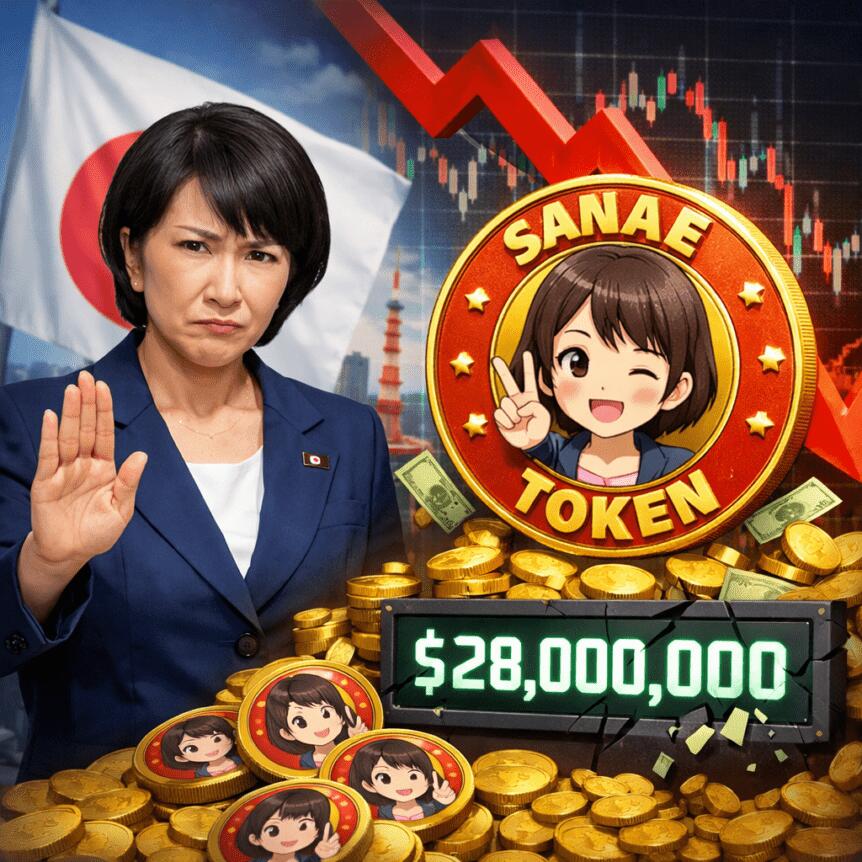
A token bearing the name of Japanese Prime Minister Sanae Takaichi briefly surged to a multi-million-dollar valuation on the Solana network before tumbling after the premier publicly denied any involvement. The episode spotlights how political-name assets can spark swift, emotion-driven moves in crypto markets, even when official ties remain unproven. On Feb. 25, trackers flagged Sanae Token reaching a market capitalization of about $27.7 million, a figure that was soon undermined by the denial. As the day progressed, the asset’s apparent value receded, with the market cap hovering around $7 million as traders reassessed the token’s fundamentals and branding risks in a highly speculative environment.
Key takeaways
- The Sanae Token briefly attained a market capitalization of roughly $27.7 million on Feb. 25, according to data tracked by Gmgn, before retracing following the prime minister’s denial of any connection.
- Prime Minister Sanae Takaichi publicly stated on X that she had no knowledge of the token and that neither her office nor she had approved it, aiming to prevent public misunderstanding.
- The Japanese Financial Services Agency (FSA) is reportedly weighing a probe into the token’s issuance and the operators behind it, though no formal announcement has been made.
- The episode is part of a broader pattern of political-name tokens drawing attention in multiple jurisdictions, including examples in the United States and Argentina that have sparked volatility and regulatory scrutiny.
- Under Japan’s Payment Services Act, issuers and service providers in the crypto space must register with the FSA; operating without proper registration can invite enforcement actions and heightened consumer-protection concerns.
Sentiment: Bearish
Price impact: Negative. The Sanae Token’s market capitalization fell from about $27.7 million to around $7 million after the denial by the prime minister’s office.
Trading idea (Not Financial Advice): Hold. The episode illustrates how social signals can produce rapid, reversible moves, and a cautious stance may be prudent until regulatory clarity and project details emerge.
Market context: The incident ties into a wider trend of political-name crypto assets triggering volatility and regulatory attention as investors weigh branding risk, authenticity, and regulatory requirements within evolving crypto frameworks.
Why it matters
The Sanae Token episode underscores how branding, public perception, and political associations can ignite short-lived surges in crypto markets. For investors and observers, it reinforces the importance of separating hype from fundamentals, especially when an asset appears to base its value on branding rather than verifiable use cases or disclosures. Tokens tied to public figures can attract early liquidity, but they also carry heightened reputational and regulatory risk if the connection to the figure is uncertain or contested.
From a regulatory perspective, the developments illuminate the delicate balance authorities strike between fostering innovation and enforcing consumer protections. Japan’s framework requires crypto-asset service providers to register with the FSA, a standard designed to curb unregistered activity and ensure some level of due diligence. The possibility that the Sanae Token’s issuer may have operated without proper registration highlights the risk of enforcement actions and potential measures that could affect market access, investor confidence, and product governance in the sector.
Globally, the phenomenon of political-name tokens has surfaced in several markets as a test case for how regulators will treat branding-driven crypto ventures. In the United States, a Trump-themed memecoin drew attention and volatility around the time an official launch was announced on Jan. 17, 2025. The asset briefly spiked to around $73 before retreating, and it was trading nearer typical levels around $3.40 at the time of reporting. In Argentina, a Libra-based token gained global notice after a promotion by President Javier Milei on X, surging past $4.50 before collapsing to sub-$0.20 values within hours, prompting allegations of pump-and-dump activity. These instances illustrate how political narratives can drive liquidity and price, while regulators scrutinize misrepresentation, disclosures, and registration obligations.
What to watch next
- Whether the FSA formally opens an investigation into the Sanae Token’s issuer and the operators involved, and which specific actions or disclosures come under review.
- Any official statements from the token project or its backers addressing registration status and compliance with the Payment Services Act.
- Regulatory developments in Japan and other jurisdictions regarding political-name tokens and branding-driven crypto assets.
- Subsequent market moves for similar political-name tokens in the US, Argentina, and elsewhere, including any new official launches or enforcement actions.
Sources & verification
- Japan’s regulatory framework and the Payment Services Act as it relates to crypto-asset issuers and service providers.
- Prime Minister Sanae Takaichi’s X post denying knowledge of or approval for the token, and her comment about preventing public misunderstanding (link).
- Gmgn data indicating the Sanae Token’s market capitalization and price action around February 25.
- Kyodo News reporting that the FSA was weighing a probe into the token’s issuance and related operators.
- Historical coverage of political-name tokens in the United States (Trump memecoin) and Argentina (Libra token) and the reported price movements and promotions surrounding those assets (announcement, Libragate timeline).
What the story means for the market
The Sanae Token case adds a data point to the ongoing discussion about how branding and public-office associations influence crypto demand, liquidity, and price discovery. It also reinforces the need for clear regulatory frameworks that can deter misrepresentation and protect investors while allowing genuine innovation to flourish. As authorities increasingly scrutinize crypto projects with political branding or affiliations, market participants may become more discerning about token narratives, disclosures, and the legitimacy of issuers—especially when official approvals or registrations are a prerequisite for operating in regulated environments.
Rewritten Article Body
The episode began with a rapid, speculative ascent for a token that carried the name of a prominent political figure, followed by a swift retrenchment once the public denial arrived. The Solana-based Sanae Token rose to a claimed market cap of about $27.7 million on Feb. 25, drawing attention from traders who monitor the intersections of politics and crypto. The spike occurred despite the absence of verifiable ties between the token and the Japanese prime minister’s office. In the hours that followed, the asset’s value deteriorated as investors digested the denial and reassessed the risk profile of a project anchored to a name rather than a clearly defined product or utility.
The public denial came through a concise message from Sanae Takaichi on X, where she emphasized that she had no knowledge of the token and that neither she nor her office had granted approval or been informed of its contents. The post, aimed at clarifying the situation and quelling misconceptions, is accessible on the official platform: https://x.com/takaichi_sanae/status/2028441855227236653.
Market observers quickly turned to regulatory signals as a potential counterweight to hype-driven moves. The Financial Services Agency (FSA) of Japan reportedly weighed a formal investigation into the token’s issuance and the operators behind it, according to Kyodo News. While the regulator had not publicly announced a formal inquiry, the possibility of closer scrutiny underscores the regulatory calculus facing crypto projects that combine branding with fundraising activities. Japan’s regime under the Payment Services Act requires crypto-asset exchanges and issuers to register with the FSA, a framework designed to curb unregistered activity and to impose disclosure and consumer-protection standards. The absence of registration could invite enforcement action and heightened scrutiny over investor protections.
Meanwhile, the broader phenomenon of political-name tokens has featured in other markets, illustrating that branding and public perception can generate sharp, if ephemeral, liquidity. In the United States, a token tied to former President Donald Trump drew attention as the team indicated an official launch in January 2025. The token briefly surged toward $73 before receding, and market observers noted trading levels around $3.40 at the time of reporting. Separately, an Argentine episode surrounding a Libra token drew international headlines after President Javier Milei endorsed it on social media; the asset jumped to above $4.50 but collapsed to sub-$0.20 within hours, prompting questions about possible pump-and-dump dynamics. These cases reflect a recurring theme where political branding can catalyze price moves that require regulatory context and investor discernment to interpret and respond to appropriately.
For investors and participants in the crypto ecosystem, the Sanae Token episode is a reminder that policy and governance structures play a critical role in shaping market outcomes. As regulators consider enforcement actions and registration requirements, and as projects navigate compliance frameworks, the quality of disclosures and the legitimacy of project teams become central to evaluating risk. The intersection of politics and crypto remains a dynamic frontier, one where headlines can transiently alter sentiment, but where durable value typically hinges on clear use cases, transparent governance, and adherence to regulatory norms.
This article was originally published as Japan’s PM Takaichi disavows Sanae Token after memecoin peaks at $28M on Crypto Breaking News – your trusted source for crypto news, Bitcoin news, and blockchain updates.


You May Also Like

Metaplanet buys 5,075 Bitcoin in Q1 to become 3rd-largest treasury

The changing face of elder care in Malaysia — Sayed Mohammad Reza Yamani Sayed Umar

One Of Frank Sinatra’s Most Famous Albums Is Back In The Spotlight



