BitcoinWorld Federal Reserve Influence: Trump’s Critical Claim to Decision-Making Power The cryptocurrency world often reacts to shifts in traditional financial markets and political statements. Recently, U.S. President Donald Trump made a significant declaration, stating his administration will soon hold a majority at the Federal Reserve, according to Walter Bloomberg. This comment suggests a belief that he will soon wield direct decision-making power within the central bank, raising crucial questions about future monetary policy and the independence of the Fed. Such an assertion of Federal Reserve influence could send ripples across all financial sectors, including digital assets. Understanding the Claim: What Does ‘Federal Reserve Influence’ Truly Mean? The Federal Reserve operates as the independent central bank of the United States. Its structure is designed to insulate it from direct political pressure. This allows it to make decisions based on economic data rather than political cycles. This independence is a cornerstone of its credibility and effectiveness. However, President Trump’s statement implies a direct shift in this established balance. He suggests his appointees will soon constitute a majority. This would give his administration significant, if not outright, control over the Fed’s decisions. This potential for increased Federal Reserve influence from the executive branch challenges the very principle of central bank autonomy. Why Does Direct Presidential Influence on the Fed Matter for the Economy? The Federal Reserve plays a vital role in the U.S. and global economy. It sets interest rates, manages the money supply, and aims to achieve maximum employment and stable prices. When these critical functions come under political sway, it can lead to: Increased Market Volatility: Investors value predictability. Political interference introduces uncertainty. Inflationary Pressures: A politically motivated Fed might be pressured to keep rates low, potentially leading to unchecked inflation. Loss of International Confidence: Global markets rely on the Fed’s independent decision-making. Eroding this could weaken the dollar. Any disruption to the Fed’s independence, and thus its Federal Reserve influence, has far-reaching implications. For cryptocurrency markets, this could mean heightened volatility as investors seek safe havens or alternative assets, or react to changes in dollar strength. Historical Context: Presidential Relations with the Federal Reserve Presidents have always had a relationship with the Federal Reserve, appointing its governors and chair. Yet, the tradition has been to respect its operational independence. While presidents may express opinions or frustrations, direct claims of “decision-making power” are less common and more contentious. This situation differs from typical executive-central bank interactions. It directly questions the institutional firewall. Understanding the historical context helps us grasp the gravity of President Trump’s recent comments regarding his desired Federal Reserve influence. Potential Challenges and Market Reactions to Heightened Executive Influence If the executive branch gains significant control over the Federal Reserve, several challenges could emerge: Erosion of Trust: Both domestic and international markets might lose faith in the Fed’s ability to act impartially. Policy Swings: Monetary policy could become more erratic, aligning with political cycles rather than long-term economic stability. Impact on Asset Prices: Unpredictable monetary policy could lead to significant shifts in bond yields, stock valuations, and even commodity prices. This could indirectly affect cryptocurrency valuations as well. Monitoring these developments is crucial for anyone involved in financial markets, especially those sensitive to macroeconomic shifts, like cryptocurrency investors. The extent of this Federal Reserve influence will be a key factor. Navigating Future Economic Landscapes: Actionable Insights In times of potential policy shifts, staying informed is paramount. Here are some actionable insights: Monitor Economic Indicators: Keep an eye on inflation rates, employment data, and interest rate announcements. Diversify Your Portfolio: Consider a balanced approach across different asset classes to mitigate risks from sudden policy changes. Understand Global Reactions: How other major economies and central banks react to these developments can offer clues about broader market sentiment. Being prepared for various scenarios can help individuals and businesses adapt to an evolving economic environment, particularly if Federal Reserve influence dynamics truly change. In Conclusion: President Trump’s statement about soon holding decision-making power at the Federal Reserve marks a potentially significant moment for U.S. monetary policy. This assertion of direct Federal Reserve influence challenges long-standing principles of central bank independence. Its implications could range from increased market volatility to shifts in inflation and investor confidence, affecting everything from traditional stocks to the burgeoning cryptocurrency markets. As events unfold, the financial world will closely watch how this dynamic evolves and what it means for the future of economic stability. Frequently Asked Questions (FAQs) 1. What is the Federal Reserve’s primary role? The Federal Reserve, often called the Fed, acts as the central bank of the United States. Its primary roles include managing the nation’s monetary policy, supervising and regulating banks, maintaining financial stability, and providing financial services to the U.S. government. 2. Why is the Federal Reserve’s independence important? Independence helps the Fed make decisions based on economic data and long-term stability rather than short-term political pressures. This fosters market confidence and prevents monetary policy from being used for political gain. 3. How could increased political Federal Reserve influence affect the U.S. economy? Increased political influence could lead to unpredictable policy shifts, higher inflation if interest rates are kept artificially low, and a loss of market confidence. This can result in economic instability and volatility. 4. What are the potential implications for cryptocurrency markets? Changes in monetary policy, particularly those driven by political factors, can impact the U.S. dollar’s strength and overall market sentiment. This might lead to increased volatility in crypto markets as investors react to macroeconomic shifts, potentially seeking safe-haven assets or alternatives to traditional finance. 5. Has a U.S. President ever claimed such direct power over the Fed before? While presidents appoint Fed governors and the chair, and may express opinions, direct claims of soon holding “decision-making power” are highly unusual and challenge the traditional understanding of the Fed’s operational independence. Did this article shed light on the critical topic of Federal Reserve influence? Share your thoughts and spread awareness by sharing this article on your social media platforms! Your engagement helps others understand these vital economic discussions. To learn more about the latest explore our article on key developments shaping US economic policy and its monetary policy future. This post Federal Reserve Influence: Trump’s Critical Claim to Decision-Making Power first appeared on BitcoinWorld and is written by Editorial TeamBitcoinWorld Federal Reserve Influence: Trump’s Critical Claim to Decision-Making Power The cryptocurrency world often reacts to shifts in traditional financial markets and political statements. Recently, U.S. President Donald Trump made a significant declaration, stating his administration will soon hold a majority at the Federal Reserve, according to Walter Bloomberg. This comment suggests a belief that he will soon wield direct decision-making power within the central bank, raising crucial questions about future monetary policy and the independence of the Fed. Such an assertion of Federal Reserve influence could send ripples across all financial sectors, including digital assets. Understanding the Claim: What Does ‘Federal Reserve Influence’ Truly Mean? The Federal Reserve operates as the independent central bank of the United States. Its structure is designed to insulate it from direct political pressure. This allows it to make decisions based on economic data rather than political cycles. This independence is a cornerstone of its credibility and effectiveness. However, President Trump’s statement implies a direct shift in this established balance. He suggests his appointees will soon constitute a majority. This would give his administration significant, if not outright, control over the Fed’s decisions. This potential for increased Federal Reserve influence from the executive branch challenges the very principle of central bank autonomy. Why Does Direct Presidential Influence on the Fed Matter for the Economy? The Federal Reserve plays a vital role in the U.S. and global economy. It sets interest rates, manages the money supply, and aims to achieve maximum employment and stable prices. When these critical functions come under political sway, it can lead to: Increased Market Volatility: Investors value predictability. Political interference introduces uncertainty. Inflationary Pressures: A politically motivated Fed might be pressured to keep rates low, potentially leading to unchecked inflation. Loss of International Confidence: Global markets rely on the Fed’s independent decision-making. Eroding this could weaken the dollar. Any disruption to the Fed’s independence, and thus its Federal Reserve influence, has far-reaching implications. For cryptocurrency markets, this could mean heightened volatility as investors seek safe havens or alternative assets, or react to changes in dollar strength. Historical Context: Presidential Relations with the Federal Reserve Presidents have always had a relationship with the Federal Reserve, appointing its governors and chair. Yet, the tradition has been to respect its operational independence. While presidents may express opinions or frustrations, direct claims of “decision-making power” are less common and more contentious. This situation differs from typical executive-central bank interactions. It directly questions the institutional firewall. Understanding the historical context helps us grasp the gravity of President Trump’s recent comments regarding his desired Federal Reserve influence. Potential Challenges and Market Reactions to Heightened Executive Influence If the executive branch gains significant control over the Federal Reserve, several challenges could emerge: Erosion of Trust: Both domestic and international markets might lose faith in the Fed’s ability to act impartially. Policy Swings: Monetary policy could become more erratic, aligning with political cycles rather than long-term economic stability. Impact on Asset Prices: Unpredictable monetary policy could lead to significant shifts in bond yields, stock valuations, and even commodity prices. This could indirectly affect cryptocurrency valuations as well. Monitoring these developments is crucial for anyone involved in financial markets, especially those sensitive to macroeconomic shifts, like cryptocurrency investors. The extent of this Federal Reserve influence will be a key factor. Navigating Future Economic Landscapes: Actionable Insights In times of potential policy shifts, staying informed is paramount. Here are some actionable insights: Monitor Economic Indicators: Keep an eye on inflation rates, employment data, and interest rate announcements. Diversify Your Portfolio: Consider a balanced approach across different asset classes to mitigate risks from sudden policy changes. Understand Global Reactions: How other major economies and central banks react to these developments can offer clues about broader market sentiment. Being prepared for various scenarios can help individuals and businesses adapt to an evolving economic environment, particularly if Federal Reserve influence dynamics truly change. In Conclusion: President Trump’s statement about soon holding decision-making power at the Federal Reserve marks a potentially significant moment for U.S. monetary policy. This assertion of direct Federal Reserve influence challenges long-standing principles of central bank independence. Its implications could range from increased market volatility to shifts in inflation and investor confidence, affecting everything from traditional stocks to the burgeoning cryptocurrency markets. As events unfold, the financial world will closely watch how this dynamic evolves and what it means for the future of economic stability. Frequently Asked Questions (FAQs) 1. What is the Federal Reserve’s primary role? The Federal Reserve, often called the Fed, acts as the central bank of the United States. Its primary roles include managing the nation’s monetary policy, supervising and regulating banks, maintaining financial stability, and providing financial services to the U.S. government. 2. Why is the Federal Reserve’s independence important? Independence helps the Fed make decisions based on economic data and long-term stability rather than short-term political pressures. This fosters market confidence and prevents monetary policy from being used for political gain. 3. How could increased political Federal Reserve influence affect the U.S. economy? Increased political influence could lead to unpredictable policy shifts, higher inflation if interest rates are kept artificially low, and a loss of market confidence. This can result in economic instability and volatility. 4. What are the potential implications for cryptocurrency markets? Changes in monetary policy, particularly those driven by political factors, can impact the U.S. dollar’s strength and overall market sentiment. This might lead to increased volatility in crypto markets as investors react to macroeconomic shifts, potentially seeking safe-haven assets or alternatives to traditional finance. 5. Has a U.S. President ever claimed such direct power over the Fed before? While presidents appoint Fed governors and the chair, and may express opinions, direct claims of soon holding “decision-making power” are highly unusual and challenge the traditional understanding of the Fed’s operational independence. Did this article shed light on the critical topic of Federal Reserve influence? Share your thoughts and spread awareness by sharing this article on your social media platforms! Your engagement helps others understand these vital economic discussions. To learn more about the latest explore our article on key developments shaping US economic policy and its monetary policy future. This post Federal Reserve Influence: Trump’s Critical Claim to Decision-Making Power first appeared on BitcoinWorld and is written by Editorial Team

Federal Reserve Influence: Trump’s Critical Claim to Decision-Making Power

BitcoinWorld
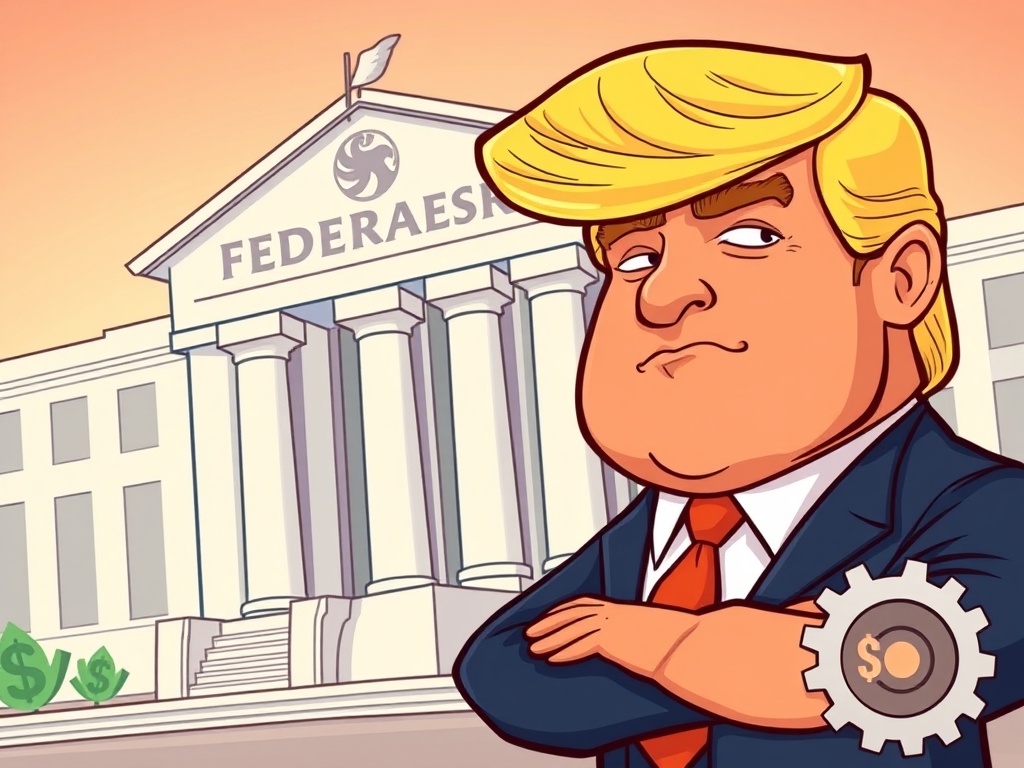
Federal Reserve Influence: Trump’s Critical Claim to Decision-Making Power

The cryptocurrency world often reacts to shifts in traditional financial markets and political statements. Recently, U.S. President Donald Trump made a significant declaration, stating his administration will soon hold a majority at the Federal Reserve, according to Walter Bloomberg. This comment suggests a belief that he will soon wield direct decision-making power within the central bank, raising crucial questions about future monetary policy and the independence of the Fed. Such an assertion of Federal Reserve influence could send ripples across all financial sectors, including digital assets.

Understanding the Claim: What Does ‘Federal Reserve Influence’ Truly Mean?

The Federal Reserve operates as the independent central bank of the United States. Its structure is designed to insulate it from direct political pressure. This allows it to make decisions based on economic data rather than political cycles. This independence is a cornerstone of its credibility and effectiveness.

However, President Trump’s statement implies a direct shift in this established balance. He suggests his appointees will soon constitute a majority. This would give his administration significant, if not outright, control over the Fed’s decisions. This potential for increased Federal Reserve influence from the executive branch challenges the very principle of central bank autonomy.

Why Does Direct Presidential Influence on the Fed Matter for the Economy?

The Federal Reserve plays a vital role in the U.S. and global economy. It sets interest rates, manages the money supply, and aims to achieve maximum employment and stable prices. When these critical functions come under political sway, it can lead to:

  • Increased Market Volatility: Investors value predictability. Political interference introduces uncertainty.
  • Inflationary Pressures: A politically motivated Fed might be pressured to keep rates low, potentially leading to unchecked inflation.
  • Loss of International Confidence: Global markets rely on the Fed’s independent decision-making. Eroding this could weaken the dollar.

Any disruption to the Fed’s independence, and thus its Federal Reserve influence, has far-reaching implications. For cryptocurrency markets, this could mean heightened volatility as investors seek safe havens or alternative assets, or react to changes in dollar strength.

Historical Context: Presidential Relations with the Federal Reserve

Presidents have always had a relationship with the Federal Reserve, appointing its governors and chair. Yet, the tradition has been to respect its operational independence. While presidents may express opinions or frustrations, direct claims of “decision-making power” are less common and more contentious.

This situation differs from typical executive-central bank interactions. It directly questions the institutional firewall. Understanding the historical context helps us grasp the gravity of President Trump’s recent comments regarding his desired Federal Reserve influence.

Potential Challenges and Market Reactions to Heightened Executive Influence

If the executive branch gains significant control over the Federal Reserve, several challenges could emerge:

  • Erosion of Trust: Both domestic and international markets might lose faith in the Fed’s ability to act impartially.
  • Policy Swings: Monetary policy could become more erratic, aligning with political cycles rather than long-term economic stability.
  • Impact on Asset Prices: Unpredictable monetary policy could lead to significant shifts in bond yields, stock valuations, and even commodity prices. This could indirectly affect cryptocurrency valuations as well.

Monitoring these developments is crucial for anyone involved in financial markets, especially those sensitive to macroeconomic shifts, like cryptocurrency investors. The extent of this Federal Reserve influence will be a key factor.

In times of potential policy shifts, staying informed is paramount. Here are some actionable insights:

  • Monitor Economic Indicators: Keep an eye on inflation rates, employment data, and interest rate announcements.
  • Diversify Your Portfolio: Consider a balanced approach across different asset classes to mitigate risks from sudden policy changes.
  • Understand Global Reactions: How other major economies and central banks react to these developments can offer clues about broader market sentiment.

Being prepared for various scenarios can help individuals and businesses adapt to an evolving economic environment, particularly if Federal Reserve influence dynamics truly change.

In Conclusion: President Trump’s statement about soon holding decision-making power at the Federal Reserve marks a potentially significant moment for U.S. monetary policy. This assertion of direct Federal Reserve influence challenges long-standing principles of central bank independence. Its implications could range from increased market volatility to shifts in inflation and investor confidence, affecting everything from traditional stocks to the burgeoning cryptocurrency markets. As events unfold, the financial world will closely watch how this dynamic evolves and what it means for the future of economic stability.

Frequently Asked Questions (FAQs)

1. What is the Federal Reserve’s primary role?
The Federal Reserve, often called the Fed, acts as the central bank of the United States. Its primary roles include managing the nation’s monetary policy, supervising and regulating banks, maintaining financial stability, and providing financial services to the U.S. government.

2. Why is the Federal Reserve’s independence important?
Independence helps the Fed make decisions based on economic data and long-term stability rather than short-term political pressures. This fosters market confidence and prevents monetary policy from being used for political gain.

3. How could increased political Federal Reserve influence affect the U.S. economy?
Increased political influence could lead to unpredictable policy shifts, higher inflation if interest rates are kept artificially low, and a loss of market confidence. This can result in economic instability and volatility.

4. What are the potential implications for cryptocurrency markets?
Changes in monetary policy, particularly those driven by political factors, can impact the U.S. dollar’s strength and overall market sentiment. This might lead to increased volatility in crypto markets as investors react to macroeconomic shifts, potentially seeking safe-haven assets or alternatives to traditional finance.

5. Has a U.S. President ever claimed such direct power over the Fed before?
While presidents appoint Fed governors and the chair, and may express opinions, direct claims of soon holding “decision-making power” are highly unusual and challenge the traditional understanding of the Fed’s operational independence.

Did this article shed light on the critical topic of Federal Reserve influence? Share your thoughts and spread awareness by sharing this article on your social media platforms! Your engagement helps others understand these vital economic discussions.

To learn more about the latest explore our article on key developments shaping US economic policy and its monetary policy future.

This post Federal Reserve Influence: Trump’s Critical Claim to Decision-Making Power first appeared on BitcoinWorld and is written by Editorial Team


Market Opportunity
OFFICIAL TRUMP Logo
OFFICIAL TRUMP Price(TRUMP)
$5.369
$5.369$5.369
-1.17%
USD
OFFICIAL TRUMP (TRUMP) Live Price Chart
Disclaimer: The articles reposted on this site are sourced from public platforms and are provided for informational purposes only. They do not necessarily reflect the views of MEXC. All rights remain with the original authors. If you believe any content infringes on third-party rights, please contact service@support.mexc.com for removal. MEXC makes no guarantees regarding the accuracy, completeness, or timeliness of the content and is not responsible for any actions taken based on the information provided. The content does not constitute financial, legal, or other professional advice, nor should it be considered a recommendation or endorsement by MEXC.

You May Also Like

Saudi Awwal Bank Adopts Chainlink Tools, LINK Near $23

Saudi Awwal Bank Adopts Chainlink Tools, LINK Near $23

The post Saudi Awwal Bank Adopts Chainlink Tools, LINK Near $23 appeared on BitcoinEthereumNews.com. SAB adopts Chainlink’s CCIP and CRE to expand tokenization and cross-border finance tools. SAB and Wamid target $2.32T Saudi capital markets with blockchain-based tokenization plans. LINK price falls 2.43% to $22.99 despite higher trading volume and steady liquidity ratios. Saudi Awwal Bank has added Chainlink’s Cross-Chain Interoperability Protocol (CCIP) and the Chainlink Runtime Environment (CRE) to its digital strategy. CCIP links assets and data across multiple blockchains, while CRE provides banks with a controlled framework to test and deploy new financial applications. The lender, with more than $100 billion in assets, is applying the tools to tokenized assets, cross-border settlement, and automated credit platforms. The move signals that Chainlink’s infrastructure is being adopted at scale inside regulated finance. Related: Chainlink’s Deal with SBI Is a Major Win, But Chart Shows LINK’s Battle at $27 Resistance Wamid Partnership Aims at $2.32 Trillion Markets In parallel, SAB signed an agreement with Wamid, a subsidiary of the Saudi Tadawul Group, to pilot tokenization of the Saudi Exchange’s $2.32 trillion capital markets. The focus is on equities and debt products, opening the door for blockchain-based issuance and settlement. SAB has already executed the world’s first Islamic repo on distributed ledger technology, in collaboration with Oumla earlier this year. That transaction gave regulators a template for compliant on-chain contracts. The Wamid deal builds directly on that precedent, shifting from single-instrument pilots toward broader capital markets integration. Saudi Blockchain Buildout Gains Pace Saudi institutions are building multiple layers of digital infrastructure. Oumla is working with Avalanche to develop the Kingdom’s first domestically hosted Layer 1 blockchain. SAB’s Chainlink adoption adds an interoperability and execution layer on top. Together, these projects are shaping a domestic framework for tokenization, with global connectivity added only where liquidity requires it. LINK Price and Liquidity Snapshot While institutional adoption progresses, Chainlink’s…
Share
BitcoinEthereumNews2025/09/18 08:49
Pump.fun CEO to Call Low-Cap Gem to Test New ‘Callouts’ Feature — Is a 100x Incoming?

Pump.fun CEO to Call Low-Cap Gem to Test New ‘Callouts’ Feature — Is a 100x Incoming?

Pump.fun has rolled out a new social feature that is already stirring debate across Solana’s meme coin scene, after founder Alon Cohen said he would personally
Share
CryptoNews2026/01/16 06:26
New York Regulators Push Banks to Adopt Blockchain Analytics

New York Regulators Push Banks to Adopt Blockchain Analytics

New York’s top financial regulator urged banks to adopt blockchain analytics, signaling tighter oversight of crypto-linked risks. The move reflects regulators’ concern that traditional institutions face rising exposure to digital assets. While crypto-native firms already rely on monitoring tools, the Department of Financial Services now expects banks to use them to detect illicit activity. NYDFS Outlines Compliance Expectations The notice, issued on Wednesday by Superintendent Adrienne Harris, applies to all state-chartered banks and foreign branches. In its industry letter, the New York State Department of Financial Services (NYDFS) emphasized that blockchain analytics should be integrated into compliance programs according to each bank’s size, operations, and risk appetite. The regulator cautioned that crypto markets evolve quickly, requiring institutions to update frameworks regularly. “Emerging technologies introduce evolving threats that require enhanced monitoring tools,” the notice stated. It stressed the need for banks to prevent money laundering, sanctions violations, and other illicit finance linked to virtual currency transactions. To that end, the Department listed specific areas where blockchain analytics can be applied: Screening customer wallets with crypto exposure to assess risks. Verifying the origin of funds from virtual asset service providers (VASPs). Monitoring the ecosystem holistically to detect money laundering or sanctions exposure. Identifying and assessing counterparties, such as third-party VASPs. Evaluating expected versus actual transaction activity, including dollar thresholds. Weighing risks tied to new digital asset products before rollout. These examples highlight how institutions can tailor monitoring tools to strengthen their risk management frameworks. The guidance expands on NYDFS’s Virtual Currency-Related Activities (VCRA) framework, which has governed crypto oversight in the state since 2022. Regulators Signal Broader Impact Market observers say the notice is less about new rules and more about clarifying expectations. By formalizing the role of blockchain analytics in traditional finance, New York is reinforcing the idea that banks cannot treat crypto exposure as a niche concern. Analysts also believe the approach could ripple beyond New York. Federal agencies and regulators in other states may view the guidance as a blueprint for aligning banking oversight with the realities of digital asset adoption. For institutions, failure to adopt blockchain intelligence tools may invite regulatory scrutiny and undermine their ability to safeguard customer trust. With crypto now firmly embedded in global finance, New York’s stance suggests that blockchain analytics are no longer optional for banks — they are essential to protecting the financial system’s integrity.
Share
Coinstats2025/09/18 08:49