BitcoinWorld Nvidia AI Chips Face Critical Halt: Unpacking Beijing’s Shocking Security Concerns in the China Market In the rapidly evolving landscape of artificial intelligence and digital assets, the ripple effects of geopolitical decisions can be profound. A recent development involving Nvidia AI chips has sent tremors through the tech world, particularly for those closely watching the intersection of advanced computing and global economics. This situation underscores the delicate balance between innovation, national security, and international trade, impacting everything from data centers to the underlying infrastructure supporting blockchain technologies. What’s Behind the Sudden Halt of Nvidia AI Chips Production? The tech community was recently abuzz with news that Nvidia, a titan in the semiconductor industry, has reportedly instructed its component suppliers to cease production of its H20 AI chip. This decision marks a significant turn, especially given that just a month prior, companies like Nvidia had received approval to sell their specialized AI chips in the Chinese market. The H20 chip was specifically designed to comply with U.S. export restrictions while still offering substantial AI processing capabilities for Chinese enterprises. The abrupt halt suggests a new and formidable challenge has emerged, complicating Nvidia’s strategic efforts to maintain its foothold in one of the world’s most critical AI battlegrounds. Navigating the Complexities of the China AI Market Beijing’s stance appears to be the primary catalyst for this production halt. Reports indicate that the Chinese government has issued a stern warning to domestic companies, advising against the use of Nvidia’s H20 chips. The core concern revolves around potential security vulnerabilities and the fear of ‘backdoors’ that could grant the U.S. government access to sensitive data. This move is not merely about a single chip; it’s a clear signal of China’s accelerating push for technological self-reliance and its deep-seated distrust of foreign-made components in critical infrastructure. For companies operating within the China AI market, this presents a challenging dilemma: balancing access to cutting-edge foreign technology with increasing pressure to adopt domestic alternatives. The implications for market access and competitive strategy are immense, forcing a re-evaluation of long-term investment and supply chain decisions. The Broader Implications for the Global Semiconductor Industry The reported halt of Nvidia’s H20 production extends far beyond the immediate financial impact on the company. It highlights the growing geopolitical fragmentation within the global semiconductor industry. For years, the industry thrived on interconnected supply chains and international collaboration. However, the escalating tech rivalry between the U.S. and China is forcing a decoupling, leading to parallel ecosystems and increased nationalistic policies. This trend could result in: Increased Costs: Developing redundant supply chains and domestic alternatives often comes at a higher price. Slower Innovation: Restrictions on technology transfer and access to global talent pools could impede the pace of technological advancement. Market Volatility: Sudden policy shifts and trade disputes create uncertainty, impacting investor confidence and long-term planning. Strategic Realignments: Semiconductor companies may need to re-evaluate their global strategies, potentially leading to regionalized production and market focus. This shift fundamentally alters the competitive landscape, pushing nations to prioritize security and self-sufficiency over pure economic efficiency. Security Scrutiny: Why Beijing is Wary of the H20 AI Chip Beijing’s specific concerns regarding the H20 AI chip stem from a broader narrative of data sovereignty and national security. In an era where AI systems process vast amounts of sensitive information, from government data to personal user details, the integrity and trustworthiness of the underlying hardware are paramount. The fear of ‘backdoors’—covert access points embedded in hardware or software—is a significant driver of this apprehension. While Nvidia explicitly denies such claims, stating, “NVIDIA does not have ‘backdoors’ in our chips that would give anyone a remote way to access or control them. The market can use the H20 with confidence,” the geopolitical climate fosters an environment of suspicion. China’s government is increasingly advocating for the use of indigenous chips, viewing them as inherently more secure and controllable. This preference for domestic solutions reflects a strategic imperative to protect national interests and reduce reliance on foreign technology that could potentially be weaponized or compromised. Beyond the Headlines: The Future of Tech Geopolitics and AI This incident serves as a stark reminder of how deeply intertwined technology and international relations have become. The future of tech geopolitics will likely be defined by continued competition over critical technologies like AI and semiconductors. Nations will increasingly prioritize domestic capabilities, invest heavily in R&D, and implement protective measures to safeguard their technological advantages. For businesses, navigating this complex environment requires: Diversified Supply Chains: Reducing over-reliance on single regions or suppliers. Localized Strategies: Adapting products and business models to comply with diverse national regulations and preferences. Enhanced Cybersecurity: Proactively addressing security concerns and building trust with local stakeholders. Policy Monitoring: Staying abreast of evolving trade policies, export controls, and national security directives. The Nvidia H20 situation is not an isolated event but rather a symptom of a larger trend—a global technological race where economic advantage, national security, and ideological differences converge. Understanding these dynamics is crucial for anyone involved in the tech sector, from cryptocurrency innovators leveraging AI to global investors monitoring market shifts. The reported halt in Nvidia’s H20 AI chip production, driven by Beijing’s security concerns and a push for domestic alternatives, marks a pivotal moment in the global tech landscape. This development underscores the intense geopolitical pressures shaping the semiconductor industry and the broader AI market. While Nvidia maintains the integrity of its chips, the incident highlights China’s unwavering commitment to technological sovereignty and its strategic pivot towards indigenous solutions. For businesses and investors, this era demands adaptability, strategic foresight, and a keen awareness of the evolving interplay between technology, trade, and national security. The path forward for AI innovation will undoubtedly be shaped by these complex and often conflicting forces. To learn more about the latest AI market trends and how geopolitical shifts are impacting the semiconductor industry, explore our article on key developments shaping AI features and institutional adoption. This post Nvidia AI Chips Face Critical Halt: Unpacking Beijing’s Shocking Security Concerns in the China Market first appeared on BitcoinWorld and is written by Editorial TeamBitcoinWorld Nvidia AI Chips Face Critical Halt: Unpacking Beijing’s Shocking Security Concerns in the China Market In the rapidly evolving landscape of artificial intelligence and digital assets, the ripple effects of geopolitical decisions can be profound. A recent development involving Nvidia AI chips has sent tremors through the tech world, particularly for those closely watching the intersection of advanced computing and global economics. This situation underscores the delicate balance between innovation, national security, and international trade, impacting everything from data centers to the underlying infrastructure supporting blockchain technologies. What’s Behind the Sudden Halt of Nvidia AI Chips Production? The tech community was recently abuzz with news that Nvidia, a titan in the semiconductor industry, has reportedly instructed its component suppliers to cease production of its H20 AI chip. This decision marks a significant turn, especially given that just a month prior, companies like Nvidia had received approval to sell their specialized AI chips in the Chinese market. The H20 chip was specifically designed to comply with U.S. export restrictions while still offering substantial AI processing capabilities for Chinese enterprises. The abrupt halt suggests a new and formidable challenge has emerged, complicating Nvidia’s strategic efforts to maintain its foothold in one of the world’s most critical AI battlegrounds. Navigating the Complexities of the China AI Market Beijing’s stance appears to be the primary catalyst for this production halt. Reports indicate that the Chinese government has issued a stern warning to domestic companies, advising against the use of Nvidia’s H20 chips. The core concern revolves around potential security vulnerabilities and the fear of ‘backdoors’ that could grant the U.S. government access to sensitive data. This move is not merely about a single chip; it’s a clear signal of China’s accelerating push for technological self-reliance and its deep-seated distrust of foreign-made components in critical infrastructure. For companies operating within the China AI market, this presents a challenging dilemma: balancing access to cutting-edge foreign technology with increasing pressure to adopt domestic alternatives. The implications for market access and competitive strategy are immense, forcing a re-evaluation of long-term investment and supply chain decisions. The Broader Implications for the Global Semiconductor Industry The reported halt of Nvidia’s H20 production extends far beyond the immediate financial impact on the company. It highlights the growing geopolitical fragmentation within the global semiconductor industry. For years, the industry thrived on interconnected supply chains and international collaboration. However, the escalating tech rivalry between the U.S. and China is forcing a decoupling, leading to parallel ecosystems and increased nationalistic policies. This trend could result in: Increased Costs: Developing redundant supply chains and domestic alternatives often comes at a higher price. Slower Innovation: Restrictions on technology transfer and access to global talent pools could impede the pace of technological advancement. Market Volatility: Sudden policy shifts and trade disputes create uncertainty, impacting investor confidence and long-term planning. Strategic Realignments: Semiconductor companies may need to re-evaluate their global strategies, potentially leading to regionalized production and market focus. This shift fundamentally alters the competitive landscape, pushing nations to prioritize security and self-sufficiency over pure economic efficiency. Security Scrutiny: Why Beijing is Wary of the H20 AI Chip Beijing’s specific concerns regarding the H20 AI chip stem from a broader narrative of data sovereignty and national security. In an era where AI systems process vast amounts of sensitive information, from government data to personal user details, the integrity and trustworthiness of the underlying hardware are paramount. The fear of ‘backdoors’—covert access points embedded in hardware or software—is a significant driver of this apprehension. While Nvidia explicitly denies such claims, stating, “NVIDIA does not have ‘backdoors’ in our chips that would give anyone a remote way to access or control them. The market can use the H20 with confidence,” the geopolitical climate fosters an environment of suspicion. China’s government is increasingly advocating for the use of indigenous chips, viewing them as inherently more secure and controllable. This preference for domestic solutions reflects a strategic imperative to protect national interests and reduce reliance on foreign technology that could potentially be weaponized or compromised. Beyond the Headlines: The Future of Tech Geopolitics and AI This incident serves as a stark reminder of how deeply intertwined technology and international relations have become. The future of tech geopolitics will likely be defined by continued competition over critical technologies like AI and semiconductors. Nations will increasingly prioritize domestic capabilities, invest heavily in R&D, and implement protective measures to safeguard their technological advantages. For businesses, navigating this complex environment requires: Diversified Supply Chains: Reducing over-reliance on single regions or suppliers. Localized Strategies: Adapting products and business models to comply with diverse national regulations and preferences. Enhanced Cybersecurity: Proactively addressing security concerns and building trust with local stakeholders. Policy Monitoring: Staying abreast of evolving trade policies, export controls, and national security directives. The Nvidia H20 situation is not an isolated event but rather a symptom of a larger trend—a global technological race where economic advantage, national security, and ideological differences converge. Understanding these dynamics is crucial for anyone involved in the tech sector, from cryptocurrency innovators leveraging AI to global investors monitoring market shifts. The reported halt in Nvidia’s H20 AI chip production, driven by Beijing’s security concerns and a push for domestic alternatives, marks a pivotal moment in the global tech landscape. This development underscores the intense geopolitical pressures shaping the semiconductor industry and the broader AI market. While Nvidia maintains the integrity of its chips, the incident highlights China’s unwavering commitment to technological sovereignty and its strategic pivot towards indigenous solutions. For businesses and investors, this era demands adaptability, strategic foresight, and a keen awareness of the evolving interplay between technology, trade, and national security. The path forward for AI innovation will undoubtedly be shaped by these complex and often conflicting forces. To learn more about the latest AI market trends and how geopolitical shifts are impacting the semiconductor industry, explore our article on key developments shaping AI features and institutional adoption. This post Nvidia AI Chips Face Critical Halt: Unpacking Beijing’s Shocking Security Concerns in the China Market first appeared on BitcoinWorld and is written by Editorial Team

Nvidia AI Chips Face Critical Halt: Unpacking Beijing’s Shocking Security Concerns in the China Market

BitcoinWorld
Nvidia AI Chips Face Critical Halt: Unpacking Beijing’s Shocking Security Concerns in the China Market

In the rapidly evolving landscape of artificial intelligence and digital assets, the ripple effects of geopolitical decisions can be profound. A recent development involving Nvidia AI chips has sent tremors through the tech world, particularly for those closely watching the intersection of advanced computing and global economics. This situation underscores the delicate balance between innovation, national security, and international trade, impacting everything from data centers to the underlying infrastructure supporting blockchain technologies.

What’s Behind the Sudden Halt of Nvidia AI Chips Production?

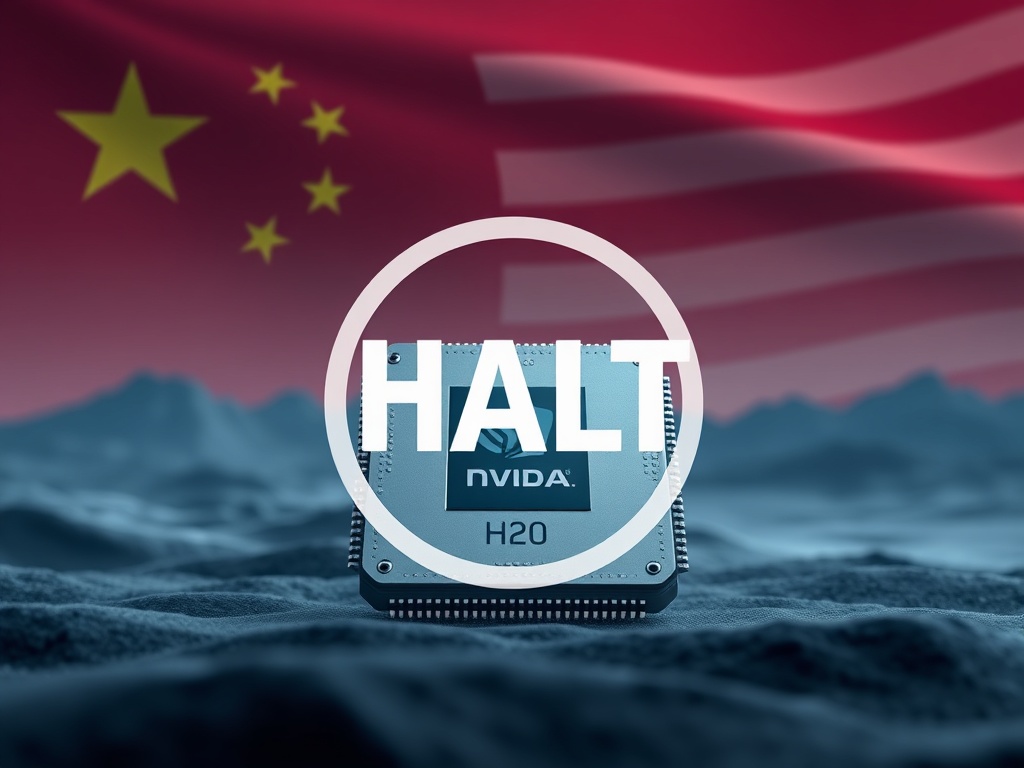
The tech community was recently abuzz with news that Nvidia, a titan in the semiconductor industry, has reportedly instructed its component suppliers to cease production of its H20 AI chip. This decision marks a significant turn, especially given that just a month prior, companies like Nvidia had received approval to sell their specialized AI chips in the Chinese market. The H20 chip was specifically designed to comply with U.S. export restrictions while still offering substantial AI processing capabilities for Chinese enterprises. The abrupt halt suggests a new and formidable challenge has emerged, complicating Nvidia’s strategic efforts to maintain its foothold in one of the world’s most critical AI battlegrounds.

Beijing’s stance appears to be the primary catalyst for this production halt. Reports indicate that the Chinese government has issued a stern warning to domestic companies, advising against the use of Nvidia’s H20 chips. The core concern revolves around potential security vulnerabilities and the fear of ‘backdoors’ that could grant the U.S. government access to sensitive data. This move is not merely about a single chip; it’s a clear signal of China’s accelerating push for technological self-reliance and its deep-seated distrust of foreign-made components in critical infrastructure. For companies operating within the China AI market, this presents a challenging dilemma: balancing access to cutting-edge foreign technology with increasing pressure to adopt domestic alternatives. The implications for market access and competitive strategy are immense, forcing a re-evaluation of long-term investment and supply chain decisions.

The Broader Implications for the Global Semiconductor Industry

The reported halt of Nvidia’s H20 production extends far beyond the immediate financial impact on the company. It highlights the growing geopolitical fragmentation within the global semiconductor industry. For years, the industry thrived on interconnected supply chains and international collaboration. However, the escalating tech rivalry between the U.S. and China is forcing a decoupling, leading to parallel ecosystems and increased nationalistic policies. This trend could result in:

  • Increased Costs: Developing redundant supply chains and domestic alternatives often comes at a higher price.
  • Slower Innovation: Restrictions on technology transfer and access to global talent pools could impede the pace of technological advancement.
  • Market Volatility: Sudden policy shifts and trade disputes create uncertainty, impacting investor confidence and long-term planning.
  • Strategic Realignments: Semiconductor companies may need to re-evaluate their global strategies, potentially leading to regionalized production and market focus.

This shift fundamentally alters the competitive landscape, pushing nations to prioritize security and self-sufficiency over pure economic efficiency.

Security Scrutiny: Why Beijing is Wary of the H20 AI Chip

Beijing’s specific concerns regarding the H20 AI chip stem from a broader narrative of data sovereignty and national security. In an era where AI systems process vast amounts of sensitive information, from government data to personal user details, the integrity and trustworthiness of the underlying hardware are paramount. The fear of ‘backdoors’—covert access points embedded in hardware or software—is a significant driver of this apprehension. While Nvidia explicitly denies such claims, stating, “NVIDIA does not have ‘backdoors’ in our chips that would give anyone a remote way to access or control them. The market can use the H20 with confidence,” the geopolitical climate fosters an environment of suspicion. China’s government is increasingly advocating for the use of indigenous chips, viewing them as inherently more secure and controllable. This preference for domestic solutions reflects a strategic imperative to protect national interests and reduce reliance on foreign technology that could potentially be weaponized or compromised.

Beyond the Headlines: The Future of Tech Geopolitics and AI

This incident serves as a stark reminder of how deeply intertwined technology and international relations have become. The future of tech geopolitics will likely be defined by continued competition over critical technologies like AI and semiconductors. Nations will increasingly prioritize domestic capabilities, invest heavily in R&D, and implement protective measures to safeguard their technological advantages. For businesses, navigating this complex environment requires:

  • Diversified Supply Chains: Reducing over-reliance on single regions or suppliers.
  • Localized Strategies: Adapting products and business models to comply with diverse national regulations and preferences.
  • Enhanced Cybersecurity: Proactively addressing security concerns and building trust with local stakeholders.
  • Policy Monitoring: Staying abreast of evolving trade policies, export controls, and national security directives.

The Nvidia H20 situation is not an isolated event but rather a symptom of a larger trend—a global technological race where economic advantage, national security, and ideological differences converge. Understanding these dynamics is crucial for anyone involved in the tech sector, from cryptocurrency innovators leveraging AI to global investors monitoring market shifts.

The reported halt in Nvidia’s H20 AI chip production, driven by Beijing’s security concerns and a push for domestic alternatives, marks a pivotal moment in the global tech landscape. This development underscores the intense geopolitical pressures shaping the semiconductor industry and the broader AI market. While Nvidia maintains the integrity of its chips, the incident highlights China’s unwavering commitment to technological sovereignty and its strategic pivot towards indigenous solutions. For businesses and investors, this era demands adaptability, strategic foresight, and a keen awareness of the evolving interplay between technology, trade, and national security. The path forward for AI innovation will undoubtedly be shaped by these complex and often conflicting forces.

To learn more about the latest AI market trends and how geopolitical shifts are impacting the semiconductor industry, explore our article on key developments shaping AI features and institutional adoption.

This post Nvidia AI Chips Face Critical Halt: Unpacking Beijing’s Shocking Security Concerns in the China Market first appeared on BitcoinWorld and is written by Editorial Team


Market Opportunity
DAR Open Network Logo
DAR Open Network Price(D)
$0.01275
$0.01275$0.01275
-4.63%
USD
DAR Open Network (D) Live Price Chart
Disclaimer: The articles reposted on this site are sourced from public platforms and are provided for informational purposes only. They do not necessarily reflect the views of MEXC. All rights remain with the original authors. If you believe any content infringes on third-party rights, please contact service@support.mexc.com for removal. MEXC makes no guarantees regarding the accuracy, completeness, or timeliness of the content and is not responsible for any actions taken based on the information provided. The content does not constitute financial, legal, or other professional advice, nor should it be considered a recommendation or endorsement by MEXC.

You May Also Like

American Bitcoin’s $5B Nasdaq Debut Puts Trump-Backed Miner in Crypto Spotlight

American Bitcoin’s $5B Nasdaq Debut Puts Trump-Backed Miner in Crypto Spotlight

The post American Bitcoin’s $5B Nasdaq Debut Puts Trump-Backed Miner in Crypto Spotlight appeared on BitcoinEthereumNews.com. Key Takeaways: American Bitcoin (ABTC) surged nearly 85% on its Nasdaq debut, briefly reaching a $5B valuation. The Trump family, alongside Hut 8 Mining, controls 98% of the newly merged crypto-mining entity. Eric Trump called Bitcoin “modern-day gold,” predicting it could reach $1 million per coin. American Bitcoin, a fast-rising crypto mining firm with strong political and institutional backing, has officially entered Wall Street. After merging with Gryphon Digital Mining, the company made its Nasdaq debut under the ticker ABTC, instantly drawing global attention to both its stock performance and its bold vision for Bitcoin’s future. Read More: Trump-Backed Crypto Firm Eyes Asia for Bold Bitcoin Expansion Nasdaq Debut: An Explosive First Day ABTC’s first day of trading proved as dramatic as expected. Shares surged almost 85% at the open, touching a peak of $14 before settling at lower levels by the close. That initial spike valued the company around $5 billion, positioning it as one of 2025’s most-watched listings. At the last session, ABTC has been trading at $7.28 per share, which is a small positive 2.97% per day. Although the price has decelerated since opening highs, analysts note that the company has been off to a strong start and early investor activity is a hard-to-find feat in a newly-launched crypto mining business. According to market watchers, the listing comes at a time of new momentum in the digital asset markets. With Bitcoin trading above $110,000 this quarter, American Bitcoin’s entry comes at a time when both institutional investors and retail traders are showing heightened interest in exposure to Bitcoin-linked equities. Ownership Structure: Trump Family and Hut 8 at the Helm Its management and ownership set up has increased the visibility of the company. The Trump family and the Canadian mining giant Hut 8 Mining jointly own 98 percent…
Share
BitcoinEthereumNews2025/09/18 01:33
Bitcoin ETFs Surge with 20,685 BTC Inflows, Marking Strongest Week

Bitcoin ETFs Surge with 20,685 BTC Inflows, Marking Strongest Week

TLDR Bitcoin ETFs recorded their strongest weekly inflows since July, reaching 20,685 BTC. U.S. Bitcoin ETFs contributed nearly 97% of the total inflows last week. The surge in Bitcoin ETF inflows pushed holdings to a new high of 1.32 million BTC. Fidelity’s FBTC product accounted for 36% of the total inflows, marking an 18-month high. [...] The post Bitcoin ETFs Surge with 20,685 BTC Inflows, Marking Strongest Week appeared first on CoinCentral.
Share
Coincentral2025/09/18 02:30
Whales Shift Focus to Zero Knowledge Proof’s 3000x ROI Potential as Zcash & Toncoin’s Rally Slows Down

Whales Shift Focus to Zero Knowledge Proof’s 3000x ROI Potential as Zcash & Toncoin’s Rally Slows Down

Explore how Zero Knowledge Proof (ZKP) is reshaping personal finance, challenging banks, and standing out as one of the top crypto gainers ahead of ZCash and Toncoin
Share
coinlineup2026/01/15 13:00