Bitcoin now sits at the center of Asia’s financial debate. Legislators and regulators—not retail traders—determine how it flows through markets. Their decisions affect liquidity, credibility, and whether Asia joins a global competition for national bitcoin holdings. Hong Kong now anchors digital assets in market infrastructure. ETFs provide compliant exposure, while the Stablecoins Bill created licensing for fiat-referenced issuers. Together, they transform crypto from speculative sidelines into financial plumbing. Hong Kong Writes the Rulebook Background Context – On April 30, 2024, HKEX listed Asia’s first spot bitcoin and ether ETFs, with in-kind creation reducing friction. The ASX followed on June 20, 2024. Korea’s Virtual Asset User Protection Act took effect on July 19, 2024, requiring 80% cold storage and insurance. In January 2025, Indonesia’s OJK assumed oversight, shifting supervision into financial regulation. Behind the Scenes – China has no unified rules for seized bitcoin. Local governments dispose of them inconsistently, prompting calls for central coordination, Reuters noted. In Hong Kong, banks and fintechs prepare applications under the new licensing regime. Japan’s Diet asked in December 2024 whether bitcoin could serve as reserves; the government dismissed the idea in its official record. In Taiwan, a legislator proposed allocating 0.1% of GDP to a national bitcoin reserve, according to CommonWealth Magazine. Wider Impact – Australia’s ETF enabled superannuation funds to allocate legally. Hong Kong’s listings drew custodians and auditors. Korea emphasizes protection, Hong Kong emphasizes access, and Indonesia strengthens supervision—divergent policies shape where capital flows. Latest Update – The US refrained from confiscating bitcoin as a strategic reserve, and plans to include crypto in 401(k)s could expose savers to political and market risks. China is reviewing yuan-backed stablecoins to boost renminbi use in global trade. Hong Kong passed its Stablecoins Bill in May and started licensing for fiat-referenced issuers under the Hong Kong Monetary Authority. Seizures Create Strategic Dilemmas Most state-controlled bitcoin comes from seizures, not reserves. China’s PlusToken case yielded about 195,000 BTC. The CPS announced record seizures in the U.K. in 2024. The U.S. chose retention, while Germany liquidated. Divergent policies inject volatility when states suddenly sell. Bitcoin Holdings of Countries & Governments | BiTBO According to CoinGecko, governments worldwide now hold about 463,741 BTC—2.3% of the supply. These caches reflect enforcement more than strategy. Whether they remain dormant, liquidated, or reclassified remains unsettled. Historical Perspective – Gold ETFs, two decades ago, unlocked institutional flows. Crypto ETFs follow that arc but face AML and custody hurdles. Bitcoin differs: its government balances come mainly from seizures. IMF frameworks exclude crypto from reserves, which is blocking official adoption for now. Possible Risks – Uncoordinated government sales could shake markets. Weak backing risks destabilizing stablecoins. Overregulation drives liquidity offshore. BeInCrypto reported that poorly designed U.S. retirement integration could amplify volatility. Declaring reserves without accounting legitimacy risks credibility loss. Politics Enter the Reserve Debate Legislatures increasingly test the reserve question. Taiwan’s proposal sparked debate. Japan’s Diet raised the issue, but the finance ministry dismissed it. According to the Brazilian Chamber record, Brazil’s Chamber of Deputies held a 2025 hearing on allocating up to 5% of reserves to Bitcoin. In the US, Texas codified a state-level bitcoin reserve. These moves show that politics, not just markets, drive the reserve conversation. Data Breakdown 2.3%: share of bitcoin controlled by governments 195,000: bitcoin seized in China’s PlusToken case 80%: cold-storage requirement in Korea April 30, 2024: Hong Kong ETF launch May 21, 2025: Hong Kong stablecoin law passed Expert Opinion “The introduction of Spot VA ETFs in Hong Kong is the latest exciting addition to HKEX’s diverse and vibrant ETP ecosystem, providing investors with access to a new asset class.” — HKEX “The Government welcomed the passage of the Stablecoins Bill… to establish a licensing regime for fiat-referenced stablecoins issuers in Hong Kong.” — HKMA “The Act… requires virtual asset service providers to safely manage and store their customers’ deposits and virtual assets.” — FSC Korea China’s decisions on seized bitcoin and yuan-backed stablecoins will set the tone. Hong Kong’s licensing regime could bring banks into the issuance process. U.S. reserves and retirement debates may pressure others to adjust. Asia must decide whether to prepare or remain cautious.Bitcoin now sits at the center of Asia’s financial debate. Legislators and regulators—not retail traders—determine how it flows through markets. Their decisions affect liquidity, credibility, and whether Asia joins a global competition for national bitcoin holdings. Hong Kong now anchors digital assets in market infrastructure. ETFs provide compliant exposure, while the Stablecoins Bill created licensing for fiat-referenced issuers. Together, they transform crypto from speculative sidelines into financial plumbing. Hong Kong Writes the Rulebook Background Context – On April 30, 2024, HKEX listed Asia’s first spot bitcoin and ether ETFs, with in-kind creation reducing friction. The ASX followed on June 20, 2024. Korea’s Virtual Asset User Protection Act took effect on July 19, 2024, requiring 80% cold storage and insurance. In January 2025, Indonesia’s OJK assumed oversight, shifting supervision into financial regulation. Behind the Scenes – China has no unified rules for seized bitcoin. Local governments dispose of them inconsistently, prompting calls for central coordination, Reuters noted. In Hong Kong, banks and fintechs prepare applications under the new licensing regime. Japan’s Diet asked in December 2024 whether bitcoin could serve as reserves; the government dismissed the idea in its official record. In Taiwan, a legislator proposed allocating 0.1% of GDP to a national bitcoin reserve, according to CommonWealth Magazine. Wider Impact – Australia’s ETF enabled superannuation funds to allocate legally. Hong Kong’s listings drew custodians and auditors. Korea emphasizes protection, Hong Kong emphasizes access, and Indonesia strengthens supervision—divergent policies shape where capital flows. Latest Update – The US refrained from confiscating bitcoin as a strategic reserve, and plans to include crypto in 401(k)s could expose savers to political and market risks. China is reviewing yuan-backed stablecoins to boost renminbi use in global trade. Hong Kong passed its Stablecoins Bill in May and started licensing for fiat-referenced issuers under the Hong Kong Monetary Authority. Seizures Create Strategic Dilemmas Most state-controlled bitcoin comes from seizures, not reserves. China’s PlusToken case yielded about 195,000 BTC. The CPS announced record seizures in the U.K. in 2024. The U.S. chose retention, while Germany liquidated. Divergent policies inject volatility when states suddenly sell. Bitcoin Holdings of Countries & Governments | BiTBO According to CoinGecko, governments worldwide now hold about 463,741 BTC—2.3% of the supply. These caches reflect enforcement more than strategy. Whether they remain dormant, liquidated, or reclassified remains unsettled. Historical Perspective – Gold ETFs, two decades ago, unlocked institutional flows. Crypto ETFs follow that arc but face AML and custody hurdles. Bitcoin differs: its government balances come mainly from seizures. IMF frameworks exclude crypto from reserves, which is blocking official adoption for now. Possible Risks – Uncoordinated government sales could shake markets. Weak backing risks destabilizing stablecoins. Overregulation drives liquidity offshore. BeInCrypto reported that poorly designed U.S. retirement integration could amplify volatility. Declaring reserves without accounting legitimacy risks credibility loss. Politics Enter the Reserve Debate Legislatures increasingly test the reserve question. Taiwan’s proposal sparked debate. Japan’s Diet raised the issue, but the finance ministry dismissed it. According to the Brazilian Chamber record, Brazil’s Chamber of Deputies held a 2025 hearing on allocating up to 5% of reserves to Bitcoin. In the US, Texas codified a state-level bitcoin reserve. These moves show that politics, not just markets, drive the reserve conversation. Data Breakdown 2.3%: share of bitcoin controlled by governments 195,000: bitcoin seized in China’s PlusToken case 80%: cold-storage requirement in Korea April 30, 2024: Hong Kong ETF launch May 21, 2025: Hong Kong stablecoin law passed Expert Opinion “The introduction of Spot VA ETFs in Hong Kong is the latest exciting addition to HKEX’s diverse and vibrant ETP ecosystem, providing investors with access to a new asset class.” — HKEX “The Government welcomed the passage of the Stablecoins Bill… to establish a licensing regime for fiat-referenced stablecoins issuers in Hong Kong.” — HKMA “The Act… requires virtual asset service providers to safely manage and store their customers’ deposits and virtual assets.” — FSC Korea China’s decisions on seized bitcoin and yuan-backed stablecoins will set the tone. Hong Kong’s licensing regime could bring banks into the issuance process. U.S. reserves and retirement debates may pressure others to adjust. Asia must decide whether to prepare or remain cautious.

National Bitcoin Reserve Strategy: Can It Succeed in Asia?

Bitcoin now sits at the center of Asia’s financial debate. Legislators and regulators—not retail traders—determine how it flows through markets. Their decisions affect liquidity, credibility, and whether Asia joins a global competition for national bitcoin holdings.

Hong Kong now anchors digital assets in market infrastructure. ETFs provide compliant exposure, while the Stablecoins Bill created licensing for fiat-referenced issuers. Together, they transform crypto from speculative sidelines into financial plumbing.

Hong Kong Writes the Rulebook

Background Context – On April 30, 2024, HKEX listed Asia’s first spot bitcoin and ether ETFs, with in-kind creation reducing friction. The ASX followed on June 20, 2024. Korea’s Virtual Asset User Protection Act took effect on July 19, 2024, requiring 80% cold storage and insurance. In January 2025, Indonesia’s OJK assumed oversight, shifting supervision into financial regulation.

Behind the Scenes – China has no unified rules for seized bitcoin. Local governments dispose of them inconsistently, prompting calls for central coordination, Reuters noted. In Hong Kong, banks and fintechs prepare applications under the new licensing regime. Japan’s Diet asked in December 2024 whether bitcoin could serve as reserves; the government dismissed the idea in its official record. In Taiwan, a legislator proposed allocating 0.1% of GDP to a national bitcoin reserve, according to CommonWealth Magazine.

Wider Impact – Australia’s ETF enabled superannuation funds to allocate legally. Hong Kong’s listings drew custodians and auditors. Korea emphasizes protection, Hong Kong emphasizes access, and Indonesia strengthens supervision—divergent policies shape where capital flows.

Latest Update – The US refrained from confiscating bitcoin as a strategic reserve, and plans to include crypto in 401(k)s could expose savers to political and market risks. China is reviewing yuan-backed stablecoins to boost renminbi use in global trade. Hong Kong passed its Stablecoins Bill in May and started licensing for fiat-referenced issuers under the Hong Kong Monetary Authority.

Seizures Create Strategic Dilemmas

Most state-controlled bitcoin comes from seizures, not reserves. China’s PlusToken case yielded about 195,000 BTC. The CPS announced record seizures in the U.K. in 2024. The U.S. chose retention, while Germany liquidated. Divergent policies inject volatility when states suddenly sell.
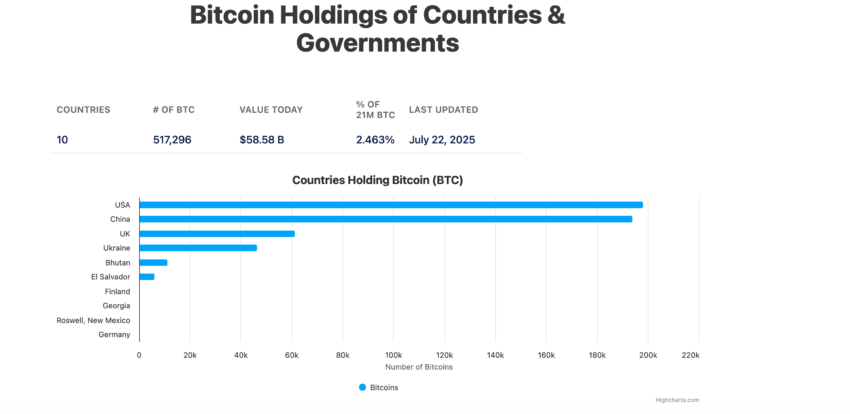
Bitcoin Holdings of Countries & Governments | BiTBO

According to CoinGecko, governments worldwide now hold about 463,741 BTC—2.3% of the supply. These caches reflect enforcement more than strategy. Whether they remain dormant, liquidated, or reclassified remains unsettled.

Historical Perspective – Gold ETFs, two decades ago, unlocked institutional flows. Crypto ETFs follow that arc but face AML and custody hurdles. Bitcoin differs: its government balances come mainly from seizures. IMF frameworks exclude crypto from reserves, which is blocking official adoption for now.

Possible Risks – Uncoordinated government sales could shake markets. Weak backing risks destabilizing stablecoins. Overregulation drives liquidity offshore. BeInCrypto reported that poorly designed U.S. retirement integration could amplify volatility. Declaring reserves without accounting legitimacy risks credibility loss.

Politics Enter the Reserve Debate

Legislatures increasingly test the reserve question. Taiwan’s proposal sparked debate. Japan’s Diet raised the issue, but the finance ministry dismissed it. According to the Brazilian Chamber record, Brazil’s Chamber of Deputies held a 2025 hearing on allocating up to 5% of reserves to Bitcoin. In the US, Texas codified a state-level bitcoin reserve. These moves show that politics, not just markets, drive the reserve conversation.

Data Breakdown

  • 2.3%: share of bitcoin controlled by governments
  • 195,000: bitcoin seized in China’s PlusToken case
  • 80%: cold-storage requirement in Korea
  • April 30, 2024: Hong Kong ETF launch
  • May 21, 2025: Hong Kong stablecoin law passed

Expert Opinion

China’s decisions on seized bitcoin and yuan-backed stablecoins will set the tone. Hong Kong’s licensing regime could bring banks into the issuance process. U.S. reserves and retirement debates may pressure others to adjust. Asia must decide whether to prepare or remain cautious.


Market Opportunity
Humanity Logo
Humanity Price(H)
$0.1806
$0.1806$0.1806
-5.01%
USD
Humanity (H) Live Price Chart
Disclaimer: The articles reposted on this site are sourced from public platforms and are provided for informational purposes only. They do not necessarily reflect the views of MEXC. All rights remain with the original authors. If you believe any content infringes on third-party rights, please contact service@support.mexc.com for removal. MEXC makes no guarantees regarding the accuracy, completeness, or timeliness of the content and is not responsible for any actions taken based on the information provided. The content does not constitute financial, legal, or other professional advice, nor should it be considered a recommendation or endorsement by MEXC.

You May Also Like

Is Doge Losing Steam As Traders Choose Pepeto For The Best Crypto Investment?

Is Doge Losing Steam As Traders Choose Pepeto For The Best Crypto Investment?

The post Is Doge Losing Steam As Traders Choose Pepeto For The Best Crypto Investment? appeared on BitcoinEthereumNews.com. Crypto News 17 September 2025 | 17:39 Is dogecoin really fading? As traders hunt the best crypto to buy now and weigh 2025 picks, Dogecoin (DOGE) still owns the meme coin spotlight, yet upside looks capped, today’s Dogecoin price prediction says as much. Attention is shifting to projects that blend culture with real on-chain tools. Buyers searching “best crypto to buy now” want shipped products, audits, and transparent tokenomics. That frames the true matchup: dogecoin vs. Pepeto. Enter Pepeto (PEPETO), an Ethereum-based memecoin with working rails: PepetoSwap, a zero-fee DEX, plus Pepeto Bridge for smooth cross-chain moves. By fusing story with tools people can use now, and speaking directly to crypto presale 2025 demand, Pepeto puts utility, clarity, and distribution in front. In a market where legacy meme coin leaders risk drifting on sentiment, Pepeto’s execution gives it a real seat in the “best crypto to buy now” debate. First, a quick look at why dogecoin may be losing altitude. Dogecoin Price Prediction: Is Doge Really Fading? Remember when dogecoin made crypto feel simple? In 2013, DOGE turned a meme into money and a loose forum into a movement. A decade on, the nonstop momentum has cooled; the backdrop is different, and the market is far more selective. With DOGE circling ~$0.268, the tape reads bearish-to-neutral for the next few weeks: hold the $0.26 shelf on daily closes and expect choppy range-trading toward $0.29–$0.30 where rallies keep stalling; lose $0.26 decisively and momentum often bleeds into $0.245 with risk of a deeper probe toward $0.22–$0.21; reclaim $0.30 on a clean daily close and the downside bias is likely neutralized, opening room for a squeeze into the low-$0.30s. Source: CoinMarketcap / TradingView Beyond the dogecoin price prediction, DOGE still centers on payments and lacks native smart contracts; ZK-proof verification is proposed,…
Share
BitcoinEthereumNews2025/09/18 00:14
Fed Decides On Interest Rates Today—Here’s What To Watch For

Fed Decides On Interest Rates Today—Here’s What To Watch For

The post Fed Decides On Interest Rates Today—Here’s What To Watch For appeared on BitcoinEthereumNews.com. Topline The Federal Reserve on Wednesday will conclude a two-day policymaking meeting and release a decision on whether to lower interest rates—following months of pressure and criticism from President Donald Trump—and potentially signal whether additional cuts are on the way. President Donald Trump has urged the central bank to “CUT INTEREST RATES, NOW, AND BIGGER” than they might plan to. Getty Images Key Facts The central bank is poised to cut interest rates by at least a quarter-point, down from the 4.25% to 4.5% range where they have been held since December to between 4% and 4.25%, as Wall Street has placed 100% odds of a rate cut, according to CME’s FedWatch, with higher odds (94%) on a quarter-point cut than a half-point (6%) reduction. Fed governors Christopher Waller and Michelle Bowman, both Trump appointees, voted in July for a quarter-point reduction to rates, and they may dissent again in favor of a large cut alongside Stephen Miran, Trump’s Council of Economic Advisers’ chair, who was sworn in at the meeting’s start on Tuesday. It’s unclear whether other policymakers, including Kansas City Fed President Jeffrey Schmid and St. Louis Fed President Alberto Musalem, will favor larger cuts or opt for no reduction. Fed Chair Jerome Powell said in his Jackson Hole, Wyoming, address last month the central bank would likely consider a looser monetary policy, noting the “shifting balance of risks” on the U.S. economy “may warrant adjusting our policy stance.” David Mericle, an economist for Goldman Sachs, wrote in a note the “key question” for the Fed’s meeting is whether policymakers signal “this is likely the first in a series of consecutive cuts” as the central bank is anticipated to “acknowledge the softening in the labor market,” though they may not “nod to an October cut.” Mericle said he…
Share
BitcoinEthereumNews2025/09/18 00:23
Stronger capital, bigger loans: Africa’s banking outlook for 2026

Stronger capital, bigger loans: Africa’s banking outlook for 2026

African banks spent 2025 consolidating, shoring up capital, tightening risk controls, and investing in digital infrastructure, following years of macroeconomic
Share
Techcabal2026/01/14 23:06