

Viewpoint: The key to NFT's bullish recovery lies in "fresh blood", and signs of recovery have emerged
By Greg Oakford , Cointelegraph
Compiled by: Felix, PANews
In an interview, Wale, a researcher at the NFT project Azuki, recalled his past involvement in NFT and expressed his views on the recent recovery of the NFT market. He believed that the interest of new participants was the key to the NFT market returning to its peak, and that Bored Apes had begun to ascend to the status of true collectibles.
Wale minted his first NFT in early 2021 and sold it for a few hundred dollars, and was “instantly hooked.”
“I bought some BTC and ETH before I got into NFTs, but I didn’t pay much attention to it or what was happening in the crypto space, and then I discovered NFTs. My real-life friends and family weren’t interested, but I started paying attention, minting new NFTs on exchanges and buying them from the secondary market.”
Wale was studying at a university in Germany at the time and had not yet graduated. Although he made a lot of money from NFT trading, he was hesitant to devote himself to Web3 full-time because he was working for a German car manufacturer at the time. 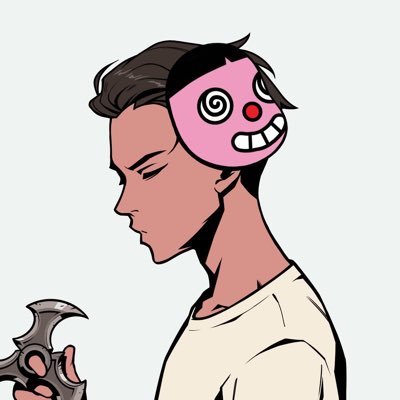
Wale Azuki PFP
“Even though I was making a lot of money from NFTs at the time, more than any job I’d ever had, I also felt that the whole space felt unreal. I didn’t have enough confidence to give up everything else in 2021. So I continued to work in marketing for a car company in Germany. I went full-time later in 2022, when not only did the market crash a bit, but I started to think more seriously about it from a creator’s perspective. I was slow to start in terms of committing to going all in on NFTs.”
Is NFT recovering?
NFTs have seen a huge resurgence over the past month. Many NFTs, such as CryptoPunks, Pudgy Penguins (who just launched the PENGU token), and Doodles have seen their prices rise.
But is NFT really recovering? Wale believes that these phenomena are good, but they are still some distance away from the frenzy of 2021-22, which was led by the cultural phenomenon of Bored Ape Yacht Club.
CryptoPunks, which were around $50,000 or slightly higher not long ago, are now over $150,000. Other traditional projects and Pudgy Penguins have also seen big gains following the announcement of the PENGU airdrop. The NFT rally has spread throughout the ecosystem, with even defunct collectibles rebounding by 50% or more.
Wale believes that “for a true recovery to happen, the market needs to be excited not only about mature projects but also about new projects emerging. We are not seeing that yet. This is similar to how memecoins work. Many of the best performing memecoins in this cycle are not the memecoins of four years ago.”
“From a broader perspective, many of the best performing memecoins are actually attracting a lot of new people and new money. If you can get a collectible minted at 0.01 ETH or 0.05 ETH to 4 ETH, that’s a real recovery, but we haven’t reached that level yet, but the good news is that we’ve seen early signs of a return to excitement and interest in NFTs.”
Bored Apes reaches true collector's item status
CryptoPunks showed strong momentum for the first time in the NFT rally over the past four to six weeks, but to the surprise of many collectors (including Wale), Bored Ape Yacht Club (BAYC) doubled its floor despite no catalyst. At the same time, Pudgy Penguins announced the launch of the PENGU token, and Pudgy holders will receive a certain allocation, a move similar to the APE allocation for BAYC holders in March 2022.
Flamingo DAO member Derek Edwards coined the term “minimal external dependencies.” This is a framework for thinking about certain types of NFTs, and many art collectibles and punk fall into this category. There are usually no promises, no catalysts, no airdrops, no roadmaps other than the NFT itself. Speculation still exists, but it is not built on external dependencies that an NFT project with a strong IP or focused on gaming might have.
During the last bull run, there was discussion about whether BAYC would fall into this category of minimal external dependency and become a collectible that people just wanted to own, not because they expected future returns. Wale believes that Apes may have shown early signs of moving in this direction.
Wale pointed out two main reasons, one is the launch of the ApeChain ecosystem, they found something that really attracted the core community and NFT traders, collectors and people who like NFTs.
The second reason is that we do see Apes becoming more of a status symbol, maybe not at the punk level in Web3, but when talking about mainstream NFTs, 90% of people know the Bored Apes brand, not Pudgy Penguins or Doodles. This has a lot to do with the mainstream attention that NFTs have received as they boomed in 2021 and 2022.
Projects that continue to build during the bear market
While a large portion of NFT projects made a lot of empty promises and failed roadmaps in 2021-22, those that persisted and continued to build are starting to gain attention again.
An example of this is Doodles’ recent major partnership with McDonald’s, where 110 million coffee cups were printed with the Doodles IP. The same is true for Pudgy Penguins, who launched PENGU this week, partnered with Walmart and other large retailers that sell plush toys, and have billions of impressions across all major social media platforms.
“From Pudgy working with Walmart to Azuki working with anime.com, a lot of projects are starting to see some results. Despite the NFT bear market for most of 2024, memecoins and crypto more broadly have performed really well. From a project perspective that has been delivered this year, I think we’ve done well, and perhaps we’re now seeing the market start to value it in a way that it hasn’t been in the last few months.”
Quick Questions
What do you think are the most undervalued NFT projects currently?
Wale: I would give a slightly different answer, instead of naming one NFT project. I think the whole Ordinals space is still undervalued. There are no top Ordinals projects in the top five PFP market cap. There are projects that I think are undervalued, such as Bitcoin Puppets, NodeMonkes, Quantum Cats.
I’m surprised, especially during this rally in Bitcoin, that they didn’t do better in terms of flooring prices, but I’d say the Ordinals ecosystem is still undervalued relative to NFTs on ETH or Solana.
Which project do you think will be a long-term success in 10 years? Doodles , VeeFriends , or Pudgy Penguins ?
Wale: I think from an attention perspective, Pudgy Penguins would have an edge over VeeFriends and Doodles. Doodles is great, but Gen Z might understand it a little less. For VeeFriends, I wouldn’t pay too much attention. They’re a little out of the daily conversation on NFT Twitter, so I don’t really know what they’re doing in terms of content.
If I had to rank them, I'd go with Pudgy Penguins, Doodles, and VeeFriends.
Related reading: NFT market rebounds: Multiple leading projects announce coin issuance plans, blue chip projects become the main force of recovery


You May Also Like

Macron pushes for trust to reopen Strait of Hormuz, impacting ceasefire odds
Pundit Says Hold Your XRP Through the Shake Out Until July 4. Here’s What Is Coming




