

What’s Been Behind the Bitcoin Crash as BTC Falls to $60K

Key Insights
- Bitcoin whales sold over 81,000 BTC in eight days, adding strong supply pressure to the market.
- Large wallets now hold their lowest share of Bitcoin supply recorded in the past nine months.
- Retail wallets increased accumulation, reaching their highest Bitcoin supply share in 20 months.
Bitcoin continued its downward move as the broader cryptocurrency market faced renewed selling pressure. Total market capitalization declined by about 7.9% to $2.23 trillion, reflecting reduced risk appetite across digital assets. Bitcoin traded near $65,100 after briefly falling to $60,074, its lowest price level since October 2024.
Ethereum followed the same trend, falling close to 9% to around $1,913. The leading altcoins such as BNB, XRP, Solana, and Dogecoin also recorded losses of between 9 per cent to 14 per cent. The market evidence indicates internal supply forces but not one macroeconomic precipitator triggered the decline.
Large Holders Reduce Bitcoin Exposure
On-chain data from Santiment shows sustained selling by large Bitcoin holders. Wallets holding between 10 and 10,000 BTC reduced their holdings over recent weeks. These wallets now control about 68.04% of total Bitcoin supply, marking a nine-month low.
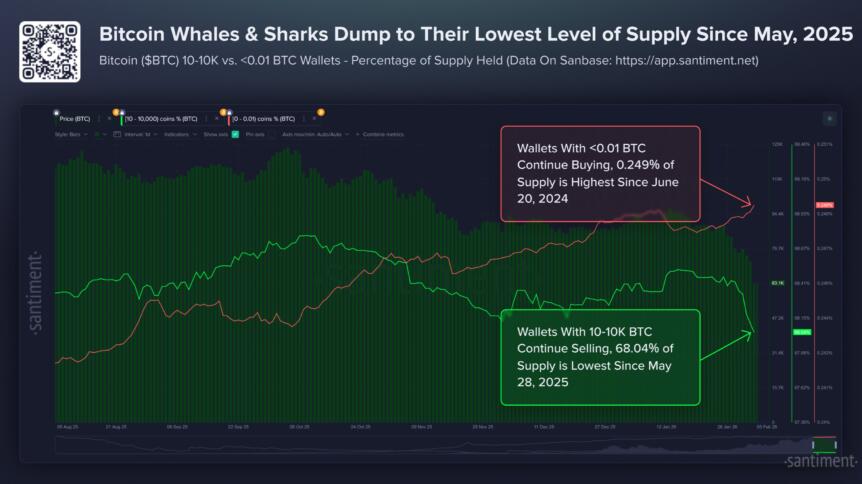 What’s Been Behind The Bitcoin Crash As Btc Falls To $60k – Source:X
Over the last eight days, big holders sold about 81,000 BTC. This selling increased available supply during weaker demand sessions. As supply pressure grew, Bitcoin prices moved lower, testing levels not experienced in several months.
Large holders often adjust exposure during periods of uncertainty. Their actions tend to influence short-term price movements due to the volume involved.
Small Investors Increase Accumulation Despite Price Decline
Large wallets decreased holdings, but smaller investors kept on accumulating Bitcoin. The proportion of wallets that contained less than 0.01 BTC expanded their total supply to approximately 0.249.This value represents the highest level recorded in roughly 20 months.
The retail wallets dominate such a small part of the total supply, but their constant accumulation indicates that they are still involved at lower levels of prices. This trend shows that smaller investors were able to absorb some of the selling pressure that was generated by larger holders.
Supply Shifts Drive Market Volatility
The contrasting behavior between large and small holders continues to shape Bitcoin’s market structure. Similar patterns have appeared during extended corrective phases in past market cycles. Big sellers allocate supply and retail players slowly escalate exposure.
Until selling activity from large wallets declines and demand improves, Bitcoin may remain volatile. The trend in prices is expected to portray a continuing shift in supply allocation and not news flash.
This article was originally published as What’s Been Behind the Bitcoin Crash as BTC Falls to $60K on Crypto Breaking News – your trusted source for crypto news, Bitcoin news, and blockchain updates.


You May Also Like

EdgeX (EDGE) Plunges 18.7% After ATH: Volume Analysis Reveals Distribution Pattern

Diesel Just Hit $200 a Barrel in Europe — Here’s Why It Could Get Worse




