

Must Read
Julieane Camile Lacsina (left) CEO of GoEden, and Cherrie Atilano, CEO of AGREA Systems.Julieane Camile Lacsina (left) CEO of GoEden, and Cherrie Atilano, CEO of AGREA Systems.
[Good Business] Kaya ba ng Pilipino maging world-class farmer?
For feedback or concerns regarding this content, please contact us at crypto.news@mexc.com
For decades, Philippine agriculture has carried a quiet contradiction. It feeds the nation, sustains rural communities, and anchors food security yet it is often treated as the least of professions. Farming is praised in speeches but sidelined in practice, imagined as labor-intensive rather than knowledge-driven, and seen as a last option rather than a first choice.
This story feels familiar. Distance learning once carried the same stigma viewed as inferior to traditional classroom education, a compromise rather than a credible pathway. Over time, that perception shifted. When designed intentionally and supported by institutions, distance education proved it could widen access, improve outcomes, and produce excellence.
Agriculture today stands at a similar crossroads.
A changing tone in Philippine agriculture
At the national level, the direction is beginning to change. Under the leadership of Agriculture Secretary Francisco Tiu Laurel Jr., the Department of Agriculture (DA) has made clear its intent to modernize and professionalize the sector. The 2026 national budget, among the largest the agency has received, signals a shift from survival-oriented interventions toward long-term productivity and resilience.
This includes investments in farm-to-market roads, post-harvest and cold storage facilities, logistics, digital command centers, and the use of data, satellite imagery, and artificial intelligence for monitoring crops, livestock, pests, and diseases. The message is unmistakable, that agriculture is no longer just about production. It is about systems, efficiency, and informed decision-making.
Yet funding and infrastructure alone do not transform a sector. Institutions, mindsets, and people do.
Bureau of Plant Industry at 96: looking toward 100
This year, the Bureau of Plant Industry (BPI) marks its 96th anniversary, a moment that invites reflection not only on what has been built, but on what must still be done. For nearly a century, BPI has played a critical role in plant protection, food safety, biosecurity, and agricultural research; often away from the spotlight, but central to national food systems.
For BPI Director Gerald Glenn F. Panganiban, the anniversary is less a celebration of the past than a commitment to the future.
“Definitely, it’s onwards to 100 years,” he said. “There has been a lot established in terms of agri-tech, biosecurity, and food safety by the bureau. However, there is still a lot to upscale and accomplish and we must do it with LGUs [Local Government Units], national government agencies, and the private sector.”
What the Bureau of Plant Industry is pursuing is not just continuity, but a change in how agriculture is planned and supported.
The paradigm shift: from outputs to relevance
When asked about the kind of shift needed moving forward, Director Panganiban was direct.
“The paradigm shift is from just doing the usual R&D for the purpose of accomplishing outputs,” he explained, “to demand-driven research and production complementing and responding to the needs of the industry.”
This approach moves away from isolated research agendas toward ecosystem thinking. It recognizes that innovation must be practical, adoptable, and aligned with real-world constraints. From new plant breeding techniques to AI-enabled pest surveillance, from controlled-environment agriculture to livelihood-oriented solutions like mushroom culture, the goal is clear: research and technology must translate into improved incomes, resilience, and opportunities for farmers.
In a context of limited resources and increasing climate risks, this shift, from compliance to usefulness, may be one of the most important reforms in Philippine agriculture today.
What makes a world-class Filipino farmer?
At the heart of these reforms lies a deeper question: Who is the Filipino farmer we are building this system for?
For Director Panganiban, a world-class farmer is not defined by land size or access to capital.
“A world-class farmer is someone who always commits to improving his craft,” he said. “He asks how he can be more efficient and productive. He thinks not only about putting food on the table tomorrow or money in his pocket, but about sustainability for a considerable period in the future.”
This farmer is not afraid to take on challenges, works with others who value resourcefulness and resiliency, and inspires the next generation to continue the craft. Simply put, he toils not only for himself, but for a better future for the entire agriculture sector.
This definition reframes farming — from manual labor to continuous learning, from isolation to collaboration, and from subsistence to stewardship.
Education as the great equalizer
If institutions like the Bureau of Plant Industry provide direction and policy, education provides momentum.
In a recent conversation led by Agriculture Training Institute (ATI) Assistant Director Antonieta J. Arceo with young agri-advocate Carl Vincent D. Gapasin who heads the National Urban and Peri-urban Agriculture, one idea stood out clearly: Filipino farmers do not lack intelligence or discipline. What they often lack is access to relevant, timely, and practical learning.
For Arceo, education is key to making farmers bankable, profitable, and resilient. ATI delivers science-based training from production and agri-entrepreneurship to climate-resilient and digital agriculture, while engaging youth through local and international internships that expose them to modern farming technologies. This perspective closely aligns with the bureau’s demand-driven approach. Education must not exist separately from production realities. Instead, it should equip farmers to make better decisions — when to plant, how to reduce losses, how to diversify income, and how to use technology not as an added burden, but as an advantage.
More importantly, Arceo emphasized that learning should empower rather than intimidate. When designed well, education allows farmers, regardless of age or formal schooling, to see themselves as active problem-solvers and innovators, not passive recipients of assistance.
In this sense, education becomes the great equalizer.
Where innovation meets dignity
Across the country, this reframing is already taking shape. Initiatives such as Varacco and ThinnkFarm show how modern agriculture can integrate IoT, data-driven decision-making, climate-smart practices, and inclusive enterprise models working alongside smallholder farmers, youth, and indigenous communities.
These efforts echo the direction articulated by the Bureau of Plant Industry: innovation that is practical, scalable, and capable of creating livelihoods. They also demonstrate that agriculture, when treated as a system rather than a charity case, can attract young people, technologists, and professionals who want to build meaningful, future-oriented enterprises.
This is where agriculture becomes “good business” — not merely profitable, but purposeful.
Agriculture as a force for good
The renewed investments by the DA, the institutional introspection within the Bureau of Plant Industry, and the expanding role of education and training point to a larger realization: agriculture is not a fallback profession. It is a strategic sector that shapes health, nutrition, climate resilience, employment, and national stability.
Like distance learning, agriculture suffers when it is misunderstood. And like distance learning, it thrives when designed intentionally, supported systemically, and judged by outcomes rather than outdated assumptions.
So we return to the question.
Kaya ba natin?
Kaya ba nating piliin ang agrikultura, hindi bilang huling opsyon, kundi unang paniniwala?
Kaya ba nating kilalanin ang magsasaka, hindi bilang tagatanggap ng tulong, kundi bilang propesyonal, innovator, at katuwang sa pag-unlad? Kaya ba nating bumuo ng sistemang ang pagsasaka ay may dignidad, may kita, at may malinaw na kinabukasan?
Kung magpapatuloy ang direksyong tinatahak ngayon sa pamahalaan, sa mga institusyon, sa edukasyon, at sa pribadong sektor, ang sagot ay malinaw.
Oo. Kaya natin.
At kapag naniwala tayo rito, hindi lang pagkain ang aanihin natin… kundi pag-asa, kaalaman, at isang mas matibay na bukas para sa bayan. – Rappler.com
Ariestelo A. Asilo is TOYM 2021, Asia 21, and PHINMA-DLSU Siklab Fellow. He is the president and CEO of www.varacco.com and www.thinnkfarm which operate through social entrepreneurship selling Buy 1 Take 1 Coffee, and creating farmer-scientists in coffee production in Mindanao. Currently, he is taking his Doctorate in Sustainability at the University of the Philippines-Open University. He also has a cat named Libe which he found at the Liberica farm in Cavite. telo@varacco.com


Disclaimer: The articles reposted on this site are sourced from public platforms and are provided for informational purposes only. They do not necessarily reflect the views of MEXC. All rights remain with the original authors. If you believe any content infringes on third-party rights, please contact crypto.news@mexc.com for removal. MEXC makes no guarantees regarding the accuracy, completeness, or timeliness of the content and is not responsible for any actions taken based on the information provided. The content does not constitute financial, legal, or other professional advice, nor should it be considered a recommendation or endorsement by MEXC.
You May Also Like

Stop Losing Sales in 2026: Build Better Funnels with Checkout Champ
If you run an e-commerce store, a sales funnel is how you keep track of your customers’ journeys. From their first website visit to purchase, if any part of the
Share
Techbullion2026/04/03 18:44

Top Mistakes People Make When Choosing Web Hosting
Choosing the right web hosting provider is one of the most important decisions you will make when launching a website. Whether you are building a personal blog,
Share
Techbullion2026/04/03 18:02
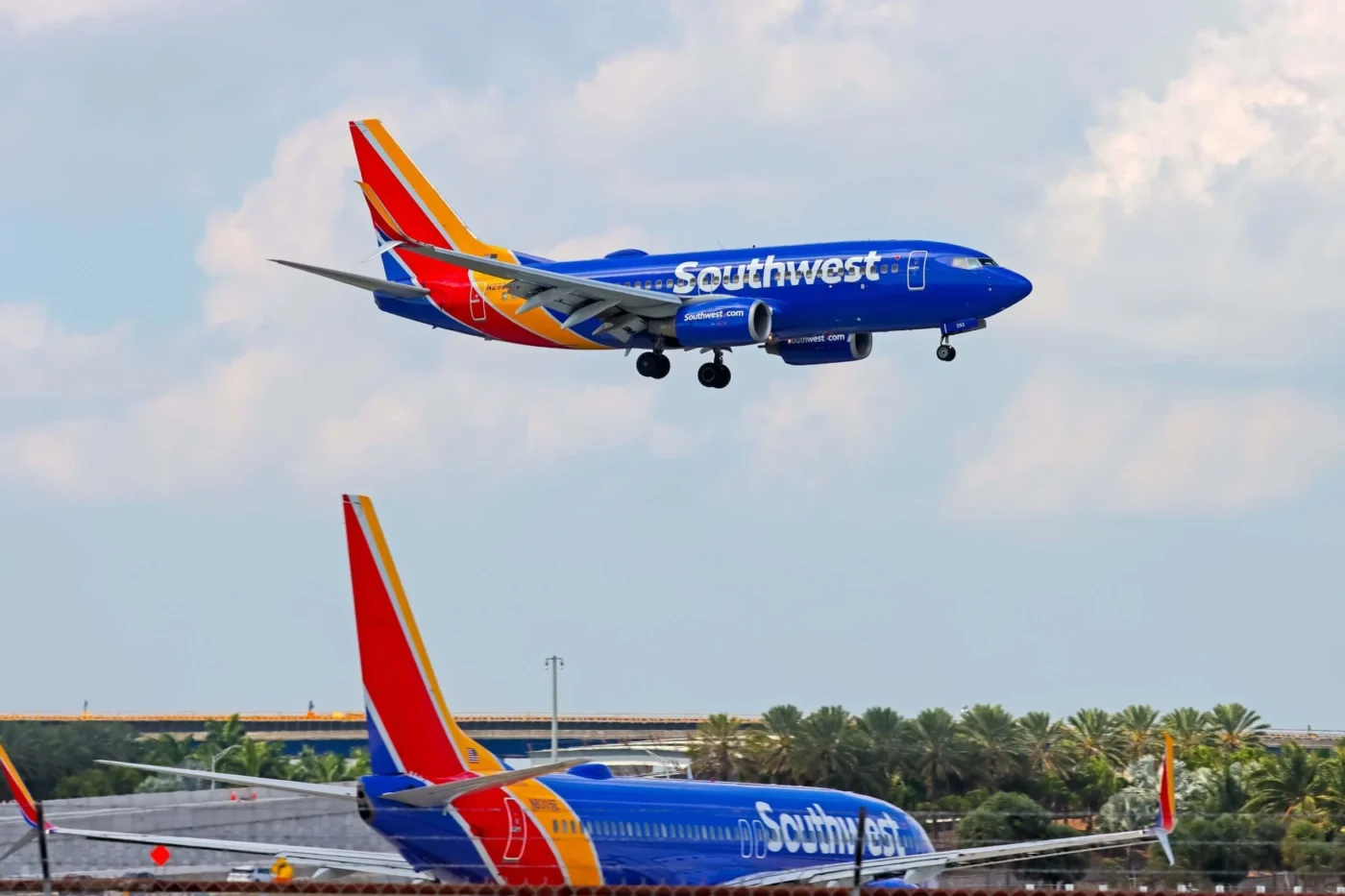
Southwest Airlines (LUV) Stock Tumbles Amid Soaring Jet Fuel Costs and Iran Conflict
Southwest Airlines (LUV) stock dropped 1.6% as TD Cowen slashed its price target to $46. Jet fuel prices have surged 70% since the Iran conflict began. The post
Share
Blockonomi2026/04/03 18:08



