

Say Goodbye to "Storytelling" for Funding: What Kind of Projects Can Survive 2026
Author: Nikka / WolfDAO ( X : @10xWolfdao )
Part 1: Dramatic Changes in VC Investment Logic
A set of data from Wintermute Ventures in 2025 revealed a harsh reality: this top market maker and investment firm reviewed approximately 600 projects throughout the year, ultimately approving only 23 deals, an approval rate of just 4%. Even more shockingly, only 20% of the projects even reached the due diligence stage. Founder Evgeny Gaevoy bluntly pointed out that they had completely abandoned the "spraying prayers" mode of 2021-2022.
This shift is not unique to Wintermute. The entire crypto VC ecosystem saw a sharp 60% drop in the number of deals in 2025, from over 2,900 in 2024 to approximately 1,200. While funds continued to flow, with global crypto VC investment reaching $4.975 billion, this money increasingly concentrated in a small number of projects. Later-stage investments accounted for 56%, while early-stage seed rounds were squeezed to historical lows. Data from the US market is even more telling: while the number of deals decreased by 33%, the median investment increased by 1.5 times to $5 million. This means VCs prefer to invest heavily in a few projects rather than cast a wide net.
The root cause of this dramatic shift lies in the highly concentrated market liquidity. The crypto market in 2025 exhibited an extremely "narrow" characteristic: institutional funds accounted for as much as 75%, but this money was mainly trapped in large-cap assets such as BTC and ETH. OTC trading data shows that although the share of BTC and ETH decreased from 54% to 49%, the overall share of blue-chip assets actually increased by 8%. More critically, the altcoin narrative cycle plummeted from 61 days in 2024 to 19-20 days in 2025, leaving no time for funds to spill over to smaller projects. Retail investors also stopped chasing cryptocurrencies as frantically as before, turning their attention to AI and tech stocks, resulting in a lack of incremental funds in the crypto market.
The traditional "four-year bull market" cycle has completely collapsed. Wintermute's report clearly points out that the recovery in 2026 will not arrive naturally as before; it requires at least one strong catalyst: either ETFs expanding to assets like SOL or XRP, BTC breaking the psychological $100,000 mark again to trigger FOMO, or a new narrative reigniting retail investor enthusiasm. In this environment, VCs can no longer gamble on projects that only "tell stories." They need projects that can prove themselves capable of surviving to exchange listings and accessing institutional liquidity from the seed round.
This is why the investment logic has shifted from "investing in 100 to hoping for a 100x return" to "only investing in the 4 that survive to be listed on an exchange." Risk aversion is no longer conservatism, but a necessity for survival. Top funds like a16z and Paradigm are reducing early-stage investments and shifting towards mid-to-late-stage rounds. The high-profile fundraising projects of 2025—Fuel Network's valuation plummeting from $1 billion to $11 million, Berachain's 93% drop from its peak, and Camp Network's 96% market capitalization loss—are all telling the market, in stark reality, that narratives are dead, and execution is king.
Second: The critical requirement for the seed-stage hematopoietic capacity
Under this extremely precise aesthetic, the biggest challenge facing startup teams is that the seed round is no longer the starting point for burning money, but a life-or-death line where they must prove that they can generate their own revenue.
The ability to generate revenue is first and foremost reflected in the hard verification of product-market fit (PMF). VCs are no longer satisfied with beautiful business plans or grand vision descriptions; they want to see real at least 1,000 active users, or monthly revenue exceeding $100,000. More crucially, is user retention rate—if your DAU/MAU ratio is below 50%, it means users aren't buying in. Many projects fail here: they have beautiful white papers and cool technical architectures, but they can't provide evidence that users are actually using the product and are genuinely willing to pay. Many of the 580 projects rejected by Wintermute died at this hurdle.
Capital efficiency is the second critical hurdle. VCs predict a surge of "profitable zombies" in 2026—companies with an ARR of only $2 million and an annual growth rate of only 50% will be unable to attract Series B funding. This means seed-stage teams must achieve a "default survival" state: monthly cash burn cannot exceed 30% of revenue, or they must achieve profitability early on. This sounds harsh, but in a liquidity-depleted market, it's the only way to survive. Teams need to be streamlined to fewer than 10 people, prioritizing the use of open-source tools to reduce costs, and even supplementing cash flow through side businesses like consulting services. Projects with dozens of people and an astonishing rate of cash burn will likely not secure further funding in 2026.
The technological requirements are also escalating dramatically. Data from 2025 shows that for every $1 invested by VCs, 40 cents went to crypto projects simultaneously working on AI, double the figure from 2024. AI is no longer a bonus, but a necessity. Seed-round projects need to demonstrate how AI can help them shorten development cycles from 6 months to 2 months, and how it can drive capital transactions or optimize DeFi liquidity management through AI agents. Simultaneously, compliance and privacy protection must be embedded at the code level. With the rise of RWA (Real-World Asset) tokenization, projects need to use technologies like zero-knowledge proofs to ensure privacy and reduce trust costs. Projects that ignore these requirements will be considered "a generation behind."
The most critical requirements are liquidity and ecosystem compatibility. Crypto projects need to clearly plan their listing path from the seed round, specifying how they will access institutional liquidity channels like ETFs or DAT. The data is clear: by 2025, institutional funding accounted for 75%, the stablecoin market surged from $206 billion to over $300 billion, while altcoin projects driven purely by narratives faced exponentially increasing fundraising difficulties. Projects need to focus on ETF-compatible assets, establish early partnerships with exchanges, and build liquidity pools. Teams thinking "get the money first, list later" will likely not survive past 2026.
These combined requirements mean that the seed round is no longer just a trial, but a comprehensive test. The team needs a cross-disciplinary structure—engineers, AI experts, financial experts, and compliance advisors are all indispensable. They need to iterate rapidly using agile development, let data speak for itself rather than just stories, and rely on sustainable business models rather than simply raising funds to stay afloat. 45% of VC-backed crypto projects have already failed, 77% of projects have monthly revenue of less than $1,000, and 85% of token projects launching in 2025 are still unprofitable—these figures tell us that projects lacking the ability to generate revenue simply won't survive to the next round of funding, let alone be listed and exited.
Three: Warnings and Shifts in Direction from Investment Institutions
For strategic investors and VC firms, 2026 is a watershed year: adapt to the new rules or be eliminated by the market. Wintermute's 4% approval rate is not a boast about how picky they are, but a warning to the entire industry—those firms still "spraying prayers" with the old model will suffer heavy losses.
The core issue is that the market has shifted from being speculative-driven to institutional-driven. When 75% of funds are tied up in institutional channels like pension funds and hedge funds, when retail investors flock to AI stocks, and when altcoin rotation cycles shorten from 60 days to 20 days, VCs that continue to cast a wide net investing in projects that only tell stories are essentially handing over their money. GameFi and DePin narratives fell by over 75% in 2025, AI-related projects also fell by an average of 50%, and the $19 billion leveraged liquidation event in October—all of this illustrates one thing: the market no longer pays for narratives, but only for execution and sustainability.
Institutions must change their approach. First, there needs to be a fundamental shift in investment criteria: from "how big can this story go?" to "can this project prove its profitability even in the seed round?" They can no longer pour large sums of money into early-stage investments; instead, they should either heavily invest in a few high-quality seed projects or simply shift to mid-to-late-stage rounds to reduce risk. Data shows that by 2025, late-stage investments already accounted for 56% of total investments—this is not accidental, but rather the result of the market voting with its feet.
More importantly, there's a need for a repositioning of investment tracks. The convergence of AI and crypto is not a trend, but a reality—investment in the AI-crypto crossover sector is projected to exceed 50% by 2026. Institutions that are still investing in purely narrative-driven altcoins, ignoring compliance and privacy, and disregarding AI integration will find that their investments simply cannot secure liquidity, cannot be listed on major exchanges, let alone exit.
Finally, there's the evolution of investment methodology. Proactive outbound sourcing must replace passively waiting for business plans (BPs), accelerated due diligence must replace lengthy evaluation processes, and faster response times must replace bureaucracy. Simultaneously, it's crucial to explore structural opportunities in emerging markets—AI rollups, RWA 2.0, stablecoin applications for cross-border payments, and fintech innovations in emerging markets. VCs need to shift from a gambler's mentality of "betting on 100x returns" to a hunter's mentality of "selecting survivors," using a 5-10 year long-term perspective rather than short-term speculative logic to screen projects.
Wintermute's report is essentially a wake-up call for the entire industry: 2026 will not be a natural continuation of the bull market, but rather a winner-takes-all battlefield. Those players who have adapted to precise market trends in advance—whether entrepreneurs or investors—will gain a commanding position when liquidity returns. Those still using old models, old mindsets, and old standards will find their invested projects failing one after another, their tokens going to zero, and exit channels closing one after another. The market has changed, the rules of the game have changed, but one thing remains constant: only projects with genuine revenue generation capabilities and the ability to survive and be listed on exchanges deserve the capital of this era.


You May Also Like
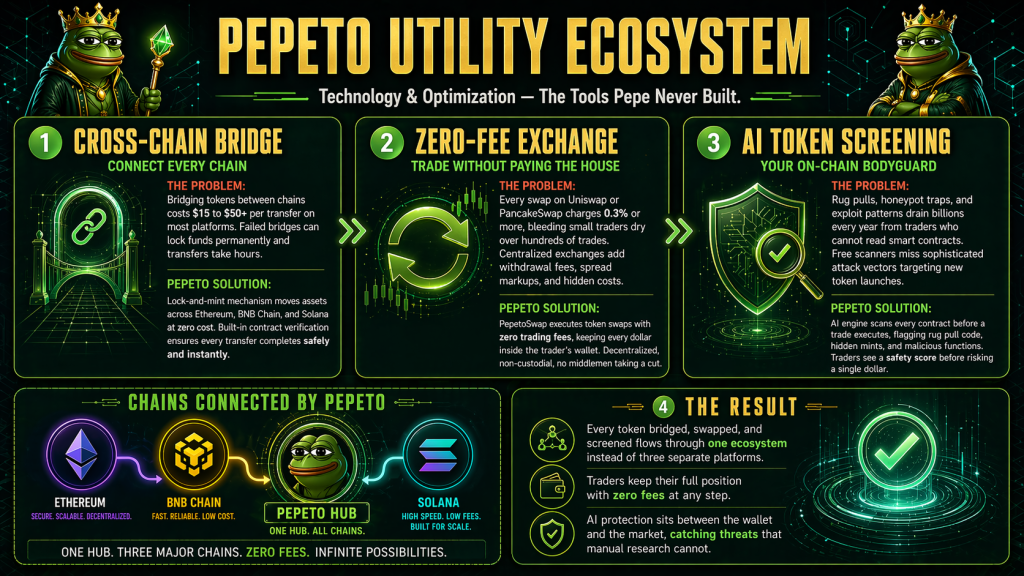
Which Are the Top 3 Cryptos to Buy Now as Solana Lands Mastercard and Pepeto Presale Nears Sold-Out Close

Ondas (ONDS) Stock Soars After Revenue Explodes Over 1,000% in Q1 2026




