

Vanaf 1 januari 2026 is er weer een hele hoop veranderd in Nederland. Het belastingstelsel in Nederland is opnieuw verbeterd en als onderdeel van het BelastingplanVanaf 1 januari 2026 is er weer een hele hoop veranderd in Nederland. Het belastingstelsel in Nederland is opnieuw verbeterd en als onderdeel van het Belastingplan
Belastingwijzigingen 2026: Alle wijzigingen die er zijn op een rijtje
For feedback or concerns regarding this content, please contact us at crypto.news@mexc.com
Vanaf 1 januari 2026 is er weer een hele hoop veranderd in Nederland. Het belastingstelsel in Nederland is opnieuw verbeterd en als onderdeel van het Belastingplan 2026 zijn er verschillende belastingen aangepast. Dit gaat van de inkomstenbelasting tot milieubelastingen. Ze kunnen allemaal impact hebben op jouw portemonnee. Deze regels kunnen allemaal op een bepaalde manier invloed hebben op cryptobeleggers. Maar wat verandert er precies en waar moet je rekening mee houden? Check onze Discord Connect met "like-minded" crypto enthousiastelingen Leer gratis de basis van Bitcoin & trading - stap voor stap, zonder voorkennis. Krijg duidelijke uitleg & charts van ervaren analisten. Sluit je aan bij een community die samen groeit. Nu naar Discord Belastingwijzigingen 2026: wat verandert er in Nederland? In 2026 worden er verschillende belastingen gewijzigd waar je als cryptoinvesteerder en als ‘normale’ Nederlandse burger rekening mee moet houden. Hieronder vind je wat er precies verandert en welke gevolgen dit kan hebben. Inkomstenbelasting 2026: minder koopkracht, hogere druk Laten we maar direct met de grootste aanpassing van 2026 beginnen: de inkomstenbelasting. Door de manier waarop de inflatiecorrectie wordt toegepast, blijven schijven en kortingen niet volledig met inflatie meegroeien. Hierdoor kunnen Nederlanders sneller in een hogere schijf ingaan en meer belasting betalen. Dit komt zelfs voor als de koopkracht niet stijgt. Nieuwe inkomstenbelastingschijven in 2026 De inkomstengrenzen voor de belastingtarieven in box 1 worden ook aangepast. Voor de eerste schijf gaat het naar € 39.357 en voor de tweede schijf gaat het naar € 79.137. Dit zal ervoor zorgen dat inkomens in 2026 sneller in een hoger tarief vallen. Box 3 en crypto in 2026: dit moet je weten Crypto speelt ook een rol binnen het Belastingplan 2026. In box 3 zijn er enkele aanpassingen gedaan die belangrijk zijn voor cryptoinvesteerders. Box 3 is de categorie waarin inkomsten uit vermogen (zoals spaargeld en beleggingen) worden belast. Hoe wordt crypto belast in 2026? Vanaf 2026 zal de manier waarop de waarde van bezitten wordt vastgesteld worden veranderd. Hierbij kun je bijvoorbeeld denken aan een verhuurde woning. Dit heeft een indirect effect op hoe overige bezittingen worden meegeteld. Dit gaat dus ook om cryptovaluta. Voor cryptoinvesteerders is het handig om te weten dat de overheid via nieuwe Europese regels van aanbieders verwacht dat zij gegevens over cryptosaldo’s en transacties doorgeven aan de Belastingdienst. Dit zou onder andere belastingontduiking moeten voorkomen. Je bent dus zichtbaar als cryptoinvesteerder voor de Belastingdienst. Overige belangrijke belastingwijzigingen in 2026 Dit zijn niet de enige belangrijke belastingwijzigingen die we in 2026 zien. Andere belangrijke punten zijn: Btw-tarief voor logies wordt volledig 21%: voorheen was er een lager tarief voor hotelovernachtingen en vakantiewoningen (9%), maar vanaf 2026 gaat dit tarief naar 21%. Accijnskorting aan de pomp blijft, maar verandert licht: de korting die tijdelijk op benzine en diesel aanwezig was wordt verlengd tot 2027. De hoogte van de korting is wel licht gedaald, waardoor je wel meer betaalt. Erf- en schenkbelasting wordt rechtvaardiger gemaakt: ongelijke vermogensverdeling tussen partners wordt aangepakt. Dit zorgt ervoor dat de erfbelasting eerlijker wordt verdeeld. ETK-regeling voor buitenlandse werknemers wordt versoberd: op het moment dat er extra kosten zijn voor buitenlandse werknemers, kan dit niet meer belastingvrij worden gedeclareerd. Klimaat- en milieuheffingen veranderen ook: BPM-tarieven voor emissievrije voertuigen worden gewijzigd, nieuwe CO₂-heffingen voor bepaalde producten binnen de EU en belasting op leidingwater wordt aangepast voor grotere verbruiksmaten. Gokken in Nederland wordt duurder: de kansspelbelasting in Nederland is opnieuw verhoogd van naar 34,2% naar 37,8%. Gokken is hierdoor nog nooit zo duur geweest als in 2026. Volledig overzicht belastingwijzigingen 2026 Alle informatie komt rechtstreeks bij de overheid vandaan, waardoor je een compleet overzicht hebt van de belastingwijzigingen van 2026. Loon en Inkomsten Belasting / regeling Wat wijzigt er in 2026? Ingangsdatum / moment Inkomstenbelasting (algemeen) Inflatiecorrectie beperkt: slechts 52,8% van de inflatiecorrectie toegepast (effectief 1,5312% i.p.v. 2,9%). 1 jan 2026 IB box 1 tarieven/schijven 1e schijf t/m € 38.883: 35,75%; 2e schijf € 38.883 tot € 78.426: 37,56%; toptarief 49,5%; grens toptarief € 78.426. 1 jan 2026 Zelfstandigenaftrek Daling naar € 1.200. 1 jan 2026 ETK-regeling Versobering: diverse kosten (o.a. extra levensonderhoud) niet meer onbelast te vergoeden. 1 jan 2026 Wet Hillen Versnelde afbouw: aftrek daalt naar 71,87% (was 76,67%). 1 jan 2026 Specifieke zorgkosten Aanpassing dieetmeerkosten in de dieetlijst. 1 jan 2026 Box 3 – verhuurde woning Leegwaarderatio niet meer toepasbaar bij verhuur aan gelieerde partij tegen niet-marktconforme huur. 1 jan 2026 Arbeidskorting Lagere inkomensgrenzen bij eerste twee knikpunten: iets hogere korting bij lagere inkomens. 1 jan 2026 EIA Samentelbepaling: investeringen in eigen bedrijf en samenwerkingsverband tellen samen voor het plafond. 1 jan 2026 Zakelijk fietsen Geen bijtelling meer voor deelfietsen. 1 jan 2026 RVU-drempelvrijstelling Vrijgesteld bedrag + € 300 bruto per maand, gekoppeld aan minimumloon. 1 jan 2026 Milieubelastingen Belasting / regeling Wat wijzigt er in 2026? Ingangsdatum / moment Energiebelasting (vermindering) Vermindering omlaag naar € 519,80 (incl. btw € 6,23 lager). 1 jan 2026 Energiebelasting (tarieven) Aardgas omhoog (tot 10 mln m³); elektriciteit omlaag in meerdere schijven. 1 jan 2026 Glastuinbouw (gas) Afbouw verlaagde tarieven naar 30% en 48% van regulier tarief. 1 jan 2026 Inputvrijstelling Verdere afbouw vrijstelling aardgas voor elektriciteitsopwek. 1 jan 2026 Waterstof Nieuw tarief voor energetisch gebruik: € 0,00310 per kWh-equivalent. 1 jan 2026 Leidingwaterbelasting Heffingsplafond omhoog van 300 m³ = 50.000 m³. 1 jan 2026 CO₂-heffing glastuinbouw Tarief omhoog naar € 11,60 per ton CO₂. 1 jan 2026 CO₂-heffing industrie/AVI ETS-tarief € 78,67/ton; AVI-tarief € 103,66/ton. 1 jan 2026 CBAM Start CO₂-heffing op import van CBAM-goederen van buiten de EU. 1 jan 2026 Autobelastingen Belasting / regeling Wat wijzigt er in 2026? Ingangsdatum / moment BPM personenauto’s Aanpassing CO₂-grenzen en tarieven. 1 jan 2026 BPM emissievrije bijzondere voertuigen Vast laag bpm-bedrag: € 687 (auto’s) en € 206 (motoren). 1 jan 2026 BPM geldtransport Afschaffing bpm-teruggaaf voor geldtransportwagens. 1 jan 2026 MRB EV/PHEV EV’s naar 70%-tarief; korting vervalt voor PHEV’s en overige EV’s. 1 jan 2026 MRB paardenvervoer Einde kwarttarief = volledig tarief. 1 jan 2026 MRB kampeerauto Kwarttarief = halftarief; geen onderscheid particulier/bedrijfsmatig. 1 jan 2026 MRB teruggekeurde vrachtwagens Nihiltarief tussen 1 juli 2026 en 1 jan 2027. 1 jul 2026 Bijtelling EV Korting omlaag naar 4% = effectieve bijtelling 18% tot € 30.000. 1 jan 2026 Youngtimerregeling Versobering: alleen overgangsrecht voor auto’s die vóór 2026 al 15 jaar oud zijn. 1 jan 2026 Vrachtwagenheffing Start km-heffing; Eurovignet stopt; MRB vrachtwagens aangepast. 1 jul 2026 Schenk- en erfbelasting Belasting / regeling Wat wijzigt er in 2026? Ingangsdatum / moment Erfbelasting Aangiftetermijn en start belastingrente naar 20 maanden. Overlijdens vanaf 2026 Schenkingen < 180 dagen voor overlijden Geen aparte schenkingsaangifte meer; meenemen in erfbelasting. Vanaf 2026 Biologische kinderen Gelijkgesteld aan juridische kinderen voor tarieven/vrijstellingen. 1 jan 2026 Huwelijksgoederengemeenschap Schenk-/erfbelasting over verkrijging boven 50% bij ontbinding. 1 jan 2026 BOR Anti-misbruik: strengere bezitstermijnen en uitsluiting bij eerder bezit. 1 jan 2026 Overige belastingen Belasting / regeling Wat wijzigt er in 2026? Ingangsdatum / moment Brandstofaccijns Accijnzen omhoog: benzine € 0,84, diesel € 0,55, LPG € 0,20 per liter. 1 jan 2026 BTW logies Verlaagd btw-tarief vervalt: 9% = 21% (met beperkte uitzonderingen). 1 jan 2026 BTW herziening onroerende zaken 5-jaars herziening bij investeringsdiensten ≥ € 30.000. 1 jan 2026 Overdrachtsbelasting beleggingswoningen Tarief omlaag van 10,4% = 8% (2% voor zelfbewoning blijft). 1 jan 2026 Kansspelbelasting Tarief verhoogd naar 37,8%. 1 jan 2026 Invorderingsrente Verhoging van 4,0% = 4,3%. Vanaf 2026 Wat betekenen de belastingwijzigingen van 2026 voor cryptobeleggers? Als cryptobelegger in 2026 betekent dit dat je crypto zichtbaar is bij de Belastingdienst en je hier zeker rekening mee moet houden. Exchanges en cryptobedrijven hebben namelijk een rapportageplicht vanaf 2026. Daarnaast gaat de belastingdruk op inkomen en vermogen stijgen. Dit komt doordat schrijven niet volledig met inflatie meegroeien. Dit zorgt ervoor dat je minder geld overhoudt om daadwerkelijk te kunnen investeren in crypto. De gevolgen van de belastingwijzigingen in 2026 zullen dus voelbaar zijn voor iedere crypto investeerder in Nederland. Best wallet - betrouwbare en anonieme wallet Best wallet - betrouwbare en anonieme wallet Meer dan 60 chains beschikbaar voor alle crypto Vroege toegang tot nieuwe projecten Hoge staking belongingen Lage transactiekosten Best wallet review Koop nu via Best Wallet Let op: cryptocurrency is een zeer volatiele en ongereguleerde investering. Doe je eigen onderzoek.
Het bericht Belastingwijzigingen 2026: Alle wijzigingen die er zijn op een rijtje is geschreven door Jessy Zuidema en verscheen als eerst op Bitcoinmagazine.nl.
Market Opportunity
OP Price(OP)
$0.1332
$0.1332$0.1332
USD
OP (OP) Live Price Chart


Disclaimer: The articles reposted on this site are sourced from public platforms and are provided for informational purposes only. They do not necessarily reflect the views of MEXC. All rights remain with the original authors. If you believe any content infringes on third-party rights, please contact crypto.news@mexc.com for removal. MEXC makes no guarantees regarding the accuracy, completeness, or timeliness of the content and is not responsible for any actions taken based on the information provided. The content does not constitute financial, legal, or other professional advice, nor should it be considered a recommendation or endorsement by MEXC.
You May Also Like

Why Bitcoin Price Could Be Forming A Consolidation Structure Around $80,000
The Bitcoin price has surged towards the $80,000 mark over the past few weeks, signaling an ongoing resurgence from the bear-market lows observed in the first quarter
Share
NewsBTC2026/05/17 05:00
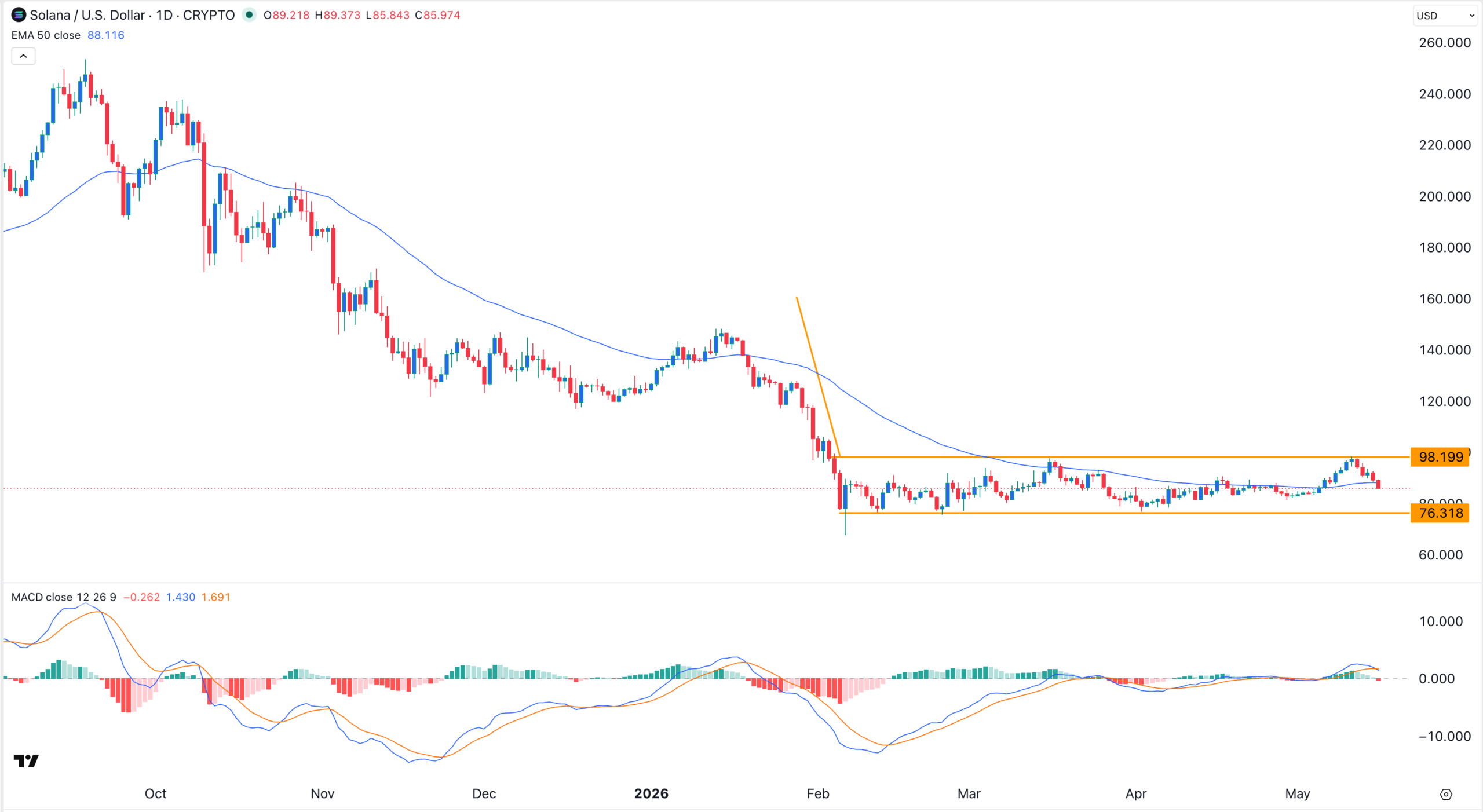
Solana Price is Hanging on a Thread as Crypto Fear and Greed Index Falls
Key Insights Solana price dropped in the past two consecutive days, moving to its lowest level since May 6 this year. It has retreated by 12% from its highest point
Share
Themarketperiodical2026/05/17 05:22
House Agriculture Leaders Urge Trump to Nominate Full CFTC Commission as CLARITY Act Moves Forward
TLDR: CFTC Chairman Michael Selig has been the agency’s only commissioner since December, with four seats still vacant. House Agriculture leaders argue a full five
Share
Blockonomi2026/05/17 05:23



