Ethereum’s Deflationary Model Faces Stress as Network Usage Evolves
This article was first published on The Bit Journal: How could the growth of L2 networks that increase activities affect the Ethereum token value? Read on to find out more.
The Ethereum network implemented upgrades in 2025 that boosted scalability, but this may have come at the expense of the Ethereum token’s value. The cryptocurrency itself failed to record corresponding growth and posted a double-digit loss in 2025.
According to on-chain data, the Ethereum token is currently trading below $3,000, which is 10% year-to-date lower. The performance mirrors that of the flagship cryptocurrency, which is also lagging at 6% lower since the beginning of 2025.
Analysts have observed that developments such as the Dencum upgrade greatly boosted scalability, but in the process, it revived inflation, undermining the platform’s deflationary token model. Implementation of the upgrade created a fundamental tension that many observers have highlighted as a trade-off between network growth and Ethereum token value.
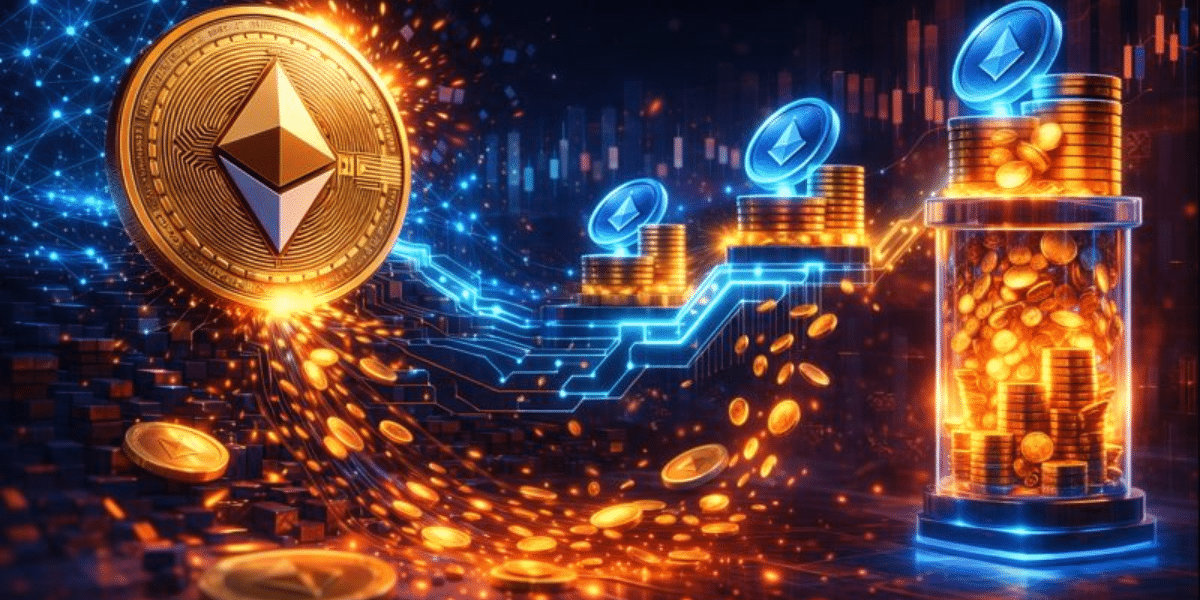 Ethereum sacrificed more than $100 million in guaranteed fee revenue this year to secure its long-term survival.
Deflationary Token Model Disrupted
The introduction of the Dencum upgrades prioritized scalability and user affordability, slashing transaction fees through innovations like EIP-4844 (proto-danksharding). The result was an unprecedented adoption that led to huge inflows into Ethereum exchange-traded funds, DeFi expansion, and corporate treasury purchases.
The net effect of implementing the upgrades was that the deflationary token model at the center of ETH’s scarcity narrative was disrupted. Observers are now questioning whether the blockchain has what it takes to sustain the dual ambition of becoming the world’s preferred infrastructure layer while maintaining the deflationary token model that supports long-term value accrual.
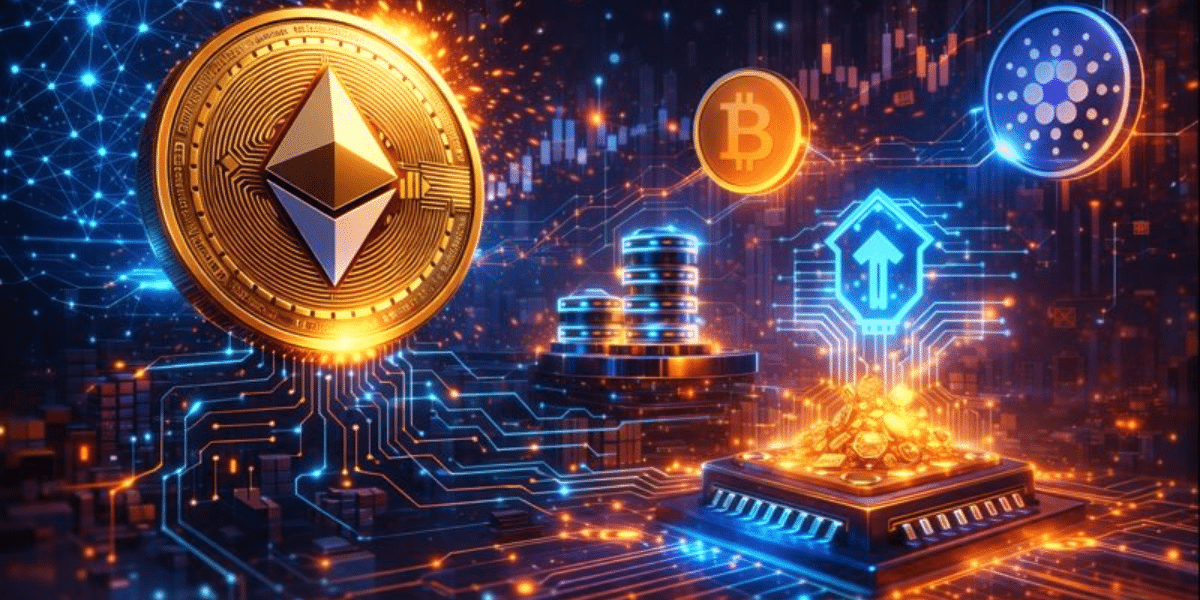 Future upgrades (Fusaka/Glasterdam) and institutional demand could restore deflation, but face competition from high-performance chains.
Ethereum Plans Additional Upgrades
For Ethereum to sustain its deflationary token model, the network would need to carefully balance its future upgrades with demand. The blockchain has planned additional upgrades, such as Fusaka and Glasterdam, designed to enhance Layer 1 (L1) throughput and data availability.
These upgrades aim to increase activity within the Mainnet and potentially reignite burn rates. Should everything go as planned, the upcoming upgrades have the potential to restore the network’s preferred deflationary token model by increasing transaction volume and fee-burning.
On the other hand, Ethereum’s ongoing institutional adoption could offer a counterweight that could help resurrect the Ethereum token’s value. The growth of ETS and corporate treasuries has led capital markets to increasingly treat ETH as a strategic asset, which could keep the network’s demand curve robust.
Conclusion
The trade-off between Ethereum token value and growth may not necessarily be a zero-sum game, as some analysts believe it could be a strategic move. The Dencum upgrade, which has increased scalability, is seen as a necessary step to help the network compete effectively, but at the cost of the short-term deflationary token model. Analysts are optimistic that, despite the $100 million loss, the price forecast could reach $12,000 to $35,000 by 2030.
Glossary to Key Terms
Deflationary model: In crypto, “deflationary” means a digital asset’s supply decreases over time, creating scarcity and potentially increasing its value, unlike traditional money, which inflates.
Dencum upgrade: A significant, multi-part technical update to the Ethereum blockchain, successfully implemented in March 2024, primarily aimed at improving scalability
Fusaka upgrade: Ethereum’s major network upgrade in December 2025, focused on scaling and efficiency by introducing PeerDAS (Peer Data Availability Sampling).
Frequently Asked Questions about the Deflationary Model
What is a deflationary token/cryptocurrency?
A deflationary token is a digital asset designed to gradually reduce its total circulating supply. This is the opposite of traditional fiat currency systems, which are typically inflationary (with the money supply increasing over time).
How does the supply reduction happen?
The reduction in supply typically happens through mechanisms embedded in the protocol’s code (tokenomics). The most common mechanisms are token burns and halving events.
What are the benefits?
Potential Value Appreciation: As supply decreases and demand holds steady or grows, the value of each token may increase, making it attractive for long-term investment or “HODLing.”
Can a crypto be both inflationary and deflationary?
Yes, it can. Ethereum (ETH) is a prime example; while new ETH is minted for staking rewards (inflationary pressure), the EIP-1559 upgrade burns a portion of transaction fees (deflationary pressure).
References
Syngum
Medium/HashKey Capital
Blog Ethereum
Read More: Ethereum’s Deflationary Model Faces Stress as Network Usage Evolves">Ethereum’s Deflationary Model Faces Stress as Network Usage Evolves


You May Also Like

Sui’s Beep Wallet Unleashes AI Power: Agentic Trading Expands to 300+ Assets

Most Expensive NFT: Record-Breaking Digital Art Sales