Tech Share Share this article Copy linkX (Twitter)LinkedInFacebookEmail Uniform Labs’ Multiliquid targets structural ga Tech Share Share this article Copy linkX (Twitter)LinkedInFacebookEmail Uniform Labs’ Multiliquid targets structural ga

Uniform Labs’ Multiliquid targets structural gap in $35 billion tokenized asset market

Share
Share this article
Copy linkX (Twitter)LinkedInFacebookEmail

Uniform Labs’ Multiliquid targets structural gap in $35 billion tokenized asset market

The new protocol offers instant swaps between tokenized money market funds and stablecoins as regulators scrutinize yield-bearing stablecoin models.

By Will Canny, AI Boost
Dec 17, 2025, 1:45 p.m.
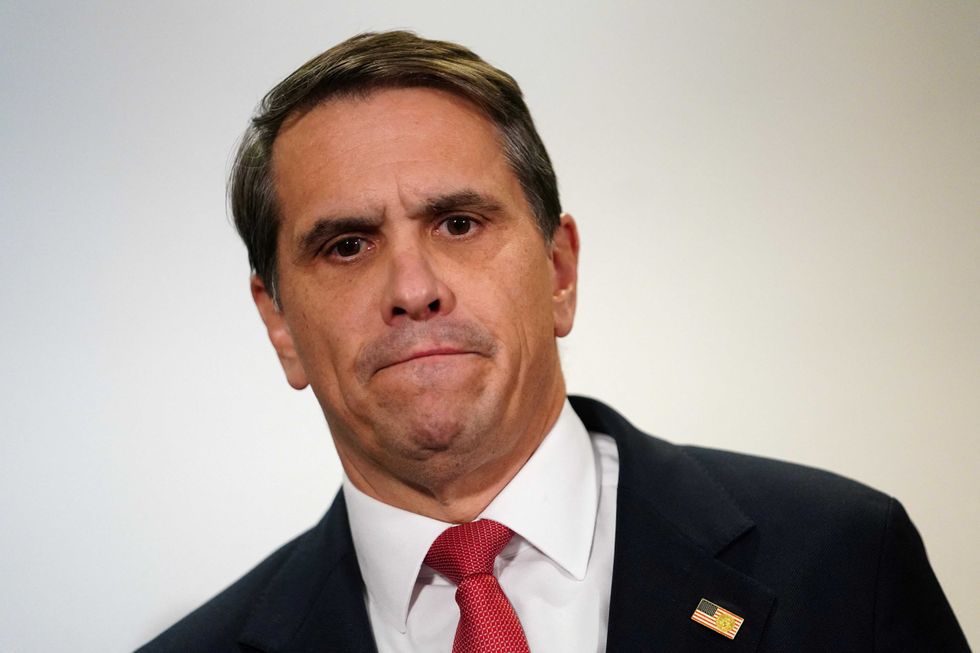
Uniform Labs’ Multiliquid targets structural gap in $35 billion tokenized asset market. (CoinDesk)

What to know:

  • Uniform Labs has launched Multiliquid, a protocol for instant, 24/7 swaps between tokenized money market funds, other RWAs and stablecoins.
  • The launch comes as the GENIUS Act tightens rules around interest on dollar-backed stablecoins, pushing institutions toward regulated yield-bearing assets.
  • Multiliquid is pitched as a market utility layer to address structural funding and exit constraints in the $35 billion tokenized asset market.

Uniform Labs, a blockchain infrastructure company founded by former Standard Chartered, UniCredit and other digital banking executives, has put its institutional liquidity protocol Multiliquid into production following build, audit and testing phases, the company said in a press release Wednesday.

Multiliquid is designed to allow institutions to swap instantly, around the clock, between blue-chip tokenized money market funds and stablecoins, aiming to remove the days-long redemption lags and liquidity constraints that have made many tokenized assets difficult to use in traditional treasury workflows.

STORY CONTINUES BELOW
Don't miss another story.Subscribe to the The Protocol Newsletter today. See all newsletters
Sign me up

The protocol currently supports integrations with leading tokenized Treasury products issued or managed by firms including Wellington Management, alongside other large asset managers, and enables 24/7 liquidity against stablecoins such as Circle's (CRCL) USDC and Tether's USDT. Additional assets are expected to be added over time, the company said.

Tokenization refers to converting real-world assets (RWA), from stocks and bonds to real estate, private equity and money market funds, into digital tokens recorded on a blockchain. Stablecoins are cryptocurrencies pegged to assets like fiat currencies or gold. They underpin much of the crypto economy, serving as payment rails and a tool for moving money across borders.

The Multiliquid launch comes against the backdrop of the GENIUS Act, which reshaped the economics of dollar-backed stablecoins by prohibiting issuers from paying interest or yield directly to holders.

Yield-bearing stablecoin structures have come under closer scrutiny, and U.S. bank lobby groups have warned that arrangements allowing affiliates to pay yield could put trillions of dollars in bank deposits at risk.

With hundreds of billions of dollars in stablecoins unable to earn yield directly under that framework, institutions are seeking compliant structures that combine regulated, yield-bearing assets with the 24/7 payment functionality of stablecoins.

Multiliquid is built specifically for that setup. Stablecoins are kept as pure payment instruments, while yield is generated from tokenized money market funds and other regulated real-world assets plugged into the company's swap layer.

The protocol also targets what Uniform Labs describes as a central weakness of the current tokenization cycle: illiquidity. While the tokenized RWA market has climbed above $35 billion, non-Treasury assets such as private credit, private equity, real estate and commodities generally remain tied to issuer-controlled redemption windows rather than continuous secondary markets.

“The tokenization thesis only works if these assets are actually liquid,” said Will Beeson, founder and CEO of Uniform Labs, in the release.

“There’s essentially zero secondary liquidity for most tokenized assets, whether money market or private credit funds, with investors largely forced to wait for issuer-controlled redemption windows. Multiliquid is the missing liquidity layer between tokenized assets and stablecoins, so that onchain capital markets can actually function in real time,” he added.

Holders using Multiliquid can access instant liquidity at any time, according to Uniform Labs. The protocol is architected to support tokenized money market funds, private credit, private equity, real estate and other RWAs with the same instant settlement behavior.

Read more: Visa brings Circle's USDC settlement to U.S. banks following $3.5 billion stablecoin pilot

TokenizationStablecoinExclusive
AI Disclaimer: Parts of this article were generated with the assistance from AI tools and reviewed by our editorial team to ensure accuracy and adherence to our standards. For more information, see CoinDesk's full AI Policy.

More For You

Protocol Research: GoPlus Security

Commissioned byGoPlus

What to know:

  • As of October 2025, GoPlus has generated $4.7M in total revenue across its product lines. The GoPlus App is the primary revenue driver, contributing $2.5M (approx. 53%), followed by the SafeToken Protocol at $1.7M.
  • GoPlus Intelligence's Token Security API averaged 717 million monthly calls year-to-date in 2025 , with a peak of nearly 1 billion calls in February 2025. Total blockchain-level requests, including transaction simulations, averaged an additional 350 million per month.
  • Since its January 2025 launch , the $GPS token has registered over $5B in total spot volume and $10B in derivatives volume in 2025. Monthly spot volume peaked in March 2025 at over $1.1B , while derivatives volume peaked the same month at over $4B.
View Full Report

More For You

New React bug that can drain all your tokens is impacting 'thousands of' websites

Attackers are using the vulnerability to deploy malware and crypto-mining software, compromising server resources and potentially intercepting wallet interactions on crypto platforms.

What to know:
  • A critical vulnerability in React Server Components, known as React2Shell, is being actively exploited, putting thousands of websites at risk, including crypto platforms.
  • The flaw, CVE-2025-55182, allows remote code execution without authentication and affects React versions 19.0 through 19.2.0.
  • Attackers are using the vulnerability to deploy malware and crypto-mining software, compromising server resources and potentially intercepting wallet interactions on crypto platforms.
Read full story
Latest Crypto News

Moon Pursuit Capital launches $100 million market-neutral crypto fund

Wall Street giant DTCC Picks privacy focused blockchain Canton Network for tokenization

Securitize to offer first fully onchain trading for real public stocks in early 2026

ETFs bleed, keeping bitcoin in stasis: Crypto Daybook Americas

Norway's sovereign wealth fund supports Metaplanet bitcoin plan ahead of EGM vote

Top Stories

Memecoin boom turns into capitulation one year after $150 billion market peak

ETFs bleed, keeping bitcoin in stasis: Crypto Daybook Americas

Bitcoin trades near key price safety net that Strategy already breached

How China’s strengthening yuan could support bitcoin prices

Norway's sovereign wealth fund supports Metaplanet bitcoin plan ahead of EGM vote

U.S. FDIC proposes first U.S. stablecoin rule to emerge from GENIUS Act

Disclaimer: The articles reposted on this site are sourced from public platforms and are provided for informational purposes only. They do not necessarily reflect the views of MEXC. All rights remain with the original authors. If you believe any content infringes on third-party rights, please contact service@support.mexc.com for removal. MEXC makes no guarantees regarding the accuracy, completeness, or timeliness of the content and is not responsible for any actions taken based on the information provided. The content does not constitute financial, legal, or other professional advice, nor should it be considered a recommendation or endorsement by MEXC.