According to a recent report, 87% of surveyed high-net-worth individuals (HNWIs) in Asia hold digital assets, and 60% plan to increase allocations. This reveals a maturing digital asset space across the region. Wealthy investors in key markets are increasingly viewing crypto as an essential component of their portfolios. Digital Asset Adoption Accelerates Among Asian Wealthy Investors The findings come from Sygnum’s APAC HNWI Report 2025. The survey of over 270 wealthy and professional investors across 10 Asia-Pacific markets indicates a significant shift: digital assets are becoming a structural component of long-term wealth strategies in the region. The report revealed 87% already own digital assets as part of their investment portfolios. Furthermore, 49% of the respondents allocate more than 10% of their portfolios to crypto, placing median HNWI exposure in the 10–20% range. 60% intend to increase their allocations. “HNWIs in Singapore and the wider APAC region are embracing digital assets as a genuine wealth creation and preservation opportunity. Their disciplined, intergenerational approach to investing, combined with a higher risk appetite, is driving substantial allocations to digital assets—particularly within Singapore’s well-regulated MAS framework that provides the institutional-grade safeguards these investors expect.” Lucas Schweiger, report author and Sygnum Crypto Asset Ecosystem Research Lead, said. Wealth Preservation Overtakes Speculation A key narrative throughout the report is the maturing behaviour of Asian private investors. 90% of respondents now view digital assets as important for long-term wealth preservation and generational planning. Diversification has become the top motivation for allocation decisions, surpassing short-term trading and megatrend exposure. Wealthy Asian Investors’ Outlook On Crypto. Source: Sygnum The appetite for more sophisticated products is also rising. HNWIs are showing an increasing interest in actively managed strategies, outsourced investment mandates, and yield-enhanced products that fit neatly into their existing wealth structures. Notably, investors increasingly expect traditional wealth managers to keep pace. Recently, BeInCrypto reported that a significant share of investors in the US have already shifted funds away from advisors who do not provide crypto exposure. “Singapore’s MAS framework and Hong Kong’s advancing digital asset regulations have established the infrastructure needed for traditional wealth managers to offer crypto services—the question is no longer whether private banks can serve this demand, but when they will move to meet it,” Gerald Goh, Sygnum Co-Founder and APAC CEO, stated. Diversification in ETF Demand Goes Beyond Bitcoin and Ethereum Demand for varied exchange-traded funds is particularly pronounced. The report finds 80% of respondents want ETFs that go beyond Bitcoin and Ethereum. Solana stands out, with 52% interested in exposure to this asset. It is followed by multi-asset crypto indexes at 48% and XRP at 41%. Notably, 70% revealed they would allocate, or increase allocations, if staking yield were incorporated into ETF structures. However, Sygnum observed that a significant share of investors are approaching the market cautiously after recent market volatility. Investors Outline Roadblocks. Source: Sygnum Factors such as unclear regulation, ongoing concerns around custody and security, and varying licensing requirements across jurisdictions continue to limit wider involvement. Even so, long-term confidence remains firm. 57% of HNWIs and 61% of UHNWIs expressed a bullish or strongly bullish long-term view of the crypto market. Their confidence is bolstered by the deepening integration between crypto and traditional finance. Goh emphasized that APAC is quickly emerging as one of the world’s fastest-growing and most influential digital asset hubs, and expects this momentum to accelerate further as the region heads into 2026. According to a recent report, 87% of surveyed high-net-worth individuals (HNWIs) in Asia hold digital assets, and 60% plan to increase allocations. This reveals a maturing digital asset space across the region. Wealthy investors in key markets are increasingly viewing crypto as an essential component of their portfolios. Digital Asset Adoption Accelerates Among Asian Wealthy Investors The findings come from Sygnum’s APAC HNWI Report 2025. The survey of over 270 wealthy and professional investors across 10 Asia-Pacific markets indicates a significant shift: digital assets are becoming a structural component of long-term wealth strategies in the region. The report revealed 87% already own digital assets as part of their investment portfolios. Furthermore, 49% of the respondents allocate more than 10% of their portfolios to crypto, placing median HNWI exposure in the 10–20% range. 60% intend to increase their allocations. “HNWIs in Singapore and the wider APAC region are embracing digital assets as a genuine wealth creation and preservation opportunity. Their disciplined, intergenerational approach to investing, combined with a higher risk appetite, is driving substantial allocations to digital assets—particularly within Singapore’s well-regulated MAS framework that provides the institutional-grade safeguards these investors expect.” Lucas Schweiger, report author and Sygnum Crypto Asset Ecosystem Research Lead, said. Wealth Preservation Overtakes Speculation A key narrative throughout the report is the maturing behaviour of Asian private investors. 90% of respondents now view digital assets as important for long-term wealth preservation and generational planning. Diversification has become the top motivation for allocation decisions, surpassing short-term trading and megatrend exposure. Wealthy Asian Investors’ Outlook On Crypto. Source: Sygnum The appetite for more sophisticated products is also rising. HNWIs are showing an increasing interest in actively managed strategies, outsourced investment mandates, and yield-enhanced products that fit neatly into their existing wealth structures. Notably, investors increasingly expect traditional wealth managers to keep pace. Recently, BeInCrypto reported that a significant share of investors in the US have already shifted funds away from advisors who do not provide crypto exposure. “Singapore’s MAS framework and Hong Kong’s advancing digital asset regulations have established the infrastructure needed for traditional wealth managers to offer crypto services—the question is no longer whether private banks can serve this demand, but when they will move to meet it,” Gerald Goh, Sygnum Co-Founder and APAC CEO, stated. Diversification in ETF Demand Goes Beyond Bitcoin and Ethereum Demand for varied exchange-traded funds is particularly pronounced. The report finds 80% of respondents want ETFs that go beyond Bitcoin and Ethereum. Solana stands out, with 52% interested in exposure to this asset. It is followed by multi-asset crypto indexes at 48% and XRP at 41%. Notably, 70% revealed they would allocate, or increase allocations, if staking yield were incorporated into ETF structures. However, Sygnum observed that a significant share of investors are approaching the market cautiously after recent market volatility. Investors Outline Roadblocks. Source: Sygnum Factors such as unclear regulation, ongoing concerns around custody and security, and varying licensing requirements across jurisdictions continue to limit wider involvement. Even so, long-term confidence remains firm. 57% of HNWIs and 61% of UHNWIs expressed a bullish or strongly bullish long-term view of the crypto market. Their confidence is bolstered by the deepening integration between crypto and traditional finance. Goh emphasized that APAC is quickly emerging as one of the world’s fastest-growing and most influential digital asset hubs, and expects this momentum to accelerate further as the region heads into 2026.

Sygnum Reveals 87% of Surveyed Asian HNWIs Hold Crypto Amid Rapid Market Maturation

According to a recent report, 87% of surveyed high-net-worth individuals (HNWIs) in Asia hold digital assets, and 60% plan to increase allocations.

This reveals a maturing digital asset space across the region. Wealthy investors in key markets are increasingly viewing crypto as an essential component of their portfolios.

Digital Asset Adoption Accelerates Among Asian Wealthy Investors

The findings come from Sygnum’s APAC HNWI Report 2025. The survey of over 270 wealthy and professional investors across 10 Asia-Pacific markets indicates a significant shift: digital assets are becoming a structural component of long-term wealth strategies in the region.

The report revealed 87% already own digital assets as part of their investment portfolios. Furthermore, 49% of the respondents allocate more than 10% of their portfolios to crypto, placing median HNWI exposure in the 10–20% range. 60% intend to increase their allocations.

Wealth Preservation Overtakes Speculation

A key narrative throughout the report is the maturing behaviour of Asian private investors. 90% of respondents now view digital assets as important for long-term wealth preservation and generational planning. Diversification has become the top motivation for allocation decisions, surpassing short-term trading and megatrend exposure.
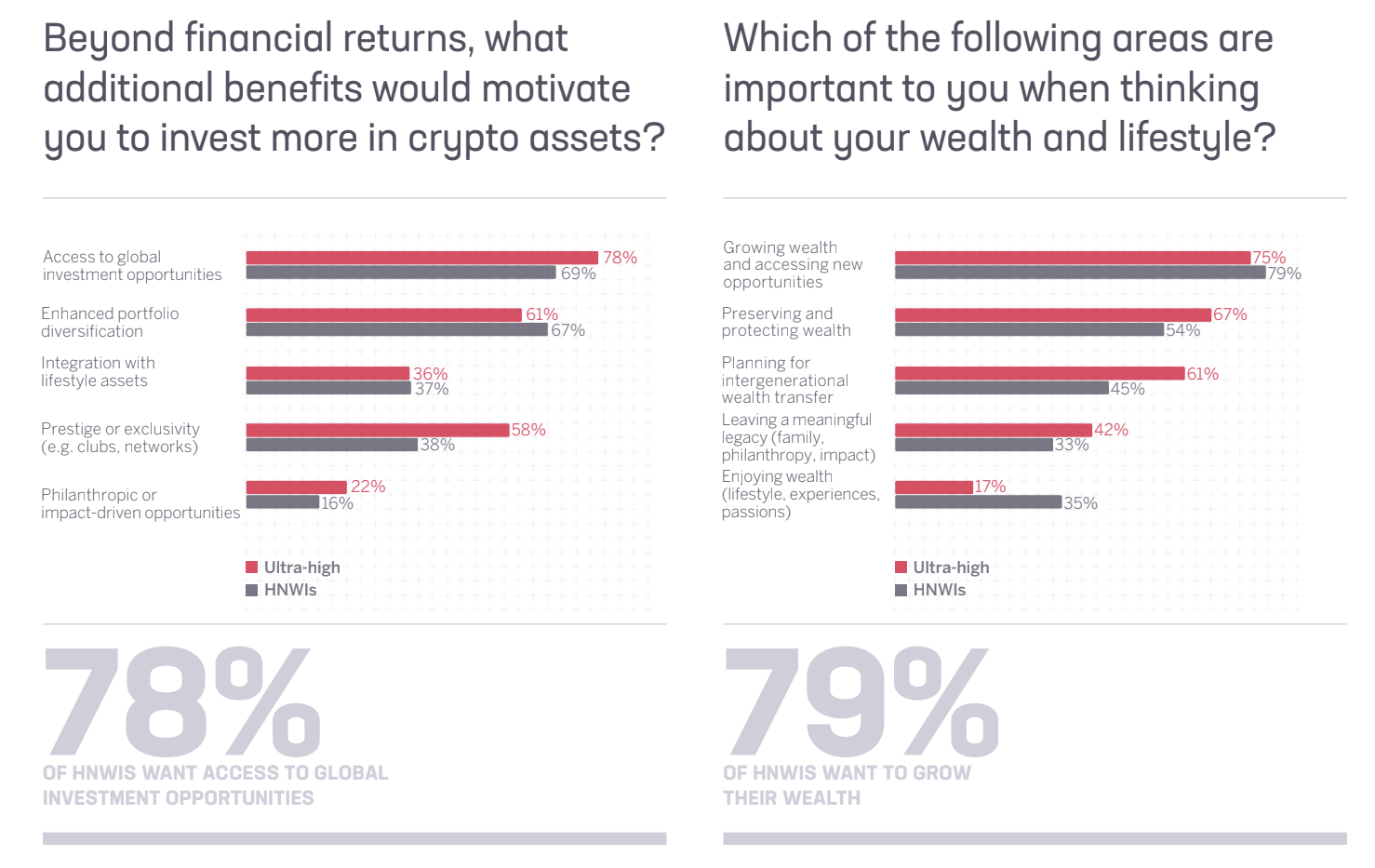
Wealthy Asian Investors' Outlook On CryptoWealthy Asian Investors’ Outlook On Crypto. Source: Sygnum

The appetite for more sophisticated products is also rising. HNWIs are showing an increasing interest in actively managed strategies, outsourced investment mandates, and yield-enhanced products that fit neatly into their existing wealth structures.

Notably, investors increasingly expect traditional wealth managers to keep pace. Recently, BeInCrypto reported that a significant share of investors in the US have already shifted funds away from advisors who do not provide crypto exposure.

Diversification in ETF Demand Goes Beyond Bitcoin and Ethereum

Demand for varied exchange-traded funds is particularly pronounced. The report finds 80% of respondents want ETFs that go beyond Bitcoin and Ethereum. Solana stands out, with 52% interested in exposure to this asset.

It is followed by multi-asset crypto indexes at 48% and XRP at 41%. Notably, 70% revealed they would allocate, or increase allocations, if staking yield were incorporated into ETF structures.

However, Sygnum observed that a significant share of investors are approaching the market cautiously after recent market volatility.
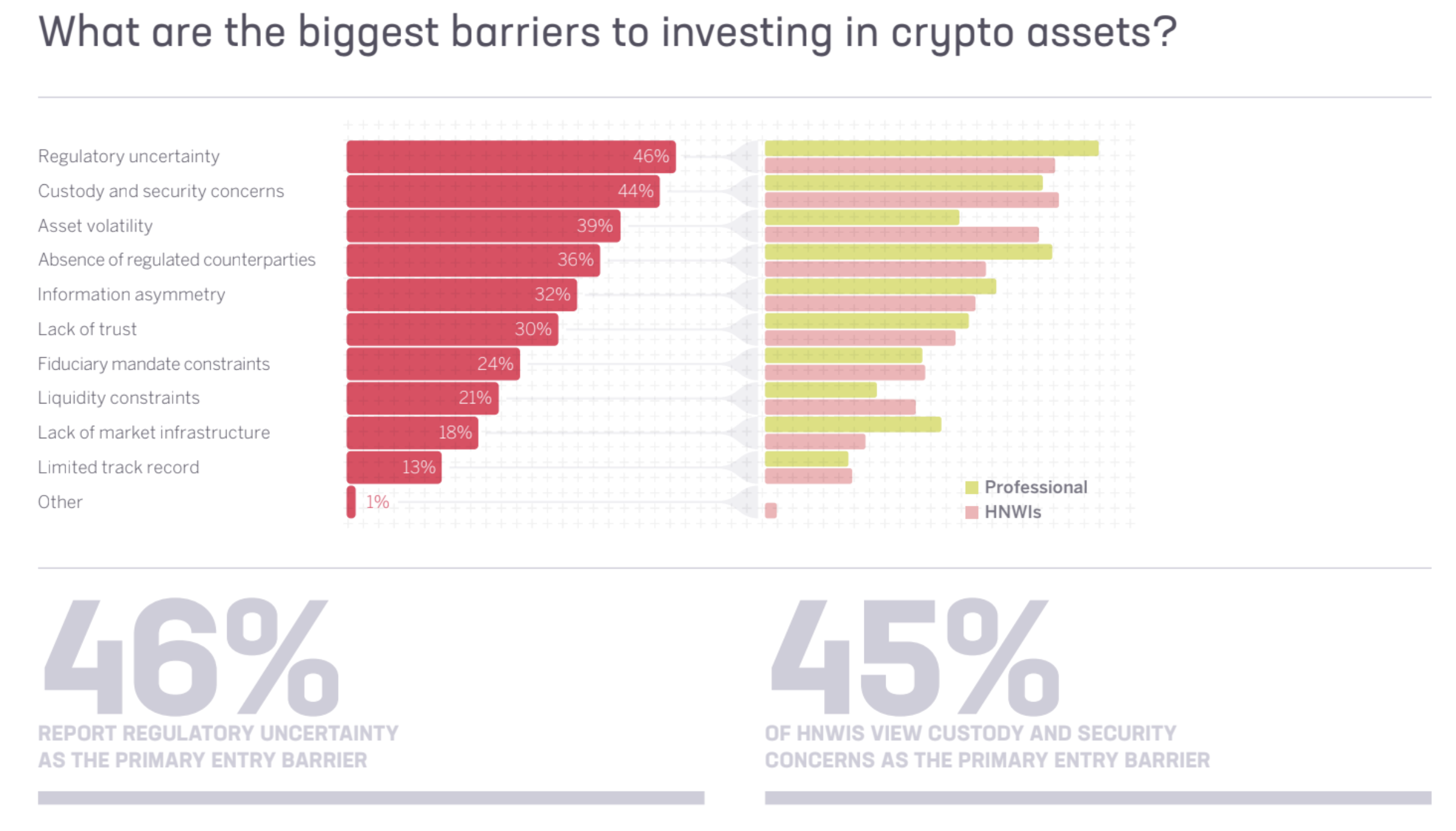
Investors Outline RoadblocksInvestors Outline Roadblocks. Source: Sygnum

Factors such as unclear regulation, ongoing concerns around custody and security, and varying licensing requirements across jurisdictions continue to limit wider involvement.

Even so, long-term confidence remains firm. 57% of HNWIs and 61% of UHNWIs expressed a bullish or strongly bullish long-term view of the crypto market. Their confidence is bolstered by the deepening integration between crypto and traditional finance.

Goh emphasized that APAC is quickly emerging as one of the world’s fastest-growing and most influential digital asset hubs, and expects this momentum to accelerate further as the region heads into 2026.


Market Opportunity
Spacecoin Logo
Spacecoin Price(SPACE)
$0
$0$0
0.00%
USD
Spacecoin (SPACE) Live Price Chart
Disclaimer: The articles reposted on this site are sourced from public platforms and are provided for informational purposes only. They do not necessarily reflect the views of MEXC. All rights remain with the original authors. If you believe any content infringes on third-party rights, please contact service@support.mexc.com for removal. MEXC makes no guarantees regarding the accuracy, completeness, or timeliness of the content and is not responsible for any actions taken based on the information provided. The content does not constitute financial, legal, or other professional advice, nor should it be considered a recommendation or endorsement by MEXC.

You May Also Like

The USDC Treasury burned $50 million worth of USDC on the Ethereum blockchain.

The USDC Treasury burned $50 million worth of USDC on the Ethereum blockchain.

PANews reported on January 22 that, according to Whale Alert monitoring, at 15:55 Beijing time, the USDC Treasury destroyed 50,000,000 USDC (approximately $50.01
Share
PANews2026/01/22 15:59
Crossmint Partners with MoneyGram for USDC Remittances in Colombia

Crossmint Partners with MoneyGram for USDC Remittances in Colombia

TLDR Crossmint enables MoneyGram’s new stablecoin payment app for cross-border transfers. The new app allows USDC transfers from the US to Colombia, boosting financial inclusion. MoneyGram offers USDC savings and Visa-linked spending for Colombian users. The collaboration simplifies cross-border payments with enterprise-grade blockchain tech. MoneyGram, a global leader in remittance services, launched its stablecoin-powered cross-border [...] The post Crossmint Partners with MoneyGram for USDC Remittances in Colombia appeared first on CoinCentral.
Share
Coincentral2025/09/18 21:02
Whales Dump 200 Million XRP in Just 2 Weeks – Is XRP’s Price on the Verge of Collapse?

Whales Dump 200 Million XRP in Just 2 Weeks – Is XRP’s Price on the Verge of Collapse?

Whales offload 200 million XRP leaving market uncertainty behind. XRP faces potential collapse as whales drive major price shifts. Is XRP’s future in danger after massive sell-off by whales? XRP’s price has been under intense pressure recently as whales reportedly offloaded a staggering 200 million XRP over the past two weeks. This massive sell-off has raised alarms across the cryptocurrency community, as many wonder if the market is on the brink of collapse or just undergoing a temporary correction. According to crypto analyst Ali (@ali_charts), this surge in whale activity correlates directly with the price fluctuations seen in the past few weeks. XRP experienced a sharp spike in late July and early August, but the price quickly reversed as whales began to sell their holdings in large quantities. The increased volume during this period highlights the intensity of the sell-off, leaving many traders to question the future of XRP’s value. Whales have offloaded around 200 million $XRP in the last two weeks! pic.twitter.com/MiSQPpDwZM — Ali (@ali_charts) September 17, 2025 Also Read: Shiba Inu’s Price Is at a Tipping Point: Will It Break or Crash Soon? Can XRP Recover or Is a Bigger Decline Ahead? As the market absorbs the effects of the whale offload, technical indicators suggest that XRP may be facing a period of consolidation. The Relative Strength Index (RSI), currently sitting at 53.05, signals a neutral market stance, indicating that XRP could move in either direction. This leaves traders uncertain whether the XRP will break above its current resistance levels or continue to fall as more whales sell off their holdings. Source: Tradingview Additionally, the Bollinger Bands, suggest that XRP is nearing the upper limits of its range. This often points to a potential slowdown or pullback in price, further raising concerns about the future direction of the XRP. With the price currently around $3.02, many are questioning whether XRP can regain its footing or if it will continue to decline. The Aftermath of Whale Activity: Is XRP’s Future in Danger? Despite the large sell-off, XRP is not yet showing signs of total collapse. However, the market remains fragile, and the price is likely to remain volatile in the coming days. With whales continuing to influence price movements, many investors are watching closely to see if this trend will reverse or intensify. The coming weeks will be critical for determining whether XRP can stabilize or face further declines. The combination of whale offloading and technical indicators suggest that XRP’s price is at a crossroads. Traders and investors alike are waiting for clear signals to determine if the XRP will bounce back or continue its downward trajectory. Also Read: Metaplanet’s Bold Move: $15M U.S. Subsidiary to Supercharge Bitcoin Strategy The post Whales Dump 200 Million XRP in Just 2 Weeks – Is XRP’s Price on the Verge of Collapse? appeared first on 36Crypto.
Share
Coinstats2025/09/17 23:42