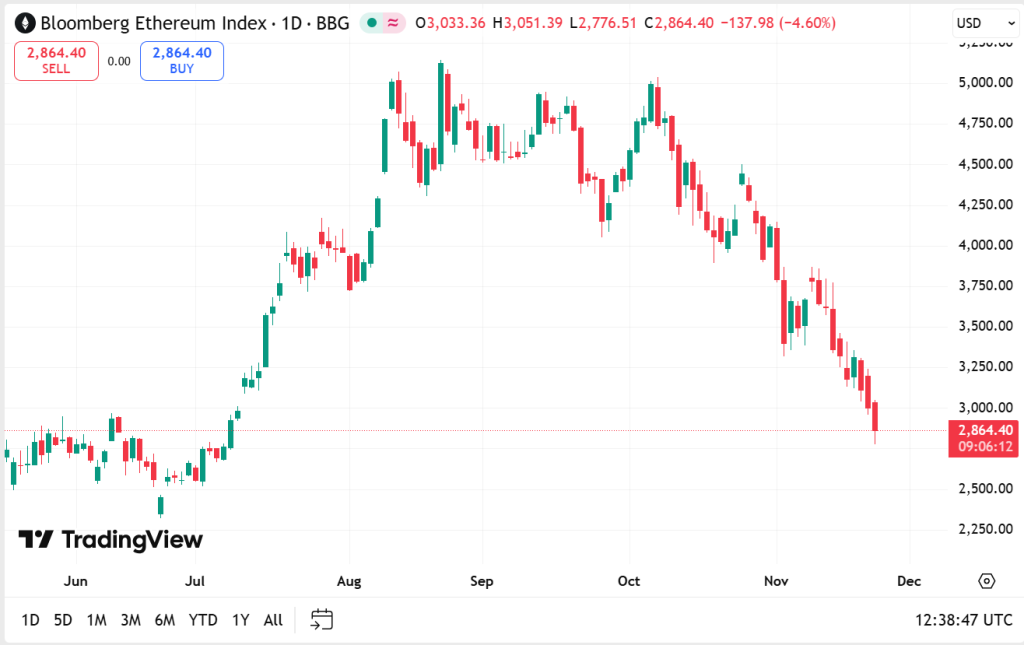
Durante la conferenza Devconnect di Buenos Aires, il co-fondatore di Ethereum, Vitalik Buterin, non ha usato mezzi termini. Al centro del suo intervento c’è una preoccupazione crescente: il dominio sempre più soffocante dei giganti istituzionali come BlackRock sul mondo delle criptovalute, con un focus particolare su Bitcoin (BTC) ed Ethereum (ETH). Secondo Buterin, questa influenza […]Durante la conferenza Devconnect di Buenos Aires, il co-fondatore di Ethereum, Vitalik Buterin, non ha usato mezzi termini. Al centro del suo intervento c’è una preoccupazione crescente: il dominio sempre più soffocante dei giganti istituzionali come BlackRock sul mondo delle criptovalute, con un focus particolare su Bitcoin (BTC) ed Ethereum (ETH). Secondo Buterin, questa influenza […]

Vitalik Buterin Lancia l’Allarme: Tra l’Ombra di BlackRock e la Minaccia dei Computer Quantistici

2025/11/21 20:48
3 min read
For feedback or concerns regarding this content, please contact us at crypto.news@mexc.com

Durante la conferenza Devconnect di Buenos Aires, il co-fondatore di Ethereum, Vitalik Buterin, non ha usato mezzi termini. Al centro del suo intervento c’è una preoccupazione crescente: il dominio sempre più soffocante dei giganti istituzionali come BlackRock sul mondo delle criptovalute, con un focus particolare su Bitcoin (BTC) ed Ethereum (ETH).

Secondo Buterin, questa influenza smisurata non è solo una questione di mercato, ma una potenziale minaccia esistenziale per la natura decentralizzata di queste reti.

Il Rischio Centralizzazione: Ethereum è “catturabile”?

L’intervento di Buterin nasce da una riflessione profonda sull’impatto degli investitori istituzionali, specialmente dopo il lancio degli ETF su Bitcoin ed Ethereum da parte di BlackRock all’inizio del 2024.

La domanda che Vitalik pone alla community è cruciale: come possiamo evitare che le crypto vengano “catturate” da entità colossali come BlackRock?

Il timore è che, se questi player dovessero continuare ad accumulare quote massicce di Ethereum, la voce di chi difende la decentralizzazione finirebbe per essere marginalizzata. Il rischio concreto è uno stravolgimento dei fondamentali della rete:

  • Ottimizzazione per le Istituzioni: La rete potrebbe evolversi per soddisfare le esigenze di Wall Street.
  • Esclusione dell’utente comune: Diventerebbe sempre più difficile per i singoli utenti gestire un nodo, trasformando la blockchain in un club per pochi eletti.

Buterin ha avvertito: “Questo allontana facilmente le persone”, ribadendo la necessità di concentrarsi su quelle caratteristiche che rendono le crypto uniche: protocolli globali, permissionless (senza permessi) e resistenti alla censura.

Non a caso, proprio questa settimana BlackRock ha fatto notizia registrando in Delaware un fondo Ethereum con staking, segnalando l’intenzione di espandersi ulteriormente nel mercato degli ETF, dove il loro fondo principale gestisce già circa 10 miliardi di dollari in ETH.

La Minaccia Quantistica: Il countdown verso il 2030

Ma le preoccupazioni di Buterin non si fermano alla finanza tradizionale. All’orizzonte si profila un’altra ombra: quella del calcolo quantistico.

Recenti scoperte di Google e Microsoft (che ha svelato un nuovo chip per l’abilitazione quantistica) hanno accelerato la corsa tecnologica, accendendo i riflettori sulla sicurezza crittografica di Bitcoin ed Ethereum.

Scott Aaronson, ricercatore nel campo quantistico, ha suonato un campanello d’allarme: la potenza di questi computer potrebbe presto essere in grado di eseguire l’Algoritmo di Shor, teoricamente capace di violare gli standard di crittografia che proteggono le blockchain attuali. Secondo Aaronson, il ritmo dell’innovazione hardware è tale che potremmo vedere un computer quantistico fault-tolerant (tollerante ai guasti) persino prima delle prossime elezioni presidenziali USA.

“Non serve il panico, serve serietà”

Alex Pruden, CEO di Project 11 (società che si occupa di rischi quantistici), ha sintetizzato così la situazione: “Non dobbiamo farci prendere dal panico, ma dobbiamo iniziare a fare sul serio”. Il messaggio è chiaro: computer quantistici sufficientemente avanzati potrebbero rompere le criptovalute al loro livello più fondamentale.

La discussione si sta spostando sulla necessità di misure proattive. Gli sviluppatori di Bitcoin sono stati esortati a prepararsi per un futuro post-quantistico, che secondo alcuni esperti potrebbe materializzarsi già nel 2030.

La dichiarazione più forte arriva da Théau Peronnin, CEO di Alice & Bob, durante il Web Summit di Lisbona: gli sviluppatori devono migrare verso blockchain più robuste entro la fine del decennio per proteggersi.

Il suo avvertimento finale è lapidario:

Avete ancora qualche buon anno davanti a voi, ma io non terrei i miei Bitcoin a lungo termine senza un aggiornamento.

Market Opportunity
Lagrange Logo
Lagrange Price(LA)
$0,2497
$0,2497$0,2497
+1,81%
USD
Lagrange (LA) Live Price Chart
Disclaimer: The articles reposted on this site are sourced from public platforms and are provided for informational purposes only. They do not necessarily reflect the views of MEXC. All rights remain with the original authors. If you believe any content infringes on third-party rights, please contact crypto.news@mexc.com for removal. MEXC makes no guarantees regarding the accuracy, completeness, or timeliness of the content and is not responsible for any actions taken based on the information provided. The content does not constitute financial, legal, or other professional advice, nor should it be considered a recommendation or endorsement by MEXC.
Tags:

You May Also Like

Is Doge Losing Steam As Traders Choose Pepeto For The Best Crypto Investment?

Is Doge Losing Steam As Traders Choose Pepeto For The Best Crypto Investment?

The post Is Doge Losing Steam As Traders Choose Pepeto For The Best Crypto Investment? appeared on BitcoinEthereumNews.com. Crypto News 17 September 2025 | 17:39 Is dogecoin really fading? As traders hunt the best crypto to buy now and weigh 2025 picks, Dogecoin (DOGE) still owns the meme coin spotlight, yet upside looks capped, today’s Dogecoin price prediction says as much. Attention is shifting to projects that blend culture with real on-chain tools. Buyers searching “best crypto to buy now” want shipped products, audits, and transparent tokenomics. That frames the true matchup: dogecoin vs. Pepeto. Enter Pepeto (PEPETO), an Ethereum-based memecoin with working rails: PepetoSwap, a zero-fee DEX, plus Pepeto Bridge for smooth cross-chain moves. By fusing story with tools people can use now, and speaking directly to crypto presale 2025 demand, Pepeto puts utility, clarity, and distribution in front. In a market where legacy meme coin leaders risk drifting on sentiment, Pepeto’s execution gives it a real seat in the “best crypto to buy now” debate. First, a quick look at why dogecoin may be losing altitude. Dogecoin Price Prediction: Is Doge Really Fading? Remember when dogecoin made crypto feel simple? In 2013, DOGE turned a meme into money and a loose forum into a movement. A decade on, the nonstop momentum has cooled; the backdrop is different, and the market is far more selective. With DOGE circling ~$0.268, the tape reads bearish-to-neutral for the next few weeks: hold the $0.26 shelf on daily closes and expect choppy range-trading toward $0.29–$0.30 where rallies keep stalling; lose $0.26 decisively and momentum often bleeds into $0.245 with risk of a deeper probe toward $0.22–$0.21; reclaim $0.30 on a clean daily close and the downside bias is likely neutralized, opening room for a squeeze into the low-$0.30s. Source: CoinMarketcap / TradingView Beyond the dogecoin price prediction, DOGE still centers on payments and lacks native smart contracts; ZK-proof verification is proposed,…
Share
BitcoinEthereumNews2025/09/18 00:14
Adoption Leads Traders to Snorter Token
Adoption Leads Traders to Snorter Token

The post Adoption Leads Traders to Snorter Token appeared on BitcoinEthereumNews.com. Largest Bank in Spain Launches Crypto Service: Adoption Leads Traders to Snorter Token Sign Up for Our Newsletter! For updates and exclusive offers enter your email. Leah is a British journalist with a BA in Journalism, Media, and Communications and nearly a decade of content writing experience. Over the last four years, her focus has primarily been on Web3 technologies, driven by her genuine enthusiasm for decentralization and the latest technological advancements. She has contributed to leading crypto and NFT publications – Cointelegraph, Coinbound, Crypto News, NFT Plazas, Bitcolumnist, Techreport, and NFT Lately – which has elevated her to a senior role in crypto journalism. Whether crafting breaking news or in-depth reviews, she strives to engage her readers with the latest insights and information. Her articles often span the hottest cryptos, exchanges, and evolving regulations. As part of her ploy to attract crypto newbies into Web3, she explains even the most complex topics in an easily understandable and engaging way. Further underscoring her dynamic journalism background, she has written for various sectors, including software testing (TEST Magazine), travel (Travel Off Path), and music (Mixmag). When she’s not deep into a crypto rabbit hole, she’s probably island-hopping (with the Galapagos and Hainan being her go-to’s). Or perhaps sketching chalk pencil drawings while listening to the Pixies, her all-time favorite band. This website uses cookies. By continuing to use this website you are giving consent to cookies being used. Visit our Privacy Center or Cookie Policy. I Agree Source: https://bitcoinist.com/banco-santander-and-snorter-token-crypto-services/
Share
BitcoinEthereumNews2025/09/17 23:45
The Role of Reference Points in Achieving Equilibrium Efficiency in Fair and Socially Just Economies

The Role of Reference Points in Achieving Equilibrium Efficiency in Fair and Socially Just Economies

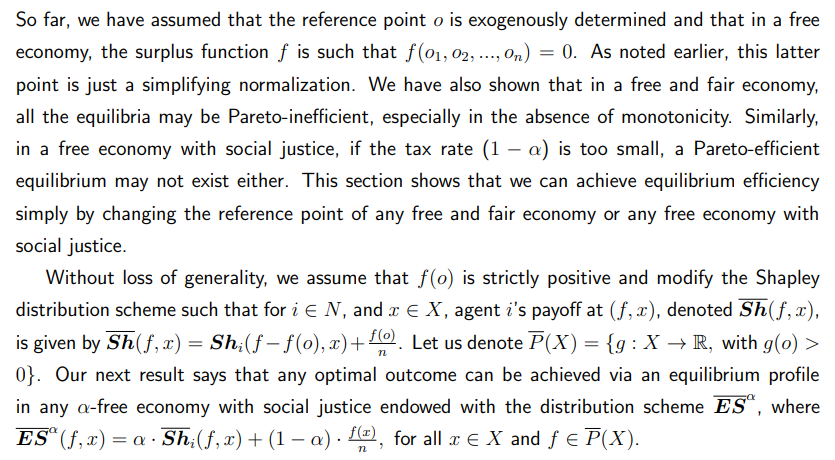
This article explores how a simple change in the reference point can achieve a Pareto-efficient equilibrium in both free and fair economies and those with social justice.
Share
Hackernoon2025/09/17 22:30