ZKsync founder Alex Gluchowski has presented a new tokenomics plan that could redefine how the ZK token operates within its ecosystem.  The proposal introduces on-chain interoperability fees and enterprise licensing revenues, designed to give ZK real-world economic value. According to DeFiLlama data, ZKsync Era’s total revenue currently stands at $30.03 million, but just $640,000 has […]ZKsync founder Alex Gluchowski has presented a new tokenomics plan that could redefine how the ZK token operates within its ecosystem.  The proposal introduces on-chain interoperability fees and enterprise licensing revenues, designed to give ZK real-world economic value. According to DeFiLlama data, ZKsync Era’s total revenue currently stands at $30.03 million, but just $640,000 has […]

ZKsync Era’s $30 Million Revenue Spurs New Tokenomics Plan for Sustainable Growth

2025/11/05 17:00
3 min read
zkSync
  • ZKsync’s new tokenomics proposal aims to link real network activity with ZK token value.
  • New revenue streams include cross-chain fees and enterprise licensing for institutions.
  • All proceeds would fund staking, burns, and ecosystem growth under community control.

ZKsync founder Alex Gluchowski has presented a new tokenomics plan that could redefine how the ZK token operates within its ecosystem. 

The proposal introduces on-chain interoperability fees and enterprise licensing revenues, designed to give ZK real-world economic value.
According to DeFiLlama data, ZKsync Era’s total revenue currently stands at $30.03 million, but just $640,000 has been generated over the past year.

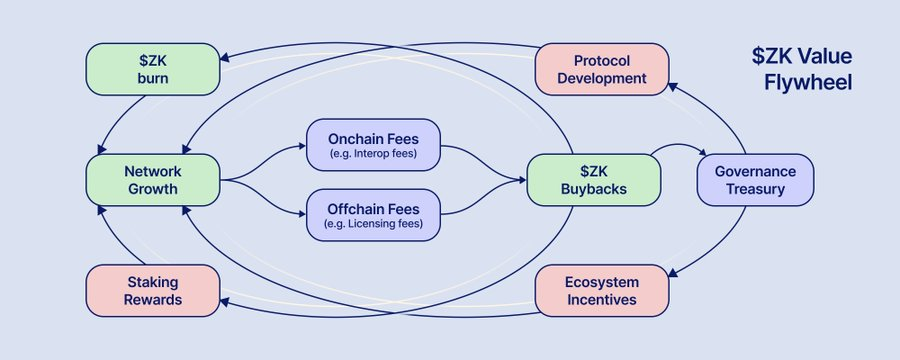
Gluchowski’s proposal aims to change this by ensuring all new value streams are directed to governance for token buybacks, burns, staking rewards, and funding network growth.

Initially launched as a governance token, ZK has evolved alongside the expanding Elastic Network, an ecosystem of nearly two dozen chains built on Ethereum security.

As interoperability and enterprise-focused Prividiums move into production, the ZK token’s design now seeks to connect network usage directly to value creation.

Also Read: ZKsync (ZK) Gains 14% Weekly, Analysts See Path Toward $0.125 Level

Cross-Chain Fees to Power ZKsync Ecosystem

As per the proposed mechanism, ZK token usage is going to depend on two primary economic streams. 

The first one will be related to interoperability charges paid when assets or messages get transferred between ZK-sync and Prividums. This indicates the increasing demand for secure cross-chain communication.
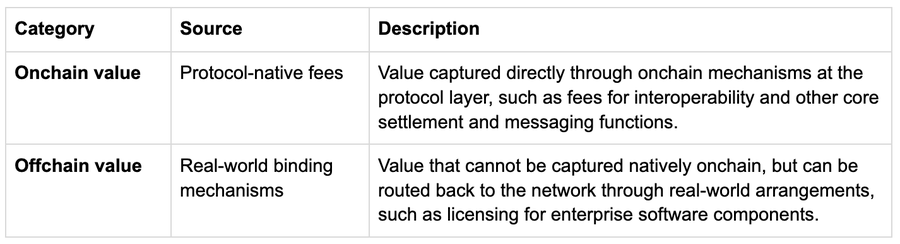
The second source will focus on off-chain enterprise licensing. This is geared towards banks and institutions utilizing advanced private modules. These modules consist of or have features such as compliance tools, reporting tools, and auditing tools.

These institutions would have to contribute towards the licensing costs to ensure that there is a financial element to their participation in the ZK ecosystem.

All funds generated through both streams would enter a governance-managed treasury. Proceeds would then be allocated for token buybacks, reducing supply through burning, staking rewards for operators, and development. 

This plan is meant to harmonize incentives between users, developers, and institutional actors.

Aligning Incentives Around a Self-Sustaining Model

The new framework indicates a focus on economic self-sufficiency. Gluchowski highlighted that for there to be proper decentralization, there must be a sound economic foundation and not one that is centrally dependent.

This new framework makes sure that with increased adoption, there is increased value to fuel the decentralized ecosystem.

The adoption of their enterprise could be another critical milestone. Banks lose million every year on their compliances and infrastructure solutions. Partial adoption of their licensed modules of ZKsync could fetch them regular income.

This proposal is to be examined on community forums as well as social media platforms, with members allowed to contribute their feedback before going to the governance voting process.

Once passed, such a model could ensure that ZK is among the first tokens to have real value associated with real-world activities.

Also Read: Ethereum Emerges as Main Capital Hub After ZKsync Atlas Brings 15K TPS and Instant Finality


Market Opportunity
ERA Logo
ERA Price(ERA)
$0.1478
$0.1478$0.1478
+2.71%
USD
ERA (ERA) Live Price Chart
Disclaimer: The articles reposted on this site are sourced from public platforms and are provided for informational purposes only. They do not necessarily reflect the views of MEXC. All rights remain with the original authors. If you believe any content infringes on third-party rights, please contact crypto.news@mexc.com for removal. MEXC makes no guarantees regarding the accuracy, completeness, or timeliness of the content and is not responsible for any actions taken based on the information provided. The content does not constitute financial, legal, or other professional advice, nor should it be considered a recommendation or endorsement by MEXC.

You May Also Like

Structural support keeps rally in play – ING

Structural support keeps rally in play – ING

The post Structural support keeps rally in play – ING appeared on BitcoinEthereumNews.com. ING’s Commodities Strategist Ewa Manthey argues that despite recent consolidation
Share
BitcoinEthereumNews2026/02/27 15:32
UNI Price Prediction: Targets $4.28 Resistance by March as Technical Indicators Show Mixed Signals

UNI Price Prediction: Targets $4.28 Resistance by March as Technical Indicators Show Mixed Signals

UNI price prediction shows neutral momentum at $3.91 with immediate resistance at $4.10. Technical analysis suggests potential rally to $4.28 if bulls can break
Share
BlockChain News2026/02/27 14:47
iPhone 17 hits stores worldwide as Apple faces heat on AI and China

iPhone 17 hits stores worldwide as Apple faces heat on AI and China

The post iPhone 17 hits stores worldwide as Apple faces heat on AI and China appeared on BitcoinEthereumNews.com. Long lines formed across cities on Friday as the iPhone 17 officially launched in retail stores globally, with buyers showing up early in places like Beijing and Singapore. The launch follows a preorder window that opened on September 12 in the U.S., but the international release carries more weight for Apple, which is dealing with falling smartphone market share in China and delays in its promised AI rollout. At Apple’s flagship store in Sanlitun, Beijing, a man named Liu showed up at 11 p.m. Thursday to be first in line for the iPhone 17 Pro Max. Liu said he switched from Huawei, calling the iPhone better for daily life and entertainment. He also said the new color and outer shell were the main reasons he came early, adding, “The phone feels cooler, and it doesn’t heat up like before.” Apple claims the redesign helps reduce overheating. Friday’s launch also included the iPhone 17 Pro, the lighter iPhone Air, the new Apple Watch, and AirPods with updated features. Buyers in China and Singapore push demand for redesigned models Another buyer in Beijing, Yang, said he previously used a Xiaomi but waited for the new iPhone because he prefers its operating system. Both Liu and Yang said more people around them are likely to switch to iPhones this year, mostly for the improved internal storage. After years of leading in China, Apple now controls just 10% of the market, trailing brands like Huawei, Xiaomi, and Oppo. Early sales data shows momentum. JD.com, one of China’s top online retailers, reported that the first minute of iPhone 17 preorders beat the entire first day of iPhone 16 preorders last year. That’s a rare spike for Apple in China, where local competitors have been taking market share fast. In Singapore, which is a smaller but…
Share
BitcoinEthereumNews2025/09/19 17:04