

Poland to push for Nato fuel pipeline extension to eastern flank
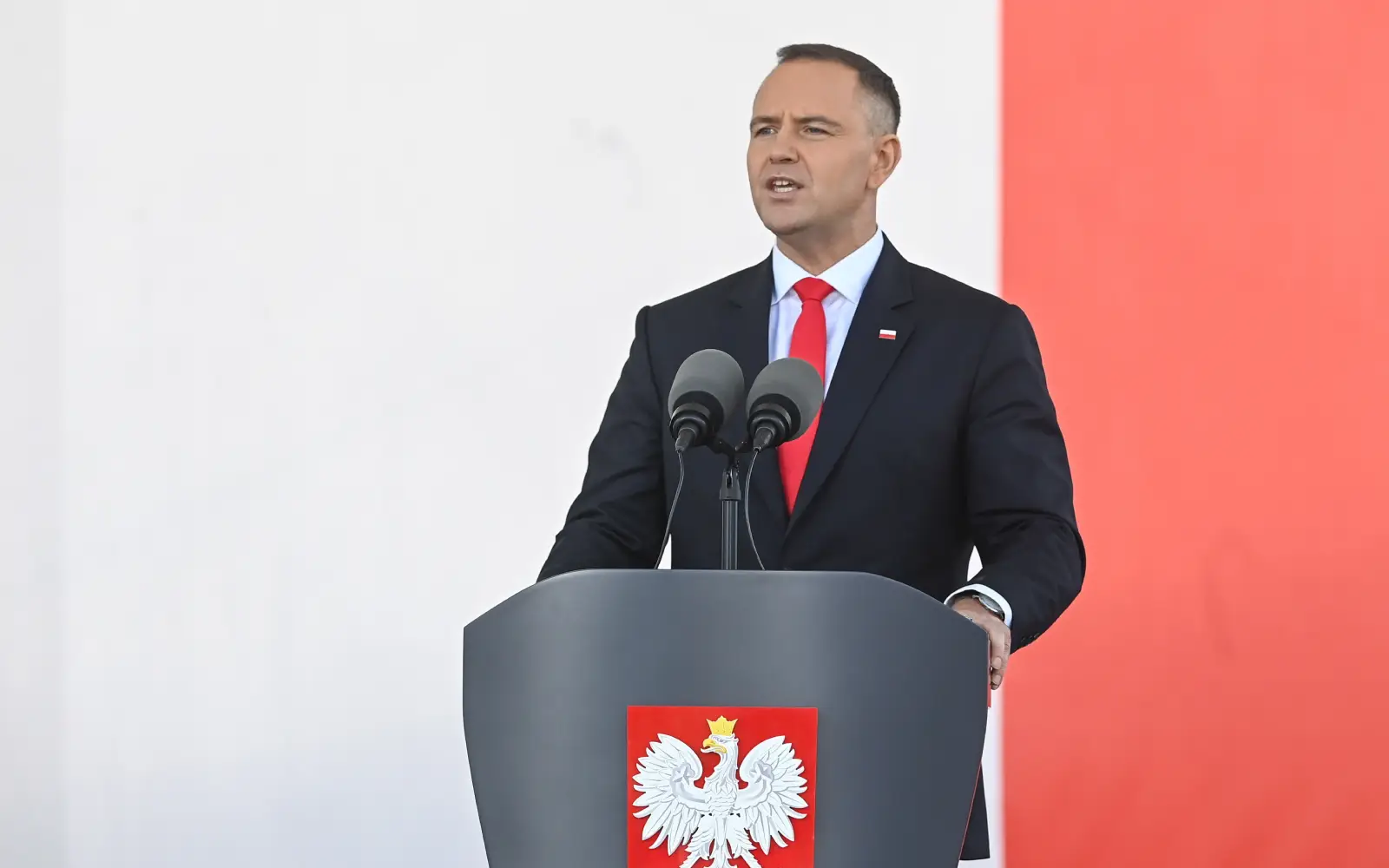 Polish president Karol Nawrocki said the dual-use nature of fuel pipelines provides the opportunity to build security for Nato’s entire eastern flank. (EPA Images pic)
WARSAW: Poland’s president said on Wednesday he will push for Nato’s fuel pipeline network to be extended to the alliance’s eastern flank, addressing what military officials see as one of the biggest challenges in the event of a conflict with Russia.
If implemented, the pipeline extension might become one of Europe’s biggest infrastructure projects.
“The dual-use nature of pipelines … provides the opportunity to build security for Nato’s entire eastern flank, so this is also an opportunity for me and all of central Europe to raise this issue once again,” president Karol Nawrocki said as he arrived at the Nato summit in Ankara.
Senior Nato military officials have called for an extension of the alliance’s Cold War-era fuel pipeline network hundreds of kilometres eastward towards Poland and the three Baltic states, with further extensions towards Finland in the north and Romania in the southeast.
However, such a project faces significant hurdles, with an estimated cost of €21 billion and taking 20 to 25 years to complete, according to Der Spiegel magazine.
The 10,000km pipeline, buried 80cm underground, currently spans 12 countries but ends in western Germany, where it serves military bases such as the US Ramstein Air Base, but also major civilian hubs such as Germany’s biggest airport in Frankfurt.
It was originally built to serve primarily Western air forces in a conflict with the then-Soviet Union.
In wartime, air forces are expected to account for as much as 85% of total military fuel consumption, according to a study by the Polish Centre for Eastern Studies think tank.
The jet fuel running through the Nato pipelines can also be used by ground vehicles, as mixing it with additives makes it suitable for trucks and tanks that normally run on diesel.
Extending the network would also help address shortfalls in storage capacity, as the fuel inside the pipeline is additional to fuel held in storage tanks.
Senior military officials describe fuel and ammunition as the two supply items most critical to running an operation, citing Nato estimates that a full-scale conflict would require hundreds of thousands of cubic metres of fuel per day.
According to the Polish think tank study, Nato’s fuel consumption in the event of a conflict would likely exceed the capacity of the existing infrastructure even before full-scale hostilities, due to the movement of land forces, airlift operations and fighter jet sorties.


You May Also Like

Broadcom Stock: The 1 Number That Could Tell You a Market Turn Is Coming

Bitcoin Exchange Bull Bitcoin Asks France’s Highest Court to Block EU Crypto Tax Rule

AT&T leaves rivals flat-footed as bankrupt carrier folds



