

Can SoftBank’s $100B AI computing rental bet challenge AWS?
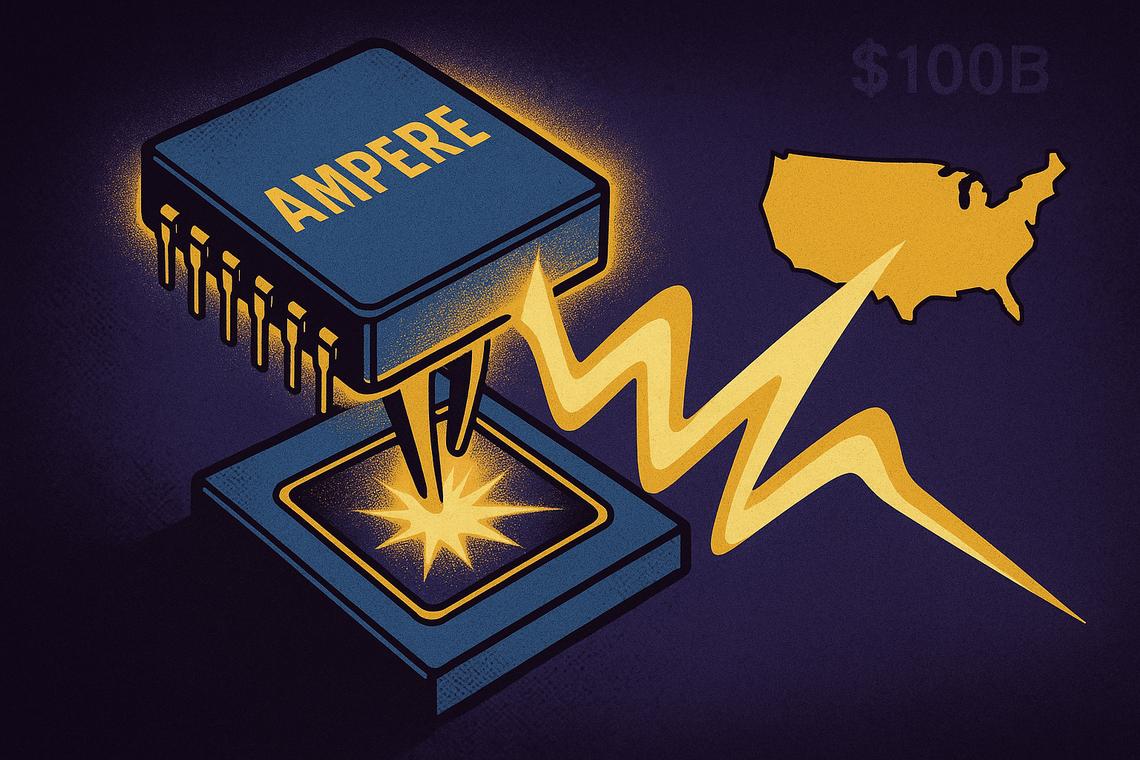
SoftBank is making a bold push into the AI computing rental business, with plans to offer AI compute resources to US companies starting next fiscal year — a move that puts Masayoshi Son’s conglomerate in direct competition with some of the most powerful names in cloud infrastructure.
Key takeaways
- SoftBank will begin renting AI computing resources to US companies starting next fiscal year.
- The company is backing the push with a $100 billion AI infrastructure investment plan in the US.
- SoftBank agreed to acquire Ampere Computing for $6.5 billion, with the deal expected to close in the second half of 2025.
- SoftBank is also investing around 45 billion euros in AI data centers in France over five years, potentially scaling to 75 billion euros by 2031.
- CEO Masayoshi Son has set a target to deploy up to one billion AI agents by 2025.
SoftBank’s Entry into the US AI Compute Rental Market
The rental service is set to launch in the next fiscal year, and the scope is significant. SoftBank’s offering will target US enterprise customers looking for access to AI compute, positioning the company as an infrastructure provider rather than a pure investor or portfolio manager — a meaningful shift in identity for a firm historically known for its venture bets.
What makes this entry particularly striking is the market SoftBank is walking into. The US AI compute rental space is already occupied by heavyweights: Amazon Web Services, Microsoft Azure, Google Cloud, and Nvidia’s DGX Cloud service all compete for enterprise GPU demand. Specialized GPU cloud providers like CoreWeave and Lambda have also carved out real market share. Entering this ecosystem requires more than capital — it demands differentiated hardware, operational scale, and pricing credibility.
SoftBank has not disclosed specific pricing or contractual structures for its rental model. That gap will matter when enterprise customers start comparing options against established players with years of infrastructure track records.
Massive AI Infrastructure Investments in the US and France
The $100 billion US commitment
The rental business doesn’t exist in isolation. It sits on top of a $100 billion AI infrastructure investment plan for the United States — a figure that encompasses large-scale GPU acquisitions and, according to the company, the leasing of large language models to enterprise customers. That level of capital commitment signals that SoftBank views AI infrastructure not as a supporting role but as a core business line.
Reporting a net profit of approximately $7.77 billion for the fiscal year ending March — its first annual profit in four years — SoftBank arrives at this moment with financial momentum. The turnaround was driven largely by growing AI-related optimism across its investment portfolio, giving Son a cleaner balance sheet to execute on an enormously ambitious infrastructure agenda.
France as a parallel front
The geographic ambition extends well beyond American borders. SoftBank has committed to investing around 45 billion euros over five years in AI data centers in France. The potential scale-up is even more striking: that figure could reach 75 billion euros for 3.1 gigawatts of capacity by 2031. Few companies anywhere — tech giant or otherwise — are making commitments of this magnitude across multiple continents simultaneously.
Together, the US and French plans represent a calculated effort to build irreplaceable compute capacity before the window of first-mover advantage closes. AI infrastructure takes years to build; the companies that control the physical layer of the AI economy may hold structural advantages long after the model race matures.
Strategic Acquisition of Ampere Computing
A $6.5 billion hardware bet
The most concrete piece of SoftBank’s hardware strategy is its agreement to acquire Ampere Computing in a deal valued at $6.5 billion. Ampere specializes in energy-efficient server processors — a design focus that becomes more valuable as data centers grow larger and electricity costs become a defining variable in AI economics.
The logic is clear: owning the chip design layer gives SoftBank a degree of vertical integration that pure compute renters cannot easily replicate. Rather than simply buying GPU capacity from Nvidia or other vendors and reselling it, SoftBank could eventually build infrastructure around proprietary or co-designed silicon optimized for its own AI workloads.
Timeline and what comes next
The Ampere Computing deal is expected to close in the second half of 2025. Once complete, it will accelerate SoftBank’s ability to deploy differentiated hardware across its growing data center footprint — and potentially offer enterprise customers compute solutions that go beyond generic GPU rentals.
The timing matters. If the acquisition closes on schedule, SoftBank will enter its compute rental launch with Ampere’s capabilities already integrated, rather than retrofitting them afterward.
Masayoshi Son’s Vision for AI Agent Deployment
Underpinning the entire infrastructure push is a strikingly ambitious target from Son himself: deploying up to one billion AI agents by 2025. The stated goal, with future ambitions extending further still, frames the infrastructure investments not just as a commercial rental play but as the foundation for SoftBank’s own AI deployment at scale.
If AI agents require persistent, high-availability compute — and at that volume, they would — then SoftBank’s data centers become both the product it sells to others and the engine it runs for itself. That dual-use architecture could be the most strategically significant element of the entire plan. Building infrastructure that serves external customers while simultaneously powering internal AI operations creates a compounding advantage that pure cloud providers or pure AI companies individually lack.
Whether Son’s billion-agent goal is achievable on that timeline remains an open question. But the infrastructure being assembled to support it is real, expensive, and accelerating — which means the competitive pressure on established cloud players is about to get considerably more concrete.
FAQ
When will SoftBank start renting AI computing resources to US companies?
SoftBank plans to begin renting AI computing resources to US companies starting next fiscal year.
How much is SoftBank investing in AI infrastructure in the US?
SoftBank is pursuing a $100 billion AI infrastructure investment plan in the United States.
What is the timeline for SoftBank’s acquisition of Ampere Computing?
The acquisition deal with Ampere Computing is expected to close in the second half of 2025.
What is Masayoshi Son’s goal for AI agent deployment?
Masayoshi Son aims to deploy up to one billion AI agents by 2025, with future targets extending even further.
Article produced with the assistance of artificial intelligence and reviewed by the editorial team.


You May Also Like

Bitcoin Treasuries Are Cracking as Public Companies Turn into BTC Sellers

Analyst to XRP Holders: Watch Closely, This Could Be XRP’s Next Big Move

Alex Eala far from satisfied as dream Wimbledon run continues



