

SpaceX IPO makes Elon Musk world’s first trillionaire, exceeding $1.1 trillion
The world now has its first trillionaire. SpaceX’s groundbreaking initial public offering on Thursday raised a record $75 billion, pushing Elon Musk’s net worth beyond $1.1 trillion. This amount is unprecedented in the history of human wealth.
Before the share sale, Forbes estimated Elon Musk’s net worth at around $780 billion. Now that SpaceX is public and his stake in the company is valued at about $866 billion, his total wealth from SpaceX, Tesla, and other ventures has surpassed one trillion dollars.
For comparison, the second-richest person in the world is roughly at $300 billion, which is less than a third of Musk’s wealth. Only Larry Ellison, the founder of Oracle, has ever reached a net worth of $400 billion.
SpaceX’s IPO, the largest in history, values the rocket, satellite, and AI company at $1.5 trillion to $2 trillion, depending on how markets price the stock when trading begins on Friday. The company went public on the Nasdaq under the ticker SPCX at $135 per share.
 Elon Musk
In its most recent quarter, SpaceX posted $4.69 billion in revenue, reflecting the scale of a company that now spans reusable rockets, the Starlink satellite internet network, and a growing artificial intelligence division.
Elon Musk, 54, was born in Pretoria, South Africa, to a Canadian mother and a South African father. He graduated from the University of Pennsylvania in 1997 and later co-founded several companies, including PayPal, Tesla, SpaceX, Neuralink, The Boring Company, and xAI.
In 2022, he acquired Twitter for $44 billion, which he later rebranded as X, providing him with a direct communication platform that reaches hundreds of millions of users worldwide.
“Much like Tesla, SpaceX is a bet on Elon Musk,” said Matt Kennedy, senior strategist at Renaissance Capital. “A market cap of $1.5 to $2 trillion would certainly throw all traditional valuation methodologies out the window; it is best characterised as the Elon Musk premium.”
 Elon Musk by Walter Isaacson
Elon Musk: The man, the SpaceX empire and what comes next
Musk’s profound influence has led market observers to coin “Muskonomy,” a term describing the interconnected network of his ventures. Investors in Tesla, SpaceX, X, and xAI are essentially betting on Musk’s unique ability to consistently transform ambitious ideas into leading industries.
JPMorgan Chase CEO Jamie Dimon, once a legal adversary of Musk, has since become an admirer. “Elon is the Edison of our time,” Dimon said.
Critics, however, point to growing concerns about the concentration of power around a single individual, conflicts of interest, governance questions, and the risks of tying massive companies too closely to one person’s personality and decisions.
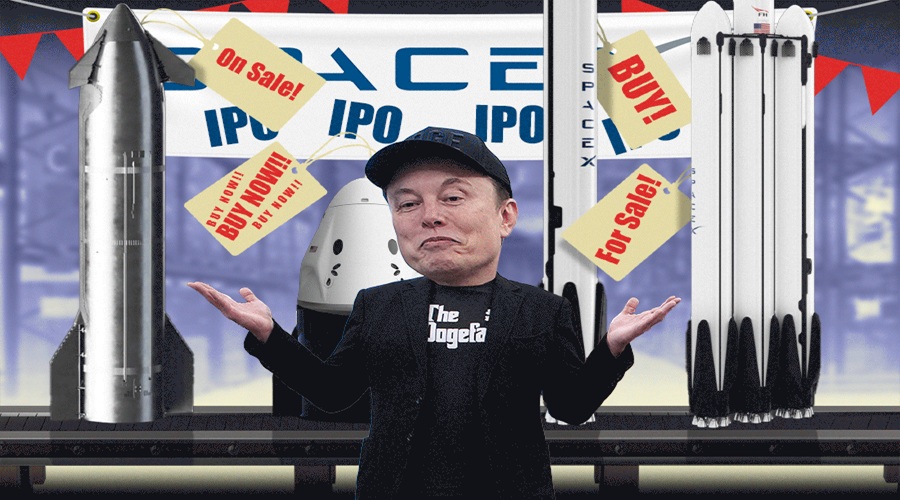 SpaceX IPO
SpaceX needs significant capital, and its high valuation relies on technologies like reusable rockets, Mars colonization, and Earth travel, which may take decades to become profitable. The justification of the market’s immense confidence in Musk will be a key investment narrative for the coming decade.
Read also: The SpaceX IPO isn’t draining crypto liquidity: Why the market has it wrong


You May Also Like

EUR/GBP Exchange Rate Surges as Bank of England Rate Hike Expectations Intensify – Market Analysis

Binance Red Packet Code 13 June 2026: Claim Free BNB Now
Federal Appeals Court Upholds Sam Bankman-Fried’s 25-Year Prison Sentence for FTX Collapse



