

EXPLORE: What Bitcoin ETF Outflows Reveal About Institutional Risk-Off Behavior
Ethereum Falls Below $2,000 as ETH Futures OI Hits Record The post Ethereum Falls Below $2,000 While ETH Futures Open Interest Hits Record 16M ETH appeared firstEthereum Falls Below $2,000 as ETH Futures OI Hits Record The post Ethereum Falls Below $2,000 While ETH Futures Open Interest Hits Record 16M ETH appeared first
Ethereum Falls Below $2,000 While ETH Futures Open Interest Hits Record 16M ETH
For feedback or concerns regarding this content, please contact us at crypto.news@mexc.com
Ether broke below $2,000 on Thursday for the first time since late March, extending a 7-day decline of nearly 8% and posting a single-session loss exceeding 5%, according to CoinDesk price data. The move lower is not a routine retracement; it is a breach of the first major psychological support level ETH has traded above since recovering from its early-2026 lows.
What makes the break structurally significant is the simultaneous surge in derivatives positioning. According to Coinglass, open interest in ether futures has climbed for three consecutive days to a record 16.39 million ETH – approximately $32.5Bn in notional value. Spot price falling while futures open interest rises is not a contradiction; it is a specific market structure that forces a resolution, either through a short squeeze that recovers the spot level or a liquidation cascade that accelerates the decline.
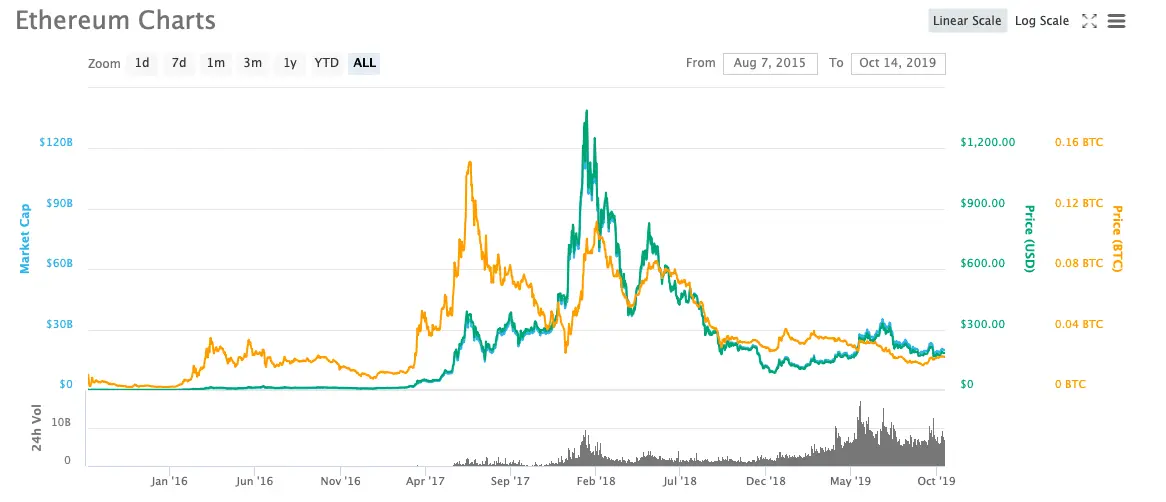
ETH Futures Open Interest: What the Record 16M ETH Positioning Actually Reveals
Open interest measures the total number of outstanding futures contracts that have not been settled – it is not a directional indicator on its own. A rising OI figure means new money is entering the derivatives market, but it does not specify whether that positioning is net long or net short. The interpretive key here is the concurrent data: ETH spot price is down sharply, the 7-day OI-adjusted cumulative volume delta (CVD) is negative, and the futures open interest is at an all-time high. A negative CVD indicates that price action is being driven by market-sell orders rather than passive limit-order buying – in other words, the new derivatives positioning is weighted toward the short side.
This is not the first time ETH has reached a futures OI record during a period of spot weakness. In March 2026, aggregate ETH futures open interest reached a prior record of 10.23 million ETH, and analysts at the time cautioned that the build-up reflected leverage-driven fragility rather than conviction buying. The current reading of 16.39 million ETH represents a 60% expansion beyond that March figure – a structural escalation, not a marginal new high.
The binary this creates is straightforward. A large short-weighted open interest at a key support level means the fuel for a violent reversal exists if spot demand re-emerges – funding rates turn deeply negative, short positions accumulate near a floor, and any sustained buying triggers forced covering. MEXC’s recent analysis flagged exactly this scenario as a potential short-squeeze setup if buyers return. The opposing outcome is equally mechanical: if spot demand does not recover, overleveraged short positions gain, spot price gaps lower, and long-side liquidations from earlier positioning compound the move.
Why Ethereum Spot Price Broke Below $2,000
The spot price break is not a liquidity vacuum; it is a convergence of fundamental de-risking, institutional outflows, and deteriorating sentiment from named market participants. Markus Thielen, founder of 10x Research, identified the core fundamental problem directly: staking yields are no longer competitive with elevated bond yields, ETH does not generate protocol revenue in a form that accrues to holders, and the one identifiable marginal buyer – Bitmine – has signaled it will slow purchases.
The institutional data reinforces that framing. U.S. spot Ether ETFs recorded $401M in cumulative outflows during May, more than reversing the $354M inflow posted in April, according to SoSoValue. That reversal is not an anomaly; it reflects a broader de-risking across digital asset products. On Wednesday alone, the 11 U.S. spot Bitcoin ETFs collectively shed $733.43M, with BlackRock’s iShares Bitcoin Trust posting $527.84M in net outflows – its second-largest single-day withdrawal since launch. The scale of those institutional outflows across Bitcoin and Ethereum products confirms the move is a macro-driven de-risking event, not an ETH-specific capitulation.

Sentiment has also deteriorated through named exits. Carl Beekhuizen and Julian Ma departed from the Ethereum Foundation, prompting Thielen to note that high-profile departures signal the original vision is losing adherents internally. David Hoffman, co-founder of Bankless, sold his ETH holdings after concluding the ‘ETH is money’ thesis has run its course. Web3 research firm House of Chimera framed the core structural problem precisely: “Ethereum’s problem is not that the chain has stopped mattering. It is that the market is questioning how Ethereum’s infrastructure strength translates back to ETH.” That question – infrastructure dominance without token value accrual – is what the $2,000 breach makes explicit.
Ethereum Price Structure: The Levels That Define What Happens Next
The $2,000 level is not simply a round number; it is the lower boundary of the consolidation range ETH held from late March through late May and the level at which a meaningful portion of short-term holders established cost-basis positions. A daily close below $2,000 with no immediate reclaim removes that cohort as a support mechanism and converts them into overhead supply on any subsequent bounce. Recent Ethereum technical analysis targeting $2,390 now faces a structurally degraded setup given the confirmed breach of this level.
Below current spot, the next meaningful structural floor sits in the $1,750–$1,800 range, where ETH found accumulation-phase support during the early-2026 drawdown before recovering to retest $2,000. That zone represents the last identifiable on-chain cost-basis cluster before the asset enters price discovery to the downside. Immediate resistance on any recovery attempt is the $2,000–$2,050 band – a range that has capped multiple intraday bounces in recent sessions and would need to be reclaimed on a sustained daily close before any recovery thesis becomes credible.
- Bull case: ETH reclaims $2,050 on a daily close with futures OI declining – indicating short covering rather than new long demand – which would confirm a potential squeeze resolution and open a path toward $2,200–$2,300.
- Base case: ETH consolidates between $1,850 and $2,000 as leveraged short positions are gradually reduced through funding rate pressure, with no directional resolution until a macro catalyst shifts risk appetite.
- Bear/invalidation: Continued spot selling below $1,900 alongside rising OI would confirm the liquidation cascade scenario, with $1,750 as the next structural reference point and the broader macro de-risking remaining the dominant driver.
Without a material reversal in ETF flows and a cooling of the current risk-off tone across digital asset markets, the $2,000 level will function as resistance rather than support on any near-term recovery attempt. A credible shift in macro conditions – or a decisive reduction in the record futures open interest through short covering rather than forced liquidation – would be the minimum signal that the structural damage from this break is contained rather than compounding.
The post Ethereum Falls Below $2,000 While ETH Futures Open Interest Hits Record 16M ETH appeared first on icobench.com.
Market Opportunity
Ethereum Price(ETH)
$2,014.53
$2,014.53$2,014.53
USD
Ethereum (ETH) Live Price Chart


Disclaimer: The articles reposted on this site are sourced from public platforms and are provided for informational purposes only. They do not necessarily reflect the views of MEXC. All rights remain with the original authors. If you believe any content infringes on third-party rights, please contact crypto.news@mexc.com for removal. MEXC makes no guarantees regarding the accuracy, completeness, or timeliness of the content and is not responsible for any actions taken based on the information provided. The content does not constitute financial, legal, or other professional advice, nor should it be considered a recommendation or endorsement by MEXC.
You May Also Like

Trezor Enables USDT and USDC Yield Via Morpho
Trezor, a leading hardware wallet maker, has integrated native stablecoin yield into Trezor Suite, enabling users to earn returns on USD-pegged tokens through Morpho
Share
Crypto Breaking News2026/05/29 03:57
Trump's scheme backfiring spectacularly as his approval rating just hit rock bottom
President Donald Trump recently created a $1.8 billion taxpayer slush fund for both his supporters and institutions directly linked to him. Many experts argue that
Share
Alternet2026/05/29 03:56

Stablecoin News: Cash App Turns USDC Into Mainstream Digital Money
Key Insights: Cash App expanded its crypto services after launching phased USDC support for millions of users across several blockchain networks. It’s currently
Share
Thecoinrepublic2026/05/29 04:00



