

Bessent: Trump Told Xi He Wants to Open Up China, Signaling Shift in Trade Strategy
BitcoinWorld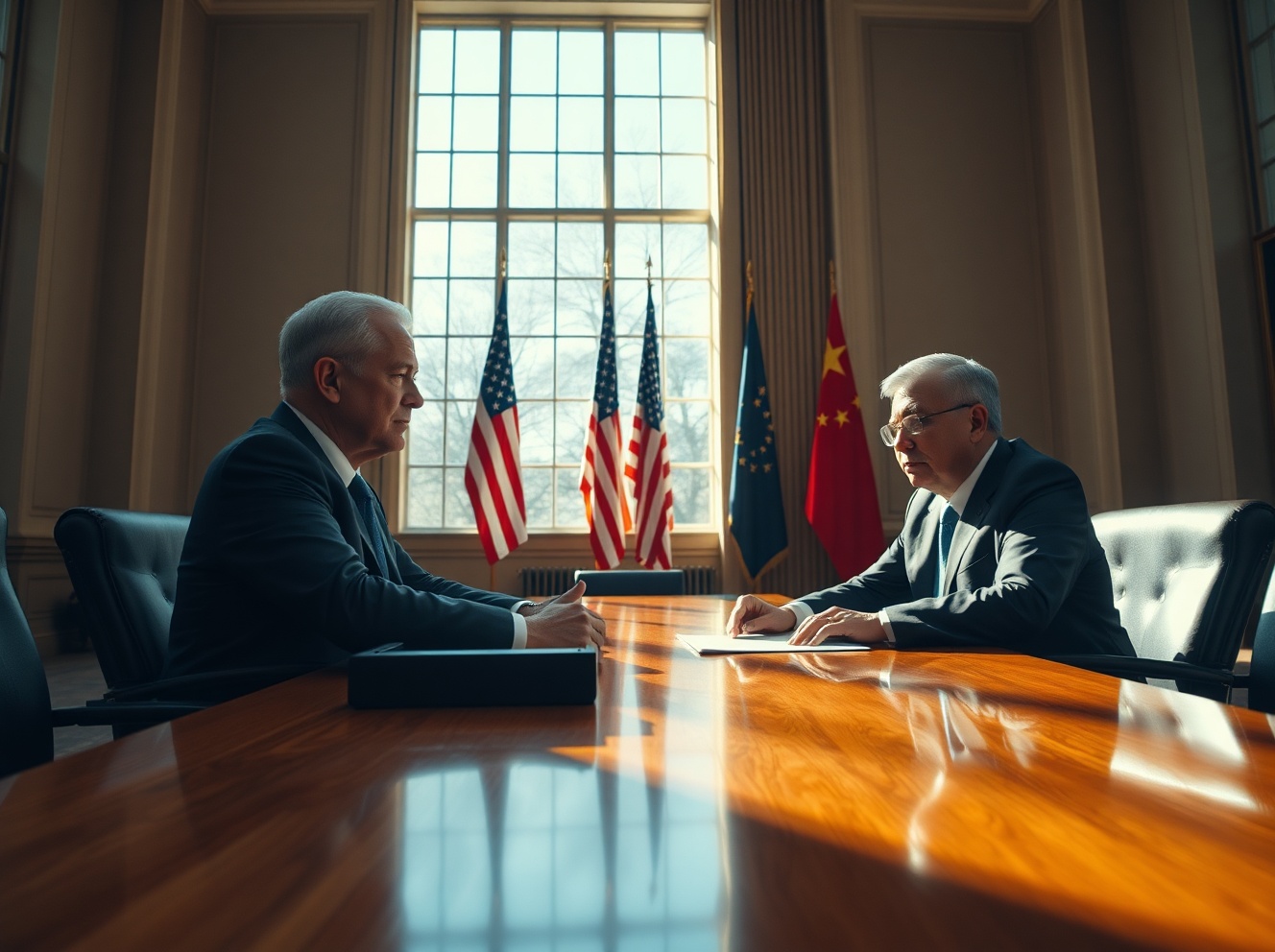
Bessent: Trump Told Xi He Wants to Open Up China, Signaling Shift in Trade Strategy
United States Treasury Secretary Scott Bessent has disclosed that President Donald Trump directly communicated to Chinese President Xi Jinping his desire to open up China economically, marking a notable rhetorical shift in the administration’s trade posture. The remarks, delivered during a recent economic forum, provide a rare glimpse into high-level diplomatic exchanges between the world’s two largest economies.
Context of the Statement
Bessent’s comments come amid ongoing tensions over tariffs, technology restrictions, and market access. The Treasury Secretary framed Trump’s message as an effort to rebalance the bilateral economic relationship rather than escalate confrontation. “The President told President Xi that he wants to open up China, not isolate it,” Bessent said, according to attendees. The statement suggests a nuanced approach that seeks greater access for American businesses while maintaining pressure on issues like intellectual property and state subsidies.
Implications for Trade Policy
The revelation adds a layer of complexity to the administration’s trade strategy. While Trump has imposed tariffs on hundreds of billions of dollars in Chinese goods, the reported private message indicates a willingness to negotiate market liberalization. Analysts view this as a potential precursor to a broader deal that could lower barriers for US financial services, agriculture, and technology firms. However, critics argue that without concrete commitments from Beijing, such statements risk being perceived as diplomatic overtures without structural change.
Market and Diplomatic Reactions
Financial markets responded cautiously, with the S&P 500 and Shanghai Composite both showing modest gains following Bessent’s remarks. Chinese state media did not immediately confirm the exchange, but trade experts note that Xi has previously expressed interest in incremental reforms. The timing is critical: the US faces renewed pressure to address a trade deficit that exceeded $300 billion in 2025, while China seeks to stabilize its slowing economy amid a property sector crisis.
What This Means for Readers
For investors and businesses, Bessent’s disclosure signals that the US administration is exploring a dual-track approach: maintaining public tariff pressure while privately advocating for structural openings. This could create opportunities in sectors like finance, energy, and agriculture if negotiations advance. However, the lack of a formal framework means volatility remains high. Consumers may see limited short-term impact, but a successful opening could eventually lower prices on imported goods and expand market access for US exporters.
Conclusion
Bessent’s revelation underscores the intricate dance between public posturing and private diplomacy in US-China relations. While the promise to “open up China” aligns with long-standing American demands, its realization depends on Beijing’s willingness to enact verifiable reforms. For now, the statement adds a layer of diplomatic nuance that could either pave the way for a new trade framework or remain a rhetorical footnote if concrete steps do not follow.
FAQs
Q1: Did Trump directly tell Xi he wants to open up China?
Yes, according to Treasury Secretary Scott Bessent, Trump conveyed this message during direct communications with President Xi Jinping. The exact timing and context of the conversation were not specified.
Q2: What does ‘open up China’ mean in this context?
It refers to reducing trade barriers, increasing market access for foreign companies, and implementing structural reforms in areas like intellectual property, state-owned enterprises, and financial services.
Q3: How does this affect current tariffs on Chinese goods?
The statement does not directly change tariff policy. It suggests a potential shift toward negotiation, but tariffs remain in place unless a formal agreement is reached and implemented.
This post Bessent: Trump Told Xi He Wants to Open Up China, Signaling Shift in Trade Strategy first appeared on BitcoinWorld.


You May Also Like

Japanese Yen: Valuation risks and policy coordination – BNY

Bitcoin treasury sell-off accelerates as Riot, Bhutan, and public companies exit positions




