XRP vs Solana (SOL): Which Cryptocurrency Offers Better Returns in 2026?
Key Takeaways
- XRP maintains a market capitalization of approximately $89.4B compared to Solana’s $55.1B, positioning SOL with greater percentage growth potential
- XRP specializes in payment infrastructure and international settlement; Solana operates across payments, stablecoins, decentralized exchanges, and asset tokenization
- The Solana Foundation introduced its Developer Platform in March 2026, attracting Mastercard, Worldpay, and Western Union as initial partners
- Ripple’s legal dispute with the SEC has concluded, though a $125 million penalty and restrictions on institutional token offerings persist
- Market experts generally recommend Solana for aggressive growth strategies and XRP for stable, payment-centric exposure
XRP and Solana stand among cryptocurrency’s most closely monitored assets. However, selecting between these digital currencies involves more than comparing transaction speeds or market rankings. Each blockchain represents a distinct vision, and their trajectories are currently diverging.
According to CoinGecko data, XRP commands a market valuation near $89.4 billion. Solana trails at roughly $55.1 billion. While XRP holds the larger position, this creates substantial headroom for Solana to deliver stronger percentage gains if network adoption accelerates.
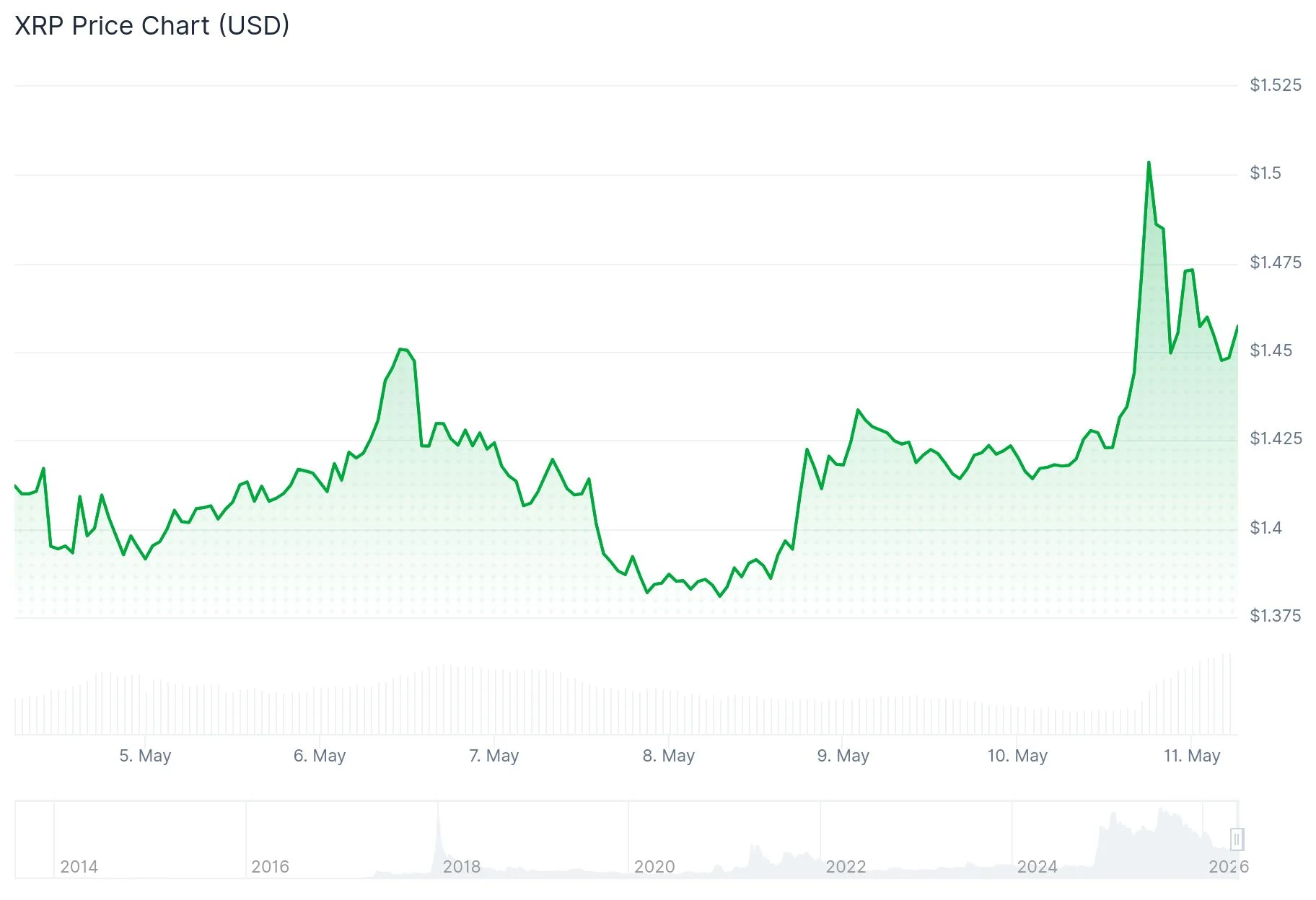 XRP Price
XRP originated as a payment-focused protocol. The XRP Ledger processes transactions in 3 to 5 seconds with minimal fees—often under a penny. This core functionality remains compelling, and Ripple continues expanding into institutional finance sectors, including asset tokenization and regulatory compliance solutions layered atop its base infrastructure.
Ripple recently concluded its protracted regulatory dispute with the SEC. The case has officially closed, though a $125 million financial penalty and restrictions concerning institutional token distributions remain enforceable. While major regulatory uncertainty has dissipated, certain limitations persist.
Solana’s Multi-Sector Expansion Strategy
Solana pursues a more diversified development approach. Its ecosystem encompasses stablecoin issuance, commercial payment systems, decentralized trading platforms, tokenized securities, and enterprise-grade blockchain infrastructure. This diversification provides multiple growth vectors even if specific segments experience slowdowns.
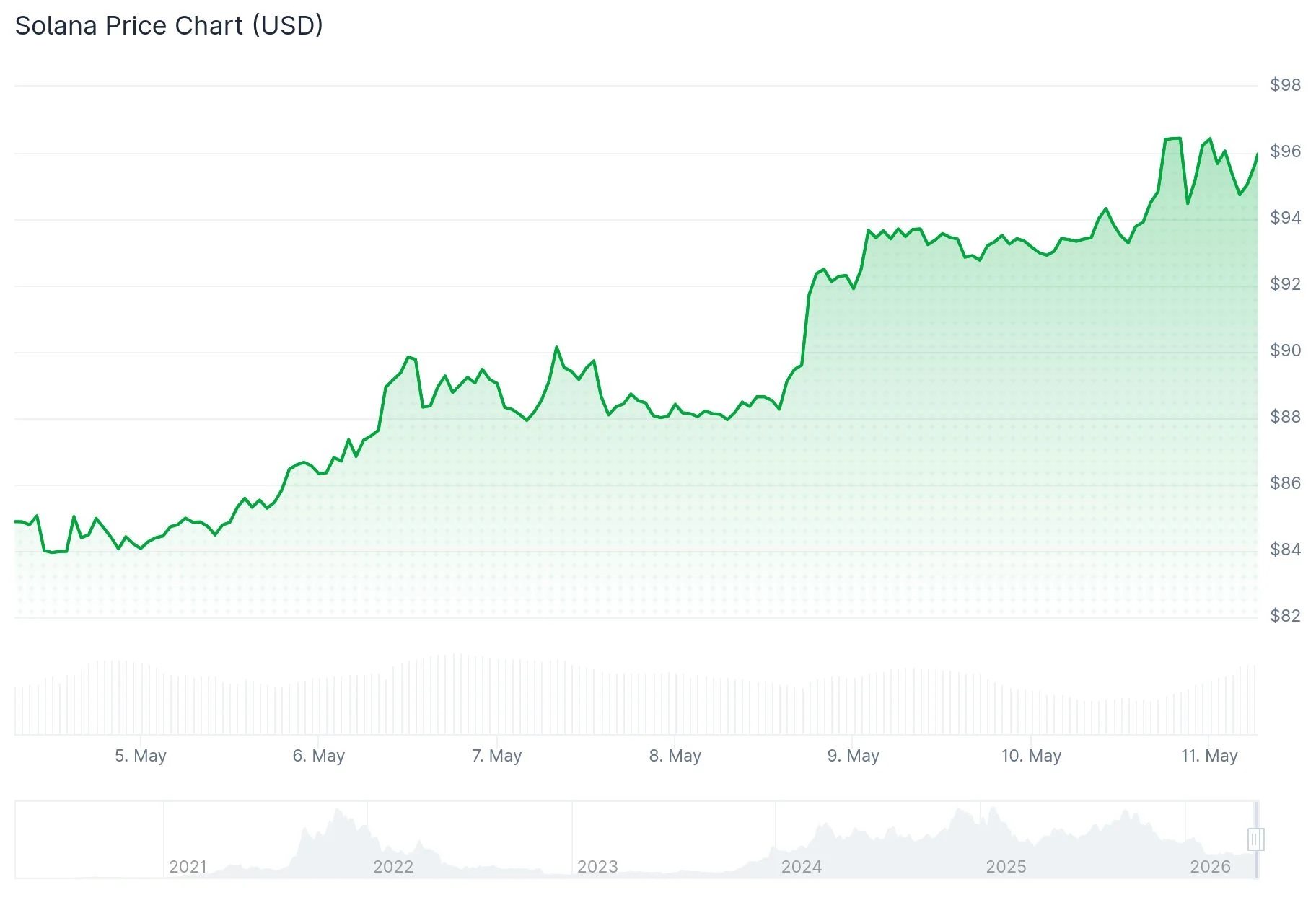 Solana (SOL) Price
March 2026 marked the debut of the Solana Foundation’s Developer Platform, designed specifically for corporations building blockchain-powered payment and issuance infrastructure. Mastercard, Worldpay, and Western Union appear among the platform’s inaugural participants. This development demonstrates Solana’s commitment to institutional financial infrastructure rather than exclusively retail cryptocurrency applications.
Solana experiences ongoing token inflation through staking incentives, although this inflation rate gradually decreases. XRP operates without new token creation since its complete supply existed at genesis, creating more straightforward supply dynamics from a technical perspective.
This represents a fundamental trade-off. XRP presents cleaner tokenomics on the surface. Yet Solana has demonstrated accelerating network activity and practical utility adoption.
XRP’s Continuing Competitive Advantages
XRP represents the superior option for investors seeking concentrated exposure to payment-focused digital assets. Its market positioning remains unambiguous, and Ripple persistently advances its integration into banking networks and international settlement infrastructure at the institutional tier.
For traders with shorter time horizons, XRP typically demonstrates greater stability during market downturns. It experiences less dramatic price swings compared to Solana, which can face steeper corrections when broader risk appetite contracts.
Solana appears positioned for stronger long-term appreciation, though this potential arrives with elevated volatility. Prospective investors must assess their risk tolerance carefully before prioritizing it over XRP.
The most significant recent catalyst remains Solana’s March 2026 enterprise platform introduction, which secured participation from three prominent financial services corporations. This development provides the clearest indication of where institutional momentum currently favors between these two blockchain networks.
The post XRP vs Solana (SOL): Which Cryptocurrency Offers Better Returns in 2026? appeared first on Blockonomi.


You May Also Like
Litecoin Price Prediction: LTC Tests $58 While Pepeto Presale Secures $9M Before Binance Listing
The Next Big Second Chance? BlockchainFX ($BFX) and the Best Crypto in 2026 Story After Aptos (APT)