Discover telecom innovations of 2025–2030: 5G, 6G, IoT, AI & fiber. Learn how businesses can prepare for the future with DID Global.Discover telecom innovations of 2025–2030: 5G, 6G, IoT, AI & fiber. Learn how businesses can prepare for the future with DID Global.

The Future of Telecommunications (2025–2030): 5G, 6G, IoT, AI & Security


SPONSORED POST*

The Current State of the Telecommunications Industry

Most businesses today rely on telecom far beyond simple calls or SMS. The future of the telecom industry is about powering digital communications, cloud services, IoT ecosystems, and enterprise connectivity. Imagine running an e-commerce store in 2025: AI chatbots handle customer service, sales reps close deals over video calls, and logistics teams track shipments in real time via IoT sensors. None of this works without global telecom innovations.

And the next five years will bring a wave of changes: some already visible, others just around the corner. Today, telecom innovations such as cloud PBX, SIP trunking, and virtual DID numbers enable seamless digital communications worldwide.

Telecom operators are heavily investing in fiber, wireless technologies, and automation to support telecom trends 2025 and beyond. According to the International Telecommunication Union (ITU), global internet traffic has tripled in the past five years, demonstrating the growing demand for advanced business VoIP solutions and enterprise communication technologies.

5G Adoption and the Road to 6G: What Businesses Need to Know

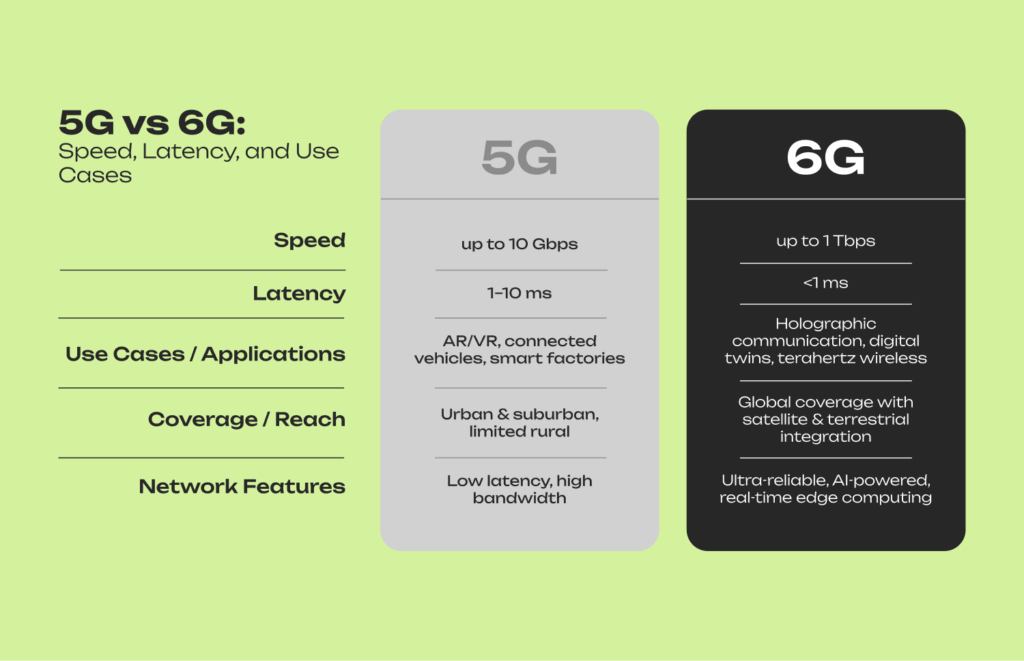
​​The rollout of 5G networks continues to reshape mobile communications. As of mid-2025, global 5G subscriptions are projected to reach approximately 2.9 billion, accounting for about one-third of all mobile subscriptions (Ericsson, June 2025 Mobility Report). In the first quarter of 2025 alone, 145 million new 5G subscriptions were added, highlighting the rapid pace of adoption (GSA, 2025).

5G provides ultra-low latency, high-speed connections, and support for massive IoT networks, enabling innovations such as connected vehicles, smart factories, and immersive AR/VR applications. These capabilities are driving the digital transformation of businesses and industries worldwide.

Meanwhile, early research into 6G networks is already underway. 6G promises speeds up to 100 times faster than 5G, ultra-reliable low-latency connections, and support for technologies like holographic communications, digital twins, and terahertz wireless transmission. While commercial 6G deployment is expected around 2030, ongoing research is helping telecom operators, including DID Global, plan for future network integration and next-generation services
Fiber-Optic Expansion: The Backbone of Future Telecom

Fiber-optic networks remain the core of global connectivity. They are critical for cloud services, mobile backhaul, and IoT applications. The FTTH Council Europe predicts over 200 million European households will have fiber by 2028.

This expansion will boost telecom reliability in both urban and rural areas, ensuring that cloud-based telecom services like Cloud PBX and VoIP run smoothly without latency.
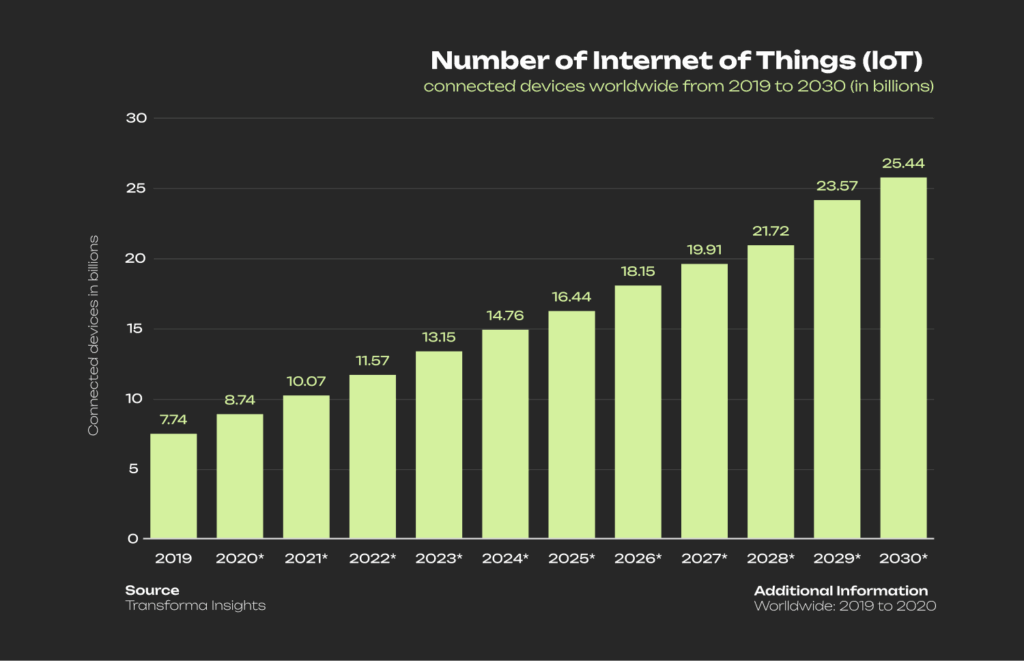
IoT Growth and Telecom Infrastructure: Preparing for 30B Devices

The Internet of Things (IoT) is one of the most powerful telecom trends. Billions of connected devices:  from wearables to industrial machines, depend on telecom infrastructure.

By 2030, Statista forecasts over 29 billion IoT devices worldwide. This growth pushes telecom providers to offer secure IoT connectivity solutions, SIM management, and big data analytics.
AI in Telecommunications: Cost Savings and Smarter Networks

AI in telecom plays a critical role in automating operations, predicting network failures, enhancing security, and improving customer experience. From chatbots in customer service to AI-driven fraud detection, operators are turning telecom into a data-intelligent ecosystem.

A McKinsey study shows AI can cut telecom operational costs by up to 30%, while reducing downtime and boosting customer satisfaction.

Security and Reliability in Communications

With billions of connected devices, enterprise telecom security is crucial. Emerging solutions include:

  • Blockchain for telecom identity management
  • Zero-trust security models
  • AI-driven cybersecurity monitoring

Gartner predicts that by 2026, 70% of telecom operators will adopt AI-based cybersecurity to prevent outages and data breaches.

The World Economic Forum warns that cyberattacks on telecom could have a domino effect on entire economies. This makes investments in resilient and reliable communication systems not just a business choice, but a national security priority.

How Telecom Innovations Impact Business and Society

Innovations in telecom reshape industries. For businesses, advanced telecom solutions reduce costs, enhance productivity, and unlock new revenue streams. For society, they provide access to telemedicine, e-learning, and financial services.

DID Global Research & Development

At DID Global, we actively invest in R&D to deliver future-proof telecom solutions. Key directions include:

  • integration of next-generation protocols for seamless global interoperability,
  • blockchain applications to protect customers from fraud,
  • development of cloud-based telecom solutions such as SIP trunking, virtual numbers, and Cloud PBX,
  • mobile-first communication services for enterprises worldwide.

Our goal is to build innovative communication technologies for business, ensuring security, flexibility, and scalability. See how DID Global can secure your business communications. 

Telecom Forecast for the Next 5 Years

The telecom trends of 2025–2030 will include:

  • Mass 5G adoption and early 6G pilots.
  • Wider fiber-optic deployment in underserved regions.
  • Explosive IoT ecosystems in healthcare, logistics, and smart cities.
  • AI-driven automation across telecom operations.
  • Stronger focus on cybersecurity in telecom networks.
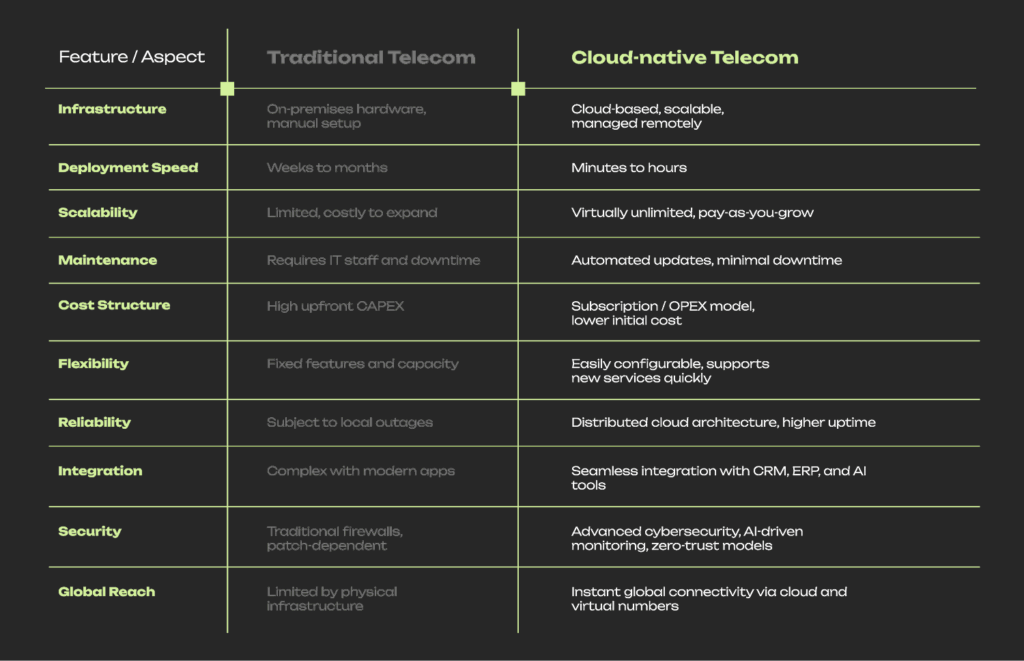
  • Scalable cloud-native telecom solutions for global businesses.

Business and Societal Impact

Telecom innovation enables businesses to automate processes, reduce costs, and expand globally. For society, it brings access to e-health, e-learning, fintech, and e-government services, even in underserved regions.

FAQ

1. What is the future of telecommunications in 2025?
By 2025, telecom will be dominated by 5G adoption, fiber expansion, and IoT growth, supported by AI-driven automation.

2. How will 6G impact mobile communication?
6G is expected to deliver speeds 100x faster than 5G, enabling holographic calls, smart cities, and real-time digital twins.

3. Why is AI important in telecommunications?
AI automates network management, improves customer service with chatbots, and enhances cybersecurity through predictive analytics.

4. What role does DID Global play in telecom innovation?
DID Global develops virtual numbers, Cloud PBX, SIP trunking, and anti-spam tools to help businesses embrace future telecom technologies.

5. What are the top telecom security challenges in 2025?
Preventing data breaches, securing IoT devices, and ensuring uninterrupted cloud communication are key challenges.

6. How can businesses prepare for 6G?
Invest in scalable cloud-native solutions, explore early integration with next-gen protocols, and partner with providers like DID Global.

Final Thoughts

The future of telecommunications is about intelligent, secure, and automated networks. From 5G and IoT to AI and blockchain, innovation is shaping how we live and do business.

At DID Global, we help companies stay ahead with scalable telecom solutions. Whether you need virtual numbers, cloud PBX, or global SIP trunking, we ensure your business is future-ready.

Contact us today for a free consultation and set up your virtual number in 15 minutes.

*This article was paid for. Cryptonomist did not write the article or test the platform.

Market Opportunity
Brainedge Logo
Brainedge Price(LEARN)
$0.007434
$0.007434$0.007434
-1.11%
USD
Brainedge (LEARN) Live Price Chart
Disclaimer: The articles reposted on this site are sourced from public platforms and are provided for informational purposes only. They do not necessarily reflect the views of MEXC. All rights remain with the original authors. If you believe any content infringes on third-party rights, please contact crypto.news@mexc.com for removal. MEXC makes no guarantees regarding the accuracy, completeness, or timeliness of the content and is not responsible for any actions taken based on the information provided. The content does not constitute financial, legal, or other professional advice, nor should it be considered a recommendation or endorsement by MEXC.
Tags:

You May Also Like

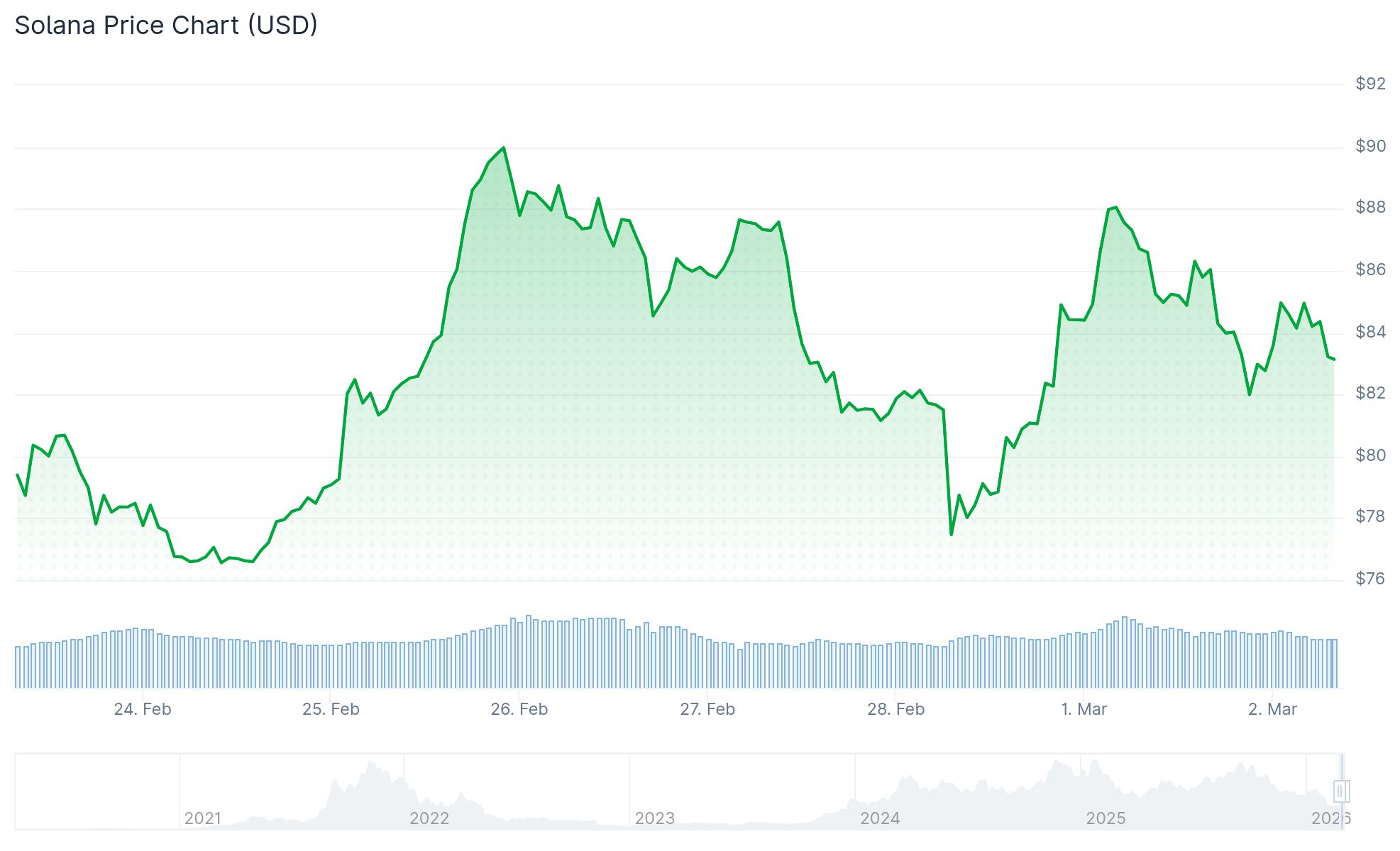
Solana (SOL) Price: Is a Breakout Coming After Four Weeks Stuck in the Same Range?

Solana (SOL) Price: Is a Breakout Coming After Four Weeks Stuck in the Same Range?

TLDR Solana (SOL) has traded in a tight $77–$88 range for nearly four weeks with no clear trend direction US spot Solana ETFs recorded over $44 million in weekly
Share
Coincentral2026/03/02 15:55
South Africa Tax Collector Deploys New Tech to Track Crypto and Offshore Assets

South Africa Tax Collector Deploys New Tech to Track Crypto and Offshore Assets

The post South Africa Tax Collector Deploys New Tech to Track Crypto and Offshore Assets appeared on BitcoinEthereumNews.com. South African crypto-asset service
Share
BitcoinEthereumNews2026/03/02 16:33
Crypto Futures Liquidation: Unpacking the Stunning $105 Million Market Shock

Crypto Futures Liquidation: Unpacking the Stunning $105 Million Market Shock

BitcoinWorld Crypto Futures Liquidation: Unpacking the Stunning $105 Million Market Shock The cryptocurrency market just experienced a sudden jolt, with a staggering $105 million worth of futures liquidated in a single hour. This dramatic event, part of a larger $311 million wipeout over the past 24 hours, has sent ripples across major exchanges. For many traders, this recent wave of crypto futures liquidation serves as a stark reminder of the inherent volatility and risks associated with leveraged trading in digital assets. What Exactly is Crypto Futures Liquidation? Understanding what happened requires a quick look at futures trading. A crypto futures contract is essentially an agreement to buy or sell a cryptocurrency at a predetermined price on a specified future date. Traders use these contracts to speculate on future price movements without owning the underlying asset. Leverage Amplifies Gains and Losses: Many traders utilize leverage, which means they borrow funds to increase their trading position beyond their initial capital. While leverage can magnify profits, it also significantly amplifies potential losses. Margin Calls and Forced Selling: When the market moves against a leveraged position, a trader’s margin (the collateral they put up) might fall below a required threshold. This triggers a “margin call,” where they need to add more funds. If they fail to do so, the exchange automatically closes their position to prevent further losses – this forced closure is known as crypto futures liquidation. The Recent $105 Million Crypto Futures Liquidation: What Triggered It? The recent surge in crypto futures liquidation, particularly the rapid $105 million in one hour, indicates a sharp and unexpected price movement. While the exact catalyst can be complex, such rapid liquidations often occur during: Sudden Price Swings: A rapid upward or downward movement in a major cryptocurrency’s price can quickly push many leveraged positions into unprofitable territory, leading to widespread liquidations. Market-Wide Sentiment Shifts: Unexpected news, regulatory announcements, or macroeconomic data can trigger a sudden shift in market sentiment, causing a cascade of selling or buying pressure. Over the past 24 hours, the total figure climbed to $311 million, highlighting a period of sustained volatility that caught many leveraged traders off guard. Why Does Leverage Play a Crucial Role in Futures Liquidation? Leverage is a double-edged sword. It allows traders to control large positions with relatively small amounts of capital. However, even a minor price fluctuation can have a significant impact on highly leveraged positions. When the market moves contrary to a trader’s bet, their equity can diminish rapidly. This is where the automatic liquidation mechanism kicks in. Exchanges implement this system to protect themselves and other traders from excessive losses. It ensures that a trader’s losses do not exceed their collateral, but it also means positions can be closed unexpectedly and quickly, contributing to the dramatic numbers seen in the recent crypto futures liquidation event. Navigating the Volatility: How Can Traders Prepare for Futures Liquidation Events? For those involved in or considering crypto futures trading, understanding and managing risk is paramount. The recent crypto futures liquidation serves as a powerful lesson. Here are some actionable insights: Use Lower Leverage: While tempting, high leverage dramatically increases risk. Opting for lower leverage significantly reduces the chance of premature liquidation. Implement Stop-Loss Orders: These orders automatically close a position if the price reaches a predetermined level, limiting potential losses before a full liquidation occurs. Manage Position Sizing: Never allocate too much of your portfolio to a single trade, especially a leveraged one. Diversification and responsible position sizing are key. Stay Informed: Keep abreast of market news, technical analysis, and global economic factors that could influence cryptocurrency prices. Beyond the Headlines: What Does This Mean for the Broader Crypto Market? While large-scale crypto futures liquidation events can be unsettling, they are a regular, albeit dramatic, feature of highly leveraged markets. Often, such events can “cleanse” the market of over-leveraged positions, potentially paving the way for more stable price action in the short term. However, they also underscore the need for caution and robust risk management practices, especially for new traders entering the volatile world of crypto futures. The recent $105 million liquidation is a stark reminder that while opportunities abound in crypto, so do significant risks. It emphasizes the importance of understanding the tools you’re using, especially leverage, and trading responsibly to protect your capital. Stay informed, manage your risks, and approach the market with a clear strategy. Frequently Asked Questions About Crypto Futures Liquidation Q1: What is the primary cause of crypto futures liquidation? A1: The primary cause is typically a sudden and significant price movement in the underlying cryptocurrency that goes against a trader’s leveraged position, causing their margin to fall below the exchange’s required maintenance level. Q2: How can traders avoid liquidation in futures trading? A2: Traders can reduce their risk of liquidation by using lower leverage, setting stop-loss orders to automatically close positions at a certain loss level, managing their position sizes responsibly, and continuously monitoring market conditions. Q3: Does liquidation only happen with leveraged positions? A3: Yes, liquidation specifically refers to the forced closure of a leveraged position when the trader’s collateral (margin) is insufficient to cover potential losses. Spot trading, where you own the asset outright, does not involve liquidation in the same manner. Q4: Is a crypto futures liquidation event bad for the entire market? A4: While immediate liquidations can cause further price volatility and negatively impact sentiment, some analysts view them as a “cleansing” event that removes excessive leverage from the market, potentially leading to a healthier, more stable environment in the long run. However, it certainly signifies a period of heightened risk. Q5: What is the difference between a margin call and liquidation? A5: A margin call is a notification from the exchange that your margin level is too low and you need to deposit more funds to maintain your position. Liquidation is what happens if you fail to meet that margin call; the exchange automatically closes your position to prevent further losses. Understanding market dynamics like crypto futures liquidation is crucial for navigating the cryptocurrency space. If you found this article insightful, please share it with your network on social media to help others better understand these significant market events and trade more responsibly. To learn more about the latest crypto market trends, explore our article on key developments shaping Bitcoin price action. This post Crypto Futures Liquidation: Unpacking the Stunning $105 Million Market Shock first appeared on BitcoinWorld.
Share
Coinstats2025/09/19 23:40