
A Complete Guide to the RIF Transaction Process
Introduction to RIF Transactions
Understanding the basics of RIF transactions is essential for anyone engaging with the Rootstock Infrastructure Framework ecosystem. RIF transactions represent the fundamental way value is transferred within the decentralized network of this digital asset. Unlike traditional financial transactions that rely on intermediaries and centralized authorities, Rootstock Infrastructure Framework token transactions operate on a peer-to-peer basis secured by cryptographic verification. Each transaction is recorded on the RIF distributed ledger, making it transparent and immutable. For investors, traders, and everyday users of the RIF token, understanding how transactions work is crucial for ensuring funds are transferred securely, optimizing for lower fees, and troubleshooting any issues that might arise. Whether you're sending RIF crypto to another wallet, trading on an exchange, or interacting with decentralized applications, transaction knowledge serves as your foundation for effective RIF coin management.
RIF transactions offer several distinctive advantages, including settlement times as quick as a few minutes without intermediaries, the ability to send value globally without permission from financial institutions, and programmable transfer logic through smart contracts. However, they also require users to understand the irreversible nature of blockchain transactions and take responsibility for proper address verification before sending Rootstock Infrastructure Framework tokens.
How RIF Transactions Work: Technical Fundamentals
At its core, RIF operates on the Rootstock (RSK) blockchain, a smart contract platform secured by Bitcoin's mining power through merge-mining. Transactions are bundled into blocks and cryptographically linked to form an unbroken chain of records. When you initiate a Rootstock Infrastructure Framework crypto transaction, it is verified by network miners who confirm that you own the tokens you're attempting to send by checking your digital signature against your public key. The mining process ensures that all network participants agree on the valid state of transactions, preventing issues like double-spending.
RIF's consensus is achieved through proof-of-work, leveraging the security of Bitcoin's network. Your RIF coin wallet manages a pair of cryptographic keys: a private key that must be kept secure at all times, and a public key from which your wallet address is derived. When sending RIF tokens, your wallet creates a digital signature using your private key, proving ownership without revealing the key itself.
Transaction fees for Rootstock Infrastructure Framework crypto are determined by network congestion, transaction size/complexity, and the priority level requested by the sender. These fees compensate miners for their work, prevent spam attacks on the network, and prioritize transactions during high demand periods. The fee structure works by specifying gas price and limits, similar to Ethereum, as the RIF token uses the ERC677 token standard (an evolution of ERC20) for efficient contract interactions.
Step-by-Step RIF Transaction Process
The RIF transaction process can be broken down into these essential steps:
Step 1: Prepare Transaction Details
- Specify the recipient's address, an alphanumeric string typically starting with "0x" (for ERC677 compatibility).
- Determine the exact amount of RIF coin to send.
- Set an appropriate transaction fee based on current network conditions. Most Rootstock Infrastructure Framework wallets provide fee estimation tools to balance cost and confirmation speed.
Step 2: Sign the Transaction
- Your wallet constructs a digital message containing sender address, recipient address, amount, and fee information.
- This message is cryptographically signed using your private key, creating a unique signature that proves you authorized the transaction. This process happens locally on your device, keeping your private keys secure.
Step 3: Broadcast to Network
- Your wallet broadcasts the signed transaction to multiple nodes in the Rootstock Infrastructure Framework network.
- These nodes verify the transaction's format and signature, then relay it to other connected nodes.
- Within seconds, your RIF crypto transaction propagates across the entire network and sits in the memory pool (mempool) awaiting inclusion in a block.
Step 4: Confirmation Process
- RIF miners select transactions from the mempool, prioritizing those with higher fees.
- Once included in a block and added to the blockchain, your transaction receives its first confirmation. Each subsequent block represents an additional confirmation.
- Most services consider a Rootstock Infrastructure Framework token transaction fully settled after 6 confirmations.
Step 5: Verification and Tracking
- Track your transaction status using blockchain explorers by searching for your transaction hash (TXID). These explorers display confirmation count, block inclusion details, fee paid, and exact timestamp.
- For RIF coins, popular explorers include the official Rootstock explorer and other tools in the RIF ecosystem.
Once fully confirmed, the recipient can safely access and use the transferred RIF tokens.
Transaction Speed and Fees Optimization
RIF transaction speeds are influenced by network congestion, the fee amount you're willing to pay, and the blockchain's inherent processing capacity. During periods of high network activity, such as major market movements, completion times can increase from the usual few minutes to longer periods unless higher fees are paid. The fee structure for Rootstock Infrastructure Framework crypto is based on gas, similar to Ethereum, and each transaction requires computational resources to process. Fees are essentially bids for inclusion in the next block, and the minimum viable fee changes constantly based on network demand.
To optimize transaction costs while maintaining reasonable confirmation times, consider:
- Transacting during off-peak hours when network activity is lower, typically weekends or between 02:00–06:00 UTC.
- Batching multiple operations into a single transaction when the protocol allows.
- Utilizing layer-2 solutions or sidechains for frequent small RIF token transfers.
- Subscribing to fee alert services that notify you when network fees drop below your specified threshold.
Network congestion impacts transaction times and costs significantly, with RIF's block time of approximately 30 seconds serving as the minimum possible confirmation time. During major market volatility events, the mempool can become backlogged with thousands of pending transactions, creating a competitive fee market where only transactions with premium fees get processed quickly. Planning non-urgent Rootstock Infrastructure Framework coin transactions for historical low-activity periods can result in fee savings of 50% or more compared to peak times.
Common Transaction Issues and Solutions
Stuck or pending transactions typically occur when the fee set is too low relative to current network demand, there are nonce sequence issues with the sending wallet, or network congestion is extraordinarily high. If your RIF crypto transaction has been unconfirmed for more than 1 hour, you can attempt a fee bump (if the protocol supports it), use a transaction accelerator service, or simply wait until network congestion decreases, as most transactions eventually confirm or get dropped from the mempool after a specific period.
Failed transactions can result from insufficient funds to cover both the sending amount and transaction fee, attempting to interact with smart contracts incorrectly, or reaching network timeout limits. Always ensure your wallet contains a buffer amount beyond your intended transaction to cover unexpected fee increases during processing.
The Rootstock Infrastructure Framework prevents double-spending through its proof-of-work consensus protocol, but you should still take precautions like waiting for the recommended number of confirmations before considering large transfers complete, especially for high-value transactions. The protocol's design makes transaction reversal impossible once confirmed, highlighting the importance of verification before sending.
Address verification is critical before sending any RIF token transaction. Always double-check the entire recipient address, not just the first and last few characters. Consider sending a small test amount before large transfers, using the QR code scanning feature when available, and confirming addresses through a secondary communication channel when sending to new recipients. Blockchain transactions are generally irreversible, and funds sent to an incorrect address are typically unrecoverable.
Security best practices include using hardware wallets for significant RIF coin holdings, enabling multi-factor authentication on exchange accounts, verifying all transaction details on your wallet's secure display, and being extremely cautious of any unexpected requests to send RIF. Be aware of common scams like phishing attempts claiming to verify your wallet, fake support staff offering transaction help in direct messages, and requests to send tokens to receive a larger amount back.
Conclusion
Understanding the RIF transaction process empowers you to confidently navigate the Rootstock Infrastructure Framework ecosystem, troubleshoot potential issues before they become problems, and optimize your usage for both security and efficiency. From the initial creation of a transaction request to final confirmation on the blockchain, each step follows logical, cryptographically-secured protocols designed to ensure trustless, permissionless value transfer. As the Rootstock Infrastructure Framework token continues to evolve, transaction processes will likely see greater scalability through protocol upgrades, reduced fees via network optimizations, and enhanced privacy features. Staying informed about these developments through official documentation, community forums, and reputable news sources will help you adapt your RIF crypto transaction strategies accordingly and make the most of this innovative digital asset.
热门文章

如何在MEXC上线项目:申请流程完整指南
将您的加密货币项目在MEXC上市需要几个步骤和要求。以下是一份全面的指南:1. MEXC上市流程概述MEXC根据您的项目阶段、社区规模和资源提供不同的上市路径。与Coinbase等其他交易所相比,MEXC以相对易于访问而闻名。第1步:了解MEXC的上市标准基于项目价值的审查流程最适合具有强大基础的项目第2步:准备您的项目在申请之前,请确保您准备好这些必需品:技术要求智能合约信息合约地址(在区块链浏
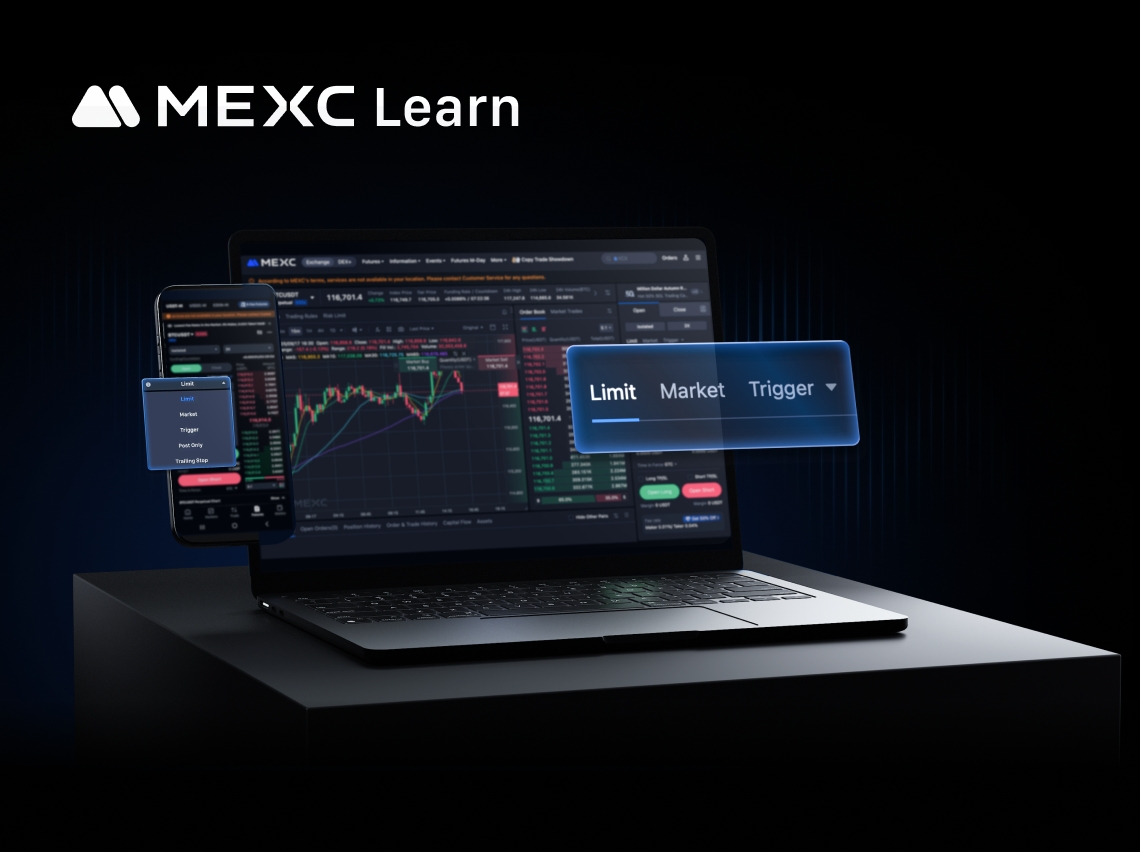
如何使用 MEXC 不同的订单模式进行合约下单?帮你低成本快速完成建仓
在瞬息万变的加密货币合约市场中,建仓(即开立仓位)是交易的第一步,也是决定交易成败的关键一步。许多交易者,尤其是新手,往往只知道使用最基础的市价单和限价单,这不仅可能让他们错失良机,还可能因为滑点等问题无形中增加了交易成本。事实上,像MEXC这样专业的交易平台提供了多种订单模式,每一种都像一个精密的工具,为特定的交易场景而设计。掌握这些工具,意味着您能更主动、更精准地执行自己的交易策略。本文将全面

如何使用 MEXC DEX+
1. 什么是 MEXC DEX+?MEXC DEX+ 是一个去中心化交易聚合平台(DEX Aggregator),整合多家 DEX,为用户提供最优交易路径,降低滑点并优化交易成本。作为 MEXC 最新推出的去中心化交易解决方案,DEX+ 支持超过 10,000 种链上资产交易,确保用户始终以最佳价格成交,带来顺畅的 DEX 交易体验。2. 如何使用 MEXC DEX+
新手必看!MEXC 合约收益和手续费详解
在 MEXC 等主流交易所进行合约交易时,您交易的盈亏来自三个方面:手续费(Trading Fee),即交易过程中所产生的成本资金费用(Funding Fee)即在持仓期间按照资金费率进行的周期性结算平仓盈亏(Realized PnL),指在平仓后锁定的最终盈亏结果掌握这三项的计算方法,不仅能够帮助交易者精准评估每一笔交易的真实收益,还能有效优化交易策略、降低成本支出,并在不同市场环境中保持理性决
热门加密动态

九位数净资产:财富创造的新里程碑
九位数净资产的概念,范围从1亿美元到略低于10亿美元,在现代经济中标志着一个关键门槛,区分超高净值个人(UHNWIs)与亿万富翁。这个财富级别不仅象征着巨大的财力,还代表了一个在当今快速发展的经济格局中越来越重要的特殊富裕阶层。在MEXC(一个领先的加密货币平台)的用户中,随着创新者、投资者和Web3先驱利用区块链技术比传统财富构建方法更快地积累大量财富,九位数财富变得越来越普遍。与传统金融不同,
Dogecoin (DOGE) 看涨价格预测
看涨 DOGE 前景介绍乐观的投资者经常关注 Dogecoin (DOGE) 的看涨价格预测,以确定该币在有利的市场周期中的增长潜力。看涨前景探讨了采用率、创新和市场动能如何将 DOGE 推向更具盈利性的加密货币交易领域的各种情景。DOGE 当前市场快照根据 MEXC News 最新的市场数据,Dogecoin 最近的交易价格在 $0.13-$0.15 区间,市值超过 220 亿美元,在最近分析期

Dogecoin (DOGE) 7日价格变动
最新的Dogecoin (DOGE)价格在过去一周显示出显著的短期波动,反映出市场对迷因币的情绪变化以及更广泛的市场状况。在本文中,我们将分析其当前价格、7天价格变动以及影响DOGE价格趋势的市场因素。Dogecoin (DOGE) 当前价格根据MEXC的最新市场数据,Dogecoin目前的交易价格约为$0.14中区,在2025年12月,其日内波动通常在$0.14至$0.15之间。在最近的24小时

BOB (Build on Bitcoin) (BOB) 30天价格变化:市场分析
追踪BOB (BOB) 的30天价格变化可以深入了解短期至中期市场趋势,突显近期波动性、动能和交易者行为。这段时期通常显示了新闻、采用事件和更广泛的加密货币动向如何影响BOB的价格趋势和BOB价格预测因素。过去30天BOB (BOB) 价格概览在过去30天内,BOB (Build on Bitcoin)从约$0.00490上涨至约$0.01625,反映了+227.00%的变化。在此期间,该代币经历
相关文章
如何在MEXC上线项目:申请流程完整指南
将您的加密货币项目在MEXC上市需要几个步骤和要求。以下是一份全面的指南:1. MEXC上市流程概述MEXC根据您的项目阶段、社区规模和资源提供不同的上市路径。与Coinbase等其他交易所相比,MEXC以相对易于访问而闻名。第1步:了解MEXC的上市标准基于项目价值的审查流程最适合具有强大基础的项目第2步:准备您的项目在申请之前,请确保您准备好这些必需品:技术要求智能合约信息合约地址(在区块链浏
如何使用 MEXC 不同的订单模式进行合约下单?帮你低成本快速完成建仓
在瞬息万变的加密货币合约市场中,建仓(即开立仓位)是交易的第一步,也是决定交易成败的关键一步。许多交易者,尤其是新手,往往只知道使用最基础的市价单和限价单,这不仅可能让他们错失良机,还可能因为滑点等问题无形中增加了交易成本。事实上,像MEXC这样专业的交易平台提供了多种订单模式,每一种都像一个精密的工具,为特定的交易场景而设计。掌握这些工具,意味着您能更主动、更精准地执行自己的交易策略。本文将全面
如何使用 MEXC DEX+
1. 什么是 MEXC DEX+?MEXC DEX+ 是一个去中心化交易聚合平台(DEX Aggregator),整合多家 DEX,为用户提供最优交易路径,降低滑点并优化交易成本。作为 MEXC 最新推出的去中心化交易解决方案,DEX+ 支持超过 10,000 种链上资产交易,确保用户始终以最佳价格成交,带来顺畅的 DEX 交易体验。2. 如何使用 MEXC DEX+
新手必看!MEXC 合约收益和手续费详解
在 MEXC 等主流交易所进行合约交易时,您交易的盈亏来自三个方面:手续费(Trading Fee),即交易过程中所产生的成本资金费用(Funding Fee)即在持仓期间按照资金费率进行的周期性结算平仓盈亏(Realized PnL),指在平仓后锁定的最终盈亏结果掌握这三项的计算方法,不仅能够帮助交易者精准评估每一笔交易的真实收益,还能有效优化交易策略、降低成本支出,并在不同市场环境中保持理性决
