A wave of crypto ETF applications hit the SEC on Tuesday, with five distinct filings spanning Avalanche infrastructure to Bonk meme coin as issuers push into increasingly exotic territory. The lineup includes Bitwise’s spot Avalanche ETF, Defiance ETFs built around Bitcoin and Ethereum basis trades, Tuttle’s “Income Blast” funds covering Bonk, Litecoin, and Sui, plus T-Rex’s leveraged 2x Orbs ETF. ETF Institute co-founder Nate Geraci warned, “You all have no idea what’s coming over the next few months” as floodgates open beyond traditional Bitcoin and Ethereum products. The filings expand an already swelling roster of over 92 crypto ETF applications pending before regulators, with most facing October and November deadlines. The surge comes as REX-Osprey’s XRP and Dogecoin ETFs are confirmed to launch on Thursday using the faster 40 Act structure. The Act is an alternative pathways to market that bypass traditional SEC approval bottlenecks. Bitcoin ETFs recorded $292 million in net inflows while Ethereum products saw $61.74 million in outflows on September 16.Source: SosoValue Analysts assign varying approval odds to the new applications, with infrastructure tokens, such as Avalanche, receiving the highest chances. At the same time, memecoins and basis trading products face “more scrutiny” from regulators concerned about their volatility and liquidity profiles. Infrastructure Tokens Lead Approval Odds While Exotic Products Face Steeper Climb Bitwise joins VanEck and Grayscale in pursuing institutional-grade Avalanche exposure, with analysts calling AVAX the “highest chance of approval because it’s a simple product relative to others.” The infrastructure positioning and established market cap provide regulatory comfort compared to more speculative alternatives. The basis trade approach represents the “first of its kind” and will likely face “more scrutiny” given its complexity. For instance, Tuttle Capital Management became the second U.S. fund manager filing for spot Bonk ETF exposure alongside “Income Blast” products covering long-tail altcoins. This follows Safety Shot’s $25M BONK treasury strategy launched earlier in August. However, analysts warn memecoin-linked products face steeper climbs due to concerns over “volatility and liquidity” compared to established infrastructure tokens. The SEC provided clarity in February that memecoins aren’t securities. Most analysts believed that infrastructure coins like Avalanche are “close enough to Ether” to warrant strong consideration for approval. Beyond crypto ETFs, Bitwise also filed for a Stablecoin & Tokenization ETF. The institution aims to address the institutional demand for exposure to programmable money and real-world asset tokenization trends, which are accelerating across traditional finance integration with blockchain infrastructure. Generic Listing Standards Could Trigger Simultaneous Product Launch Wave Bloomberg analyst Eric Balchunas attributes systematic SEC delays to coordination with generic listing standards requested by Cboe and NYSE in July. The institutions proposed amendments that would allow for automatic crypto ETF listings without requiring case-by-case regulatory review, potentially eliminating the current 240-day process. Generic standards would accelerate multiple product launches simultaneously, rather than having them staggered and requiring separate approvals. Similar to Nate, Balchunas also expects a “flood of ETFs probably in a couple months” following anticipated October approval of streamlined procedures that could address accumulated demand across altcoin categories. The SEC extended Franklin Templeton’s Solana and XRP ETF decisions to November 14 while postponing BlackRock’s Ethereum staking amendment to October 30. Prediction markets assign 99% approval probability for Solana ETFs and 96% for XRP products as institutional confidence builds around regulatory clarity. Similarly, Dogecoin maintains a 96% approval odds despite its origins as a meme coin.Source: Polymarket Current uncertainty affects over 90 crypto ETF applications spanning diverse digital assets beyond Bitcoin and Ethereum. Solana and XRP currently lead the list of applications. Solana treasury companies position tens of billions in accumulation funds, anticipating approvals, while institutional demand continues building with Bitcoin ETFs recording consecutive daily inflows. The filing blitz occurs as President Trump’s pro-crypto stance creates regulatory optimism, with Chair Atkins declaring “Crypto’s time has come” at international forums. Additionally, Atkins’ “Project Crypto” initiative is also working towards modernizing securities rules and unifying digital asset frameworks amid growing institutional pressureA wave of crypto ETF applications hit the SEC on Tuesday, with five distinct filings spanning Avalanche infrastructure to Bonk meme coin as issuers push into increasingly exotic territory. The lineup includes Bitwise’s spot Avalanche ETF, Defiance ETFs built around Bitcoin and Ethereum basis trades, Tuttle’s “Income Blast” funds covering Bonk, Litecoin, and Sui, plus T-Rex’s leveraged 2x Orbs ETF. ETF Institute co-founder Nate Geraci warned, “You all have no idea what’s coming over the next few months” as floodgates open beyond traditional Bitcoin and Ethereum products. The filings expand an already swelling roster of over 92 crypto ETF applications pending before regulators, with most facing October and November deadlines. The surge comes as REX-Osprey’s XRP and Dogecoin ETFs are confirmed to launch on Thursday using the faster 40 Act structure. The Act is an alternative pathways to market that bypass traditional SEC approval bottlenecks. Bitcoin ETFs recorded $292 million in net inflows while Ethereum products saw $61.74 million in outflows on September 16.Source: SosoValue Analysts assign varying approval odds to the new applications, with infrastructure tokens, such as Avalanche, receiving the highest chances. At the same time, memecoins and basis trading products face “more scrutiny” from regulators concerned about their volatility and liquidity profiles. Infrastructure Tokens Lead Approval Odds While Exotic Products Face Steeper Climb Bitwise joins VanEck and Grayscale in pursuing institutional-grade Avalanche exposure, with analysts calling AVAX the “highest chance of approval because it’s a simple product relative to others.” The infrastructure positioning and established market cap provide regulatory comfort compared to more speculative alternatives. The basis trade approach represents the “first of its kind” and will likely face “more scrutiny” given its complexity. For instance, Tuttle Capital Management became the second U.S. fund manager filing for spot Bonk ETF exposure alongside “Income Blast” products covering long-tail altcoins. This follows Safety Shot’s $25M BONK treasury strategy launched earlier in August. However, analysts warn memecoin-linked products face steeper climbs due to concerns over “volatility and liquidity” compared to established infrastructure tokens. The SEC provided clarity in February that memecoins aren’t securities. Most analysts believed that infrastructure coins like Avalanche are “close enough to Ether” to warrant strong consideration for approval. Beyond crypto ETFs, Bitwise also filed for a Stablecoin & Tokenization ETF. The institution aims to address the institutional demand for exposure to programmable money and real-world asset tokenization trends, which are accelerating across traditional finance integration with blockchain infrastructure. Generic Listing Standards Could Trigger Simultaneous Product Launch Wave Bloomberg analyst Eric Balchunas attributes systematic SEC delays to coordination with generic listing standards requested by Cboe and NYSE in July. The institutions proposed amendments that would allow for automatic crypto ETF listings without requiring case-by-case regulatory review, potentially eliminating the current 240-day process. Generic standards would accelerate multiple product launches simultaneously, rather than having them staggered and requiring separate approvals. Similar to Nate, Balchunas also expects a “flood of ETFs probably in a couple months” following anticipated October approval of streamlined procedures that could address accumulated demand across altcoin categories. The SEC extended Franklin Templeton’s Solana and XRP ETF decisions to November 14 while postponing BlackRock’s Ethereum staking amendment to October 30. Prediction markets assign 99% approval probability for Solana ETFs and 96% for XRP products as institutional confidence builds around regulatory clarity. Similarly, Dogecoin maintains a 96% approval odds despite its origins as a meme coin.Source: Polymarket Current uncertainty affects over 90 crypto ETF applications spanning diverse digital assets beyond Bitcoin and Ethereum. Solana and XRP currently lead the list of applications. Solana treasury companies position tens of billions in accumulation funds, anticipating approvals, while institutional demand continues building with Bitcoin ETFs recording consecutive daily inflows. The filing blitz occurs as President Trump’s pro-crypto stance creates regulatory optimism, with Chair Atkins declaring “Crypto’s time has come” at international forums. Additionally, Atkins’ “Project Crypto” initiative is also working towards modernizing securities rules and unifying digital asset frameworks amid growing institutional pressure

Crypto ETF Filings Flood SEC with Avalanche, Sui, and Bonk Products as Issuers Test Limits

A wave of crypto ETF applications hit the SEC on Tuesday, with five distinct filings spanning Avalanche infrastructure to Bonk meme coin as issuers push into increasingly exotic territory.

The lineup includes Bitwise’s spot Avalanche ETF, Defiance ETFs built around Bitcoin and Ethereum basis trades, Tuttle’s “Income Blast” funds covering Bonk, Litecoin, and Sui, plus T-Rex’s leveraged 2x Orbs ETF.

ETF Institute co-founder Nate Geraci warned, “You all have no idea what’s coming over the next few months” as floodgates open beyond traditional Bitcoin and Ethereum products.

The filings expand an already swelling roster of over 92 crypto ETF applications pending before regulators, with most facing October and November deadlines.

The surge comes as REX-Osprey’s XRP and Dogecoin ETFs are confirmed to launch on Thursday using the faster 40 Act structure. The Act is an alternative pathways to market that bypass traditional SEC approval bottlenecks.

Bitcoin ETFs recorded $292 million in net inflows while Ethereum products saw $61.74 million in outflows on September 16.
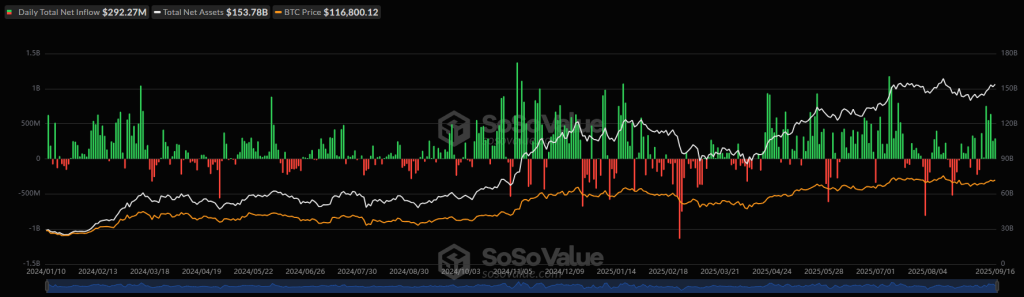
Crypto ETF Filings Flood SEC with Avalanche, Sui, and Bonk Products as Issuers Test LimitsSource: SosoValue

Analysts assign varying approval odds to the new applications, with infrastructure tokens, such as Avalanche, receiving the highest chances.

At the same time, memecoins and basis trading products face “more scrutiny” from regulators concerned about their volatility and liquidity profiles.

Infrastructure Tokens Lead Approval Odds While Exotic Products Face Steeper Climb

Bitwise joins VanEck and Grayscale in pursuing institutional-grade Avalanche exposure, with analysts calling AVAX the “highest chance of approval because it’s a simple product relative to others.

The infrastructure positioning and established market cap provide regulatory comfort compared to more speculative alternatives.

The basis trade approach represents the “first of its kind” and will likely face “more scrutiny” given its complexity.

For instance, Tuttle Capital Management became the second U.S. fund manager filing for spot Bonk ETF exposure alongside “Income Blast” products covering long-tail altcoins.

This follows Safety Shot’s $25M BONK treasury strategy launched earlier in August.

However, analysts warn memecoin-linked products face steeper climbs due to concerns over “volatility and liquidity” compared to established infrastructure tokens.

The SEC provided clarity in February that memecoins aren’t securities. Most analysts believed that infrastructure coins like Avalanche are “close enough to Ether” to warrant strong consideration for approval.

Beyond crypto ETFs, Bitwise also filed for a Stablecoin & Tokenization ETF.

The institution aims to address the institutional demand for exposure to programmable money and real-world asset tokenization trends, which are accelerating across traditional finance integration with blockchain infrastructure.

Generic Listing Standards Could Trigger Simultaneous Product Launch Wave

Bloomberg analyst Eric Balchunas attributes systematic SEC delays to coordination with generic listing standards requested by Cboe and NYSE in July.

The institutions proposed amendments that would allow for automatic crypto ETF listings without requiring case-by-case regulatory review, potentially eliminating the current 240-day process.

Generic standards would accelerate multiple product launches simultaneously, rather than having them staggered and requiring separate approvals.

Similar to Nate, Balchunas also expects a “flood of ETFs probably in a couple months” following anticipated October approval of streamlined procedures that could address accumulated demand across altcoin categories.

The SEC extended Franklin Templeton’s Solana and XRP ETF decisions to November 14 while postponing BlackRock’s Ethereum staking amendment to October 30.

Prediction markets assign 99% approval probability for Solana ETFs and 96% for XRP products as institutional confidence builds around regulatory clarity.

Similarly, Dogecoin maintains a 96% approval odds despite its origins as a meme coin.

Crypto ETF Filings Flood SEC with Avalanche, Sui, and Bonk Products as Issuers Test LimitsSource: Polymarket

Current uncertainty affects over 90 crypto ETF applications spanning diverse digital assets beyond Bitcoin and Ethereum. Solana and XRP currently lead the list of applications.

Solana treasury companies position tens of billions in accumulation funds, anticipating approvals, while institutional demand continues building with Bitcoin ETFs recording consecutive daily inflows.

The filing blitz occurs as President Trump’s pro-crypto stance creates regulatory optimism, with Chair Atkins declaring “Crypto’s time has come” at international forums.

Additionally, Atkins’ “Project Crypto” initiative is also working towards modernizing securities rules and unifying digital asset frameworks amid growing institutional pressure.

Market Opportunity
SUI Logo
SUI Price(SUI)
--
----
USD
SUI (SUI) Live Price Chart
Disclaimer: The articles reposted on this site are sourced from public platforms and are provided for informational purposes only. They do not necessarily reflect the views of MEXC. All rights remain with the original authors. If you believe any content infringes on third-party rights, please contact service@support.mexc.com for removal. MEXC makes no guarantees regarding the accuracy, completeness, or timeliness of the content and is not responsible for any actions taken based on the information provided. The content does not constitute financial, legal, or other professional advice, nor should it be considered a recommendation or endorsement by MEXC.

You May Also Like

UK Looks to US to Adopt More Crypto-Friendly Approach

UK Looks to US to Adopt More Crypto-Friendly Approach

The post UK Looks to US to Adopt More Crypto-Friendly Approach appeared on BitcoinEthereumNews.com. The UK and US are reportedly preparing to deepen cooperation on digital assets, with Britain looking to copy the Trump administration’s crypto-friendly stance in a bid to boost innovation.  UK Chancellor Rachel Reeves and US Treasury Secretary Scott Bessent discussed on Tuesday how the two nations could strengthen their coordination on crypto, the Financial Times reported on Tuesday, citing people familiar with the matter.  The discussions also involved representatives from crypto companies, including Coinbase, Circle Internet Group and Ripple, with executives from the Bank of America, Barclays and Citi also attending, according to the report. The agreement was made “last-minute” after crypto advocacy groups urged the UK government on Thursday to adopt a more open stance toward the industry, claiming its cautious approach to the sector has left the country lagging in innovation and policy.  Source: Rachel Reeves Deal to include stablecoins, look to unlock adoption Any deal between the countries is likely to include stablecoins, the Financial Times reported, an area of crypto that US President Donald Trump made a policy priority and in which his family has significant business interests. The Financial Times reported on Monday that UK crypto advocacy groups also slammed the Bank of England’s proposal to limit individual stablecoin holdings to between 10,000 British pounds ($13,650) and 20,000 pounds ($27,300), claiming it would be difficult and expensive to implement. UK banks appear to have slowed adoption too, with around 40% of 2,000 recently surveyed crypto investors saying that their banks had either blocked or delayed a payment to a crypto provider.  Many of these actions have been linked to concerns over volatility, fraud and scams. The UK has made some progress on crypto regulation recently, proposing a framework in May that would see crypto exchanges, dealers, and agents treated similarly to traditional finance firms, with…
Share
BitcoinEthereumNews2025/09/18 02:21
Crucial Fed Rate Cut: October Probability Surges to 94%

Crucial Fed Rate Cut: October Probability Surges to 94%

BitcoinWorld Crucial Fed Rate Cut: October Probability Surges to 94% The financial world is buzzing with a significant development: the probability of a Fed rate cut in October has just seen a dramatic increase. This isn’t just a minor shift; it’s a monumental change that could ripple through global markets, including the dynamic cryptocurrency space. For anyone tracking economic indicators and their impact on investments, this update from the U.S. interest rate futures market is absolutely crucial. What Just Happened? Unpacking the FOMC Statement’s Impact Following the latest Federal Open Market Committee (FOMC) statement, market sentiment has decisively shifted. Before the announcement, the U.S. interest rate futures market had priced in a 71.6% chance of an October rate cut. However, after the statement, this figure surged to an astounding 94%. This jump indicates that traders and analysts are now overwhelmingly confident that the Federal Reserve will lower interest rates next month. Such a high probability suggests a strong consensus emerging from the Fed’s latest communications and economic outlook. A Fed rate cut typically means cheaper borrowing costs for businesses and consumers, which can stimulate economic activity. But what does this really signify for investors, especially those in the digital asset realm? Why is a Fed Rate Cut So Significant for Markets? When the Federal Reserve adjusts interest rates, it sends powerful signals across the entire financial ecosystem. A rate cut generally implies a more accommodative monetary policy, often enacted to boost economic growth or combat deflationary pressures. Impact on Traditional Markets: Stocks: Lower interest rates can make borrowing cheaper for companies, potentially boosting earnings and making stocks more attractive compared to bonds. Bonds: Existing bonds with higher yields might become more valuable, but new bonds will likely offer lower returns. Dollar Strength: A rate cut can weaken the U.S. dollar, making exports cheaper and potentially benefiting multinational corporations. Potential for Cryptocurrency Markets: The cryptocurrency market, while often seen as uncorrelated, can still react significantly to macro-economic shifts. A Fed rate cut could be interpreted as: Increased Risk Appetite: With traditional investments offering lower returns, investors might seek higher-yielding or more volatile assets like cryptocurrencies. Inflation Hedge Narrative: If rate cuts are perceived as a precursor to inflation, assets like Bitcoin, often dubbed “digital gold,” could gain traction as an inflation hedge. Liquidity Influx: A more accommodative monetary environment generally means more liquidity in the financial system, some of which could flow into digital assets. Looking Ahead: What Could This Mean for Your Portfolio? While the 94% probability for a Fed rate cut in October is compelling, it’s essential to consider the nuances. Market probabilities can shift, and the Fed’s ultimate decision will depend on incoming economic data. Actionable Insights: Stay Informed: Continue to monitor economic reports, inflation data, and future Fed statements. Diversify: A diversified portfolio can help mitigate risks associated with sudden market shifts. Assess Risk Tolerance: Understand how a potential rate cut might affect your specific investments and adjust your strategy accordingly. This increased likelihood of a Fed rate cut presents both opportunities and challenges. It underscores the interconnectedness of traditional finance and the emerging digital asset space. Investors should remain vigilant and prepared for potential volatility. The financial landscape is always evolving, and the significant surge in the probability of an October Fed rate cut is a clear signal of impending change. From stimulating economic growth to potentially fueling interest in digital assets, the implications are vast. Staying informed and strategically positioned will be key as we approach this crucial decision point. The market is now almost certain of a rate cut, and understanding its potential ripple effects is paramount for every investor. Frequently Asked Questions (FAQs) Q1: What is the Federal Open Market Committee (FOMC)? A1: The FOMC is the monetary policymaking body of the Federal Reserve System. It sets the federal funds rate, which influences other interest rates and economic conditions. Q2: How does a Fed rate cut impact the U.S. dollar? A2: A rate cut typically makes the U.S. dollar less attractive to foreign investors seeking higher returns, potentially leading to a weakening of the dollar against other currencies. Q3: Why might a Fed rate cut be good for cryptocurrency? A3: Lower interest rates can reduce the appeal of traditional investments, encouraging investors to seek higher returns in alternative assets like cryptocurrencies. It can also be seen as a sign of increased liquidity or potential inflation, benefiting assets like Bitcoin. Q4: Is a 94% probability a guarantee of a rate cut? A4: While a 94% probability is very high, it is not a guarantee. Market probabilities reflect current sentiment and data, but the Federal Reserve’s final decision will depend on all available economic information leading up to their meeting. Q5: What should investors do in response to this news? A5: Investors should stay informed about economic developments, review their portfolio diversification, and assess their risk tolerance. Consider how potential changes in interest rates might affect different asset classes and adjust strategies as needed. Did you find this analysis helpful? Share this article with your network to keep others informed about the potential impact of the upcoming Fed rate cut and its implications for the financial markets! To learn more about the latest crypto market trends, explore our article on key developments shaping Bitcoin price action. This post Crucial Fed Rate Cut: October Probability Surges to 94% first appeared on BitcoinWorld.
Share
Coinstats2025/09/18 02:25
Pump Fun Fund Launches $3M Hackathon: Market-Driven Startups

Pump Fun Fund Launches $3M Hackathon: Market-Driven Startups

The post Pump Fun Fund Launches $3M Hackathon: Market-Driven Startups appeared on BitcoinEthereumNews.com. In a bid to evolve beyond its roots as a memecoin launchpad
Share
BitcoinEthereumNews2026/01/20 20:06